The Story
Plant Bio
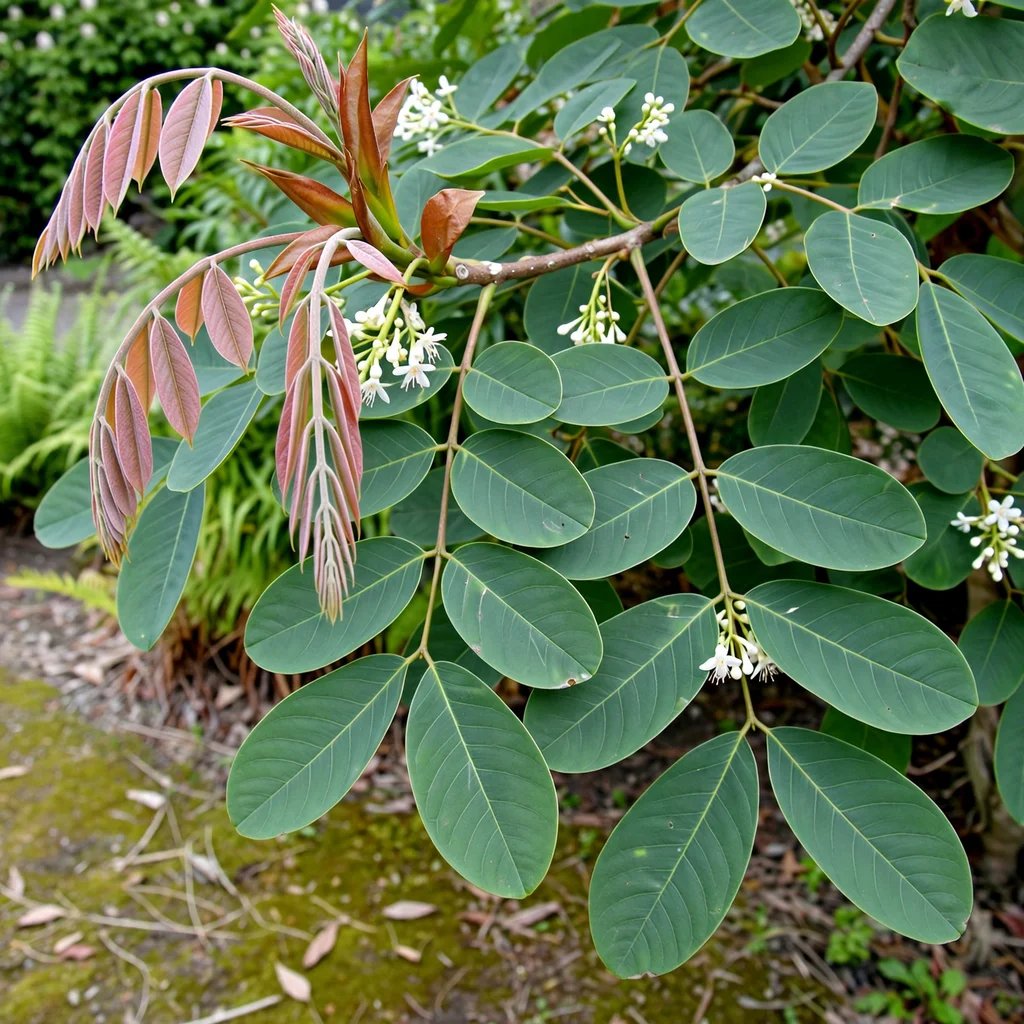
Cynometra lenticellata is a medium to large tropical tree native to rainforest margins in New Guinea and northern Queensland, forming a dense, rounded canopy with a weeping growth habit. Fragrant white to cream flower clusters emerge along the branches in spring and summer, followed by pod fruit.
Periodic growth flushes produce limp, pendulous tassels of brilliant white to pale bright pink new foliage emerging from papery scale bracts. These dramatic cascading leaves rapidly transition to pinkish-brown and harden into deep green foliage within a few days.
Uses & Benefits:
Essentials
At a Glance
Plant Type
Tree
Height
630"
Width
450"
Light
Full Sun, Partial Sun
Zones
10
Water
Moderate to High
Humidity
High
Lifespan
Perennial
Native To
Oceania (Northern Queensland, Papua New Guinea)
Toxicity
Non-toxic
Bloom period
Spring – Summer
In flower about 6 months of the year
Planting
How to Grow
- Select a planting site receiving full sun to partial shade in a completely frost-free location.
- Prepare rich, highly organic soil that retains moisture while draining excess water efficiently.
- Water deeply and regularly during establishment to maintain consistent moisture throughout the root zone.
- Apply a generous layer of organic mulch around the tree base to retain moisture and suppress weeds.
Pro Tip
Do not prune off or treat limp, pastel-pink juvenile foliage; this pendulous display is a normal physiological growth flush and hardens into healthy, deep green leaves within days.
Keep It Thriving
Care Guide
Do
- Water regularly during dry periods to ensure the root system stays consistently moist.
- Mulch heavily around the tree base to conserve soil moisture and protect surface roots.
- Provide full sun to promote dense branching and vibrant color in new leaf flushes.
Don't
- Do not prune heavily into old, leafless wood, as regrowth from old branches is poor.
- Do not allow soil to remain waterlogged or subject roots to standing water.
- Do not expose the plant to cold drafts or sub-freezing temperatures.
Seasonal Care Calendar
| Task | Jan | Feb | Mar | Apr | May | Jun | Jul | Aug | Sep | Oct | Nov | Dec |
|---|---|---|---|---|---|---|---|---|---|---|---|---|
| Fertilize | ||||||||||||
| Mulch | ||||||||||||
| Pest Check | ||||||||||||
| Prune |
Watch Out For
Pests & Diseases
Common Pests
Common Diseases
In the Garden
Landscape Uses & Companions
Landscape Uses
Multiply
Propagation Methods
Good to Know
Common Questions
Silk Handkerchief Tree questions
What zones can Silk Handkerchief Tree grow in?
Silk Handkerchief Tree is hardy in USDA Zone 10: in that range it survives winter in the ground. Colder than Zone 10, winters are too cold for it to survive outdoors.
When does Silk Handkerchief Tree bloom?
Silk Handkerchief Tree typically blooms from spring to summer. Exact timing shifts a week or two with your zone — Sow's bloom calendar maps it to your garden.
Does Silk Handkerchief Tree need full sun?
Silk Handkerchief Tree does best in full sun to part shade. In hot climates, afternoon shade keeps blooms fresher longer.
Keep exploring
Explore the genus
Hardy in your zone?
Grow Silk Handkerchief Tree with confidence
See it in a design of your actual yard, get zone-matched care reminders, and track it season by season in your garden journal.