The Story
Plant Bio
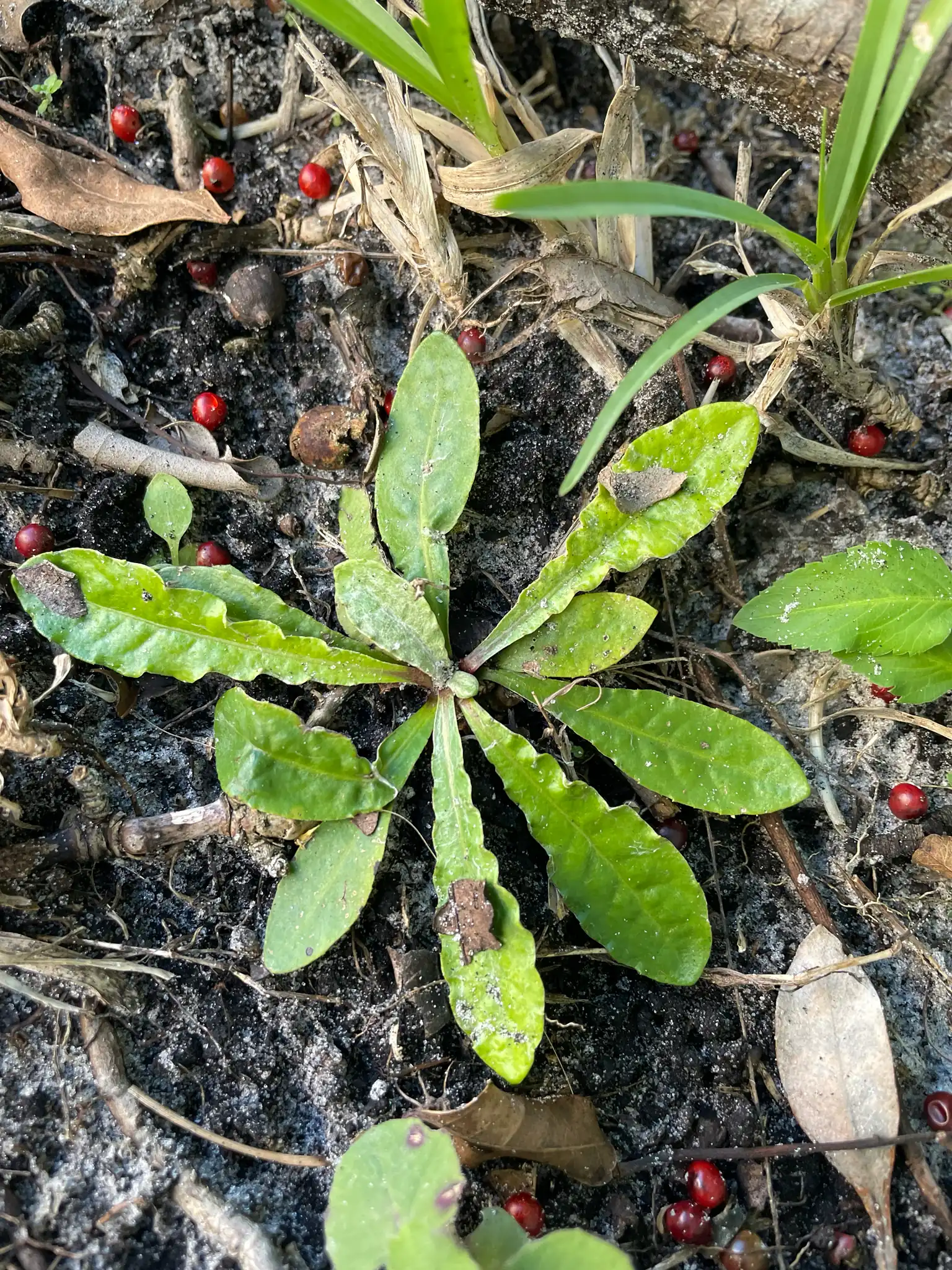
Chaptalia albicans is a fibrous-rooted evergreen perennial that grows as a flat basal rosette of elliptic to obovate leaves, densely white-woolly beneath and hairless green above. Leafless scapes rise from the center carrying a single nodding daisy head that opens white, purple-tinged on the reverse, from spring through fall.
It stays low in leaf, about six inches high in flower with fruiting scapes stretching to fifteen inches, which gardeners often mistake for the plant's true size. In Florida it is a threatened native of Miami-Dade pine rockland and open savanna, separated from the common Chaptalia tomentosa by its wavy-margined leaves and strict southern range.
Uses & Benefits:
Essentials
At a Glance
Plant Type
Perennial
Height
6"
Width
6"
Light
Full Sun
Zones
10
Water
Low
Humidity
Unknown
Lifespan
Perennial
Native To
Florida, Mexico, Central America, Caribbean
Toxicity
Unknown
Bloom period
Spring – Fall
In flower about 9 months of the year
Planting
How to Grow
- Plant in full sun in sandy, well-drained grassland soil with the crown at grade.
- Water in to settle sand around fibrous roots, then water only to establish.
- Keep competing turf and leaf litter pulled back by hand.
- Leave spent heads to mature seed; do not shear the rosette.
Pro Tip
Set the crown at soil level in open sun and then leave it alone; cutting into the rosette or burying it with mulch kills growth faster than neglect.
Keep It Thriving
Care Guide
Do
- Plant in open sun with air movement
- Keep crown exposed and dry
- Hand-weed around rosette
Don't
- Do not mulch over the crown
- Do not cut back leaves to tidy
- Do not fertilize to force size
Seasonal Care Calendar
| Task | Jan | Feb | Mar | Apr | May | Jun | Jul | Aug | Sep | Oct | Nov | Dec |
|---|---|---|---|---|---|---|---|---|---|---|---|---|
| Mulch | ||||||||||||
| Pest Check | ||||||||||||
| Plant | ||||||||||||
| Spring Cleanup |
Watch Out For
Pests & Diseases
Common Pests
Common Diseases
In the Garden
Landscape Uses & Companions
Landscape Uses
Multiply
Propagation Methods
Good to Know
Common Questions
White Sunbonnet questions
What zones can White Sunbonnet grow in?
White Sunbonnet is hardy in USDA Zone 10: in that range it survives winter in the ground. Colder than Zone 10, grow it in a container you can move to shelter for the winter, or as an annual.
When does White Sunbonnet bloom?
White Sunbonnet typically blooms from spring to fall. Exact timing shifts a week or two with your zone — Sow's bloom calendar maps it to your garden.
Does White Sunbonnet need full sun?
White Sunbonnet does best in full sun (6+ hours).
Keep exploring
Explore the genus
Hardy in your zone?
Grow White Sunbonnet with confidence
See it in a design of your actual yard, get zone-matched care reminders, and track it season by season in your garden journal.