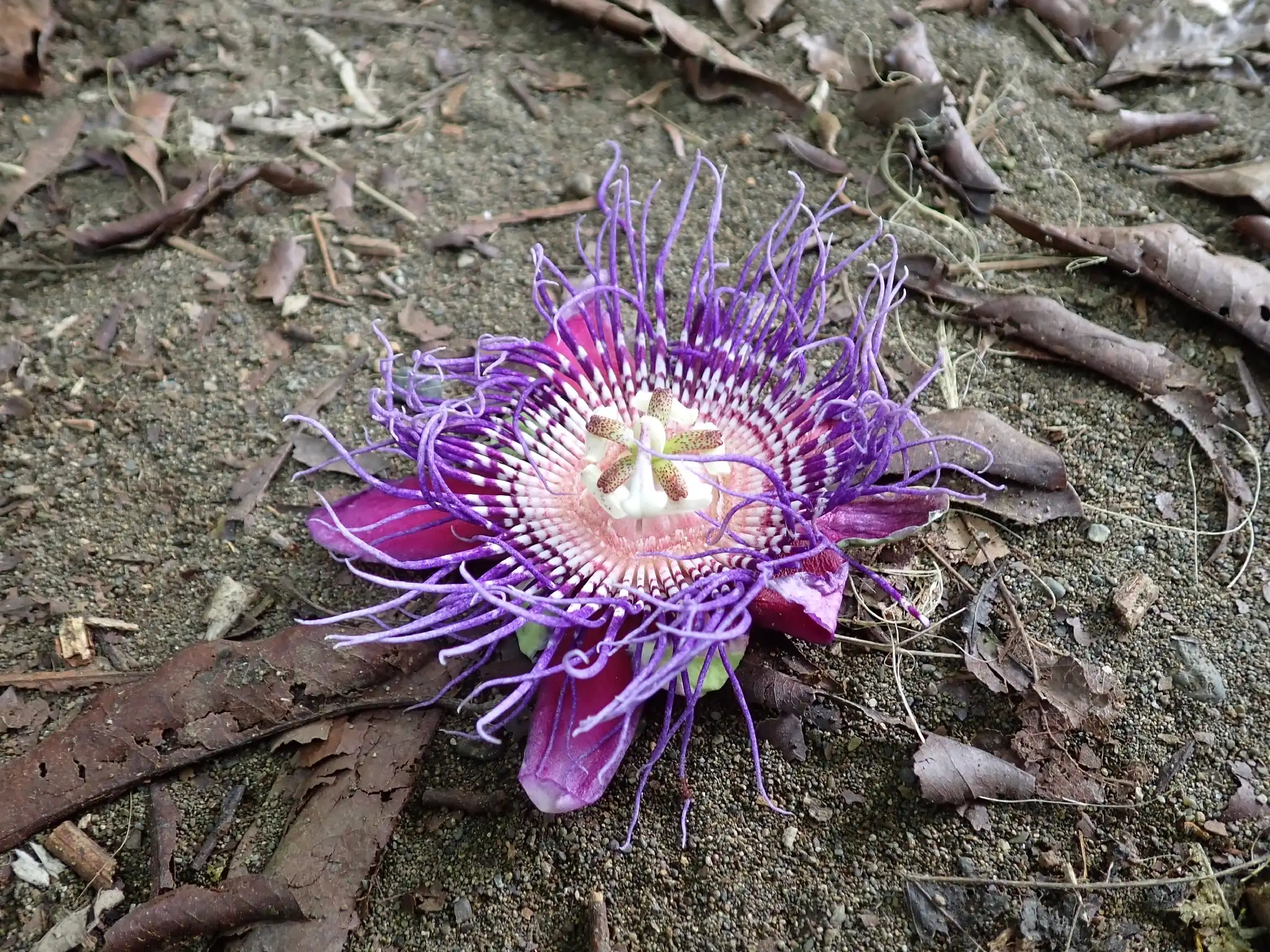
The Story
Plant Bio
Passiflora quadrangularis is a vigorous evergreen vine that climbs by tendrils to 30 to 50 feet where it has strong support. It produces large broadly ovate leaves on four-angled winged stems and bears solitary nodding bell-shaped flowers 2 to 4 inches across.
The square winged stem separates it from other passionflowers at a glance. It develops the largest fruit in the genus, an oblong fruit 8 to 12 inches long with fragrant edible pulp when fully ripe, while the flower shows carmine-red petals around a five-ranked corona of white and purple-violet filaments banded reddish-purple around a blue center.
Uses & Benefits:
Essentials
At a Glance
Plant Type
Vine
Height
590"
Width
59"
Light
Full Sun, Partial Sun
Zones
9, 10
Water
Evenly moist
Humidity
High
Lifespan
Perennial vine
Native To
Brazil, Colombia
Toxicity
Toxic to humans
Bloom period
Summer – Fall
In flower about 6 months of the year
Planting
How to Grow
- Plant in spring after frost in full sun to partial shade with a stout trellis or arbor.
- Set in rich fertile organic soil that drains freely but holds moisture, pH 6.0 to 7.5.
- Water to keep soil evenly moist and never leave roots standing in water.
- Train new tendrils to support and prune to control size; protect from frost below 30F.
- Grow in a greenhouse or large container moved indoors where winters drop below zone 9b.
Pro Tip
Give it a stout trellis in full sun and rich moist soil, and move containers under glass well before frost; fruit only ripens where summer heat and humidity stay high.
Keep It Thriving
Care Guide
Do
- Give full sun to partial shade with strong support for tendrils.
- Keep soil rich, moist and well drained with organic matter.
- Provide heat, humidity and airflow for healthy growth and fruit set.
Don't
- Do not let soil stay waterlogged or roots will rot.
- Do not expose to frost; bring containers under cover before freezing.
- Do not eat raw roots, leaves or unripe fruit; they are poisonous.
Seasonal Care Calendar
| Task | Jan | Feb | Mar | Apr | May | Jun | Jul | Aug | Sep | Oct | Nov | Dec |
|---|---|---|---|---|---|---|---|---|---|---|---|---|
| Mulch | ||||||||||||
| Pest Check | ||||||||||||
| Plant | ||||||||||||
| Stake | ||||||||||||
| Winter Prep |
Watch Out For
Pests & Diseases
Common Pests
Common Diseases
In the Garden
Landscape Uses & Companions
Landscape Uses
Multiply
Propagation Methods
Good to Know
Common Questions
Giant Granadilla questions
What zones can Giant Granadilla grow in?
Giant Granadilla is hardy in USDA Zones 9–10: in that range it survives winter in the ground. Colder than Zone 9, grow it in a container you can move to shelter for the winter, or as an annual.
When does Giant Granadilla bloom?
Giant Granadilla typically blooms from summer to fall. Exact timing shifts a week or two with your zone — Sow's bloom calendar maps it to your garden.
Does Giant Granadilla need full sun?
Giant Granadilla does best in full sun to part shade. In hot climates, afternoon shade keeps blooms fresher longer.
More Passiflora to compare
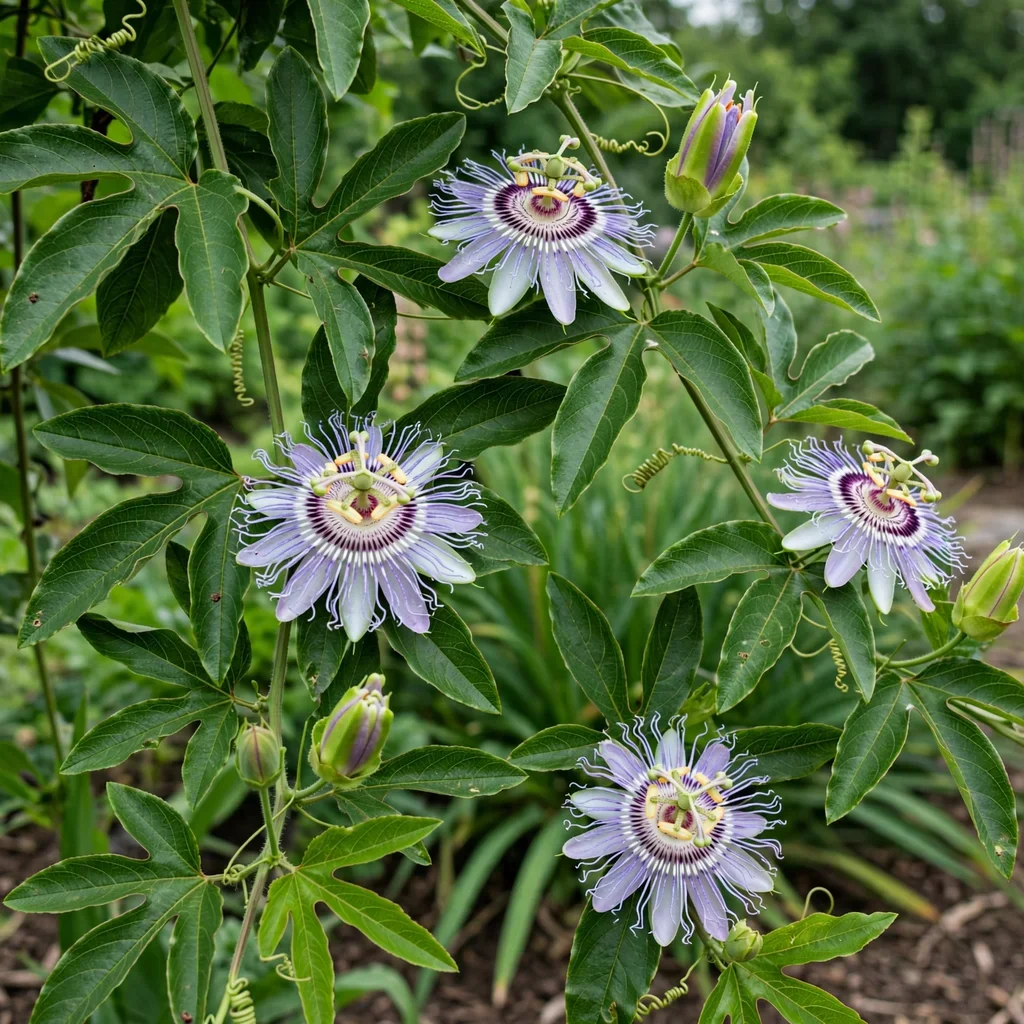
Purple Passionflower
Passiflora incarnata
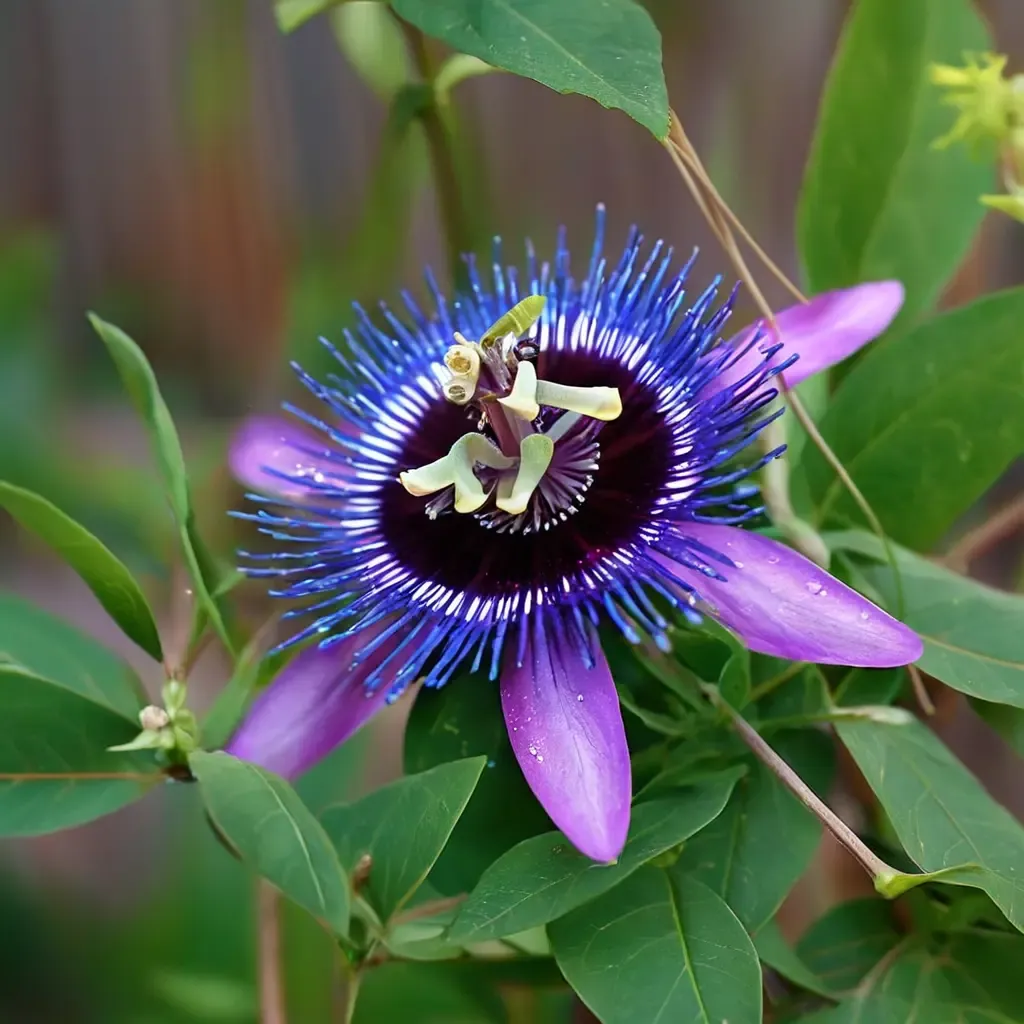
Blue Passionflower
Passiflora loefgrenii
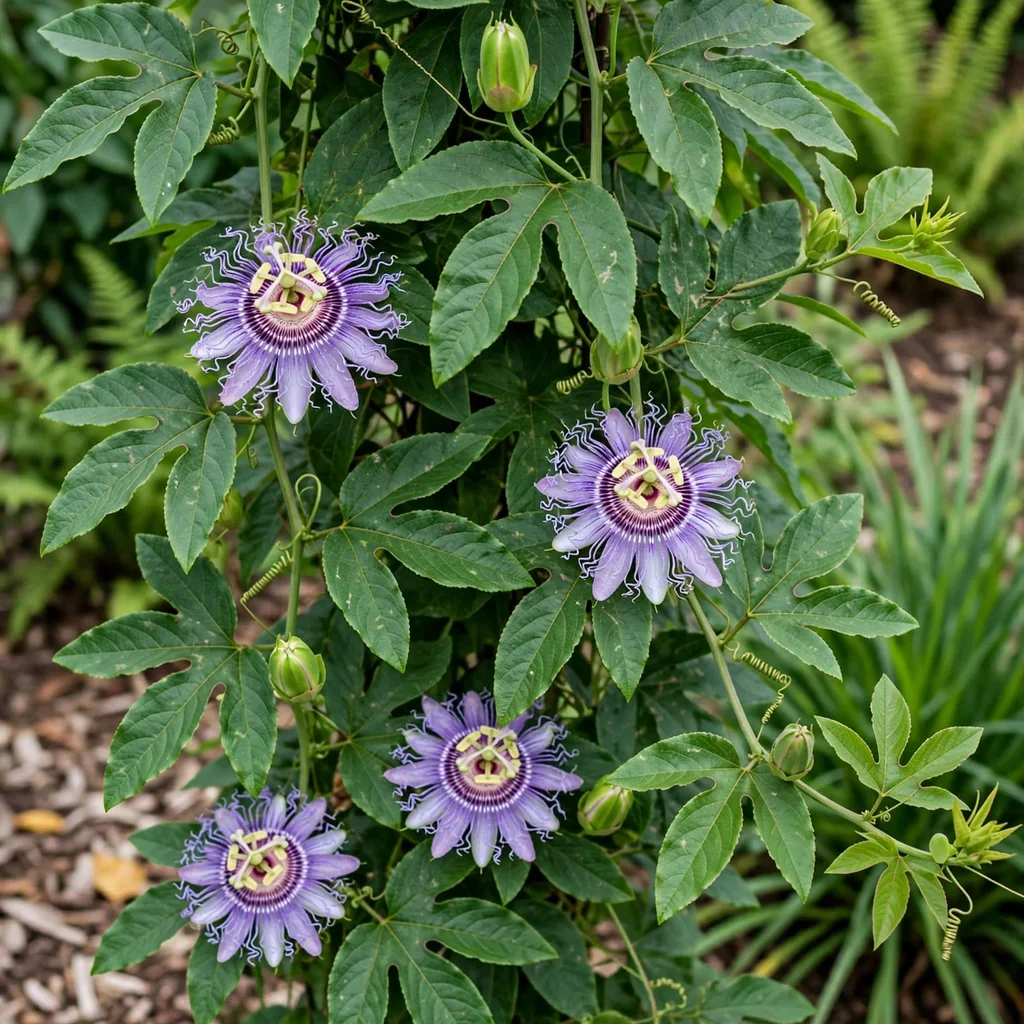
Butterfly Flower Purple Passionflower
Passiflora incarnata 'Butterfly Flower'
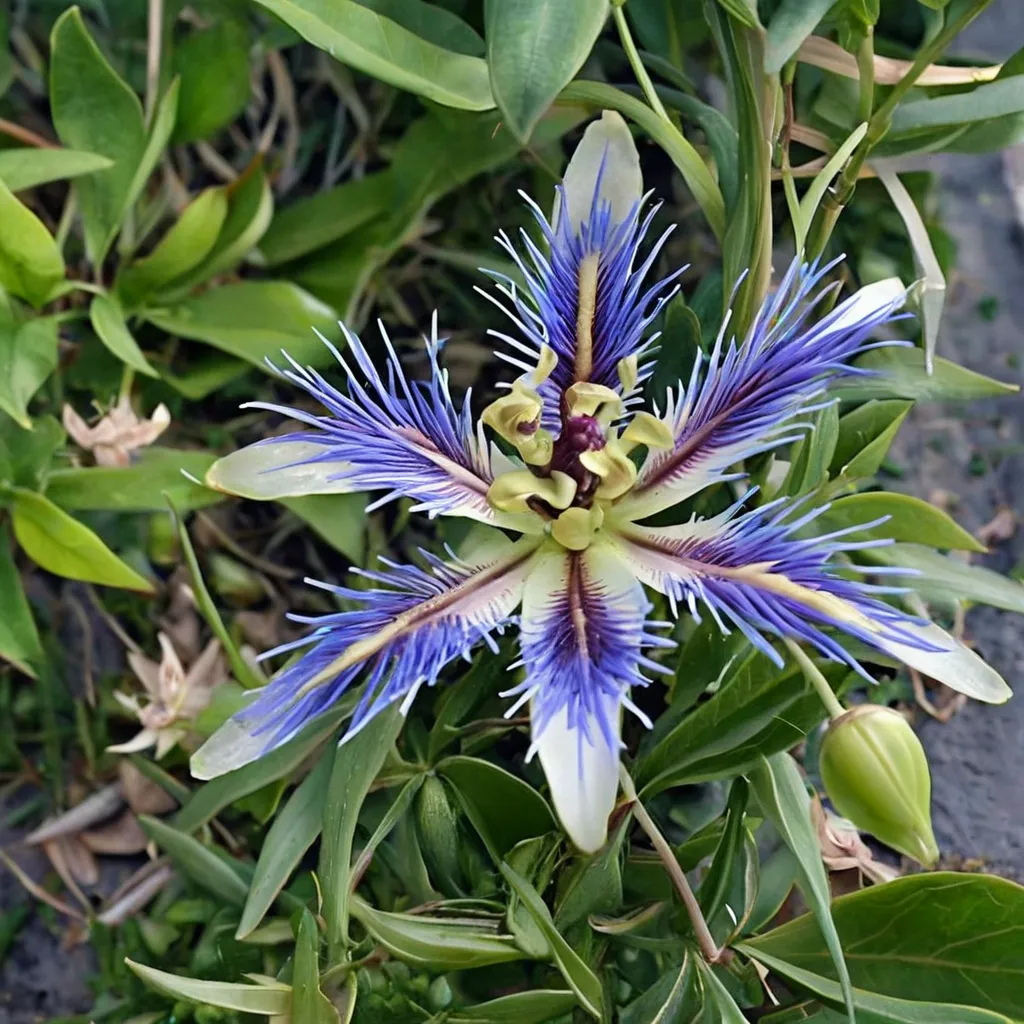
Waterloo Blue Passionflower
Passiflora caerulea 'Waterloo Blue'
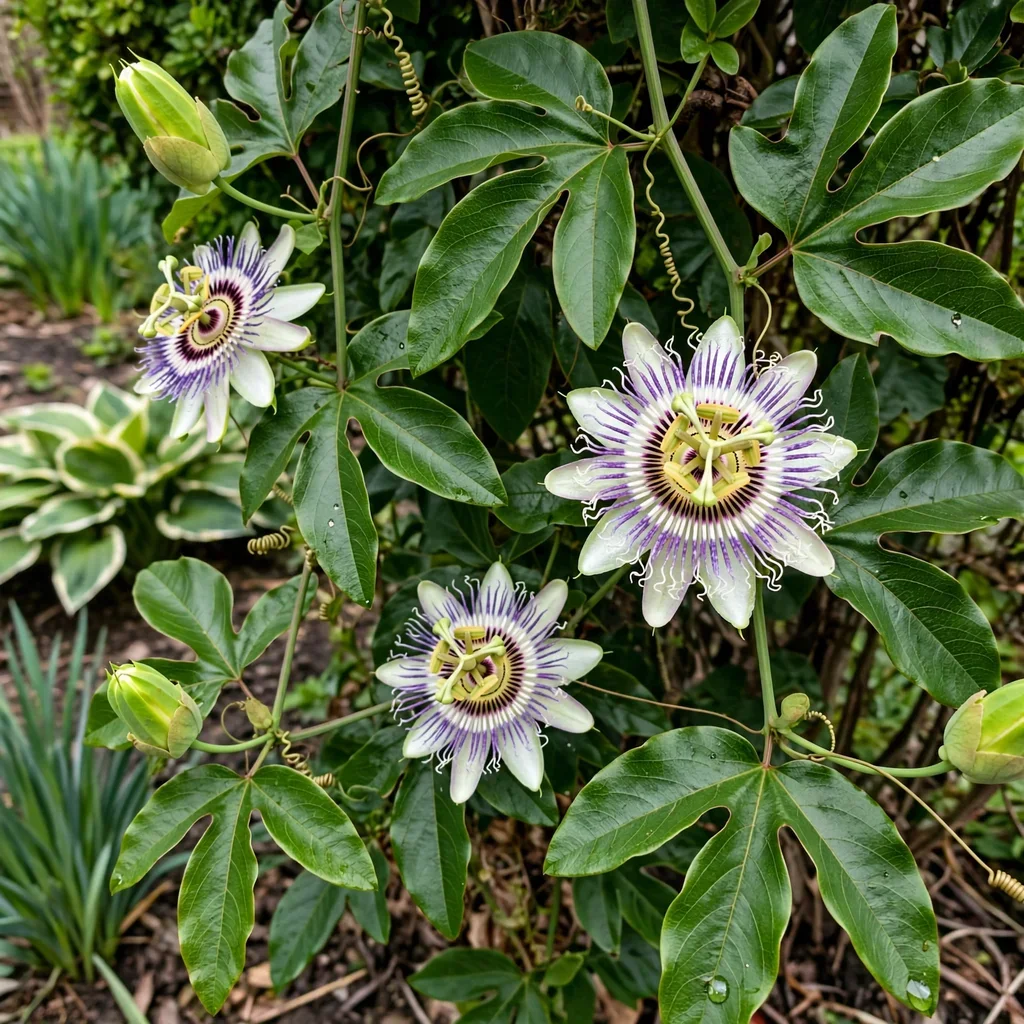
Sea Anemone Passion Flower
Passiflora actinia
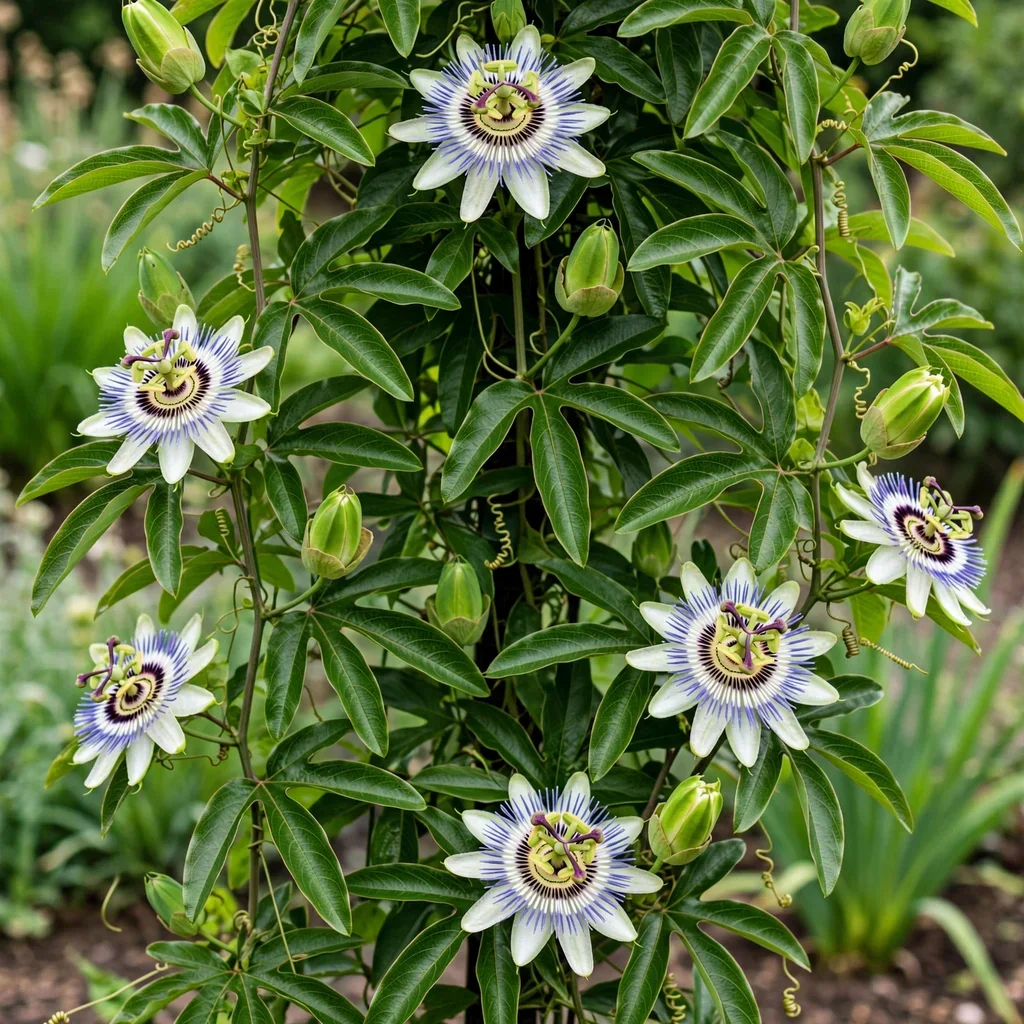
White Passionflower
Passiflora alba 'Blue Horizon'
Keep exploring
Explore the genus
Hardy in your zone?
Grow Giant Granadilla with confidence
See it in a design of your actual yard, get zone-matched care reminders, and track it season by season in your garden journal.