The Story
Plant Bio
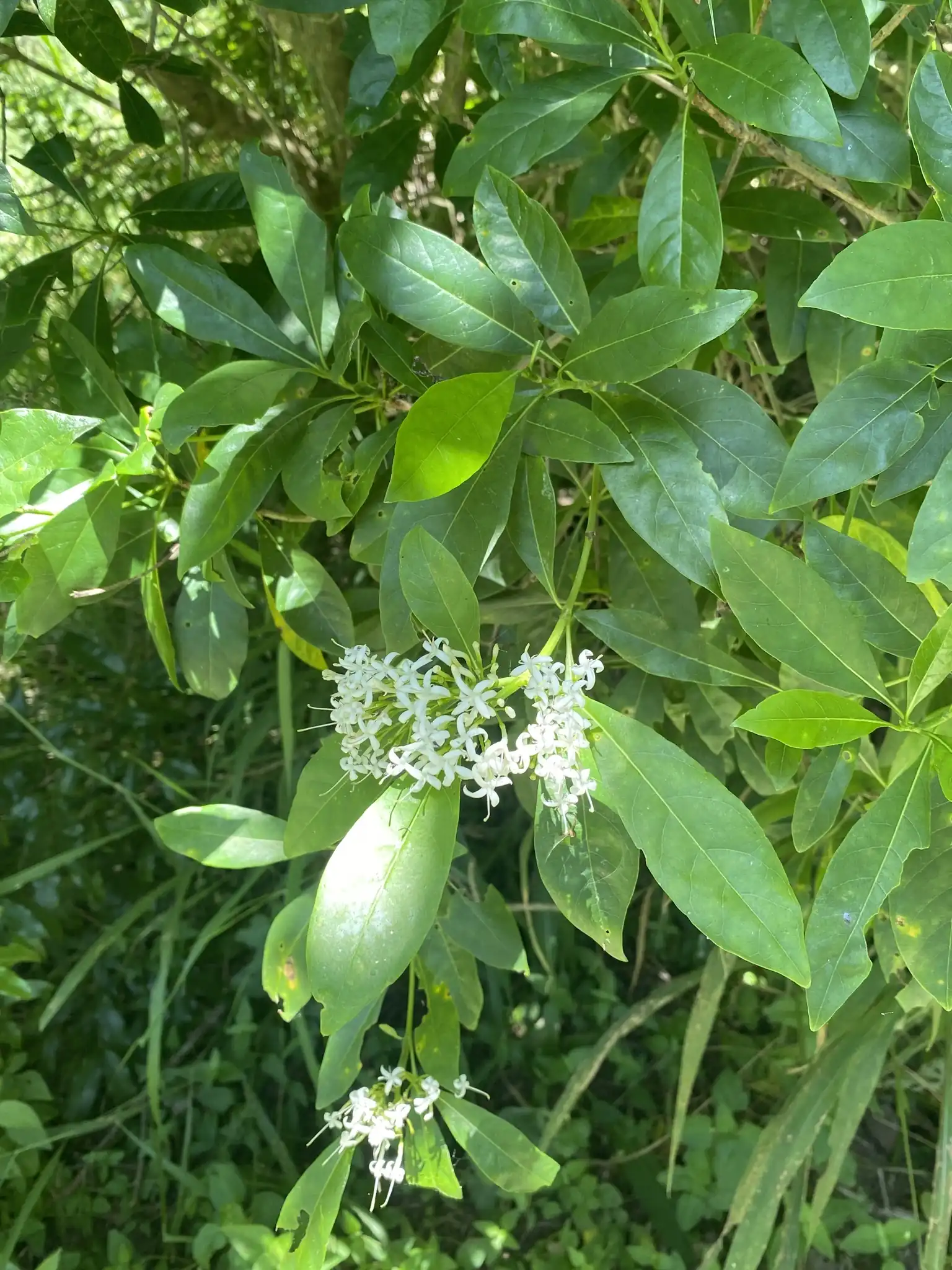
Pavetta australiensis is an evergreen understory shrub or small tree native to monsoon forests, vine thickets, and coastal beach forests of northeastern Australia and Papua New Guinea. It produces glossy green, opposite leaves and bears dense, rounded terminal panicles of sweet-scented white flowers in spring.
The fragrant white blossoms feature slender corolla tubes topped by spreading lobes and long, thread-like styles that extend twice the length of the flower heads. It provides a non-invasive flowering alternative to exotic butterfly bushes, drawing high numbers of insect pollinators when in full bloom.
Uses & Benefits:
Essentials
At a Glance
Plant Type
Shrub
Height
197"
Width
118"
Light
Full Sun, Partial Sun
Zones
10
Water
Moderate
Humidity
High
Lifespan
Perennial
Native To
Northeastern Australia, Papua New Guinea
Toxicity
Non-toxic
Bloom period
Spring – Late spring
In flower about 3 months of the year
Planting
How to Grow
- Select a planting location receiving morning sun or high ambient light with light, free-draining soil.
- Dig a planting hole twice as wide as the root ball and enrich the soil with organic compost.
- Position the plant at the same depth it grew in its container and backfill firmly.
- Water thoroughly after planting and apply a layer of organic mulch around the base to retain moisture.
Pro Tip
Position in morning sun or bright ambient light in exceptionally well-drained soil, and prune lightly only after flowering to avoid cutting back into old, leafless wood.
Keep It Thriving
Care Guide
Do
- Plant in light, loamy, or sandy soils with excellent drainage.
- Prune lightly after the spring flowering display to maintain shape.
- Feed sparingly with a balanced organic fertilizer in spring.
Don't
- Do not plant in heavy, waterlogged clay soils.
- Do not cut hard into old, bare wood when pruning.
- Do not allow established plants to sit in standing water.
Seasonal Care Calendar
| Task | Jan | Feb | Mar | Apr | May | Jun | Jul | Aug | Sep | Oct | Nov | Dec |
|---|---|---|---|---|---|---|---|---|---|---|---|---|
| Fertilize | ||||||||||||
| Mulch | ||||||||||||
| Pest Check | ||||||||||||
| Prune |
Watch Out For
Pests & Diseases
Common Pests
Common Diseases
In the Garden
Landscape Uses & Companions
Landscape Uses
Multiply
Propagation Methods
Good to Know
Common Questions
Butterfly Bush questions
What zones can Butterfly Bush grow in?
Butterfly Bush is hardy in USDA Zone 10: in that range it survives winter in the ground. Colder than Zone 10, grow it in a container you can move to shelter for the winter.
When does Butterfly Bush bloom?
Butterfly Bush typically blooms in spring. Exact timing shifts a week or two with your zone — Sow's bloom calendar maps it to your garden.
Does Butterfly Bush need full sun?
Butterfly Bush does best in full sun to part shade. In hot climates, afternoon shade keeps blooms fresher longer.
Is Butterfly Bush drought tolerant?
Yes — once established (usually after the first full season), Butterfly Bush handles dry spells with minimal watering. Water deeply its first year to build the root system that makes that possible.
Keep exploring
Explore the genus
Hardy in your zone?
Grow Butterfly Bush with confidence
See it in a design of your actual yard, get zone-matched care reminders, and track it season by season in your garden journal.