The Story
Plant Bio
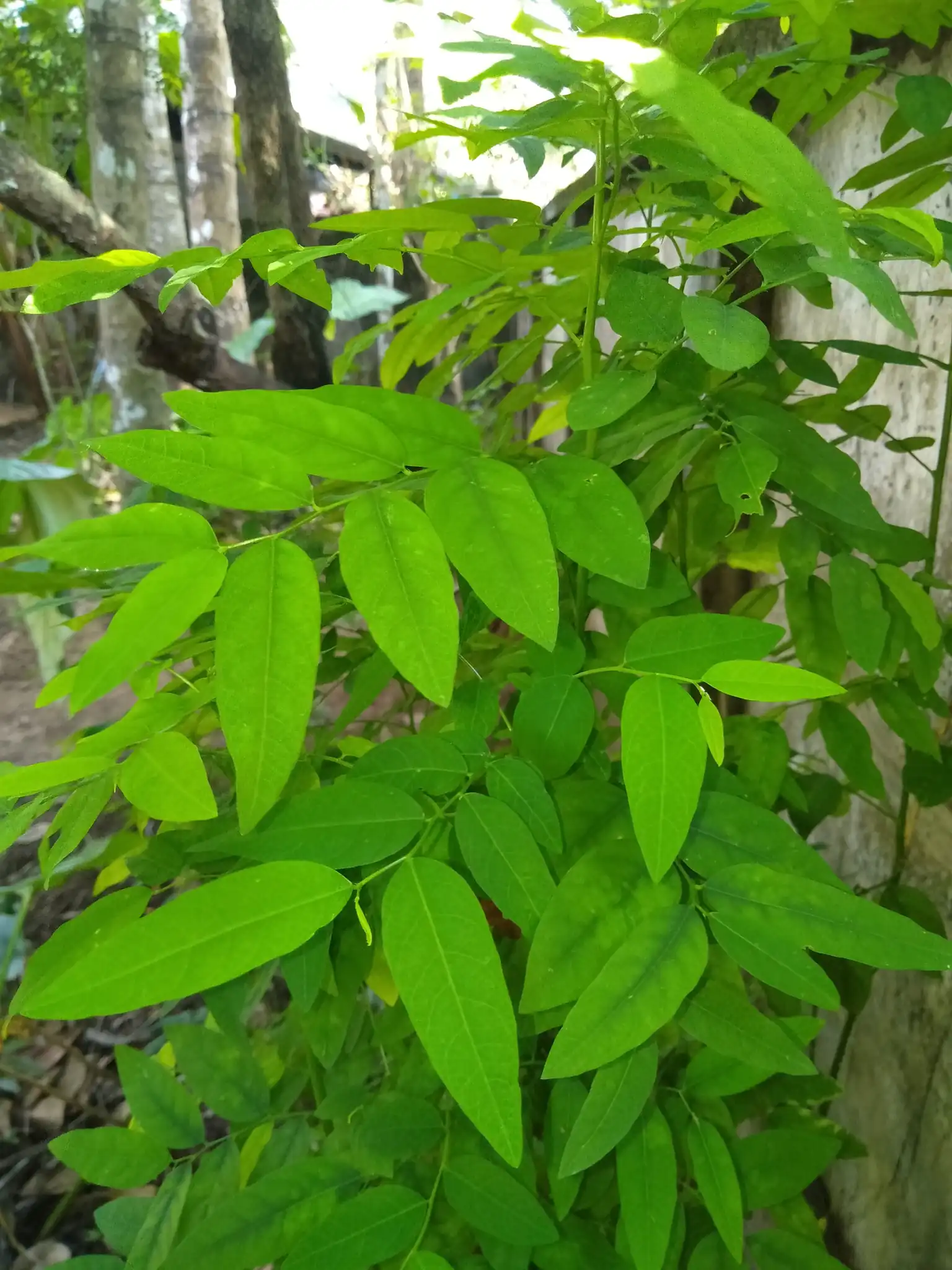
Phyllanthus androgynus, still sold as Sauropus androgynus, is a fast-growing evergreen shrub from humid lowland Asia that reaches four to eight feet in cultivation with slender upright stems and leafy side branches. The foliage is glossy dark green ovals one to two inches long borne along the stems, with small flat yellow-to-red flowers tucked in the leaf axils beneath the leaves.
Unlike most ornamental shrubs it is grown for its edible shoot tips, which are harvested young and eaten cooked as a green vegetable. The pendant upper branches grow top-heavy and leggy unless trimmed to three to six feet, and the marble-patterned white-to-purple fruits that follow summer bloom each hold three black seeds.
Uses & Benefits:
Essentials
At a Glance
Plant Type
Shrub
Height
84"
Width
48"
Light
Partial Sun, Shade
Zones
9, 10
Water
Medium
Humidity
High
Lifespan
Long-lived evergreen shrub
Native To
Southern India to Southeast Asia and southern China
Toxicity
Toxic raw in excess - cook before eating
Bloom period
Summer – Fall
In flower about 6 months of the year
Planting
How to Grow
- Plant in partial shade in warm, humid, frost-free soil after night temperatures stay above 50F.
- Space plants 3 to 4 feet apart and water regularly to keep the root zone evenly moist.
- Mulch to hold humidity and cut stems back to 3 to 6 feet when top growth gets leggy.
- Harvest young shoot tips for cooking and bring container plants under cover before frost.
Pro Tip
Cut top-heavy stems back to three to six feet after harvest to keep new shoot tips within reach and prevent flopping.
Keep It Thriving
Care Guide
Do
- Grow in partial shade with steady moisture and humidity
- Trim to 3 to 6 feet to control top-heavy growth
- Cook harvested leaves before eating and use in moderation
Don't
- Do not plant outdoors where hard frost occurs without winter protection
- Do not eat large amounts of raw leaves or drink juiced raw leaves
- Do not let plants go leggy and flop without pruning
Seasonal Care Calendar
| Task | Jan | Feb | Mar | Apr | May | Jun | Jul | Aug | Sep | Oct | Nov | Dec |
|---|---|---|---|---|---|---|---|---|---|---|---|---|
| Fertilize | ||||||||||||
| Harvest | ||||||||||||
| Pest Check | ||||||||||||
| Prune | ||||||||||||
| Winter Prep |
Watch Out For
Pests & Diseases
Common Pests
Common Diseases
In the Garden
Landscape Uses & Companions
Landscape Uses
Companion Plants
Multiply
Propagation Methods
Good to Know
Common Questions
Katuk questions
What zones can Katuk grow in?
Katuk is hardy in USDA Zones 9–10: in that range it survives winter in the ground. Colder than Zone 9, grow it in a container you can move to shelter for the winter.
When does Katuk bloom?
Katuk typically blooms from summer to fall. Exact timing shifts a week or two with your zone — Sow's bloom calendar maps it to your garden.
Does Katuk need full sun?
Katuk does best in part shade.
Keep exploring
Explore the genus
Hardy in your zone?
Grow Katuk with confidence
See it in a design of your actual yard, get zone-matched care reminders, and track it season by season in your garden journal.