The Story
Plant Bio
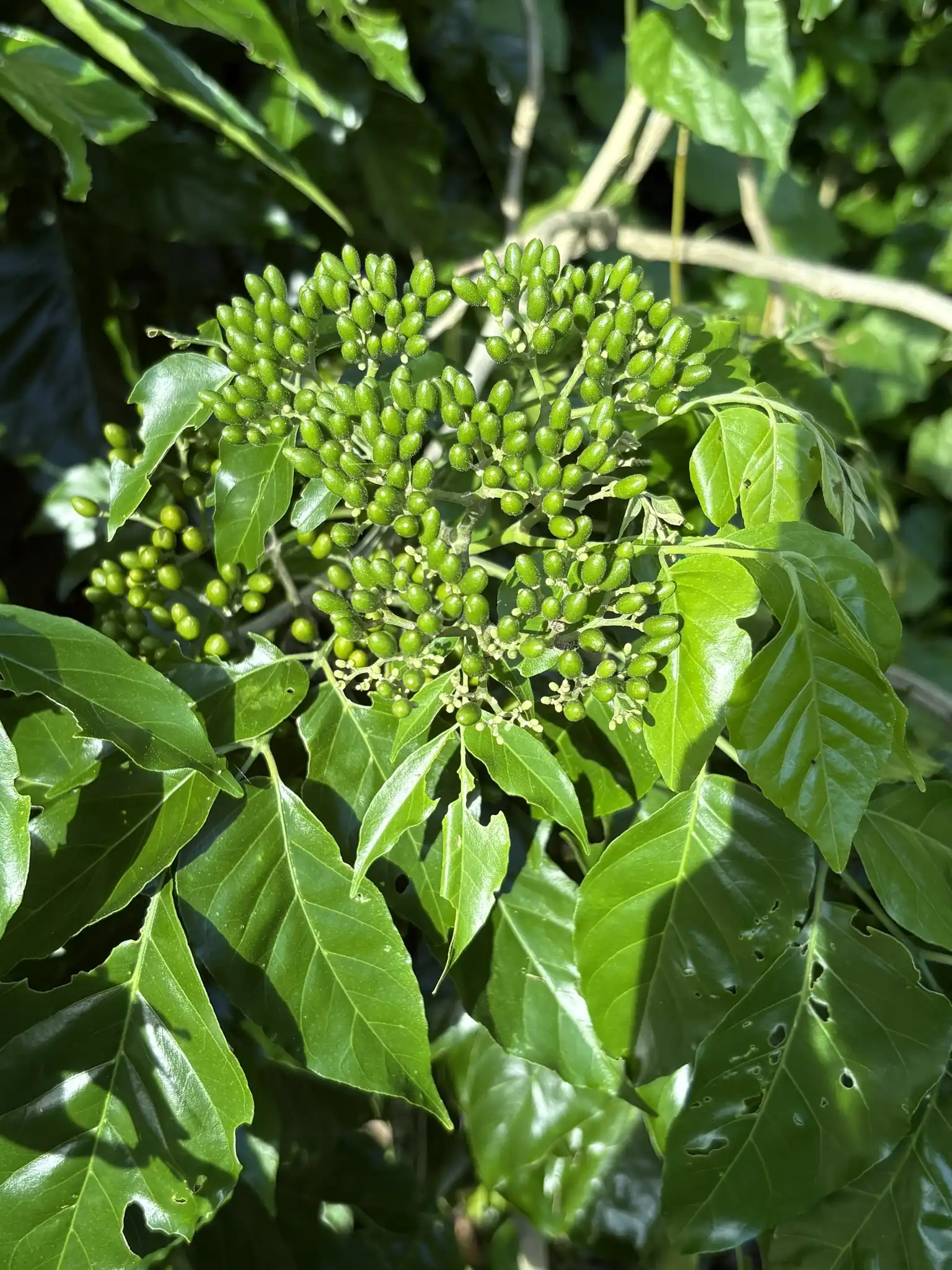
Micromelum minutum, commonly known as lime berry, is an evergreen tropical shrub or small multi-stemmed tree featuring compound leaves that emit a pleasant citrus scent when crushed. Dense clusters of small, sweetly fragrant white flowers appear throughout the warmer months, followed by edible sweet-to-tart berries.
Distinguished by prominent oil glands across its foliage and large terminal flower clusters, this species functions ideally as a sheltered understory element. It develops an upright, spreading canopy that provides year-round screening in warm or protected microclimates.
Uses & Benefits:
Essentials
At a Glance
Plant Type
Shrub
Height
354"
Width
236"
Light
Full Sun, Partial Sun, Shade
Zones
8, 9, 10
Water
Moderate
Humidity
High
Lifespan
Perennial
Native To
Asia, Malesia, Western Pacific, Northern Australia
Toxicity
Non-toxic
Bloom period
Spring – Fall
In flower about 9 months of the year
Planting
How to Grow
- Select a planting site or large container with permeable, loam-rich soil and partial shade.
- Amend heavy soils with organic matter and coarse grit to ensure rapid drainage.
- Set the root ball level with the surrounding soil and water thoroughly.
- Apply a 2-inch layer of organic mulch around the base, keeping it away from the main stems.
Pro Tip
Position in freely draining, organic-rich soil under dappled light or partial shade, as full afternoon sun combined with dry conditions causes leaf scorch and dieback.
Keep It Thriving
Care Guide
Do
- Keep soil consistently moist during early root establishment.
- Provide partial shade or protection from intense afternoon sun.
- Use well-draining soil mixes to prevent standing water around the roots.
Don't
- Do not plant in heavy, poorly drained clay soil.
- Avoid severe pruning into old, leafless wood.
- Do not subject plants to hard freezing conditions without protection.
Seasonal Care Calendar
| Task | Jan | Feb | Mar | Apr | May | Jun | Jul | Aug | Sep | Oct | Nov | Dec |
|---|---|---|---|---|---|---|---|---|---|---|---|---|
| Fertilize | ||||||||||||
| Pest Check | ||||||||||||
| Prune | ||||||||||||
| Winter Prep |
Watch Out For
Pests & Diseases
Common Pests
Common Diseases
In the Garden
Landscape Uses & Companions
Landscape Uses
Multiply
Propagation Methods
Good to Know
Common Questions
Lime Berry questions
What zones can Lime Berry grow in?
Lime Berry is hardy in USDA Zones 8–10: in that range it survives winter in the ground. Colder than Zone 8, grow it in a container you can move to shelter for the winter.
When does Lime Berry bloom?
Lime Berry typically blooms from spring to fall. Exact timing shifts a week or two with your zone — Sow's bloom calendar maps it to your garden.
Does Lime Berry need full sun?
Lime Berry does best in full sun to part shade. In hot climates, afternoon shade keeps blooms fresher longer.
Is Lime Berry drought tolerant?
Yes — once established (usually after the first full season), Lime Berry handles dry spells with minimal watering. Water deeply its first year to build the root system that makes that possible.
Keep exploring
Explore the genus
Hardy in your zone?
Grow Lime Berry with confidence
See it in a design of your actual yard, get zone-matched care reminders, and track it season by season in your garden journal.