The Story
Plant Bio
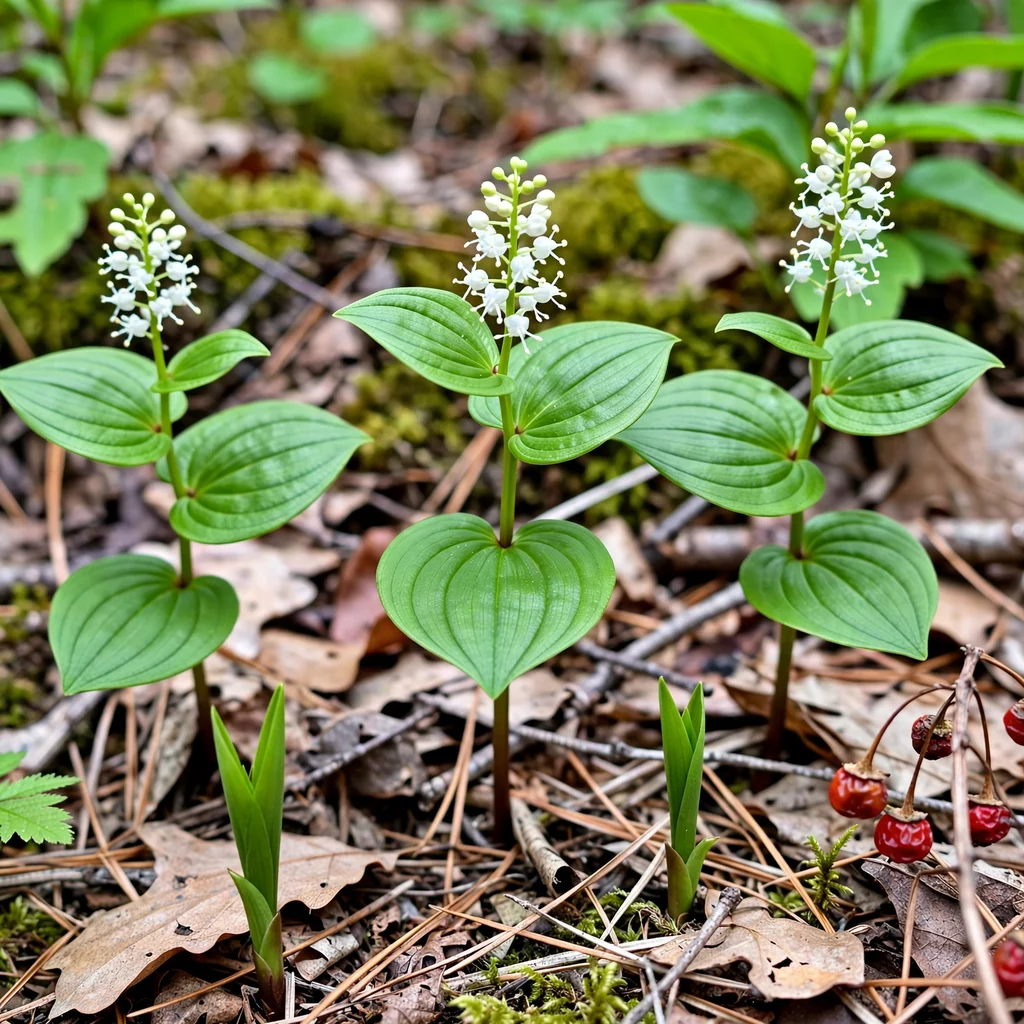
Maianthemum dilatatum, known as false lily-of-the-valley, is a rhizomatous perennial groundcover native to moist coastal forests of the Pacific Northwest and northeastern Asia. It spreads via slender underground stems to form dense carpets of glossy, heart-shaped leaves topped in late spring by erect spikes of tiny, fragrant white flowers.
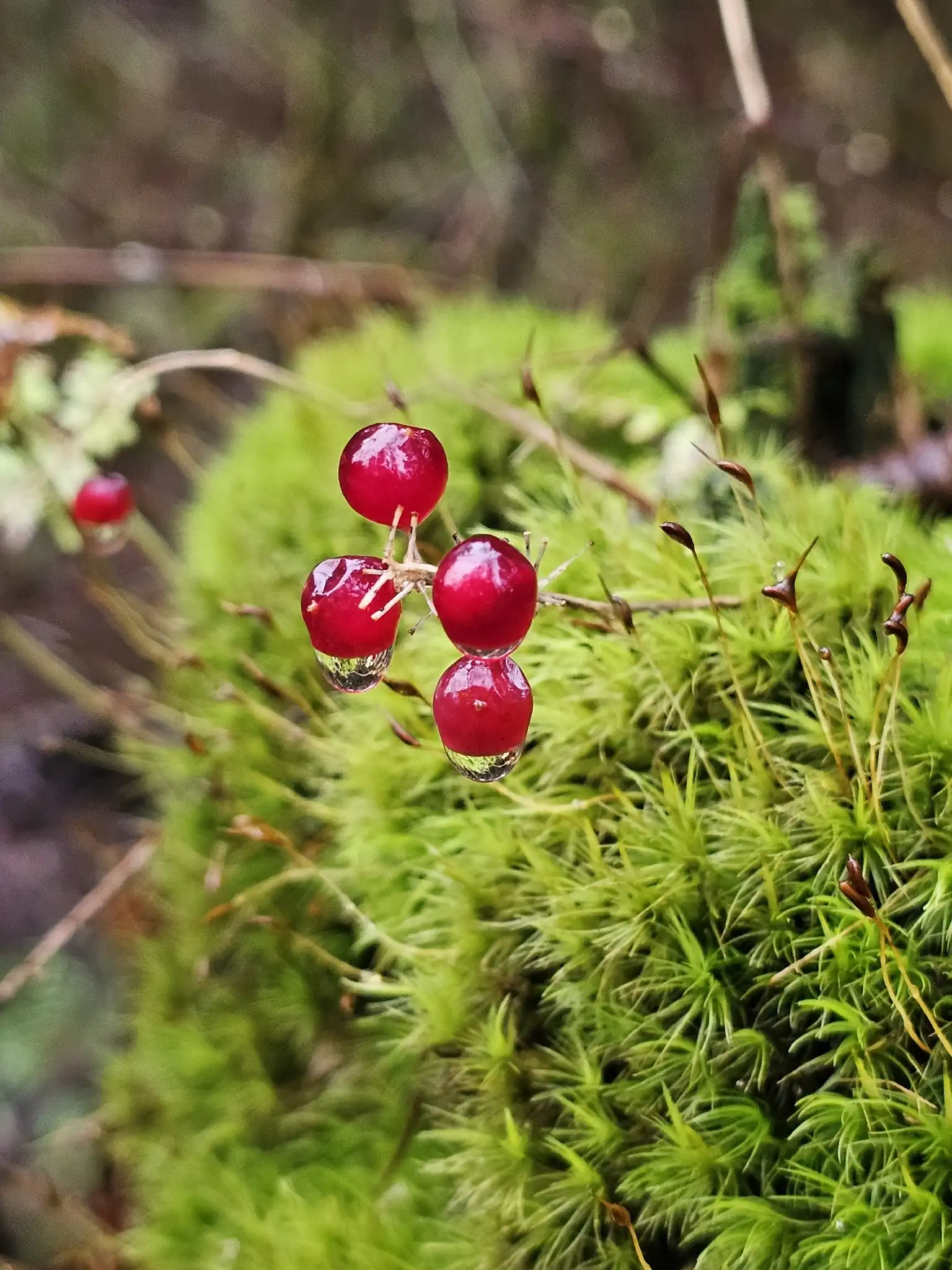
Unlike true lily-of-the-valley, this species typically carries two to three prominently veined leaves per stem and yields mottled berries that turn bright translucent red in fall. Its vigorous creeping rhizomes allow it to quickly cover cool, damp understory spaces where other groundcovers struggle.
Uses & Benefits:
Essentials
At a Glance
Plant Type
Groundcover
Height
14"
Width
24"
Light
Partial Sun, Shade
Zones
4, 5, 6, 7, 8
Water
High
Humidity
Moderate to High
Lifespan
Perennial
Native To
North America, Asia
Toxicity
Mildly toxic if ingested
Bloom period
Late spring – Early summer
In flower about 2 months of the year
Planting
How to Grow
- Select a fully shaded or dapple-shaded location beneath native trees or tall shrubs.
- Amend the soil with composted leaf mold or fine organic bark to ensure rich moisture retention.
- Plant rhizome plugs 1 to 2 inches deep and space them 12 inches apart to allow for lateral spread.
- Keep soil continuously moist throughout the first growing season until roots colonize the bed.
Pro Tip
Maintain rich, consistently damp organic soil under a deep tree canopy to prevent the foliage from collapsing into early summer dormancy.
Keep It Thriving
Care Guide
Do
- Top-dress annually with leaf mold or compost in spring to mimic the natural forest floor.
- Provide supplemental water during warm dry spells to keep foliage green through summer.
- Install deep garden borders if you need to limit rhizomatous spreading into adjacent beds.
Don't
- Do not plant in locations exposed to hot, direct afternoon sunlight.
- Do not allow the root zone to dry out completely during summer heat.
- Do not apply high-nitrogen chemical fertilizers that disrupt forest soil chemistry.
Seasonal Care Calendar
| Task | Jan | Feb | Mar | Apr | May | Jun | Jul | Aug | Sep | Oct | Nov | Dec |
|---|---|---|---|---|---|---|---|---|---|---|---|---|
| Divide | ||||||||||||
| Fertilize | ||||||||||||
| Mulch | ||||||||||||
| Spring Cleanup |
Watch Out For
Pests & Diseases
Common Pests
Common Diseases
In the Garden
Landscape Uses & Companions
Landscape Uses
Multiply
Propagation Methods
Good to Know
Common Questions
False Lily-of-the-Valley questions
What zones can False Lily-of-the-Valley grow in?
False Lily-of-the-Valley is hardy in USDA Zones 4–8: in that range it survives winter in the ground. Warmer than Zone 8, winter isn't the problem: it prefers colder winters, and summer heat can shorten its life.
Is False Lily-of-the-Valley deer resistant?
Yes — False Lily-of-the-Valley is rated deer-resistant. Deer typically pass it over, though extreme hunger can override any plant's defenses.
When does False Lily-of-the-Valley bloom?
False Lily-of-the-Valley typically blooms from late spring to early summer. Exact timing shifts a week or two with your zone — Sow's bloom calendar maps it to your garden.
Does False Lily-of-the-Valley need full sun?
False Lily-of-the-Valley does best in part shade.
More Maianthemum to compare
Keep exploring
Explore the genus
Hardy in your zone?
Grow False Lily-of-the-Valley with confidence
See it in a design of your actual yard, get zone-matched care reminders, and track it season by season in your garden journal.