The Story
Plant Bio
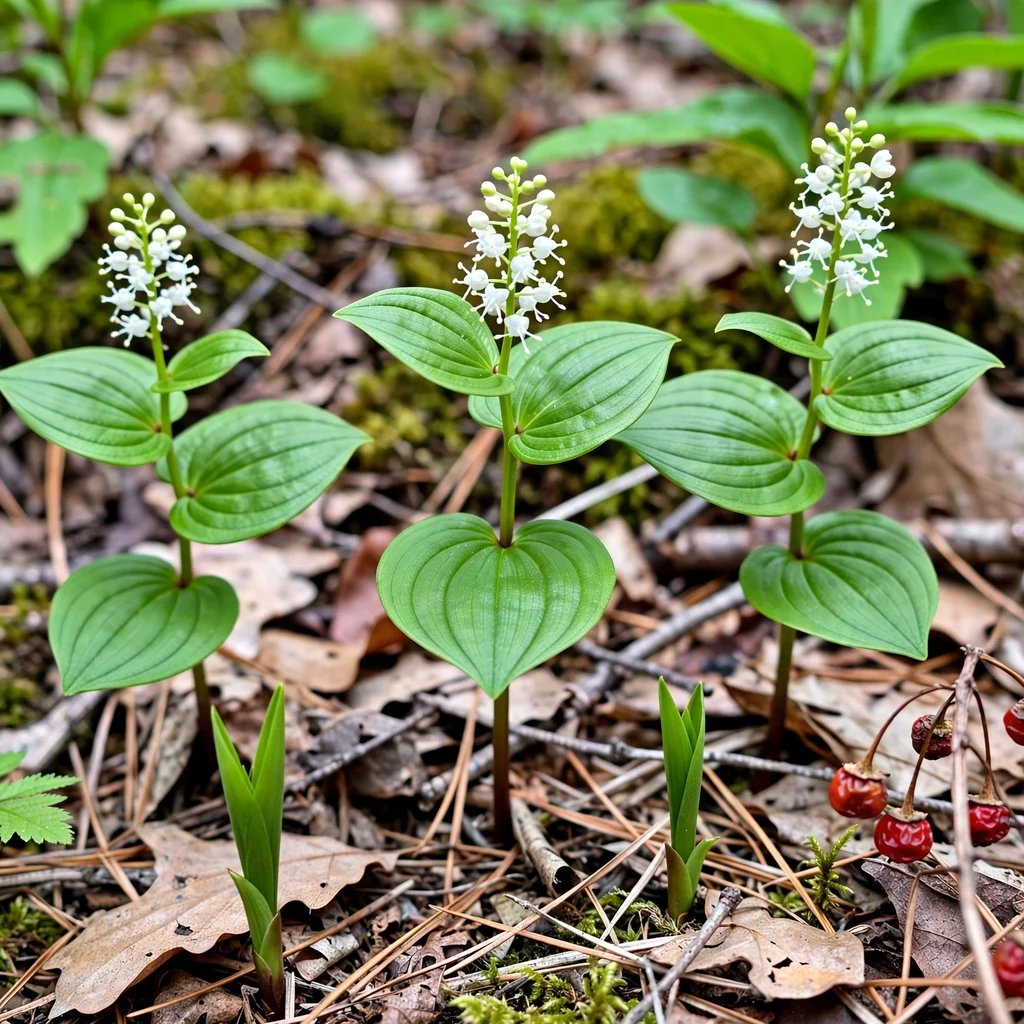
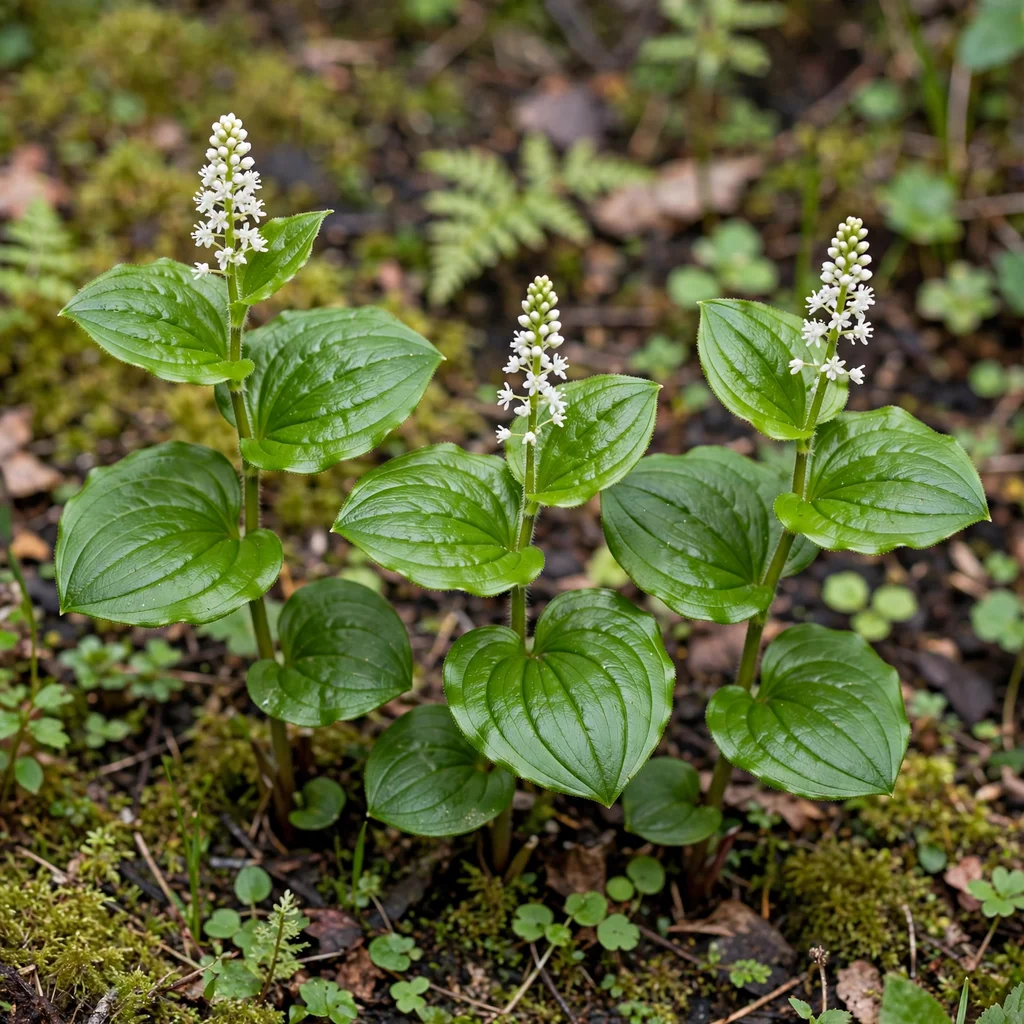
Maianthemum canadense, commonly known as Canada mayflower, is a low-growing woodland perennial native to moist and dry forest understories across North America. Stems bearing one to three glossy, heart-shaped leaves rise three to eight inches high, spreading via slender rhizomes to form continuous carpet-like colonies.
Tiny white to cream flowers held in upright terminal spikes emerge in spring, providing nectar for small native pollinators. These blooms develop into speckled green berries that ripen to a translucent pale red, feeding forest birds and small mammals into late summer.
Uses & Benefits:
Essentials
At a Glance
Plant Type
Groundcover
Height
8"
Width
24"
Light
Partial Sun, Shade
Zones
4, 5, 6, 7, 8
Water
Moist, well-drained
Humidity
Moderate to high
Lifespan
Perennial
Native To
North America
Toxicity
Toxic if ingested
Bloom period
Spring – Early summer
In flower about 4 months of the year
Planting
How to Grow
- Select a planting site in partial to deep shade with loose, humus-rich soil high in organic content.
- Work leaf mold or well-rotted compost into topsoil to establish an acidic pH between 4.5 and 6.5.
- Plant creeping rhizomes horizontally one inch deep, spacing them six to twelve inches apart.
- Water thoroughly after planting and maintain consistent moisture throughout the initial growing season.
Pro Tip
Maintain an undisturbed layer of forest leaf mold around plants to retain acidity and consistent moisture, as summer drought triggers premature leaf scorch and dormancy.
Keep It Thriving
Care Guide
Do
- Keep soil continuously moist using natural leaf litter mulches.
- Provide deep shade or dappled woodland light to protect delicate foliage.
- Topdress annually with leaf mold in fall to sustain natural soil acidity.
Don't
- Do not plant in heavy clay or alkaline soils where drainage stalls.
- Do not cut back green stems into old leafless wood.
- Do not allow the root zone to dry out completely during summer dry spells.
Seasonal Care Calendar
| Task | Jan | Feb | Mar | Apr | May | Jun | Jul | Aug | Sep | Oct | Nov | Dec |
|---|---|---|---|---|---|---|---|---|---|---|---|---|
| Divide | ||||||||||||
| Mulch | ||||||||||||
| Pest Check | ||||||||||||
| Plant |
Watch Out For
Pests & Diseases
Common Pests
Common Diseases
In the Garden
Landscape Uses & Companions
Landscape Uses
Multiply
Propagation Methods
Good to Know
Common Questions
Canada Mayflower questions
What zones can Canada Mayflower grow in?
Canada Mayflower is hardy in USDA Zones 4–8: in that range it survives winter in the ground. Warmer than Zone 8, winter isn't the problem: it prefers colder winters, and summer heat can shorten its life.
Is Canada Mayflower deer resistant?
Not reliably. Deer may browse Canada Mayflower, especially tender spring growth — plan on repellents or fencing where pressure is high.
When does Canada Mayflower bloom?
Canada Mayflower typically blooms from early spring to early summer. Exact timing shifts a week or two with your zone — Sow's bloom calendar maps it to your garden.
Does Canada Mayflower need full sun?
Canada Mayflower does best in part shade.
More Maianthemum to compare
Keep exploring
Explore the genus
Hardy in your zone?
Grow Canada Mayflower with confidence
See it in a design of your actual yard, get zone-matched care reminders, and track it season by season in your garden journal.