The Story
Plant Bio
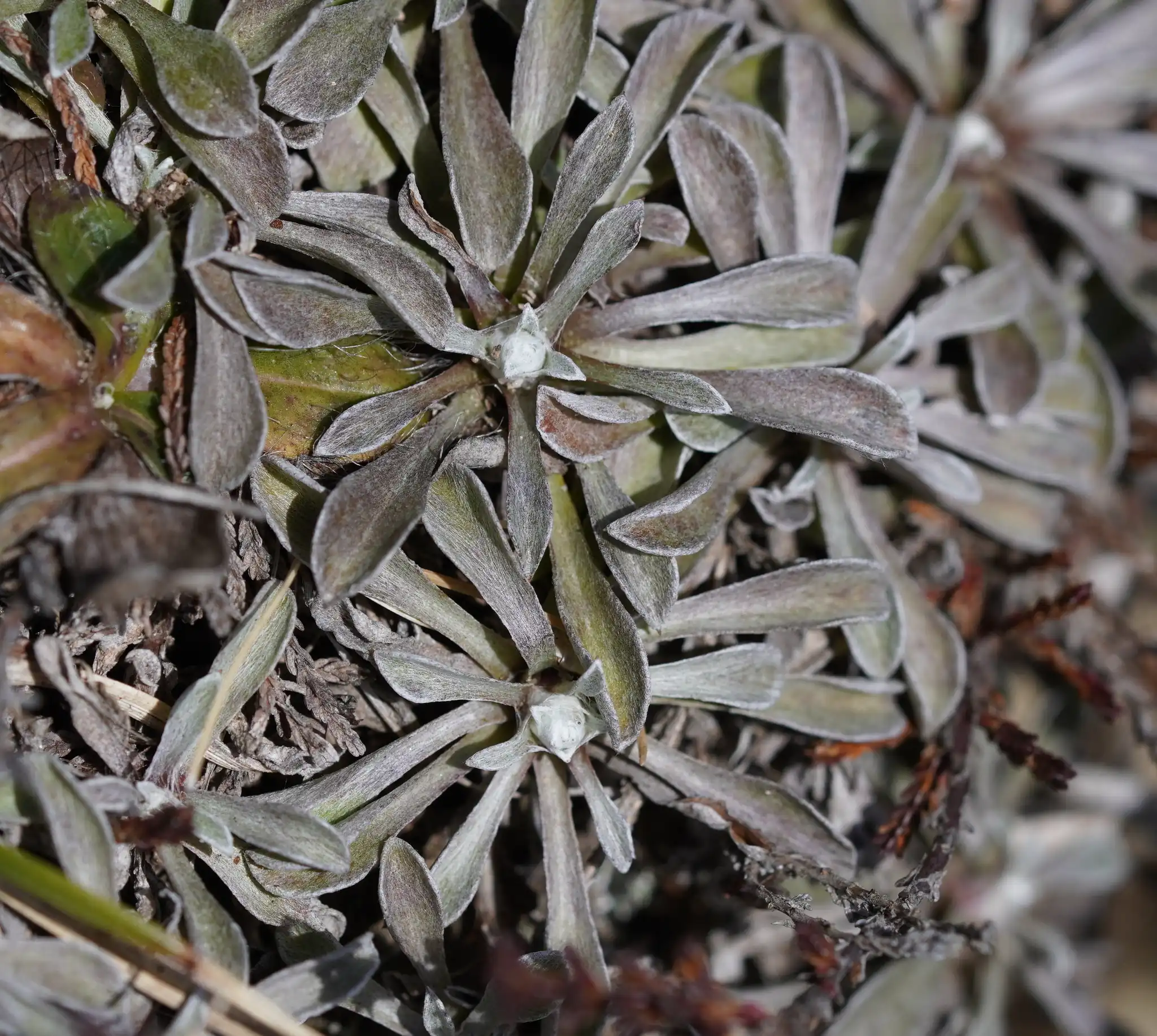
Antennaria dioica, the stoloniferous pussytoes, is a mat-forming herbaceous perennial from temperate Eurasia, rooting by stolons into a low evergreen carpet. Basal rosettes carry small spatulate leaves woolly-silvery beneath and green above, with smaller leaves spiralling up the stem.
Plants are dioecious, with male and female flower heads borne on separate clumps on erect stems to ten inches. Heads open white to pale pink in tight terminal corymbs in late spring to summer, the female heads rosier and more persistent than the males.
Uses & Benefits:
Essentials
At a Glance
Plant Type
Groundcover
Height
10"
Width
18"
Light
Full Sun
Zones
4, 5, 6, 7, 8
Water
Low; dry to medium
Humidity
Low; needs cool, airy summers
Lifespan
Perennial, evergreen mat
Native To
Temperate Eurasia to Aleutian Islands, Alaska
Toxicity
Non-toxic; may trigger allergy in Asteraceae-sensitive people
Bloom period
Late spring – Summer
In flower about 4 months of the year
Planting
How to Grow
- Plant in full sun in lean, gritty, sharply drained soil.
- Space rosettes 9 to 12 inches apart and water in once to settle.
- Withhold fertilizer and extra water once rooted; let soil dry between waterings.
- Pull weeds and remove spent flower stems to keep the mat dense.
Pro Tip
Plant lean and leave it alone; rich soil and summer watering rot the crown where gritty, starved soil keeps it tight.
Keep It Thriving
Care Guide
Do
- Grow in full sun with sharp drainage.
- Use poor, gritty or calcareous soil.
- Divide congested mats in spring to renew spread.
Don't
- Do not enrich soil or apply fertilizer.
- Do not overwater or plant in clay that holds winter wet.
- Do not expect it to persist where summers stay hot and humid without cool nights and airflow.
Seasonal Care Calendar
| Task | Jan | Feb | Mar | Apr | May | Jun | Jul | Aug | Sep | Oct | Nov | Dec |
|---|---|---|---|---|---|---|---|---|---|---|---|---|
| Divide | ||||||||||||
| Pest Check | ||||||||||||
| Plant | ||||||||||||
| Spring Cleanup |
Watch Out For
Pests & Diseases
Common Pests
Common Diseases
In the Garden
Landscape Uses & Companions
Landscape Uses
Companion Plants
Multiply
Propagation Methods
Good to Know
Common Questions
Pussytoes questions
What zones can Pussytoes grow in?
Pussytoes is hardy in USDA Zones 4–8: in that range it survives winter in the ground. Warmer than Zone 8, winter isn't the problem: it prefers colder winters, and summer heat can shorten its life.
When does Pussytoes bloom?
Pussytoes typically blooms from late spring to late summer. Exact timing shifts a week or two with your zone — Sow's bloom calendar maps it to your garden.
Does Pussytoes need full sun?
Pussytoes does best in full sun (6+ hours).
Is Pussytoes drought tolerant?
Yes — once established (usually after the first full season), Pussytoes handles dry spells with minimal watering. Water deeply its first year to build the root system that makes that possible.
More Antennaria to compare
Keep exploring
Explore the genus
Hardy in your zone?
Grow Pussytoes with confidence
See it in a design of your actual yard, get zone-matched care reminders, and track it season by season in your garden journal.