The Story
Plant Bio
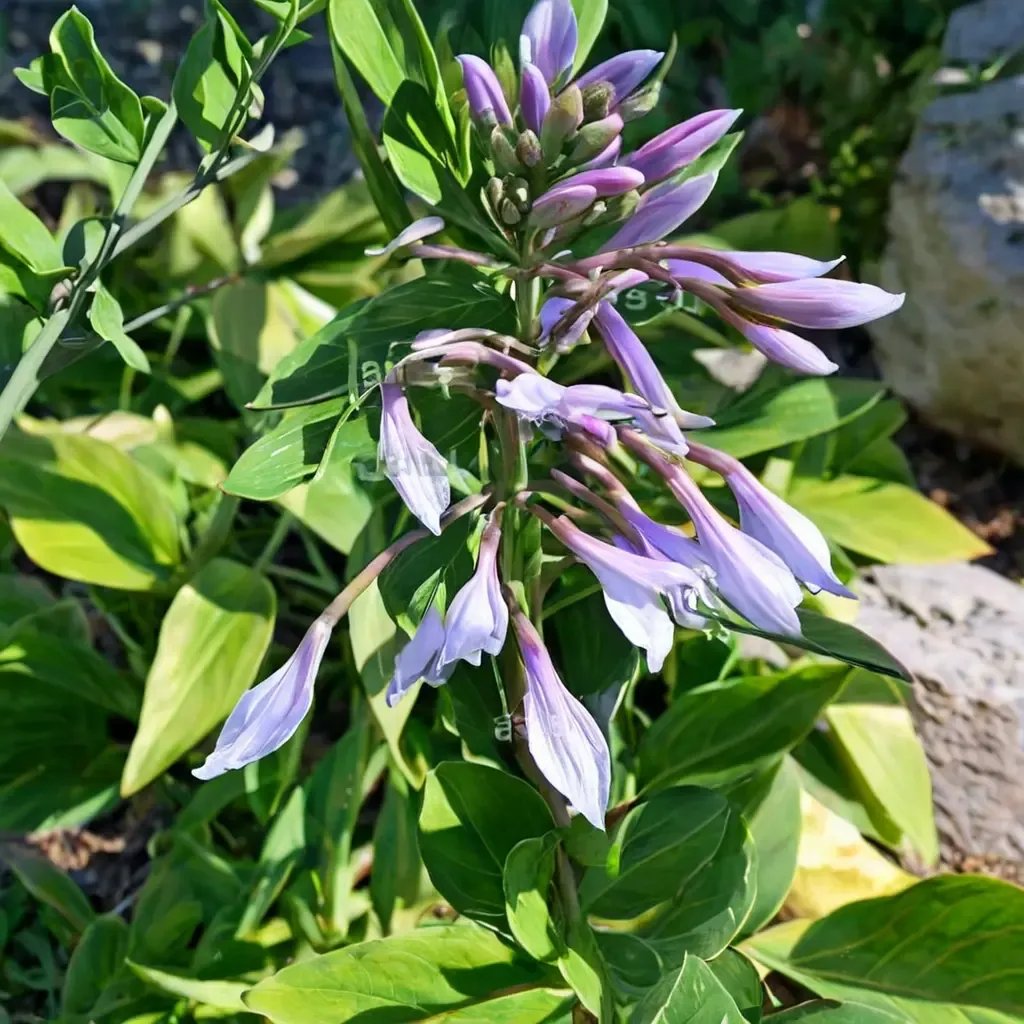
A vigorous, clump-forming perennial grown for its dense mound of attractive, lance-shaped, wavy-margined, glossy green leaves. It is a reliable and popular choice for shady gardens and groundcover.
Native to Japan. Valued for its late-season bloom of lavender, funnel-shaped flowers which attract hummingbirds. Spreads by rhizomes to form a dense groundcover.
Uses & Benefits:
Essentials
At a Glance
Plant Type
Perennial
Height
18"
Width
24"
Light
Partial Sun, Shade
Zones
4, 5, 6, 7, 8
Water
Moderate
Humidity
Prefers moist, humid environments
Lifespan
Perennial
Native To
Japan
Toxicity
Toxic to dogs, cats, and horses
Bloom period
Late Summer – Late summer
In flower about 1 month of the year
Planting
How to Grow
- Choose a shaded location with rich, well-draining soil.
- Tuck young plants into the ground in early spring after the last frost.
- Water consistently to keep soil moist but not waterlogged.
- Apply a layer of mulch to retain moisture and suppress weeds.
- Fertilize in early spring with a balanced, slow-release fertilizer.
- Divide clumps every 3-4 years in early spring or fall for vigorous growth.
Pro Tip
Ensure adequate shade and moisture for lush foliage and healthy growth.
Keep It Thriving
Care Guide
Do
- Water regularly to keep soil moist 🌱
- Mulch to retain soil moisture and regulate temperature
- Divide plants to promote vigor and prevent crowding
- Fertilize in spring with a balanced fertilizer
- Remove dead or damaged leaves for a tidy appearance
Don't
- Avoid excessive sunlight which can scorch leaves ❌
- Don’t let soil dry out completely
- Avoid heavy fertilization that can cause weak stems
- Don’t transplant during peak flowering
- Avoid poor drainage which can lead to root rot
Seasonal Care Calendar
| Task | Jan | Feb | Mar | Apr | May | Jun | Jul | Aug | Sep | Oct | Nov | Dec |
|---|---|---|---|---|---|---|---|---|---|---|---|---|
| Divide | ||||||||||||
| Fertilize | ||||||||||||
| Mulch | ||||||||||||
| Pest Check | ||||||||||||
| Plant | ||||||||||||
| Spring Cleanup |
Watch Out For
Pests & Diseases
Common Pests
Common Diseases
In the Garden
Landscape Uses & Companions
Landscape Uses
Companion Plants
Multiply
Propagation Methods
Good to Know