The Story
Plant Bio
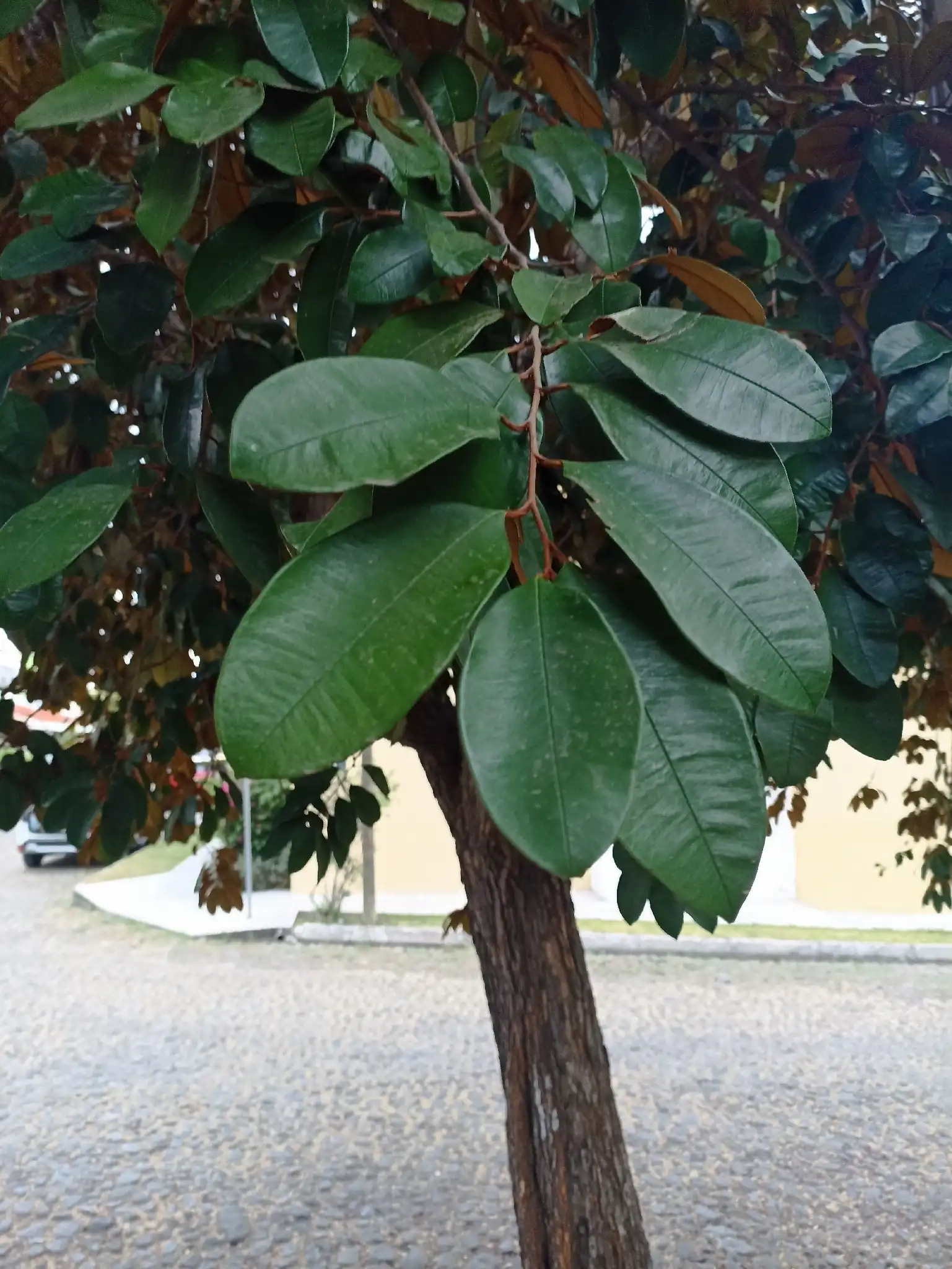
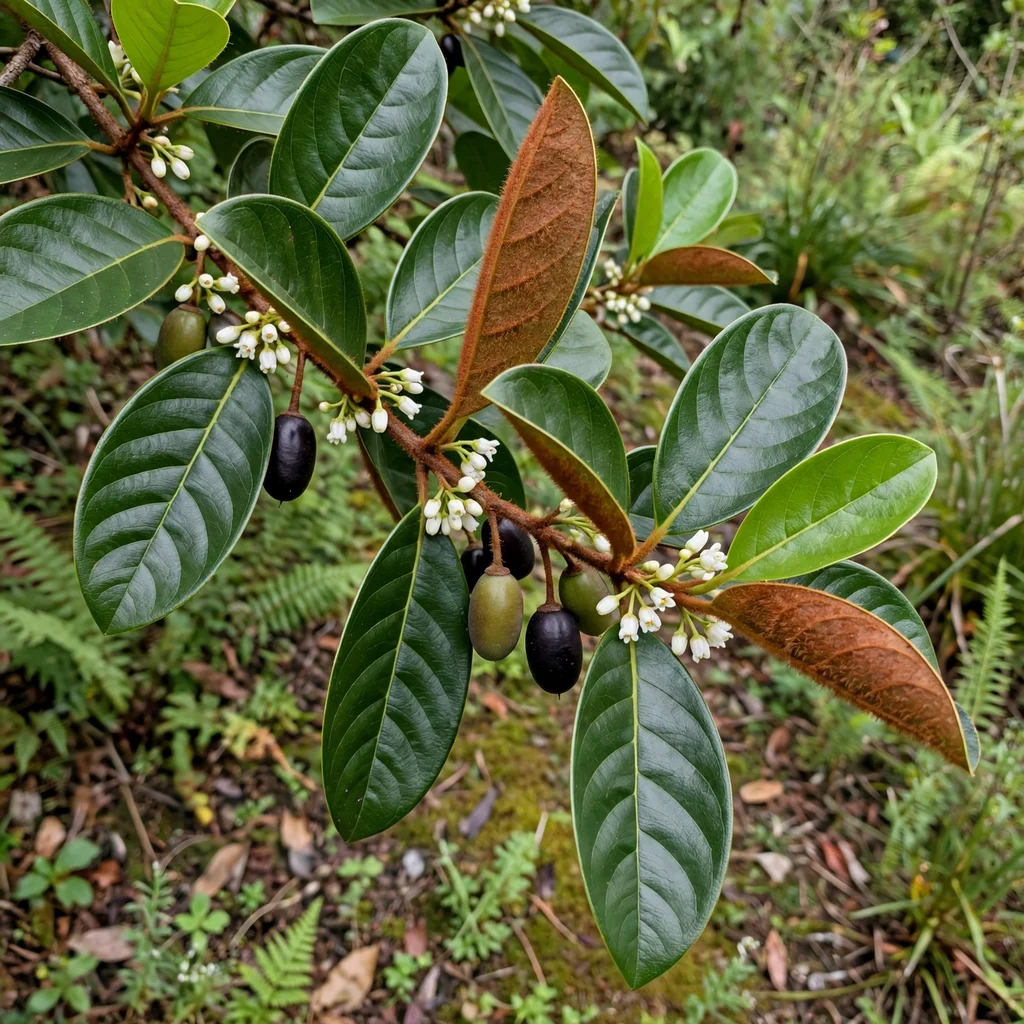
Chrysophyllum cainito, commonly known as the star apple or caimito, is a fast-growing tropical evergreen tree reaching thirty to fifty feet tall with a dense, rounded canopy. Its elliptic, leathery leaves are glossy dark green above and coated in a silky, golden-brown wool beneath that shimmers strikingly in the wind.
Insignificant clusters of small, fragrant cream-colored flowers yield round purple or green fruits that reveal a star-shaped pulp pattern when sliced horizontally. The sweet, milky flesh is eaten fresh when completely ripe, while the seeds contain cyanogenic glycosides and must be discarded.
Uses & Benefits:
Essentials
At a Glance
Plant Type
Tree
Height
480"
Width
360"
Light
Full Sun, Partial Sun
Zones
10
Water
Moderate
Humidity
High
Lifespan
20-50 years
Native To
Neotropical Americas
Toxicity
Seeds contain cyanogenic glycosides
Bloom period
Spring – Summer
In flower about 6 months of the year
Planting
How to Grow
- Select a full-sun site with fertile, well-drained loam protected from strong winds and frost.
- Dig a hole twice as wide as the container, planting the stem at its original nursery depth.
- Water regularly during the initial year to establish a deep, resilient root system.
- Prune main branches annually after harvesting fruit to keep the canopy reachable for picking.
Pro Tip
Plant grafted trees rather than seedlings to secure earlier fruiting and high crop quality, and ensure the planting location remains completely free of frost.
Keep It Thriving
Care Guide
Do
- Plant in rich, well-draining soil with a neutral to slightly acidic pH.
- Water deeply during periods of extended dry weather while fruit is developing.
- Protect young trees from cool breezes and any risk of frost.
Don't
- Do not allow young trees to experience temperatures below thirty degrees Fahrenheit.
- Do not plant in highly alkaline soil, which induces foliage chlorosis.
- Do not eat unripe fruit, as the milky latex inside is sticky and astringent.
Seasonal Care Calendar
| Task | Jan | Feb | Mar | Apr | May | Jun | Jul | Aug | Sep | Oct | Nov | Dec |
|---|---|---|---|---|---|---|---|---|---|---|---|---|
| Fertilize | ||||||||||||
| Harvest | ||||||||||||
| Mulch | ||||||||||||
| Pest Check | ||||||||||||
| Prune |
Watch Out For
Pests & Diseases
Common Pests
Common Diseases
In the Garden
Landscape Uses & Companions
Landscape Uses
Multiply
Propagation Methods
Good to Know
Common Questions
Star Apple questions
What zones can Star Apple grow in?
Star Apple is hardy in USDA Zone 10: in that range it survives winter in the ground. Colder than Zone 10, winters are too cold for it to survive outdoors.
When does Star Apple bloom?
Star Apple typically blooms from spring to summer. Exact timing shifts a week or two with your zone — Sow's bloom calendar maps it to your garden.
Does Star Apple need full sun?
Star Apple does best in full sun to part shade. In hot climates, afternoon shade keeps blooms fresher longer.
Is Star Apple drought tolerant?
Yes — once established (usually after the first full season), Star Apple handles dry spells with minimal watering. Water deeply its first year to build the root system that makes that possible.
More Chrysophyllum to compare
Keep exploring
Explore the genus
Hardy in your zone?
Grow Star Apple with confidence
See it in a design of your actual yard, get zone-matched care reminders, and track it season by season in your garden journal.