The Story
Plant Bio
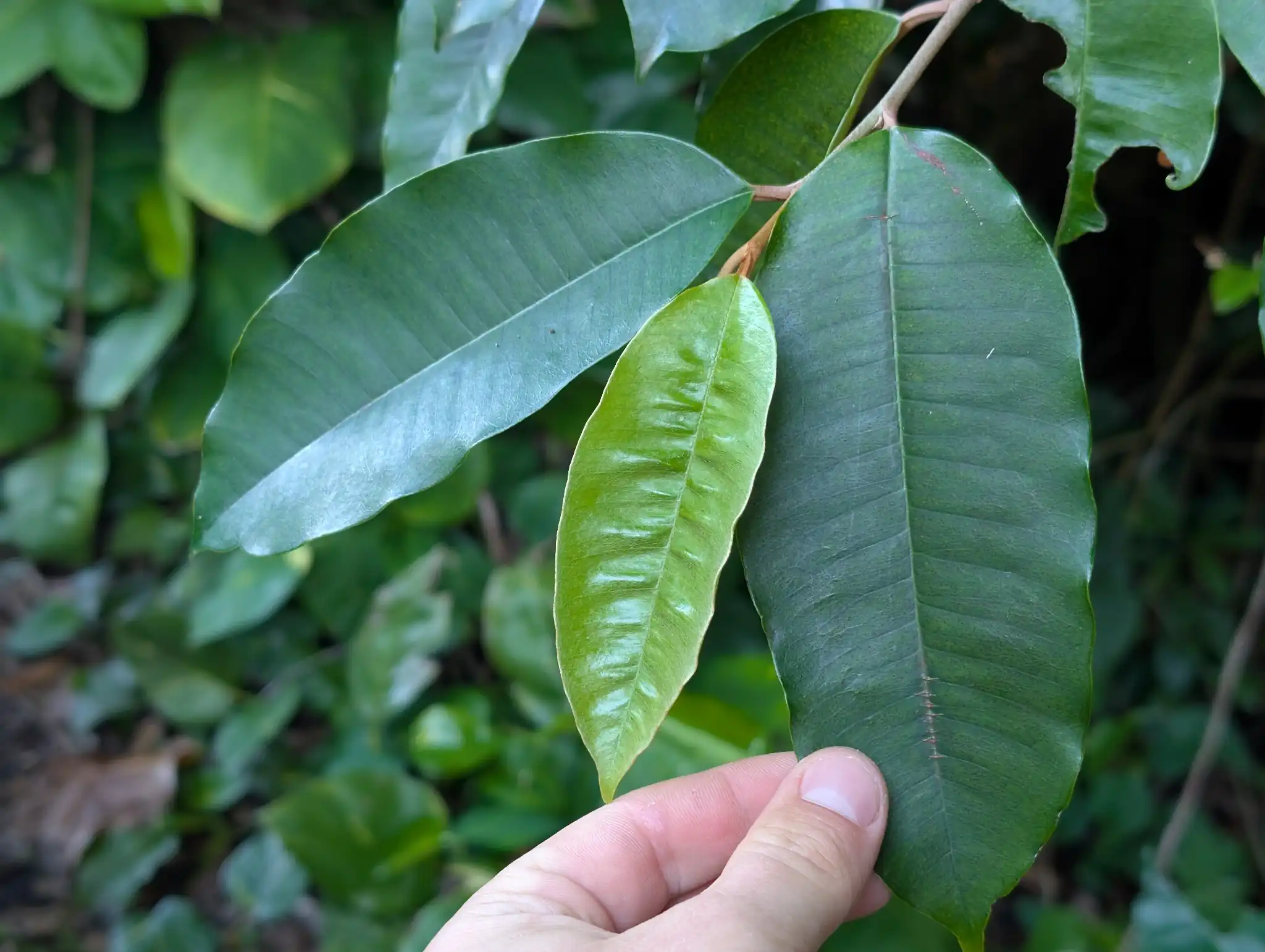
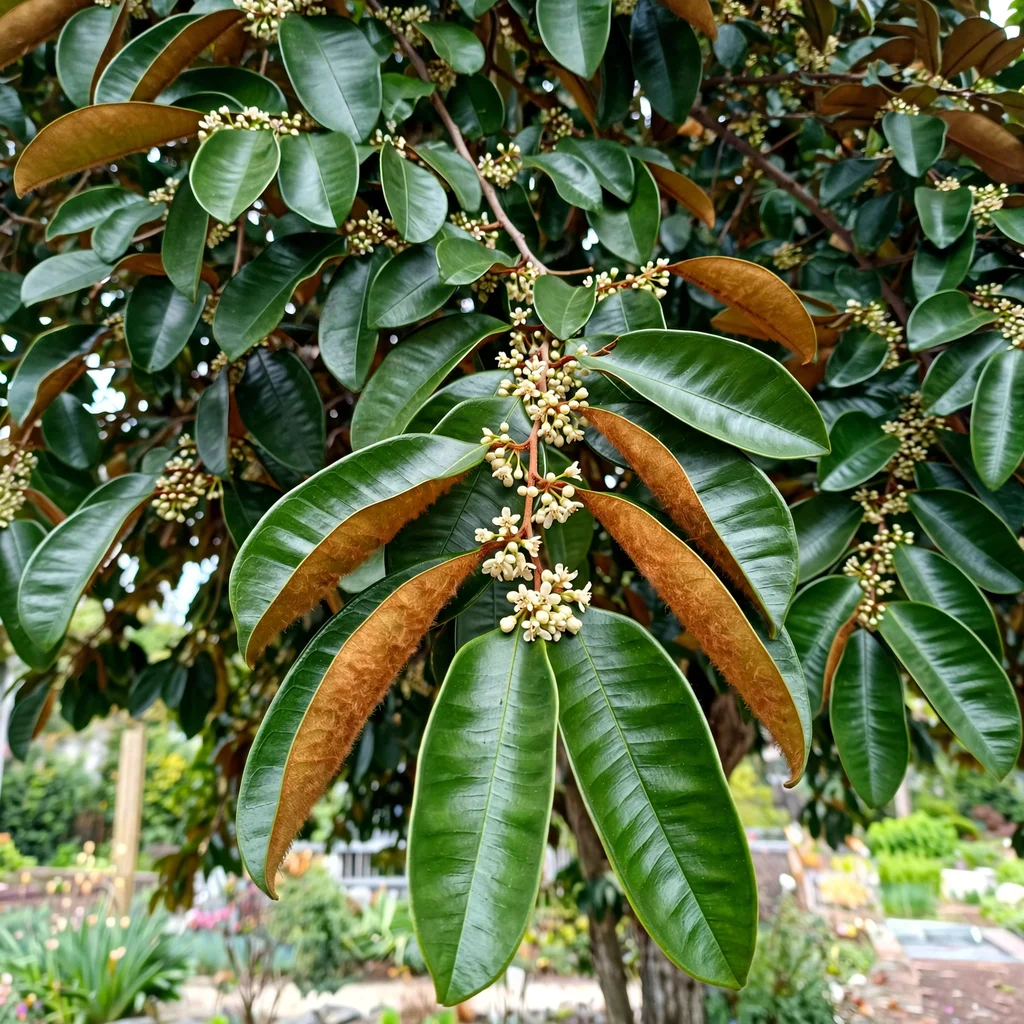
Chrysophyllum oliviforme is a medium evergreen tree reaching 35 to 45 feet tall and 18 to 25 feet wide, with a symmetrical oval crown, drooping branches and a single trunk with reddish-brown scaly bark. The alternate elliptic leaves are 1 to 5 inches long with pinnate veins and form a moderately dense canopy.
What sets satinleaf apart is its two-toned foliage, glossy dark green above and densely copper-haired beneath, so the crown flashes green and rust when wind lifts the leaves. Small bell-shaped white flowers borne singly or in clusters in the leaf axils open through the year and mature to olive-shaped 3/4-inch fleshy drupes that ripen from green to purple-black with sweet pulp and milky sap.
Uses & Benefits:
Essentials
At a Glance
Plant Type
Tree
Height
540"
Width
300"
Light
Full Sun, Partial Sun
Zones
10
Water
Medium
Humidity
Unknown
Lifespan
Long-lived tree
Native To
South Florida, Caribbean and Mexico
Toxicity
Unknown - milky sap; fruit edible when ripe
Bloom period
Year round
In flower about 12 months of the year
Planting
How to Grow
- Plant in full sun to partial shade in fertile, well-drained sand, loam or clay that stays moist after establishment.
- Set the root ball level with the grade, backfill with native soil and spread a 2- to 3-inch mulch ring kept clear of the trunk.
- Water faithfully through the first year, then taper off; established trees handle drought but hold canopy better with deep watering in dry spells.
- Prune in late winter to keep a single leader and strong branch attachments; wood is breakage-resistant once structure is set.
Pro Tip
Train to a single leader when young and then leave it alone; regrowth is slow and hard pruning leaves a thin crown for years.
Keep It Thriving
Care Guide
Do
- Mulch and water through establishment even though mature trees tolerate drought.
- Prune young trees for a single trunk and wide branch angles.
- Leave ripe fruit for birds or harvest fully purple-black for fresh eating.
Don't
- Do not plant where temperatures fall to 32F; foliage and twigs are severely damaged by frost.
- Do not cut back into old bare wood for size control; this slow grower fills in poorly.
- Do not let lawn equipment wound the scaly bark on the single trunk.
Seasonal Care Calendar
| Task | Jan | Feb | Mar | Apr | May | Jun | Jul | Aug | Sep | Oct | Nov | Dec |
|---|---|---|---|---|---|---|---|---|---|---|---|---|
| Mulch | ||||||||||||
| Pest Check | ||||||||||||
| Plant | ||||||||||||
| Propagate | ||||||||||||
| Prune |
Watch Out For
Pests & Diseases
Common Pests
In the Garden
Landscape Uses & Companions
Landscape Uses
Multiply
Propagation Methods
Good to Know
Common Questions
Satinleaf questions
What zones can Satinleaf grow in?
Satinleaf is hardy in USDA Zone 10: in that range it survives winter in the ground. Colder than Zone 10, winters are too cold for it to survive outdoors.
When does Satinleaf bloom?
Satinleaf typically blooms year-round. Exact timing shifts a week or two with your zone — Sow's bloom calendar maps it to your garden.
Does Satinleaf need full sun?
Satinleaf does best in full sun to part shade. In hot climates, afternoon shade keeps blooms fresher longer.
Is Satinleaf drought tolerant?
Yes — once established (usually after the first full season), Satinleaf handles dry spells with minimal watering. Water deeply its first year to build the root system that makes that possible.
More Chrysophyllum to compare
Keep exploring
Explore the genus
Hardy in your zone?
Grow Satinleaf with confidence
See it in a design of your actual yard, get zone-matched care reminders, and track it season by season in your garden journal.