The Story
Plant Bio
Alpinia galanga is a clumping evergreen perennial in the ginger family, forming tight stands of leafy canes 4 to 6 feet tall from thick branching rhizomes. Each cane carries long lance-shaped leaves 12 to 15 inches long by 2 to 3 inches wide that smell sharp and gingery when crushed.
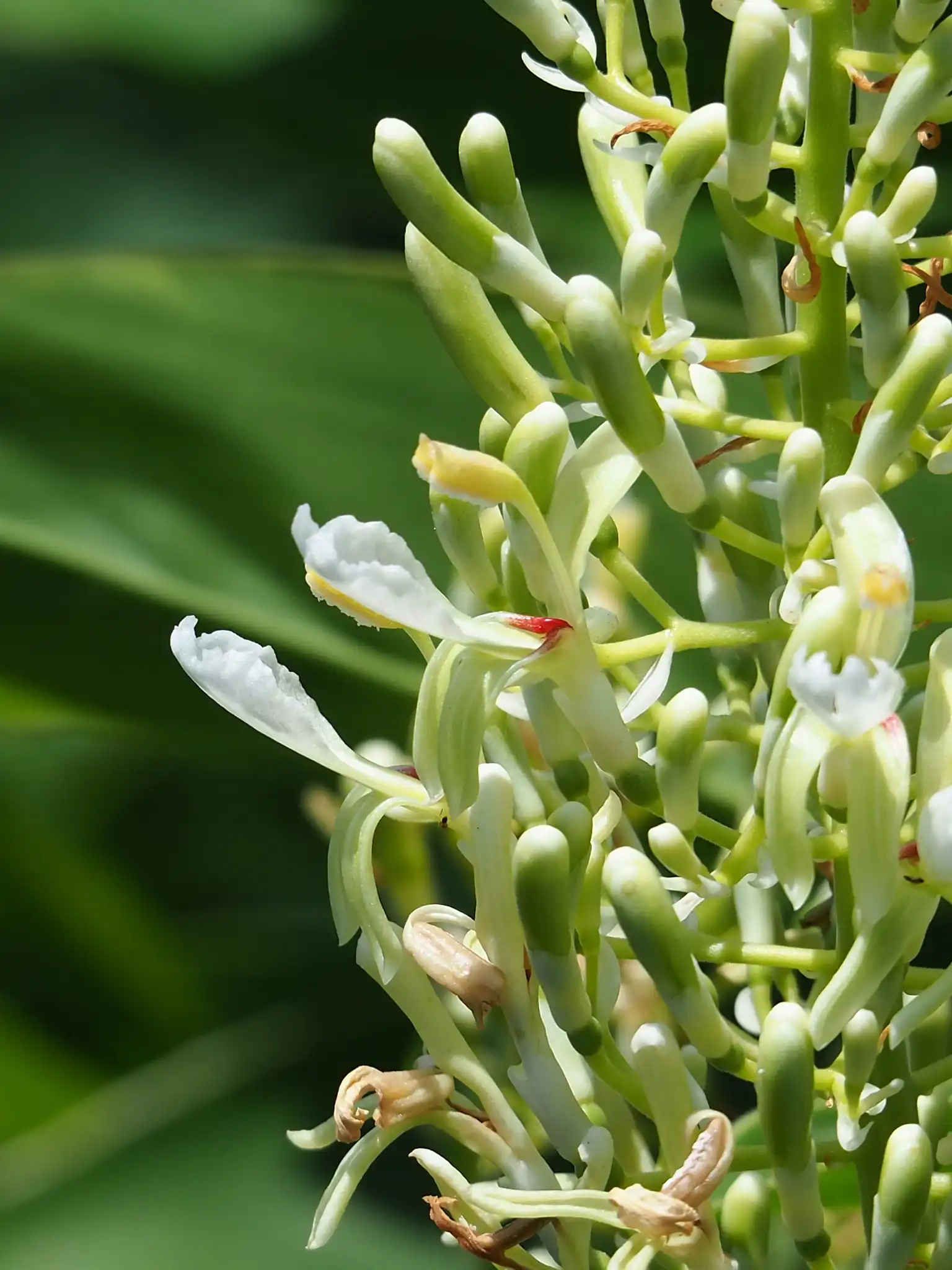
It flowers on an erect terminal spike of yellowish-white blooms veined red in the throat, followed by round capsules about half an inch wide that ripen green-yellow to red. The pale fleshy rhizome is the true culinary galangal for Thai curries, firmer and more pine-citrus than common ginger, which separates it from lesser galangal and sand ginger sold under the same name.
Uses & Benefits:
Essentials
At a Glance
Plant Type
Tropical
Height
72"
Width
48"
Light
Full Sun, Partial Sun
Water
Medium
Humidity
High
Lifespan
Tender perennial
Native To
South and Southeast Asia
Toxicity
Non-toxic
Bloom period
Summer
In flower about 3 months of the year
Planting
How to Grow
- Plant after last frost in full sun to part shade in moist organically rich well-drained soil.
- Set rhizome pieces 2 inches deep with buds up, 2 feet apart, and water in deeply.
- Water evenly through spring and summer to keep soil consistently moist but never soggy.
- Bring containers indoors before first frost to a bright spot above 60F and keep barely moist.
- Harvest from 1 to 2 year old clumps by lifting an edge and cutting rhizome, leaving part to regrow.
Pro Tip
Set the rhizome shallow with buds just covered and keep the crown out of standing water; cold wet soil rots the rhizome while the top still looks green.
Keep It Thriving
Care Guide
Do
- Water deeply and regularly in warm weather
- Grow in rich soil amended with compost
- Give afternoon shade in hot climates
- Lift or shelter before hard frost
Don't
- Do not plant in waterlogged soil
- Do not cut all canes to the ground each year
- Do not let pots freeze with wet mix
Seasonal Care Calendar
| Task | Jan | Feb | Mar | Apr | May | Jun | Jul | Aug | Sep | Oct | Nov | Dec |
|---|---|---|---|---|---|---|---|---|---|---|---|---|
| Harvest | ||||||||||||
| Lift Store | ||||||||||||
| Pest Check | ||||||||||||
| Plant | ||||||||||||
| Prune |
Watch Out For
Pests & Diseases
Common Pests
Common Diseases
In the Garden
Landscape Uses & Companions
Landscape Uses
Companion Plants
Multiply
Propagation Methods
Good to Know
Common Questions
Greater Galangal questions
When does Greater Galangal bloom?
Greater Galangal typically blooms in summer. Exact timing shifts a week or two with your zone — Sow's bloom calendar maps it to your garden.
Does Greater Galangal need full sun?
Greater Galangal does best in full sun to part shade. In hot climates, afternoon shade keeps blooms fresher longer.
More Alpinia to compare
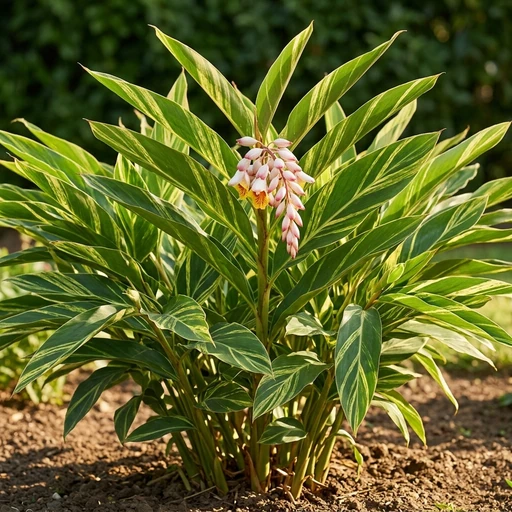
Variegated Shell Ginger
Alpinia zerumbet 'Variegata'
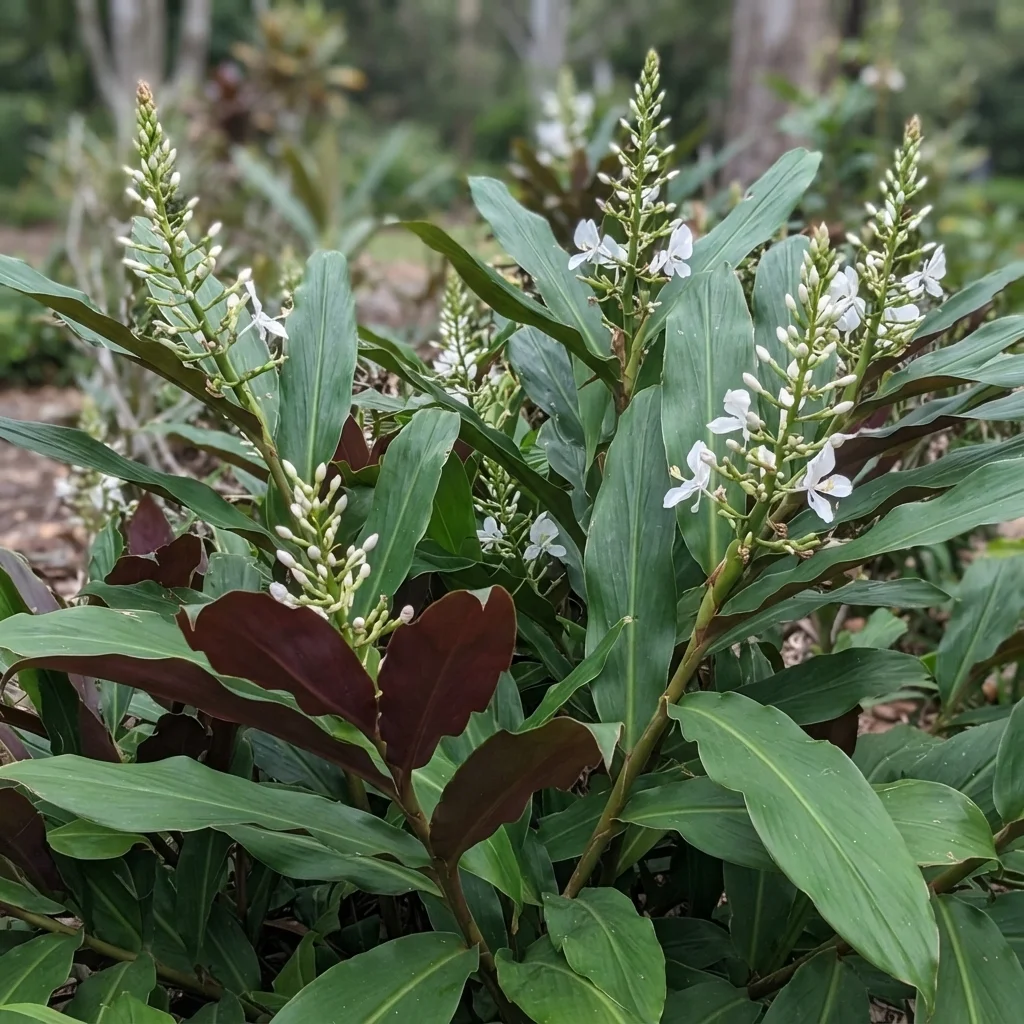
Native Ginger
Alpinia caerulea
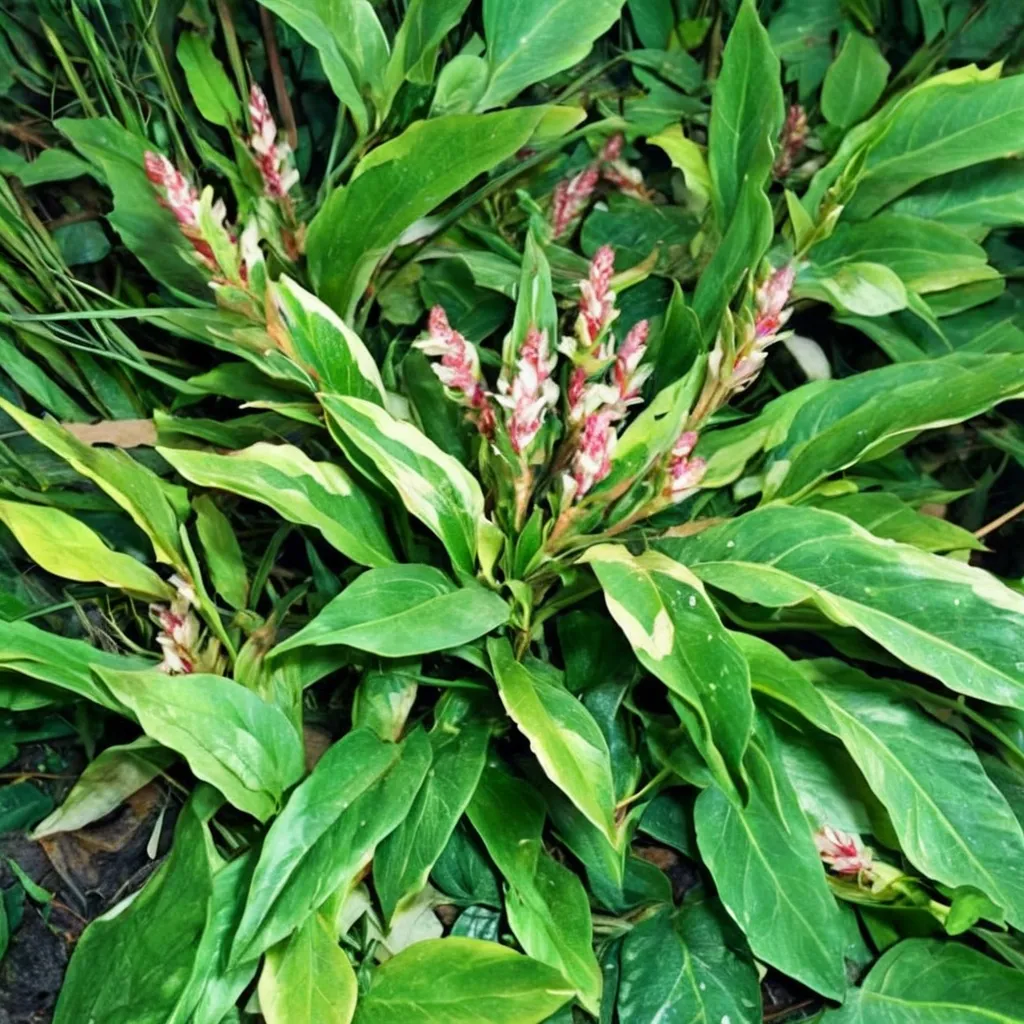
Japanese Ginger
Alpinia japonica
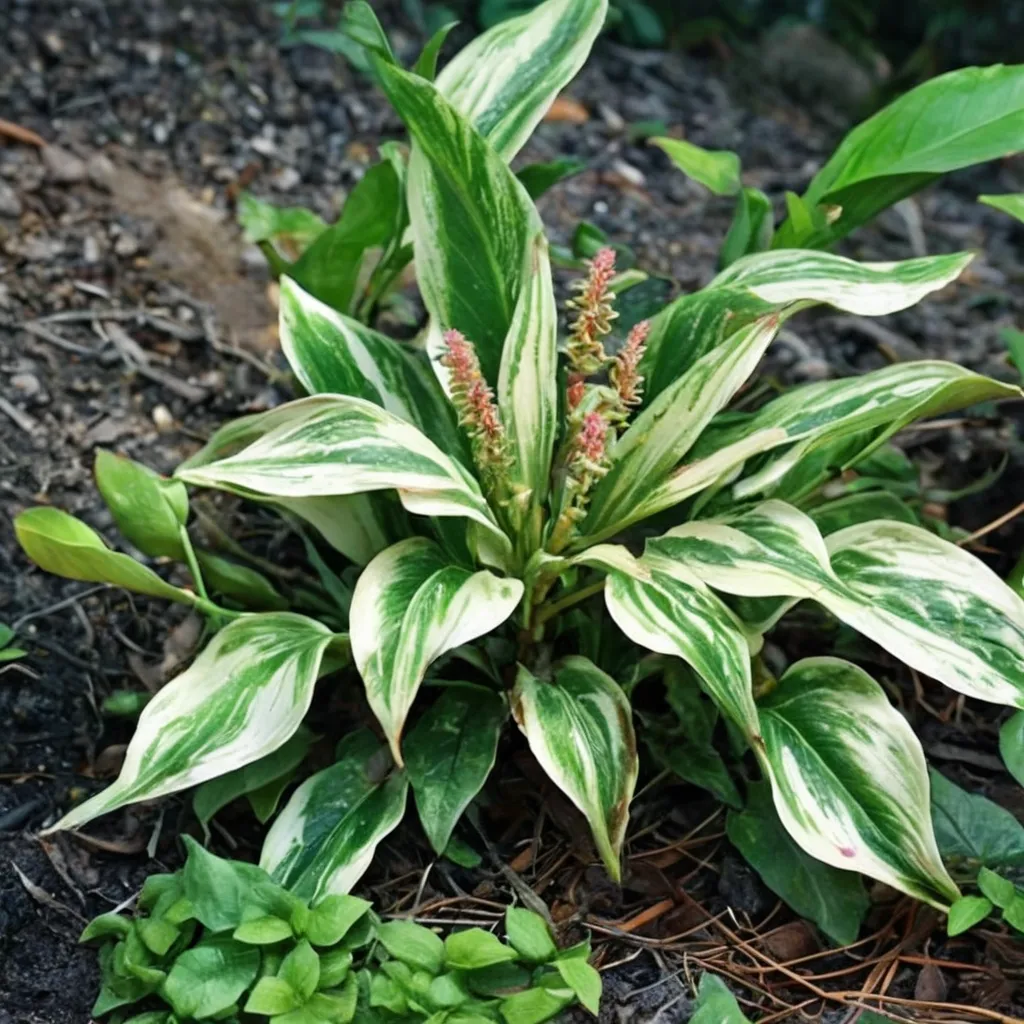
Extra Spicy Japanese Ginger
Alpinia japonica 'Extra Spicy'
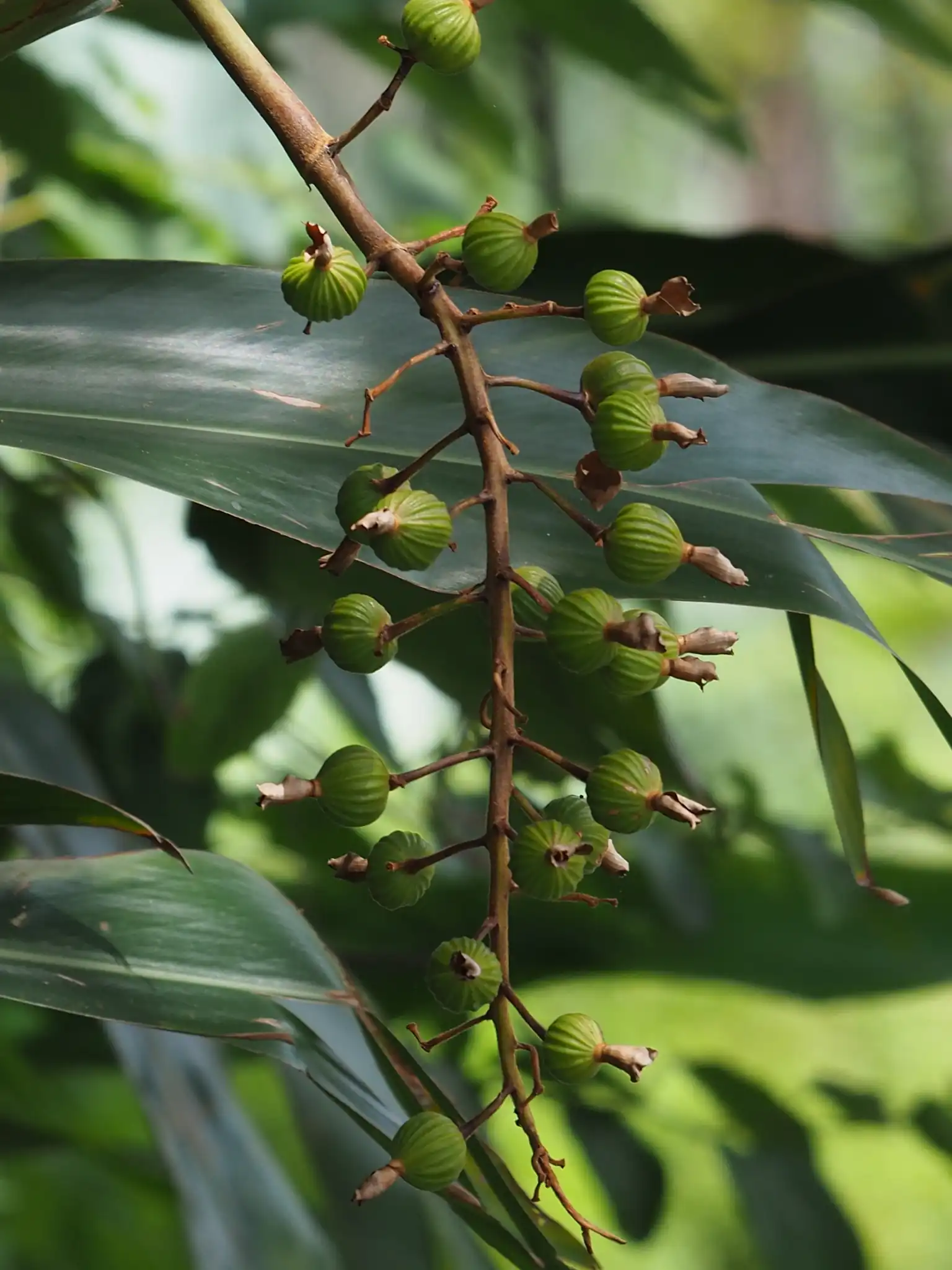
Shell Ginger
Alpinia zerumbet
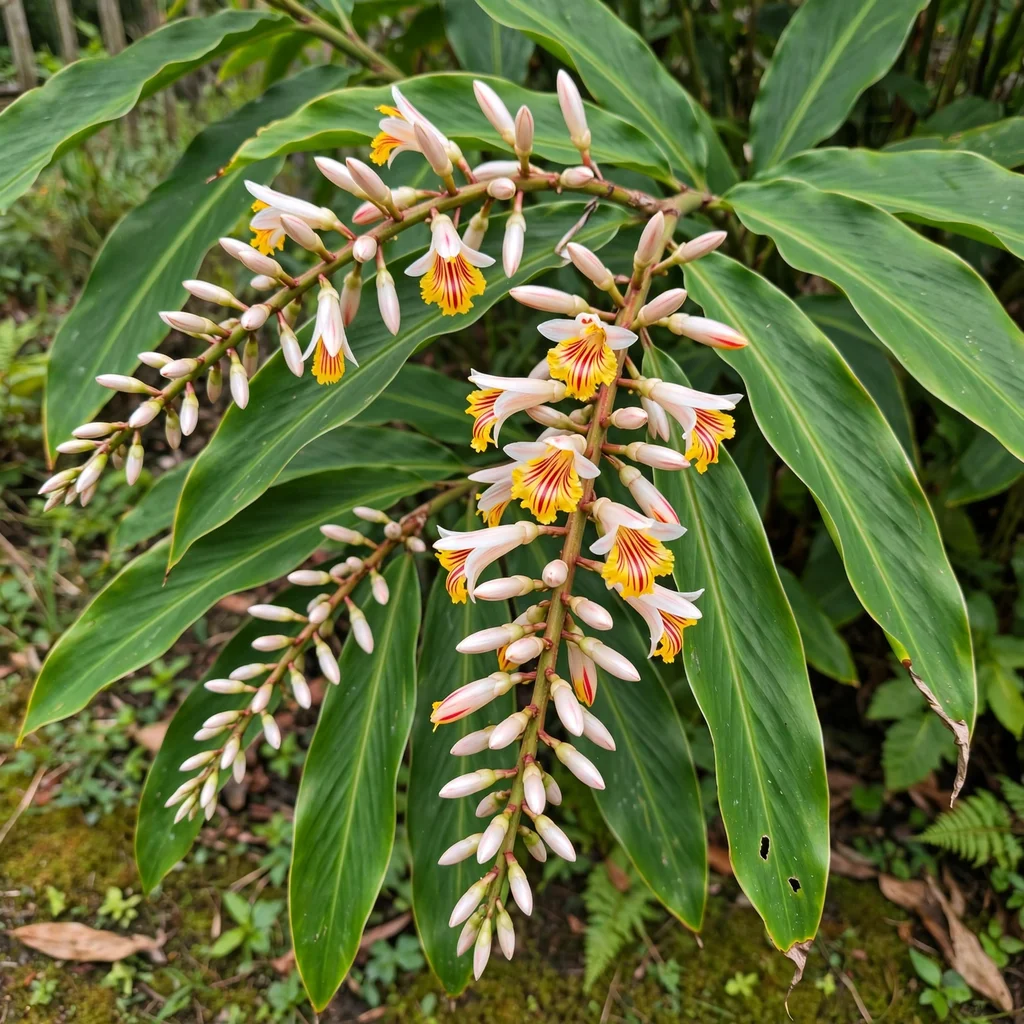
Pinstripe Ginger
Alpinia formosana
Keep exploring
Explore the genus
Grow Greater Galangal with confidence
See it in a design of your actual yard, get zone-matched care reminders, and track it season by season in your garden journal.