The Story
Plant Bio
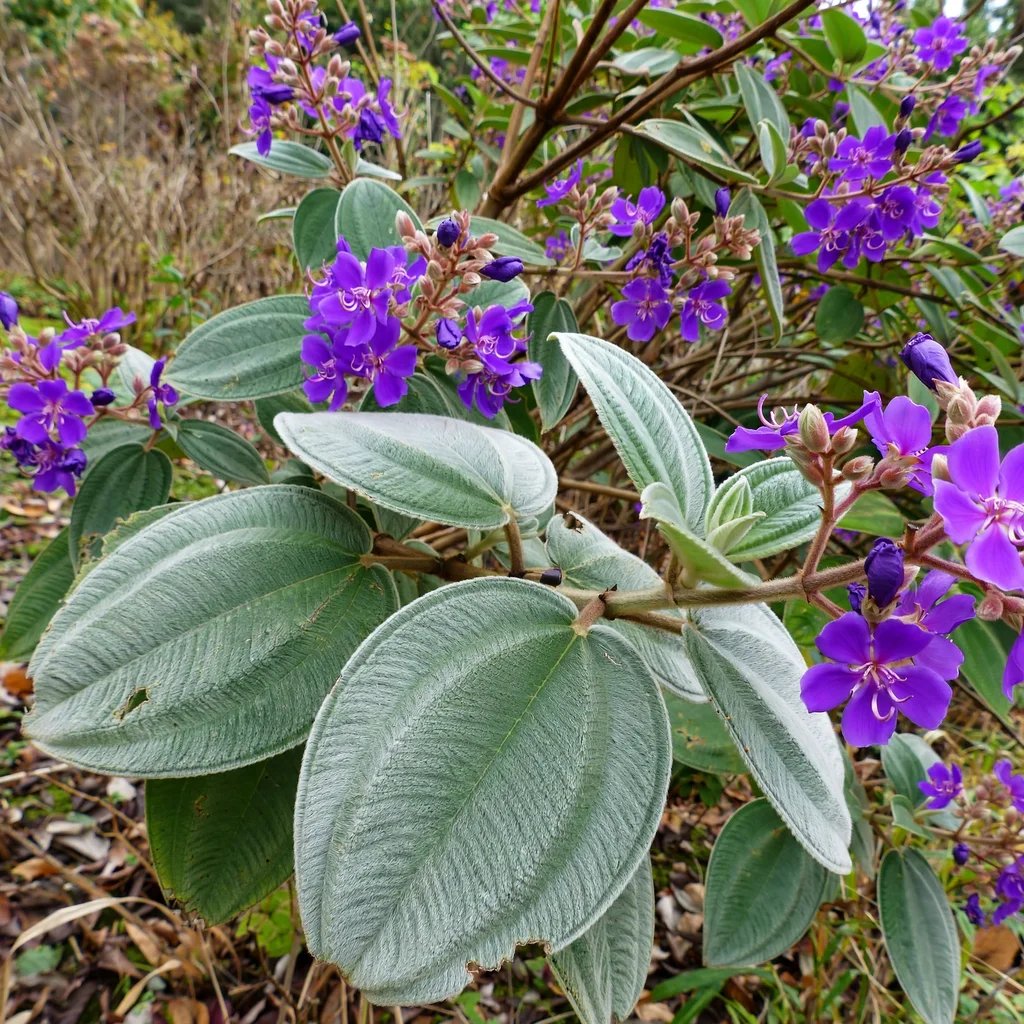
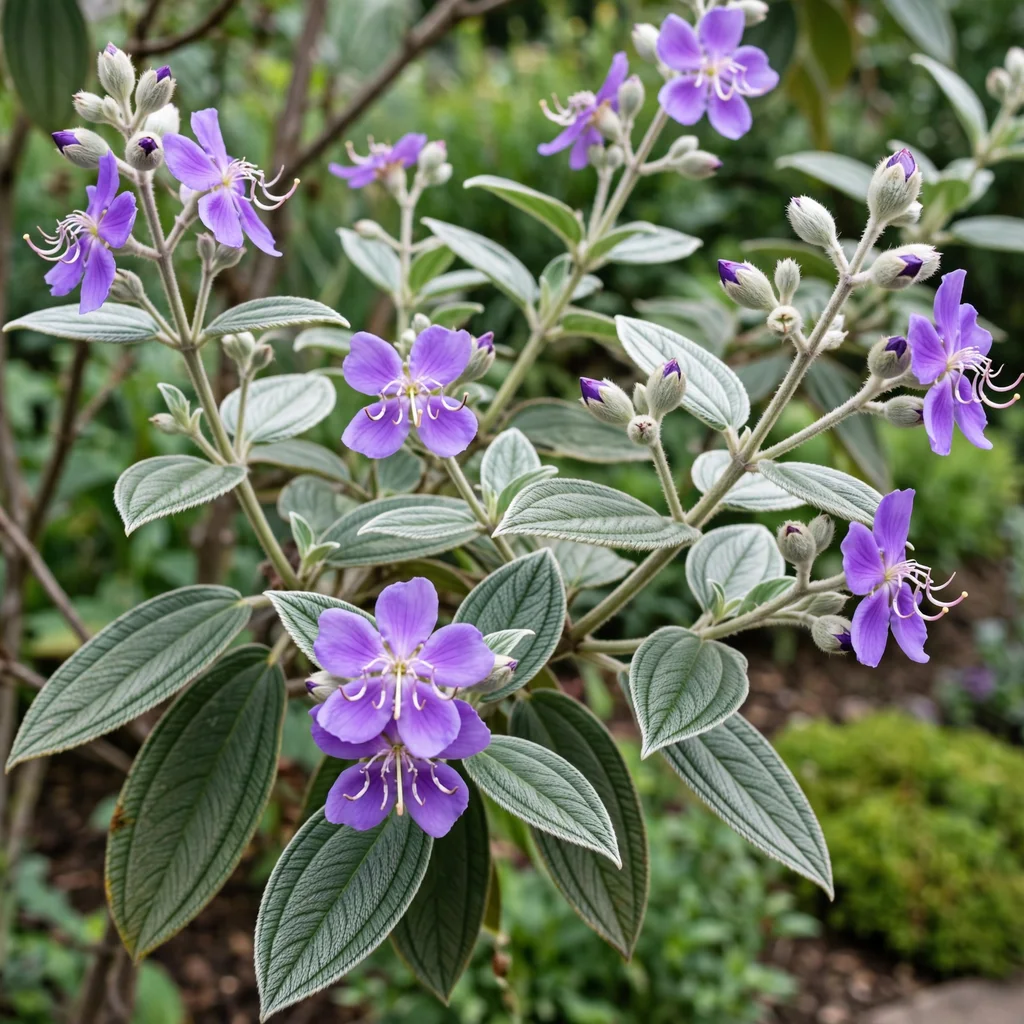
Tibouchina multiflora, now accepted as Pleroma heteromallum, is an evergreen large shrub to small tree from tropical South America with a branching habit that trains readily to a single trunk. The leaves are huge, gray-green and densely velvety to the touch, reaching 10 inches across and holding year-round where frost never comes.
Unlike Tibouchina urvilleana, this species carries small royal-purple blooms in upright clusters that open purple with a white center and fade through lavender-pink to red over several days. The result is one spray showing three colors at once, borne from fall into winter in frost-free gardens when grown in full sun.
Uses & Benefits:
Essentials
At a Glance
Plant Type
Shrub
Height
120"
Width
72"
Light
Full Sun, Partial Sun, Shade
Zones
10
Water
Moderate
Humidity
Likes warm humidity
Lifespan
Long-lived shrub
Native To
Brazil, Bolivia, French Guiana
Toxicity
Non-toxic
Bloom period
Autumn – Winter
In flower about 6 months of the year
Planting
How to Grow
- Set out after last frost in full sun for best flowering, with light shade tolerated in hot spots.
- Plant in well-draining mix with organic matter dug in, letting the top dry between waterings.
- Water steadily the first two years to establish, then reduce; established plants handle dry spells.
- Prune very hard in late winter and train to a single trunk if a tree form is wanted.
- Grow outdoors only in USDA 10a-11; elsewhere overwinter in a bright frost-free container.
Pro Tip
Cut back very hard in late winter to keep it compact; left alone it grows wide and leggy and flowers poorly.
Keep It Thriving
Care Guide
Do
- Give full sun for heaviest bloom
- Prune hard every late winter
- Propagate from soft-tip cuttings
Don't
- Do not leave unpruned to sprawl
- Do not plant outdoors where frost occurs
- Do not keep soil constantly soggy
Seasonal Care Calendar
| Task | Jan | Feb | Mar | Apr | May | Jun | Jul | Aug | Sep | Oct | Nov | Dec |
|---|---|---|---|---|---|---|---|---|---|---|---|---|
| Mulch | ||||||||||||
| Pest Check | ||||||||||||
| Plant | ||||||||||||
| Prune | ||||||||||||
| Winter Prep |
Watch Out For
Pests & Diseases
Common Pests
Common Diseases
In the Garden
Landscape Uses & Companions
Landscape Uses
Companion Plants
Multiply
Propagation Methods
Good to Know
Common Questions
Glory Bush questions
What zones can Glory Bush grow in?
Glory Bush is hardy in USDA Zone 10: in that range it survives winter in the ground. Colder than Zone 10, grow it in a container you can move to shelter for the winter.
When does Glory Bush bloom?
Glory Bush typically blooms from fall to winter. Exact timing shifts a week or two with your zone — Sow's bloom calendar maps it to your garden.
Does Glory Bush need full sun?
Glory Bush does best in full sun to part shade. In hot climates, afternoon shade keeps blooms fresher longer.
Is Glory Bush drought tolerant?
Yes — once established (usually after the first full season), Glory Bush handles dry spells with minimal watering. Water deeply its first year to build the root system that makes that possible.
More Tibouchina to compare
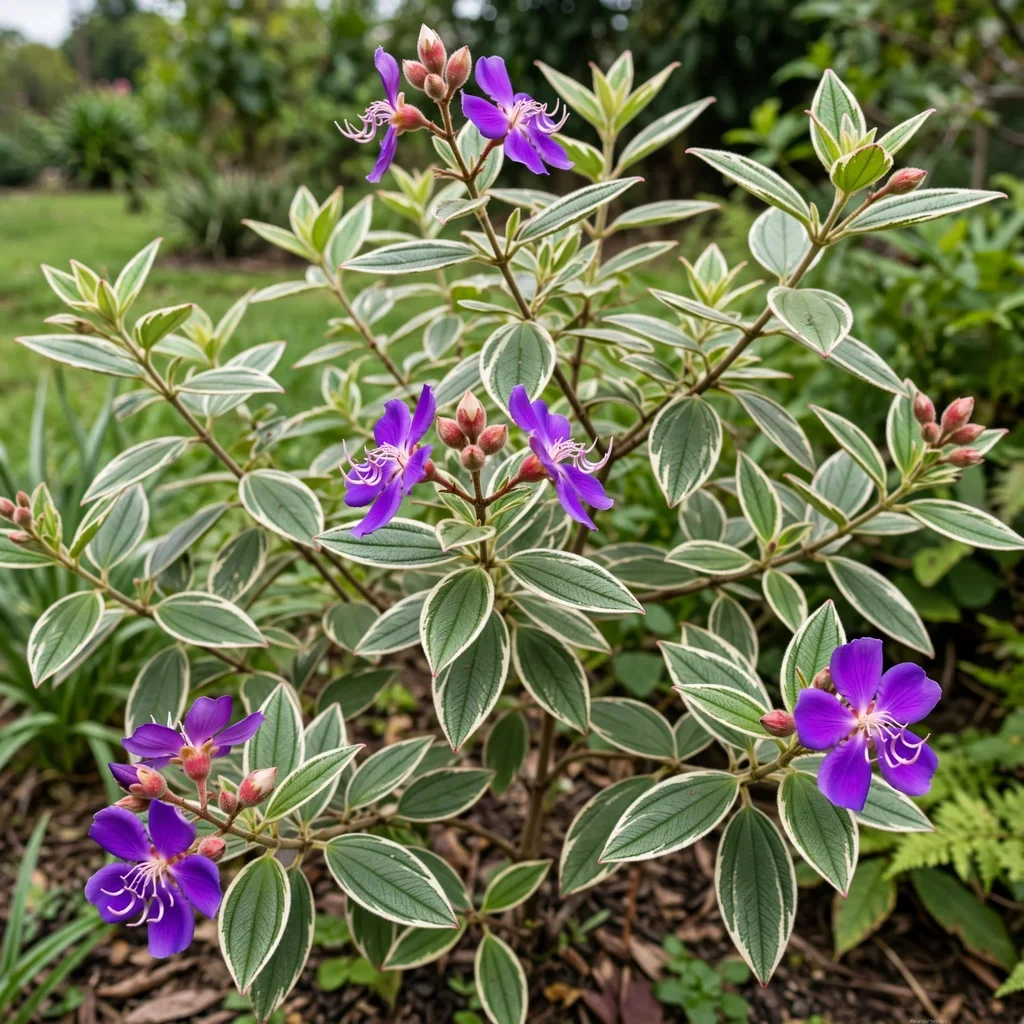
Variegated Princess Flower
Tibouchina urvilleana 'Variegata'
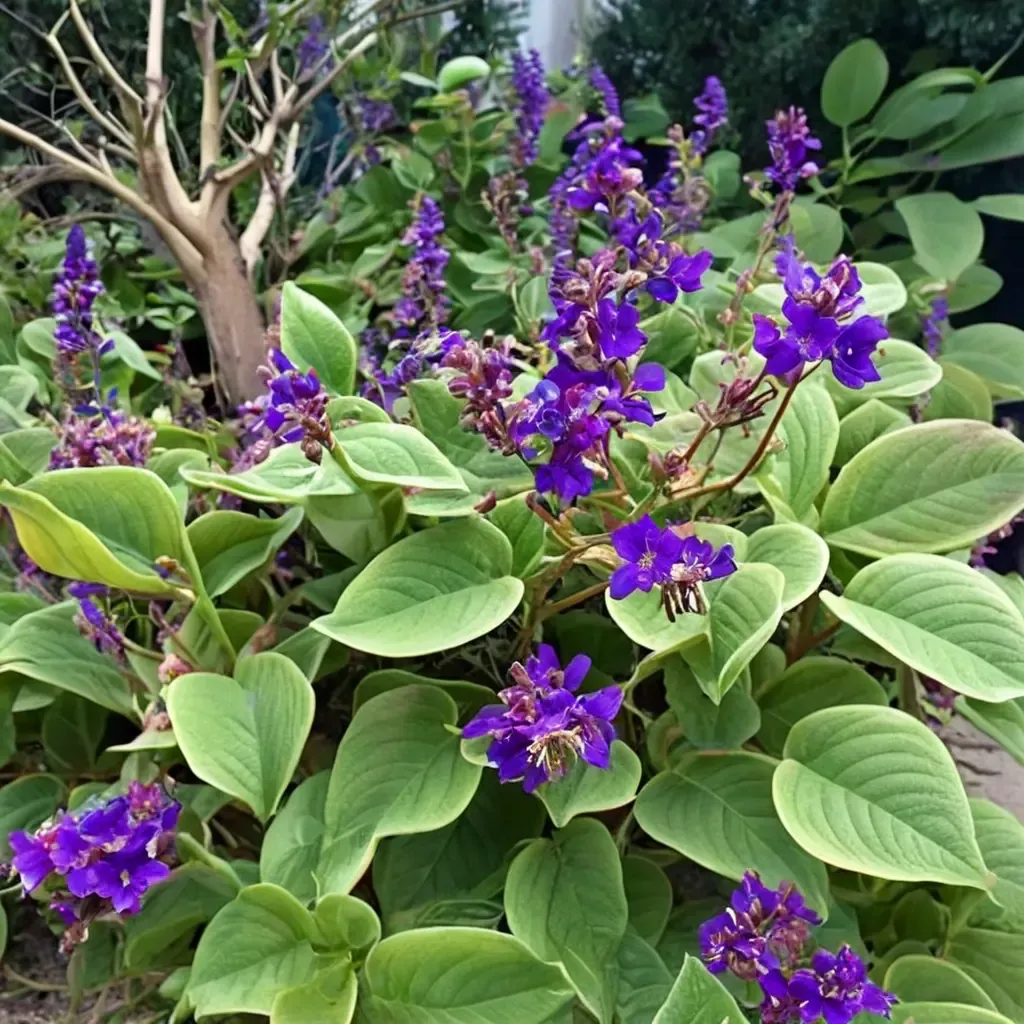
Silverleaf Princess Flower
Tibouchina heteromalla
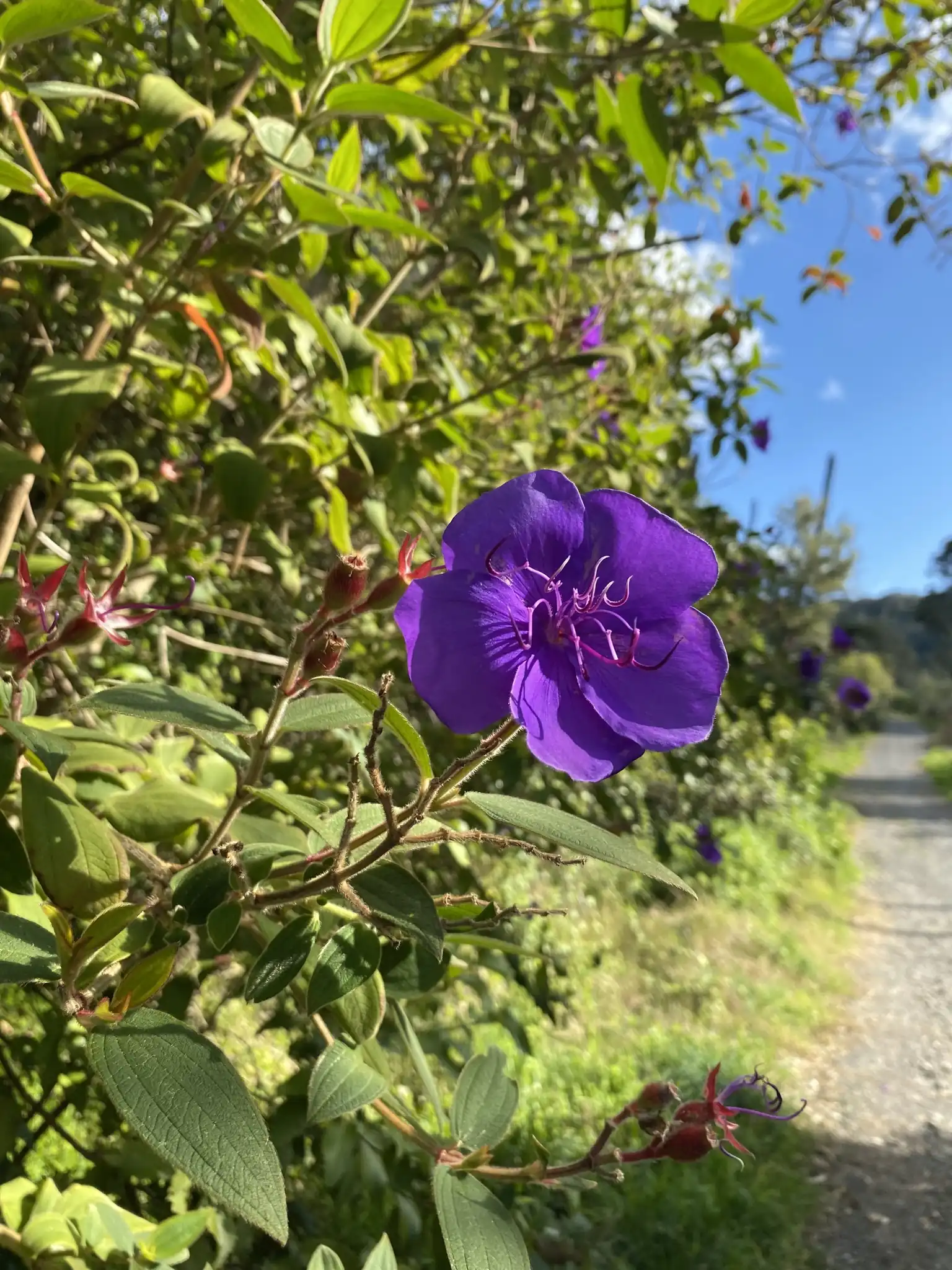
Princess Flower
Tibouchina urvilleana
Bears Ear
Tibouchina clavata
Purple Glory Tree
Tibouchina granulosa
Keep exploring
Explore the genus
Hardy in your zone?
Grow Glory Bush with confidence
See it in a design of your actual yard, get zone-matched care reminders, and track it season by season in your garden journal.