The Story
Plant Bio
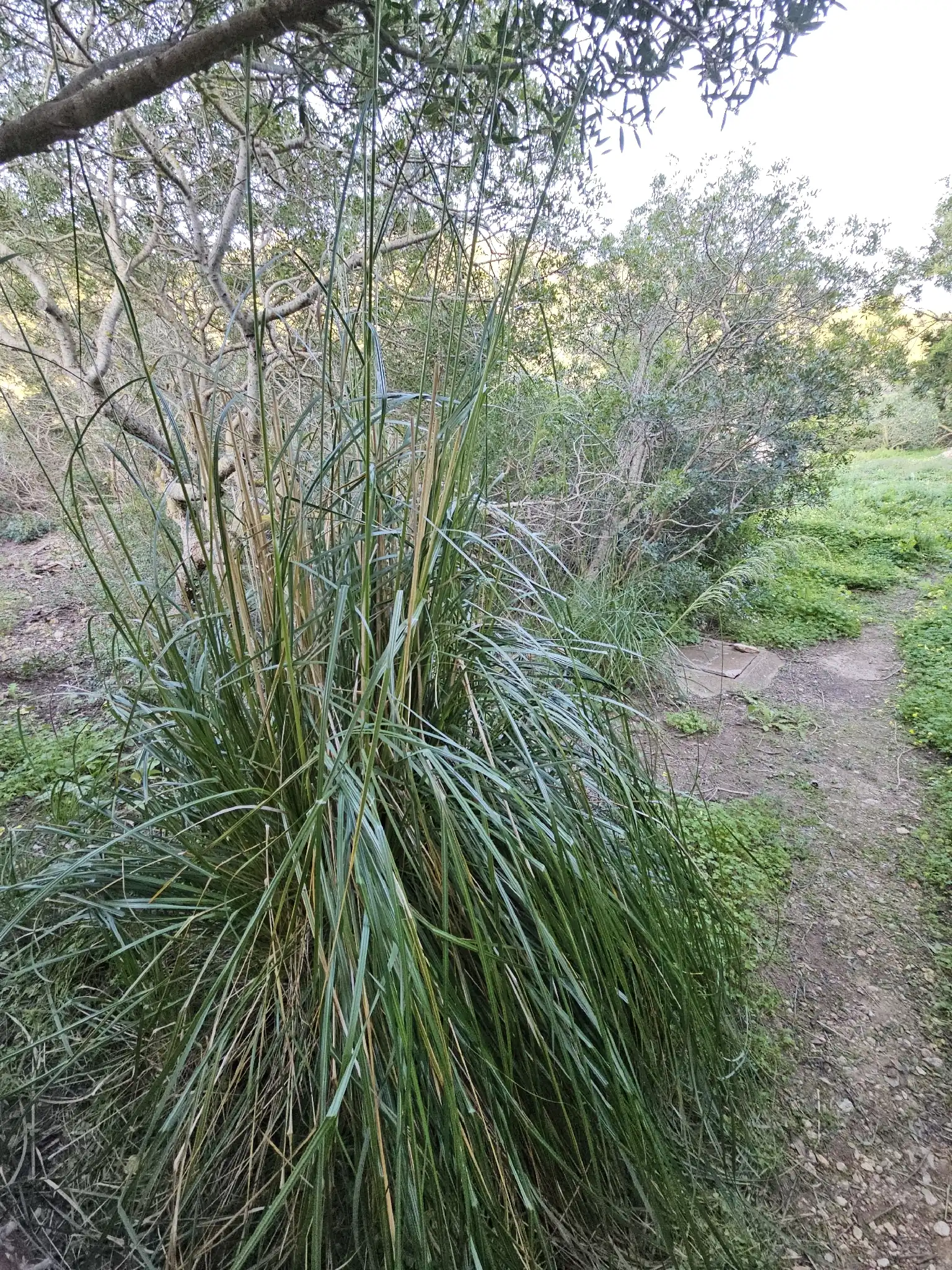
Ampelodesmos mauritanicus is a large evergreen bunchgrass from the western and central Mediterranean, forming a dense tussock of tough arching leaves with foliage three to six feet tall. Flowering culms rise well above the foliage to seven to nine feet, carrying tall nodding one-sided panicles to two feet long that open pale and dry to tan-white.
It is set apart by its leathery light to mid-green leaves that trail and arch from a short-rhizomed clump, with edges sharp enough to cause small cuts when handled without gloves. It stays evergreen on very well-drained poor rocky or sandy ground and tolerates heat, drought and coastal exposure once established, but it seeds freely and needs space for the full spread of its flower wands.
Uses & Benefits:
Essentials
At a Glance
Plant Type
Grass
Height
108"
Width
44"
Light
Full Sun, Partial Sun
Zones
7, 8, 9, 10
Water
Low
Humidity
Low
Lifespan
Perennial
Native To
W. and central Mediterranean
Toxicity
Non-toxic, sharp leaf edges
Bloom period
Late spring – Fall
In flower about 7 months of the year
Planting
How to Grow
- Plant in spring in full sun in very well-drained sandy, rocky or stony soil.
- Set the crown level with the soil, backfill with lean soil and water in well.
- Water regularly the first season to establish, then water deeply only in extended dry spells.
- In spring comb or rake out dead leaves and cut spent flower stems at the base wearing gloves.
- Give it air circulation and four feet of clear space; do not plant in wet or waterlogged ground.
Pro Tip
Plant it in full sun with sharp drainage and room to reach four feet wide; in spring comb out dead leaves wearing gloves instead of shearing the living tussock.
Keep It Thriving
Care Guide
Do
- Plant in full hot sun with sharp drainage
- Wear gloves and long sleeves when handling or cleaning the clump
- Cut spent plumes before seed drops where self-sowing is a concern
- Water to keep green through long drought once established
Don't
- Don't plant in heavy clay or low spots that stay wet in winter
- Don't shear the whole evergreen tussock to the ground
- Don't handle leaves with bare hands
Seasonal Care Calendar
| Task | Jan | Feb | Mar | Apr | May | Jun | Jul | Aug | Sep | Oct | Nov | Dec |
|---|---|---|---|---|---|---|---|---|---|---|---|---|
| Deadhead | ||||||||||||
| Pest Check | ||||||||||||
| Plant | ||||||||||||
| Spring Cleanup | ||||||||||||
| Winter Prep |
Watch Out For
Pests & Diseases
Common Pests
Common Diseases
In the Garden
Landscape Uses & Companions
Landscape Uses
Multiply
Propagation Methods
Good to Know
Common Questions
Mauritania Vine Reed questions
What zones can Mauritania Vine Reed grow in?
Mauritania Vine Reed is hardy in USDA Zones 7–10: in that range it survives winter in the ground. Colder than Zone 7, grow it in a container you can move to shelter for the winter, or as an annual.
Is Mauritania Vine Reed deer resistant?
Yes — Mauritania Vine Reed is rated deer-resistant. Deer typically pass it over, though extreme hunger can override any plant's defenses.
When does Mauritania Vine Reed bloom?
Mauritania Vine Reed typically blooms from late spring to late fall. Exact timing shifts a week or two with your zone — Sow's bloom calendar maps it to your garden.
Does Mauritania Vine Reed need full sun?
Mauritania Vine Reed does best in full sun to part shade. In hot climates, afternoon shade keeps blooms fresher longer.
Is Mauritania Vine Reed drought tolerant?
Yes — once established (usually after the first full season), Mauritania Vine Reed handles dry spells with minimal watering. Water deeply its first year to build the root system that makes that possible.
Keep exploring
Explore the genus
Hardy in your zone?
Grow Mauritania Vine Reed with confidence
See it in a design of your actual yard, get zone-matched care reminders, and track it season by season in your garden journal.