The Story
Plant Bio
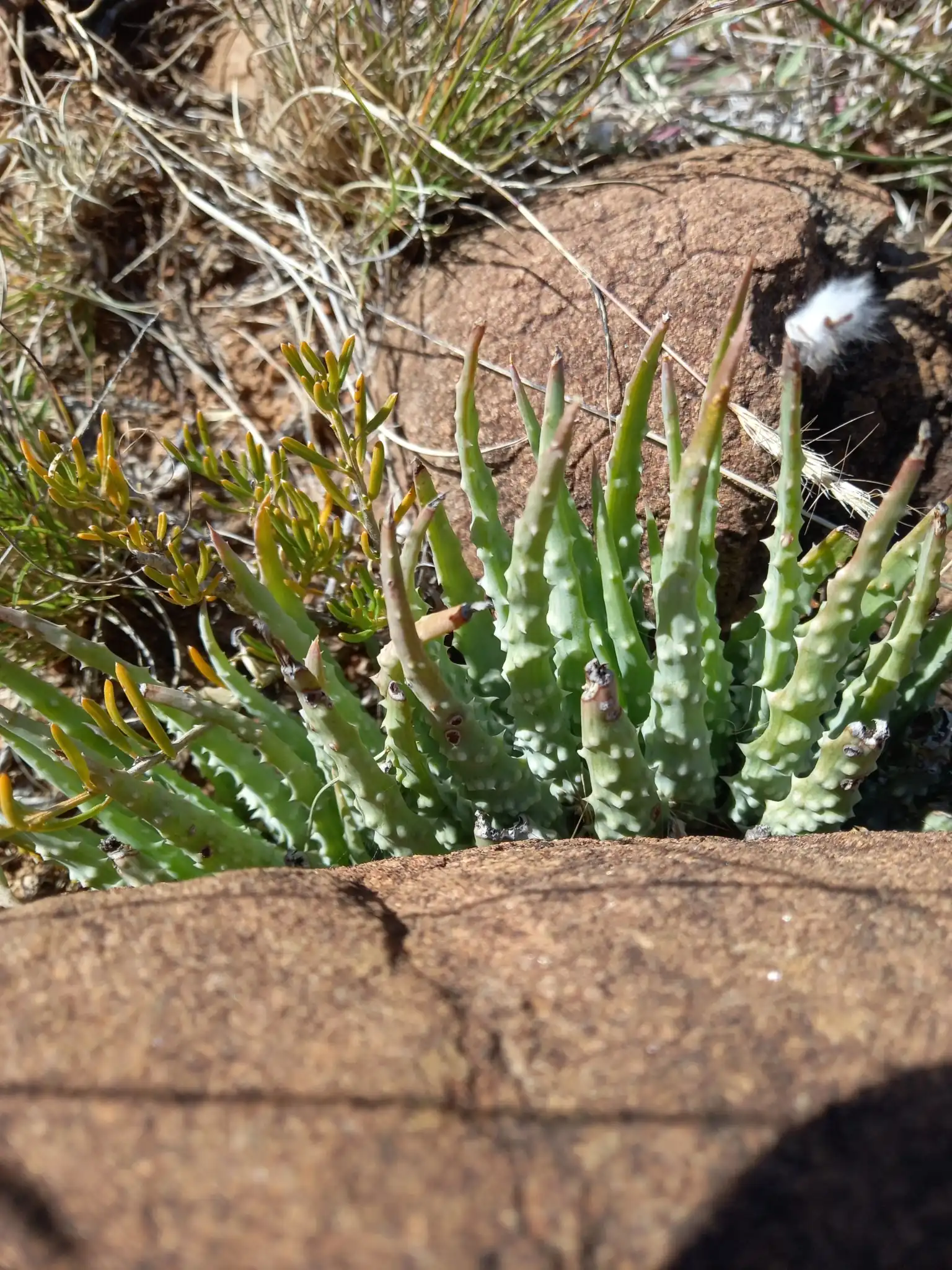
Aloe humilis is a dwarf stemless succulent from the stony flats of South Africa's Cape Provinces, forming tight mounds of offsetting rosettes to about six inches tall. The blue-green triangular leaves curve inward and carry raised tubercles and soft white marginal teeth, holding water in tissue for long dry periods.
It stays under six inches vegetatively and spreads by offsets into dense clusters to a foot wide, far smaller and more heavily warted than common aloe. Single unbranched stalks rise to over a foot in late winter and spring carrying pendulous coral-orange tubes about two inches long.
Uses & Benefits:
Essentials
At a Glance
Plant Type
Cactus Succulent
Height
6"
Width
12"
Light
Full Sun, Partial Sun
Zones
9, 10
Water
Low
Humidity
Low
Lifespan
Perennial
Native To
South Africa - Cape Provinces
Toxicity
Toxic to cats and dogs if ingested
Bloom period
Late winter – Spring
In flower about 4 months of the year
Marketplace
Where to Buy
Shipping costs Year-round shipping Free shipping
Planting
How to Grow
- Plant in full sun in a very gritty cactus mix with 50 to 70 percent mineral grit; use pots with drainage holes.
- Set the crown at soil level in a container 30 to 50 percent wider than the rootball.
- Water deeply only when soil is fully dry, then withhold water in winter.
- Keep above 25 degrees Fahrenheit; move pots indoors before hard frost.
- Give light afternoon shade in extreme heat but avoid shade that stretches rosettes.
Pro Tip
Grow it hard in full sun in 50 to 70 percent mineral grit and keep it completely dry in winter; rich soil and frequent water rot the crown.
Keep It Thriving
Care Guide
Do
- Grow in full sun with sharp drainage.
- Remove spent flower stalks and damaged leaves only.
- Check leaf undersides for scale and mealybug in summer.
Don't
- Do not overwater or use rich moisture-holding soil.
- Do not cut into old leafless stems.
- Do not eat or use as medicine like Aloe vera.
Seasonal Care Calendar
| Task | Jan | Feb | Mar | Apr | May | Jun | Jul | Aug | Sep | Oct | Nov | Dec |
|---|---|---|---|---|---|---|---|---|---|---|---|---|
| Deadhead | ||||||||||||
| Pest Check | ||||||||||||
| Plant | ||||||||||||
| Propagate | ||||||||||||
| Winter Prep |
Watch Out For
Pests & Diseases
Common Pests
Common Diseases
In the Garden
Landscape Uses & Companions
Landscape Uses
Companion Plants
Multiply
Propagation Methods
Good to Know
Common Questions
Spider Aloe questions
What zones can Spider Aloe grow in?
Spider Aloe is hardy in USDA Zones 9–10: in that range it survives winter in the ground. Colder than Zone 9, grow it in a container you can move to shelter for the winter, or as an annual.
When does Spider Aloe bloom?
Spider Aloe typically blooms from late winter to late spring. Exact timing shifts a week or two with your zone — Sow's bloom calendar maps it to your garden.
Does Spider Aloe need full sun?
Spider Aloe does best in full sun to part shade. In hot climates, afternoon shade keeps blooms fresher longer.
Is Spider Aloe drought tolerant?
Yes — once established (usually after the first full season), Spider Aloe handles dry spells with minimal watering. Water deeply its first year to build the root system that makes that possible.
More Aloe to compare
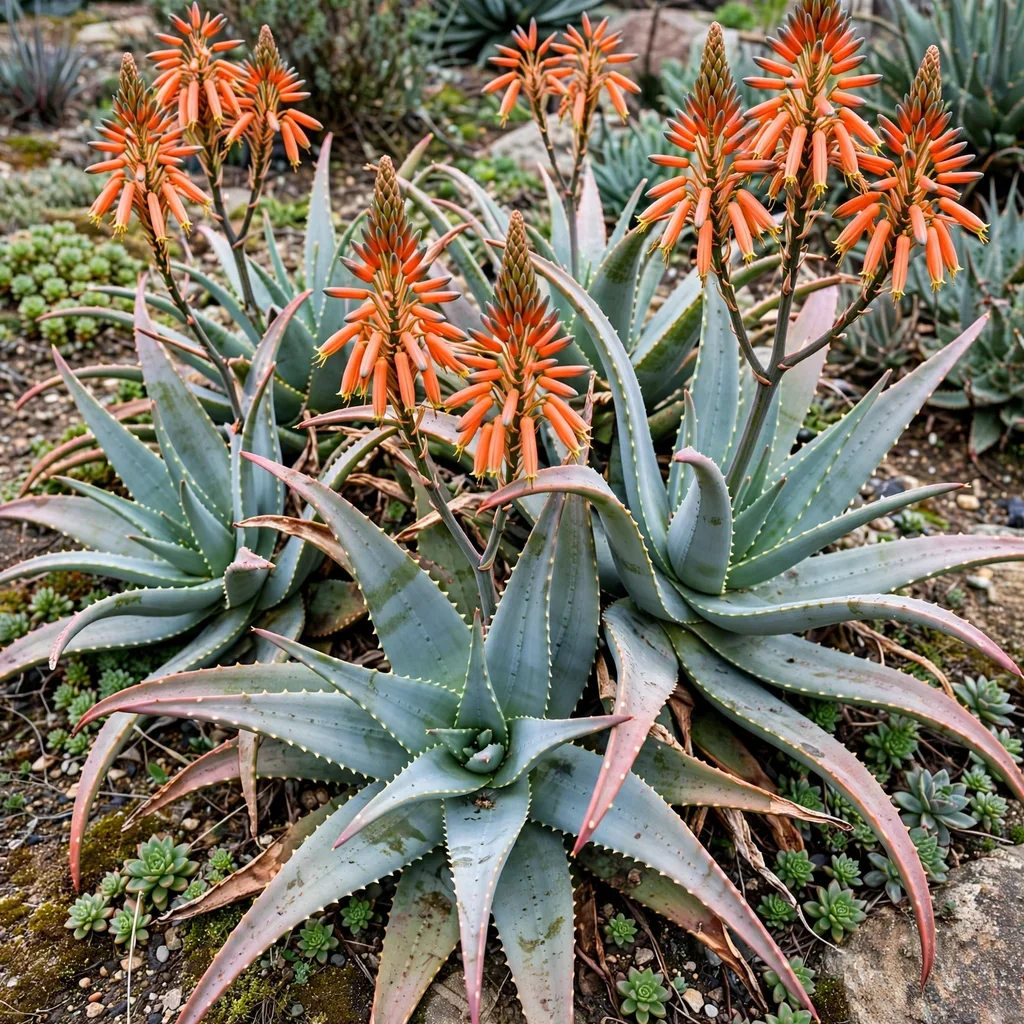
Compton's Aloe
Aloe comptonii
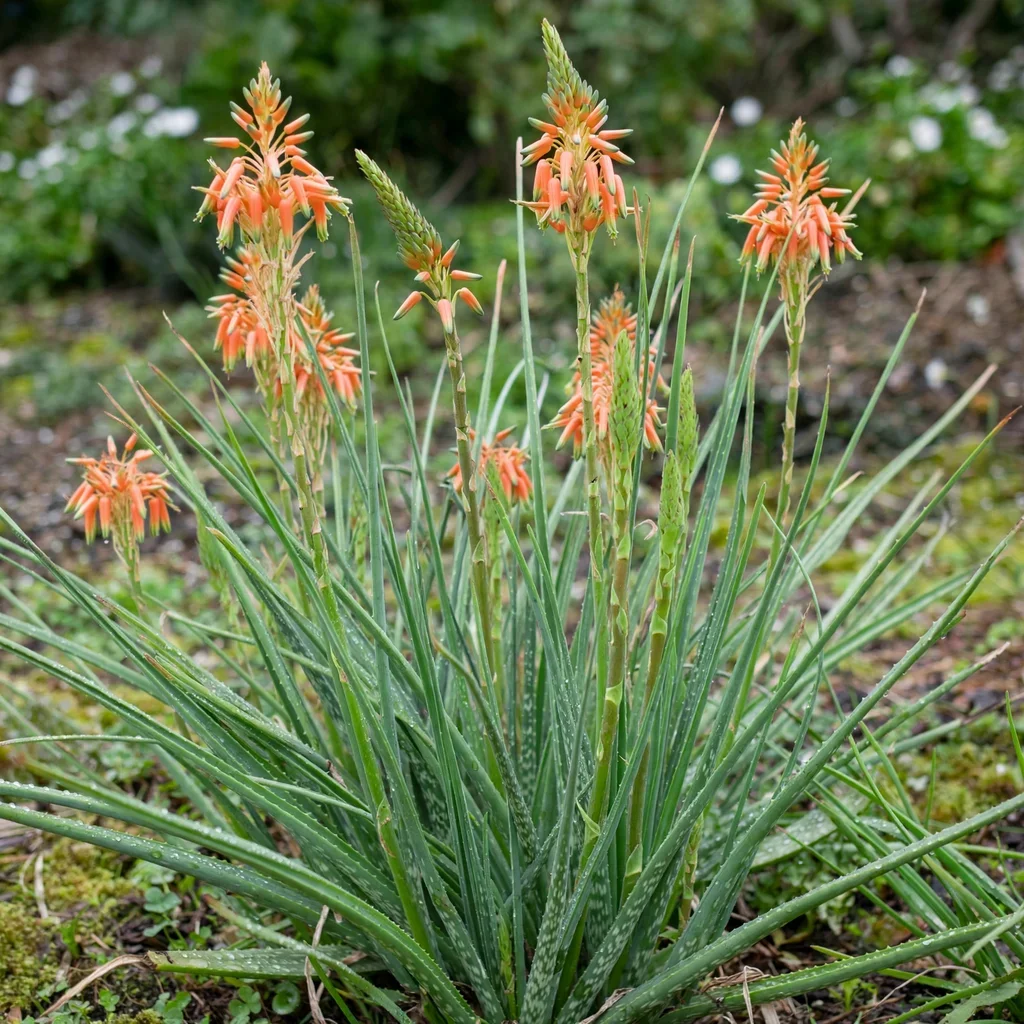
Cooper's Aloe
Aloe cooperi
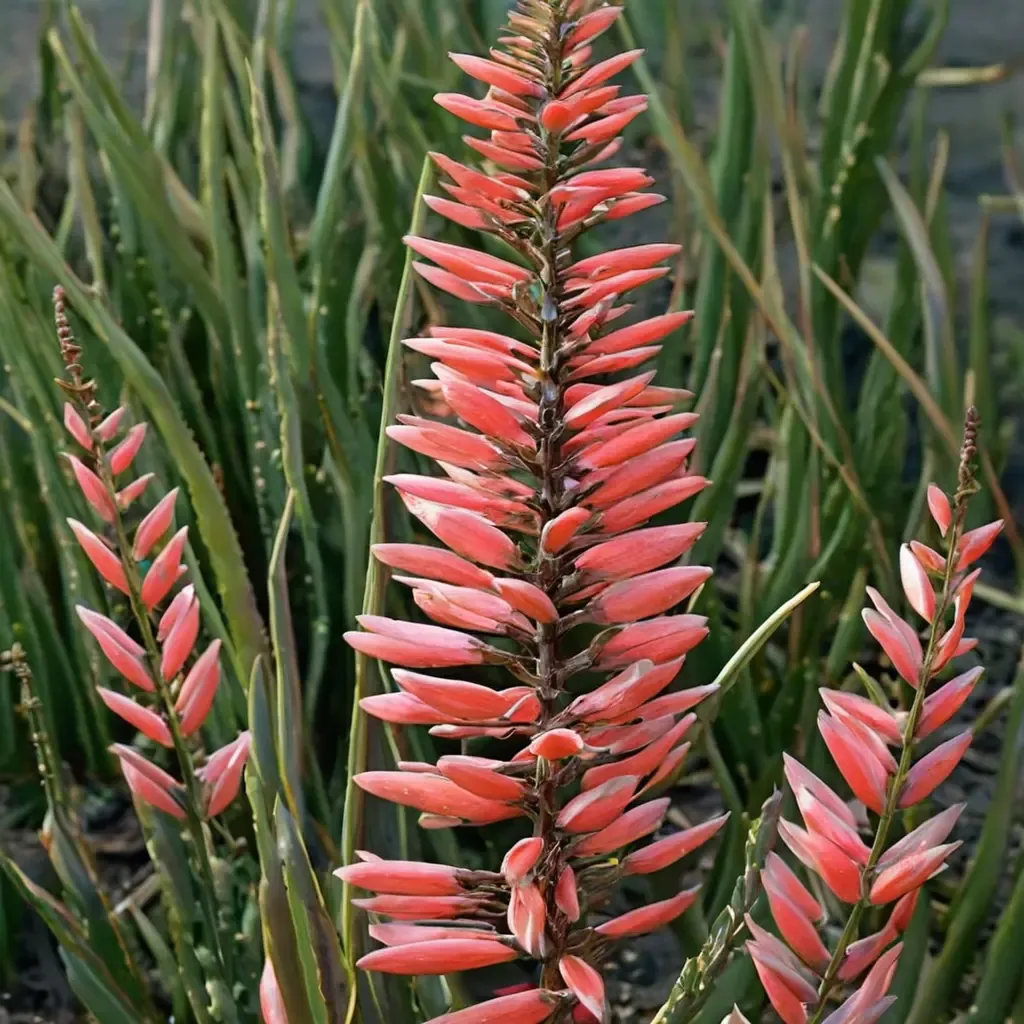
Safari Rose Aloe
Aloe vera 'Safari Rose'
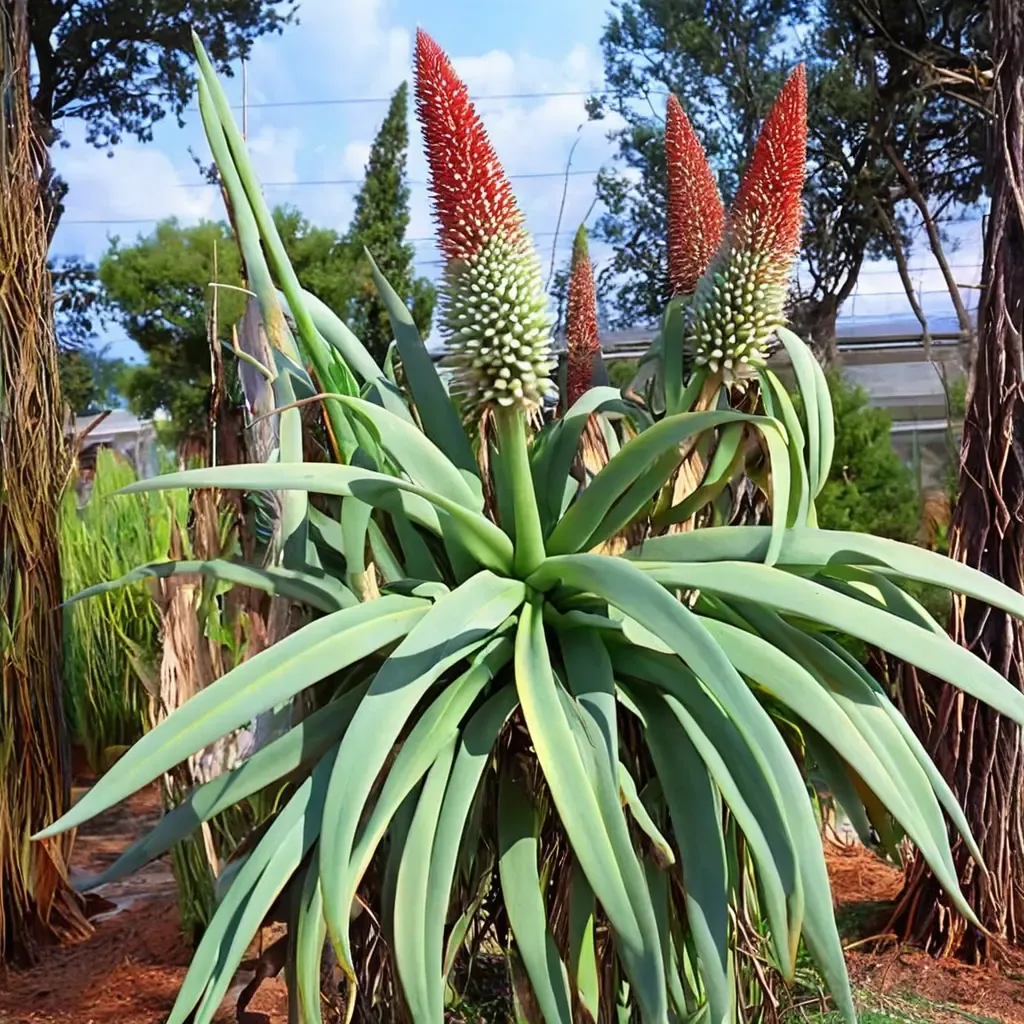
Tilt-Head Aloe
Aloe speciosa 'Tilt-Head Aloe'
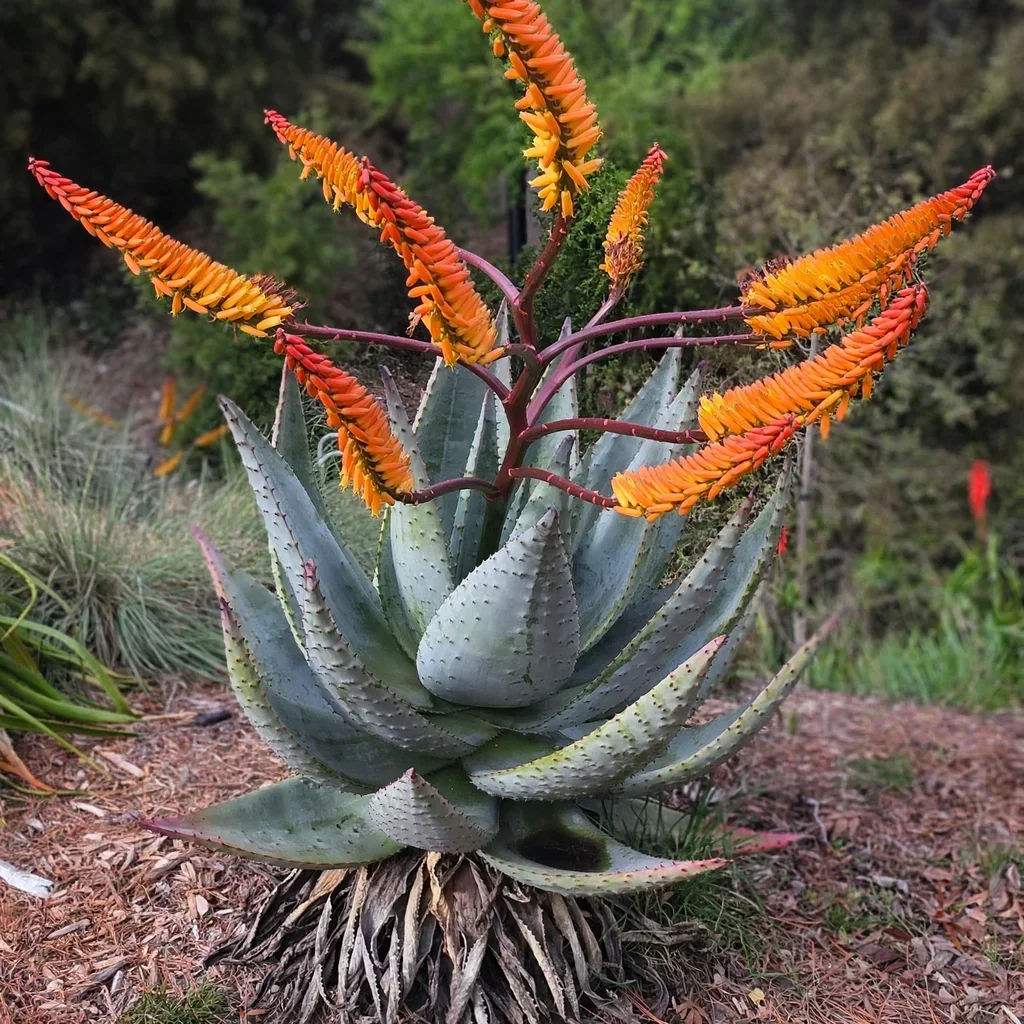
Mountain Aloe
Aloe marlothii 'Flat Flowered Aloe'
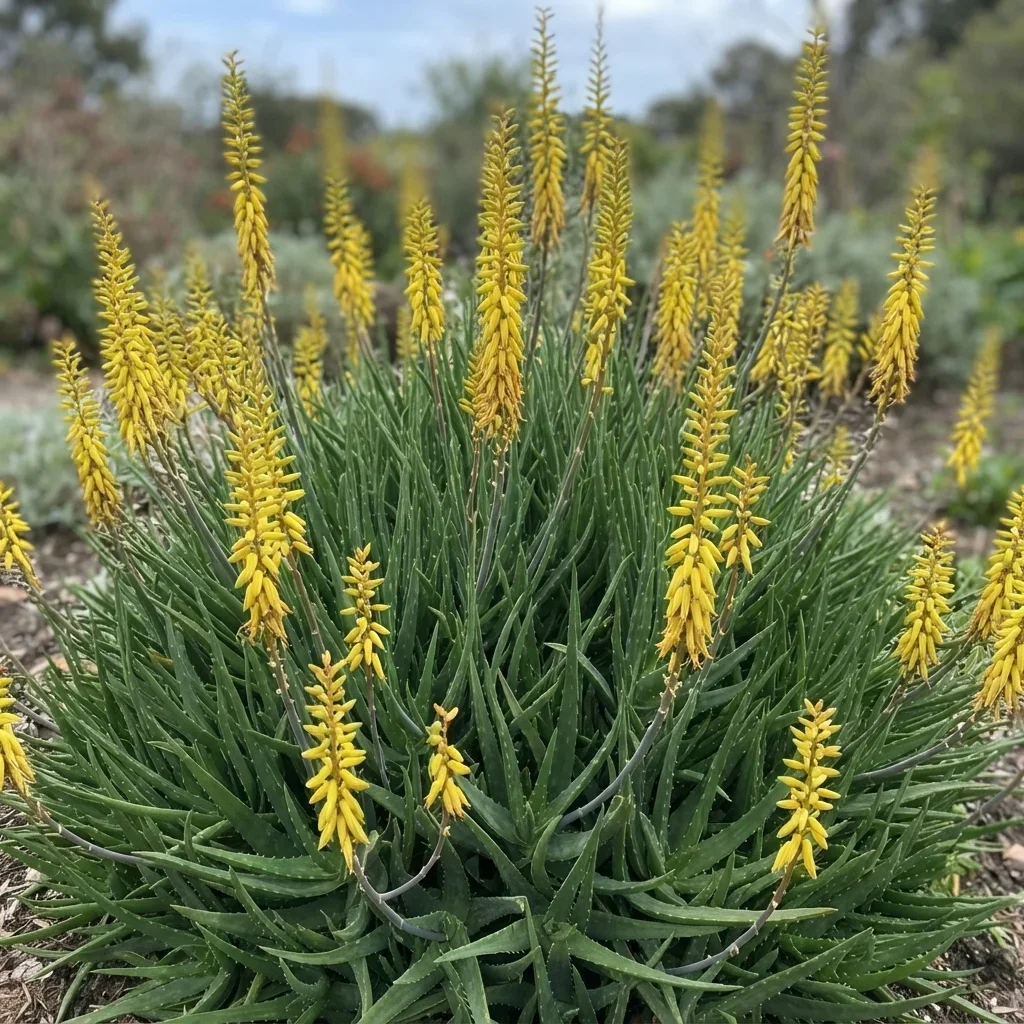
Fence Aloe
Aloe tenuior 'Fence Aloe'
Keep exploring
Explore the genus
Hardy in your zone?
Grow Spider Aloe with confidence
See it in a design of your actual yard, get zone-matched care reminders, and track it season by season in your garden journal.