The Story
Plant Bio
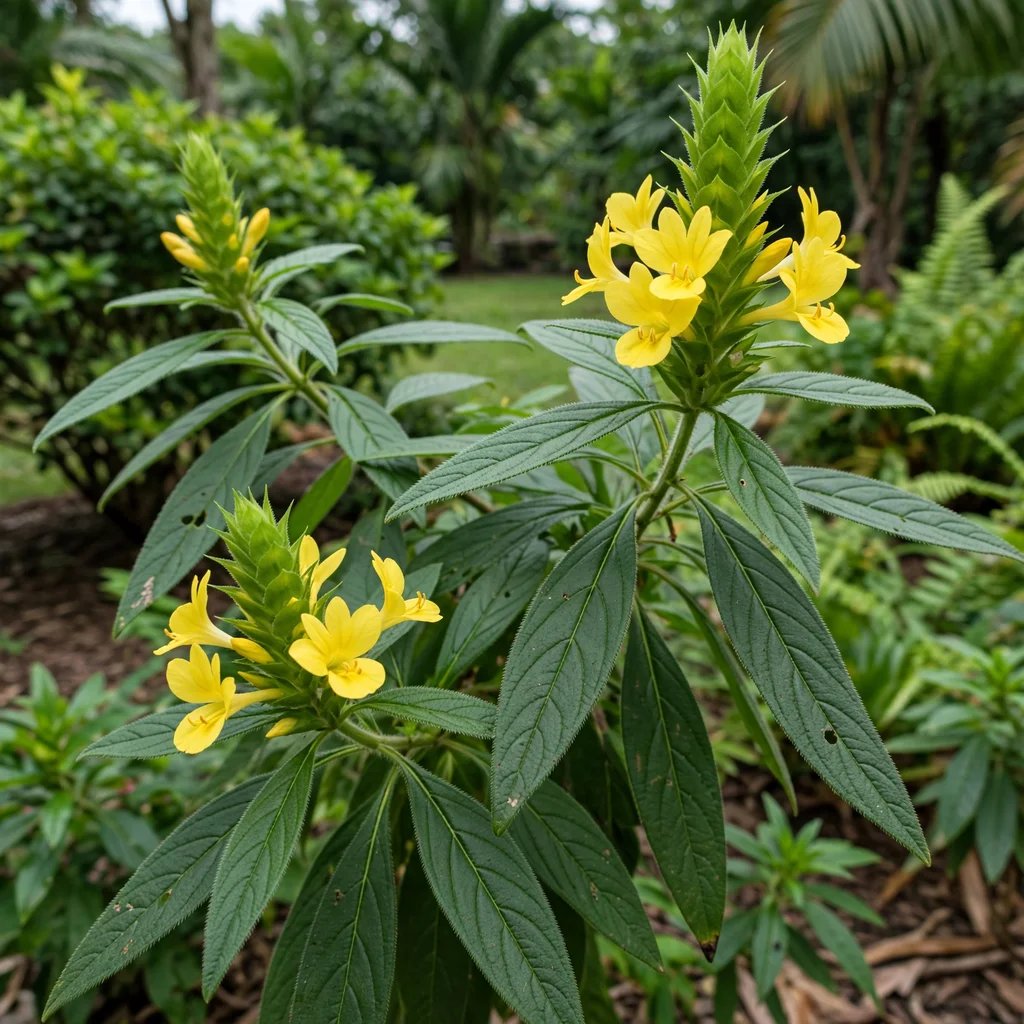
Barleria oenotheroides is an evergreen woody subshrub from tropical America and western tropical Africa, erect at first then branching low and sprawling to root where stems touch soil. Leaves are opposite, elliptic to lance-shaped and 5 to 8 inches long, dark green above with prominent veins and a light covering of short hairs.
Sold as Barleria micans, it carries dense terminal spikes of unmarked bright yellow funnel-shaped flowers about 2 inches long with protruding darker yellow stamens. Each flower pair is backed by pale green spiny-tipped bracts, and plants reach 2 to 5 feet tall with yellowish hairy young stems.
Uses & Benefits:
Essentials
At a Glance
Plant Type
Shrub
Height
60"
Width
72"
Light
Full Sun, Partial Sun, Shade
Zones
9, 10
Water
Medium
Humidity
High
Lifespan
Long-lived
Native To
Mexico to South America and West Tropical Africa
Toxicity
Non-toxic
Bloom period
Summer – Fall
In flower about 6 months of the year
Planting
How to Grow
- Plant in full sun to light shade in rich, well-drained soil with the top of the rootball set slightly high.
- Water deeply at planting and keep soil evenly moist through the first season, letting only the top inch dry.
- Spread 2 to 3 inches of mulch under the plant, kept clear of the stems.
- Feed with slow-release fertilizer at planting and again in early summer for steady bloom.
- Protect young plants from frost and wind; grow in containers to move indoors below 30F.
Pro Tip
Tip-prune after flowering to keep it bushy; cutting hard into old bare wood in winter gives slow, patchy regrowth.
Keep It Thriving
Care Guide
Do
- Water regularly in summer heat; it drops growth in dry soil.
- Tip-prune lightly to encourage branching and denser spikes.
- Provide good airflow around crowded stems.
Don't
- Do not let soil stay soggy or mound mulch against stems.
- Do not cut hard into old leafless wood in winter.
- Do not stop watering in heat or expose young plants to frost.
Seasonal Care Calendar
| Task | Jan | Feb | Mar | Apr | May | Jun | Jul | Aug | Sep | Oct | Nov | Dec |
|---|---|---|---|---|---|---|---|---|---|---|---|---|
| Fertilize | ||||||||||||
| Mulch | ||||||||||||
| Pest Check | ||||||||||||
| Prune | ||||||||||||
| Winter Prep |
Watch Out For
Pests & Diseases
Common Pests
Common Diseases
In the Garden
Landscape Uses & Companions
Landscape Uses
Multiply
Propagation Methods
Good to Know
Common Questions
Giant Yellow Shrimp questions
What zones can Giant Yellow Shrimp grow in?
Giant Yellow Shrimp is hardy in USDA Zones 9–10: in that range it survives winter in the ground. Colder than Zone 9, grow it in a container you can move to shelter for the winter.
When does Giant Yellow Shrimp bloom?
Giant Yellow Shrimp typically blooms from summer to fall. Exact timing shifts a week or two with your zone — Sow's bloom calendar maps it to your garden.
Does Giant Yellow Shrimp need full sun?
Giant Yellow Shrimp does best in full sun to part shade. In hot climates, afternoon shade keeps blooms fresher longer.
More Barleria to compare
Keep exploring
Explore the genus
Hardy in your zone?
Grow Giant Yellow Shrimp with confidence
See it in a design of your actual yard, get zone-matched care reminders, and track it season by season in your garden journal.