The Story
Plant Bio
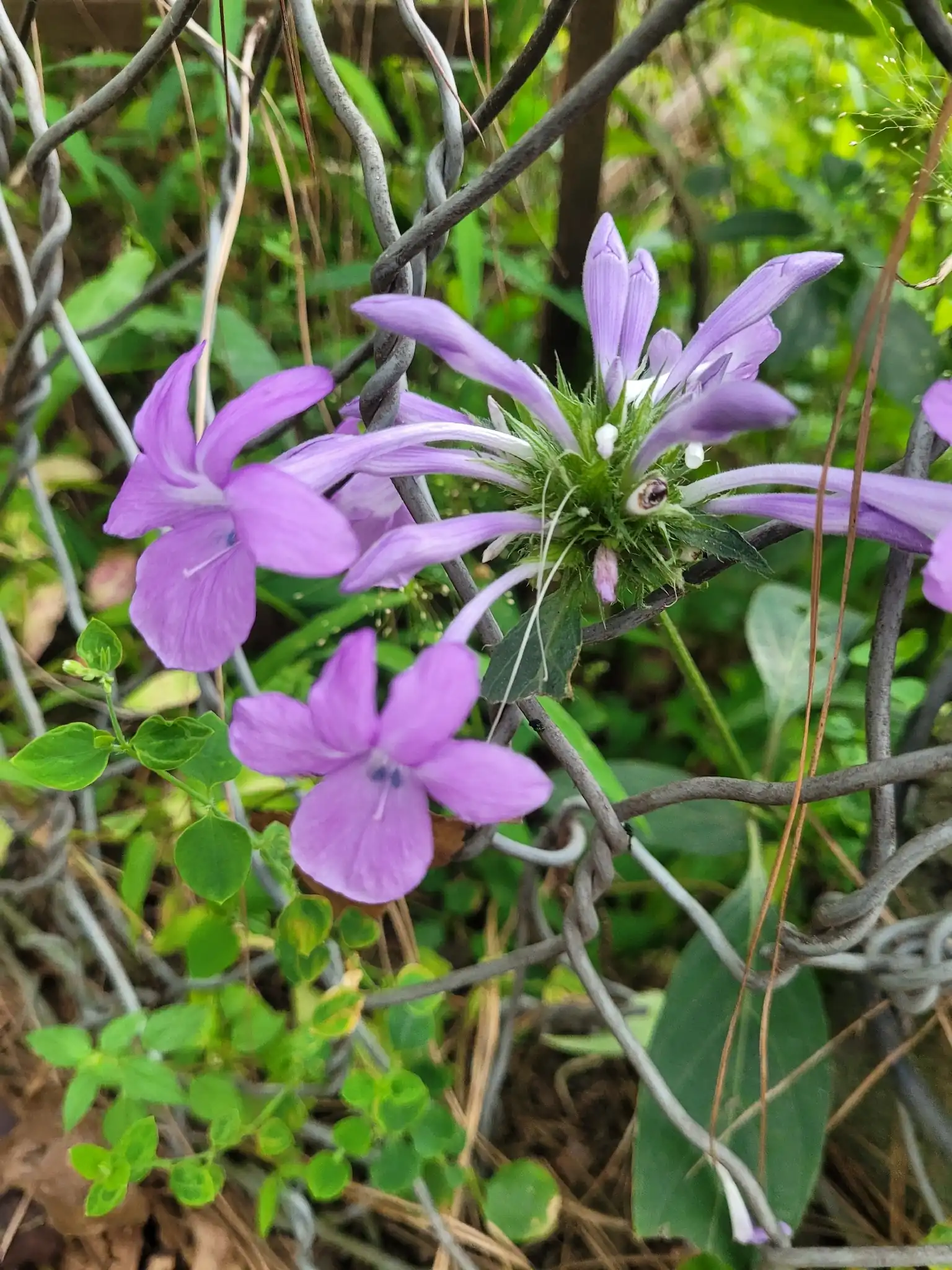
Barleria cristata is an upright, fast-growing herbaceous perennial that forms a dense, multi-stemmed clump to six feet tall and four feet wide, with evergreen ovate dark green leaves five to ten centimeters long. The funnel-shaped tubular flowers are borne on new growth in pink, lavender-purple and white.
It blooms on current-season wood from late summer into fall, with flowers opening over weeks when many shrubs have finished. Plants die to the base in cold winters and resprout in spring, and freely shed seed that germinates where soil stays undisturbed.
Uses & Benefits:
Essentials
At a Glance
Plant Type
Perennial
Height
72"
Width
48"
Light
Full Sun, Partial Sun
Zones
8, 9, 10
Water
Low to moderate
Humidity
Moderate
Lifespan
Perennial
Native To
South to Southeast Asia
Toxicity
Non-toxic; coarse leaves irritate skin
Bloom period
Late summer – Fall
In flower about 4 months of the year
Planting
How to Grow
- Plant after frost danger in full sun to partial shade; growth stays densest in full sun.
- Set in sand, loam or clay that drains freely, spacing plants 36 to 60 inches apart.
- Water deeply to establish, then water only during extended dry spells; keep winter soil on the dry side where tops die back.
- Cut all stems to ground level in early spring and clear dead foliage as new basal shoots emerge.
Pro Tip
Cut stems to the ground in early spring as basal shoots emerge; plants bloom on new growth, so spring cutback makes a fuller clump without reducing flowers.
Keep It Thriving
Care Guide
Do
- Cut to the ground each spring to force fuller flowering wood from the base.
- Wear gloves when clearing freeze-damaged stems; coarse leaves irritate skin.
- Deadhead lightly to limit self-sowing where reseeding is unwanted.
Don't
- Do not overwater in winter when tops are dormant or cut back.
- Do not cut back in fall; the plant needs intact stems until spring regrowth.
- Do not plant where seed can wash into natural areas in Florida.
Seasonal Care Calendar
| Task | Jan | Feb | Mar | Apr | May | Jun | Jul | Aug | Sep | Oct | Nov | Dec |
|---|---|---|---|---|---|---|---|---|---|---|---|---|
| Pest Check | ||||||||||||
| Plant | ||||||||||||
| Prune | ||||||||||||
| Spring Cleanup | ||||||||||||
| Winter Prep |
Watch Out For
Pests & Diseases
Common Pests
Common Diseases
In the Garden
Landscape Uses & Companions
Landscape Uses
Companion Plants
Multiply
Propagation Methods
Good to Know
Common Questions
Philippine Violet questions
What zones can Philippine Violet grow in?
Philippine Violet is hardy in USDA Zones 8–10: in that range it survives winter in the ground. Colder than Zone 8, grow it in a container you can move to shelter for the winter, or as an annual.
When does Philippine Violet bloom?
Philippine Violet typically blooms from late summer to late fall. Exact timing shifts a week or two with your zone — Sow's bloom calendar maps it to your garden.
Does Philippine Violet need full sun?
Philippine Violet does best in full sun to part shade. In hot climates, afternoon shade keeps blooms fresher longer.
Is Philippine Violet drought tolerant?
Yes — once established (usually after the first full season), Philippine Violet handles dry spells with minimal watering. Water deeply its first year to build the root system that makes that possible.
More Barleria to compare
Keep exploring
Explore the genus
Hardy in your zone?
Grow Philippine Violet with confidence
See it in a design of your actual yard, get zone-matched care reminders, and track it season by season in your garden journal.