The Story
Plant Bio
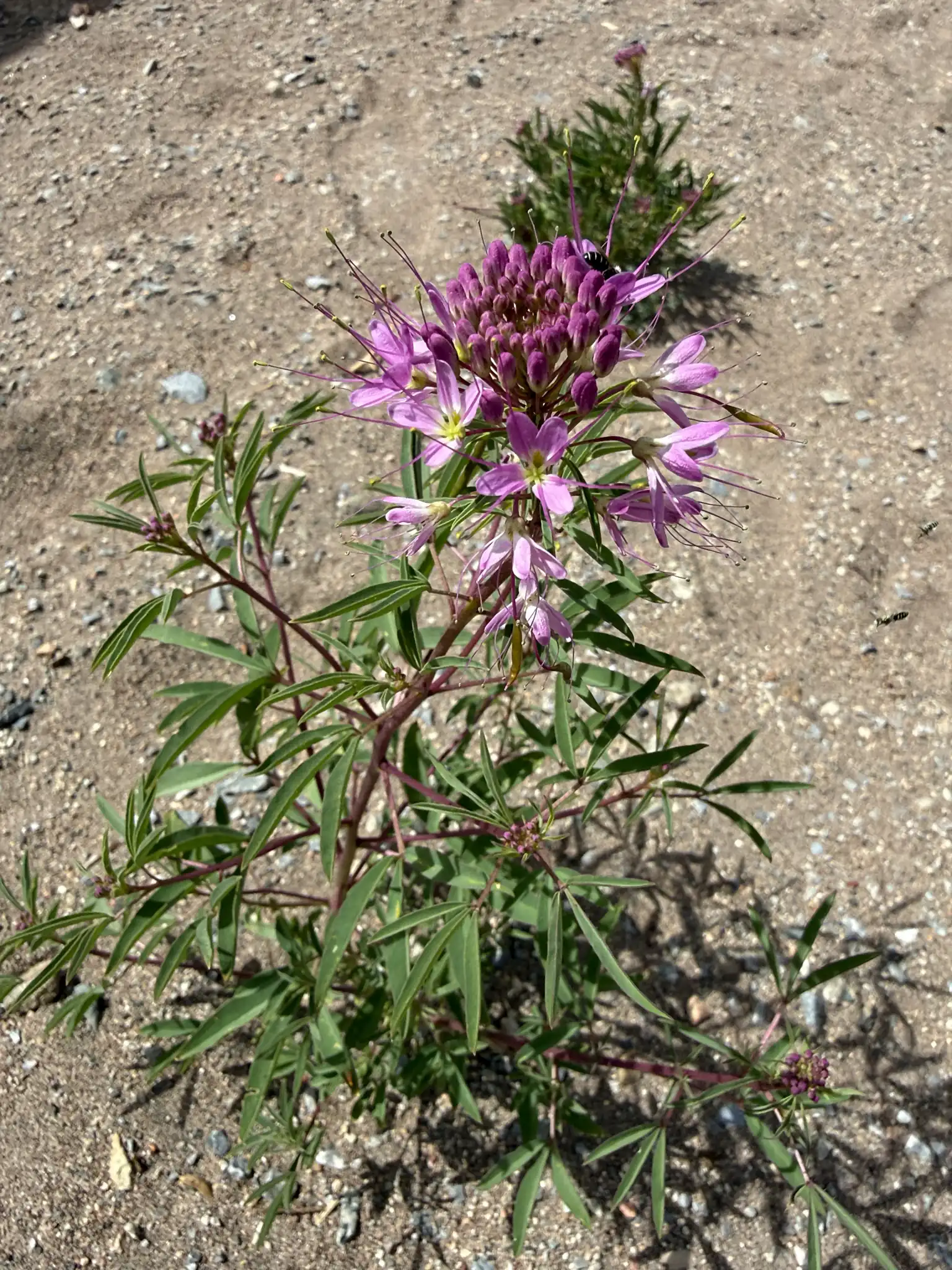
Cleomella serrulata, commonly known as Rocky Mountain beeplant, is an upright herbaceous annual native to western and central North America that reaches two to six feet tall with trifoliate, lance-shaped leaves. Dense, terminal racemes of four-petaled pink to purple flowers with long, protruding purplish stamens bloom continuously from late spring into early fall.
When crushed, the foliage emits a pungent, skunk-like odor that naturally deters deer and browsing livestock. The nectar-rich blossoms act as a primary food source for native bees, butterflies, and hummingbirds, followed by slender seedpods that nourish upland birds.
Uses & Benefits:
Essentials
At a Glance
Plant Type
Annual
Height
48"
Width
24"
Light
Full Sun, Partial Sun
Zones
4, 5, 6, 7, 8, 9, 10
Water
Low to moderate
Humidity
Low
Lifespan
Annual
Native To
North America
Toxicity
Mildly toxic if ingested in large quantities
Bloom period
Late spring – Autumn
In flower about 7 months of the year
Planting
How to Grow
- Select a site in full sun to partial shade with lean, sharply draining sandy or loamy soil.
- Sow seeds directly onto the soil surface in early spring or late autumn, pressing them lightly into the dirt without burying them deeply.
- Water lightly to keep the soil surface moist until seedlings emerge, then reduce watering as roots establish.
- Thin young seedlings to 12 to 18 inches apart to allow room for secondary branching and clear airflow.
Pro Tip
Avoid applying nitrogen-rich fertilizers or overwatering, which cause weak, floppy growth and induce root rot in lean garden soils.
Keep It Thriving
Care Guide
Do
- Plant in light, well-drained soil where water never collects.
- Allow the soil surface to dry out completely between waterings once established.
- Let plants drop seed naturally in autumn if perpetual annual stands are desired.
Don't
- Do not overwater or plant in heavy, boggy clay soils.
- Do not apply heavy nitrogen fertilizers, which cause leggy, weak stems.
- Do not attempt to transplant mature taprooted plants from the ground.
Seasonal Care Calendar
| Task | Jan | Feb | Mar | Apr | May | Jun | Jul | Aug | Sep | Oct | Nov | Dec |
|---|---|---|---|---|---|---|---|---|---|---|---|---|
| Deadhead | ||||||||||||
| Pest Check | ||||||||||||
| Plant | ||||||||||||
| Spring Cleanup |
Watch Out For
Pests & Diseases
Common Pests
Common Diseases
In the Garden
Landscape Uses & Companions
Landscape Uses
Multiply
Propagation Methods
Good to Know
Common Questions
Rocky Mountain Beeplant questions
What zones can Rocky Mountain Beeplant grow in?
Rocky Mountain Beeplant is an annual: it grows, flowers and sets seed in one season, so winter cold doesn't limit where it grows. Gardeners in any zone can grow it by planting at the right time, usually after the last spring frost.
Is Rocky Mountain Beeplant deer resistant?
Yes — Rocky Mountain Beeplant is rated deer-resistant. Deer typically pass it over, though extreme hunger can override any plant's defenses.
When does Rocky Mountain Beeplant bloom?
Rocky Mountain Beeplant typically blooms from late spring to late fall. Exact timing shifts a week or two with your zone — Sow's bloom calendar maps it to your garden.
Does Rocky Mountain Beeplant need full sun?
Rocky Mountain Beeplant does best in full sun to part shade. In hot climates, afternoon shade keeps blooms fresher longer.
Is Rocky Mountain Beeplant drought tolerant?
Yes — once established (usually after the first full season), Rocky Mountain Beeplant handles dry spells with minimal watering. Water deeply its first year to build the root system that makes that possible.
More Cleomella to compare
Keep exploring
Explore the genus
Grow Rocky Mountain Beeplant with confidence
See it in a design of your actual yard, get zone-matched care reminders, and track it season by season in your garden journal.