The Story
Plant Bio
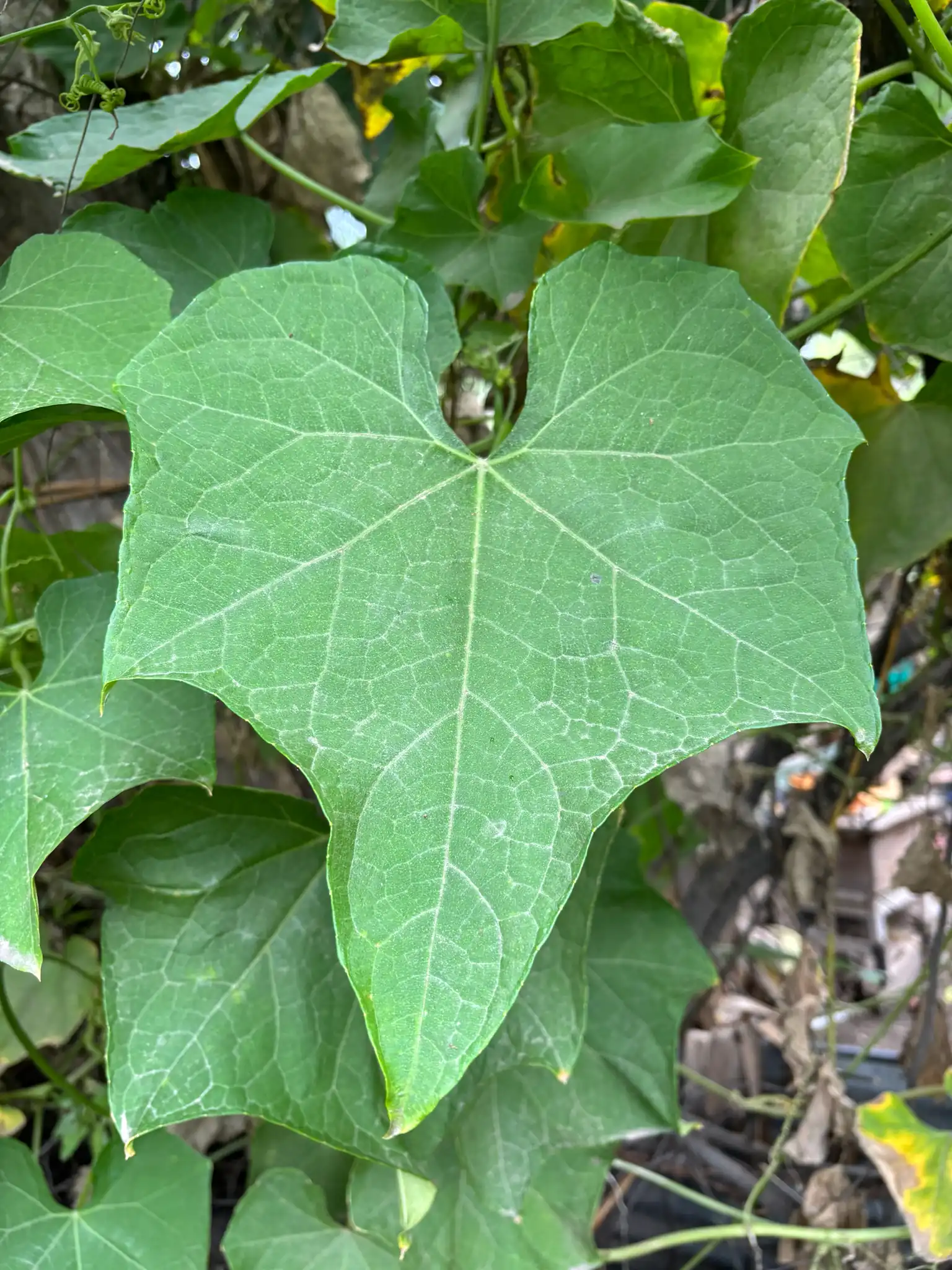
Sicyos edulis, sold as Sechium edule, is a vigorous perennial vine in the cucumber family climbing thirty to fifty feet by grooved hairy stems and two to five-branched tendrils. The spirally arranged leaves are broadly ovate to circular, three to ten inches across, three to seven-angled with a deeply cordate base, five to seven veins and a sparse hairy surface.
Male flowers are borne in clusters and females singly or paired in the same leaf axils, creamy-white to pale green and insect-pollinated, with fruit swelling about thirty-five days later. It is a short-day fall fruiter whose light-green pear-shaped fruit, young shoots and tuberous root are all edible, setting fifty to one hundred fifty fruit per plant on a strong trellis.
Uses & Benefits:
Essentials
At a Glance
Plant Type
Fruit Vegetable
Height
472"
Width
39"
Light
Full Sun
Zones
7, 8, 9, 10
Water
High
Humidity
High
Lifespan
Perennial
Native To
Southern Mexico and Guatemala
Toxicity
Non-toxic
Bloom period
Late summer – Fall
In flower about 4 months of the year
Planting
How to Grow
- Give it full sun and a very strong trellis, fence or overhead arbor that can carry a 30- to 50-foot vine.
- Set the whole sprouted fruit on its side in rich well-drained loam after frost when soil is warm, fat end down with the narrow end just above the surface, spacing plants about 40 inches apart.
- Water deeply and regularly and feed with compost or balanced fertilizer through summer; mulch the root zone but keep leaves in full sun.
- Tie new growth to support and pick fruit in fall when light green and under 2.5 inches, about 35 days after pollination.
- In zone 8 and warmer leave the tuberous root in place with mulch for regrowth; in colder zones grow it as an annual.
Pro Tip
Plant the whole mature sprouted fruit on its side with the fat end down and the narrow end just above the soil; never cut it open to extract the seed.
Keep It Thriving
Care Guide
Do
- Provide a sturdy trellis or fence from the start.
- Water deeply and feed regularly through summer.
- Mulch the root zone to keep roots cool and moist.
- Harvest young fruit promptly to keep production going.
Don't
- Do not extract the seed from the fruit.
- Do not plant out until frost has passed and soil is warm.
- Do not let the vine dry out or go hungry in hot weather.
- Do not grow on a flimsy support that fruit weight will collapse.
Seasonal Care Calendar
| Task | Jan | Feb | Mar | Apr | May | Jun | Jul | Aug | Sep | Oct | Nov | Dec |
|---|---|---|---|---|---|---|---|---|---|---|---|---|
| Fertilize | ||||||||||||
| Harvest | ||||||||||||
| Pest Check | ||||||||||||
| Plant | ||||||||||||
| Stake |
Watch Out For
Pests & Diseases
Common Pests
Common Diseases
In the Garden
Landscape Uses & Companions
Landscape Uses
Companion Plants
Multiply
Propagation Methods
Good to Know
Common Questions
Chayote questions
What zones can Chayote grow in?
Chayote is hardy in USDA Zones 7–10: in that range it survives winter in the ground. Colder than Zone 7, grow it in a container you can move to shelter for the winter, or as an annual.
When does Chayote bloom?
Chayote typically blooms from late summer to late fall. Exact timing shifts a week or two with your zone — Sow's bloom calendar maps it to your garden.
Does Chayote need full sun?
Chayote does best in full sun (6+ hours).
Keep exploring
Explore the genus
Hardy in your zone?
Grow Chayote with confidence
See it in a design of your actual yard, get zone-matched care reminders, and track it season by season in your garden journal.