
The Story
Plant Bio
Santolina virens is an evergreen subshrub from dry rocky scrub of southern Europe, forming a compact rounded mound of finely divided foliage. In cultivation it reaches 18 to 24 inches high and spreads wider, with narrow emerald leaves that release a strong pine-menthol scent when crushed.
Unlike gray lavender cotton, it holds bright emerald-green, almost needle-like foliage that stays green through winter. Solitary gold button heads under one inch across are borne singly on slender stalks 4 to 10 inches above the mound in summer.
Uses & Benefits:
Essentials
At a Glance
Plant Type
Shrub
Height
20"
Width
30"
Light
Full Sun
Zones
5, 6, 7, 8, 9
Water
Low
Humidity
Low
Lifespan
Perennial subshrub
Native To
Southern Europe
Toxicity
Skin irritant
Bloom period
Summer
In flower about 3 months of the year
Marketplace
Where to Buy
Shipping costs Year-round shipping Free shipping
Planting
How to Grow
- Plant in full sun with at least 6 hours of direct sun in very well-drained, poor to average soil.
- Space 24 to 30 inches apart to allow air flow and prevent humidity buildup in the crown.
- Water deeply at planting, then water sparingly once established; allow soil to dry between waterings.
- Shear lightly in early spring to keep the mound tight, and deadhead spent buttons promptly.
- Cut back woody, split centers in spring rather than fall to avoid winter damage.
Pro Tip
Plant it lean and leave it alone — poor alkaline soil, sharp drainage and full sun keep it tight; rich soil and frequent water make it open, floppy and rot-prone.
Keep It Thriving
Care Guide
Do
- Do plant in sandy, alkaline, fast-draining soil.
- Do shear in spring to keep growth dense and mounded.
- Do deadhead as soon as the yellow buttons fade.
Don't
- Don't overwater or plant in rich, wet soil.
- Don't shear constantly if you want flowers, as hedging removes bloom stalks.
- Don't cut back hard into old bare wood in fall.
Seasonal Care Calendar
| Task | Jan | Feb | Mar | Apr | May | Jun | Jul | Aug | Sep | Oct | Nov | Dec |
|---|---|---|---|---|---|---|---|---|---|---|---|---|
| Deadhead | ||||||||||||
| Pest Check | ||||||||||||
| Plant | ||||||||||||
| Propagate | ||||||||||||
| Prune |
Watch Out For
Pests & Diseases
Common Pests
Common Diseases
In the Garden
Landscape Uses & Companions
Landscape Uses
Multiply
Propagation Methods
Good to Know
Common Questions
Green Santolina questions
What zones can Green Santolina grow in?
Green Santolina is hardy in USDA Zones 5–9: in that range it survives winter in the ground. Colder than Zone 5, grow it in a container you can move to shelter for the winter. Warmer than Zone 9, winter isn't the problem: it prefers colder winters, and summer heat can shorten its life.
Is Green Santolina deer resistant?
Yes — Green Santolina is rated deer-resistant. Deer typically pass it over, though extreme hunger can override any plant's defenses.
When does Green Santolina bloom?
Green Santolina typically blooms in summer. Exact timing shifts a week or two with your zone — Sow's bloom calendar maps it to your garden.
Does Green Santolina need full sun?
Green Santolina does best in full sun (6+ hours).
Is Green Santolina drought tolerant?
Yes — once established (usually after the first full season), Green Santolina handles dry spells with minimal watering. Water deeply its first year to build the root system that makes that possible.
More Santolina to compare
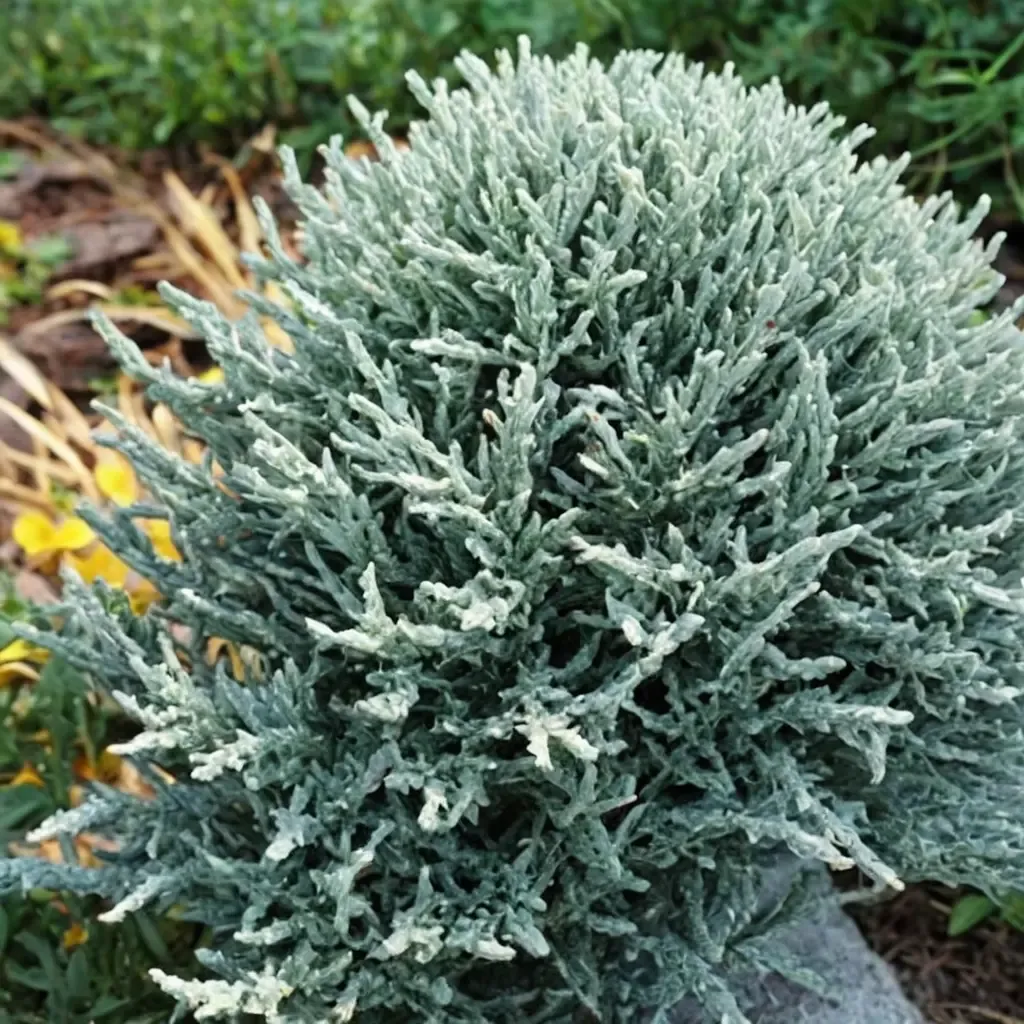
Dwarf Lavender Cotton
Santolina incana 'Nana'
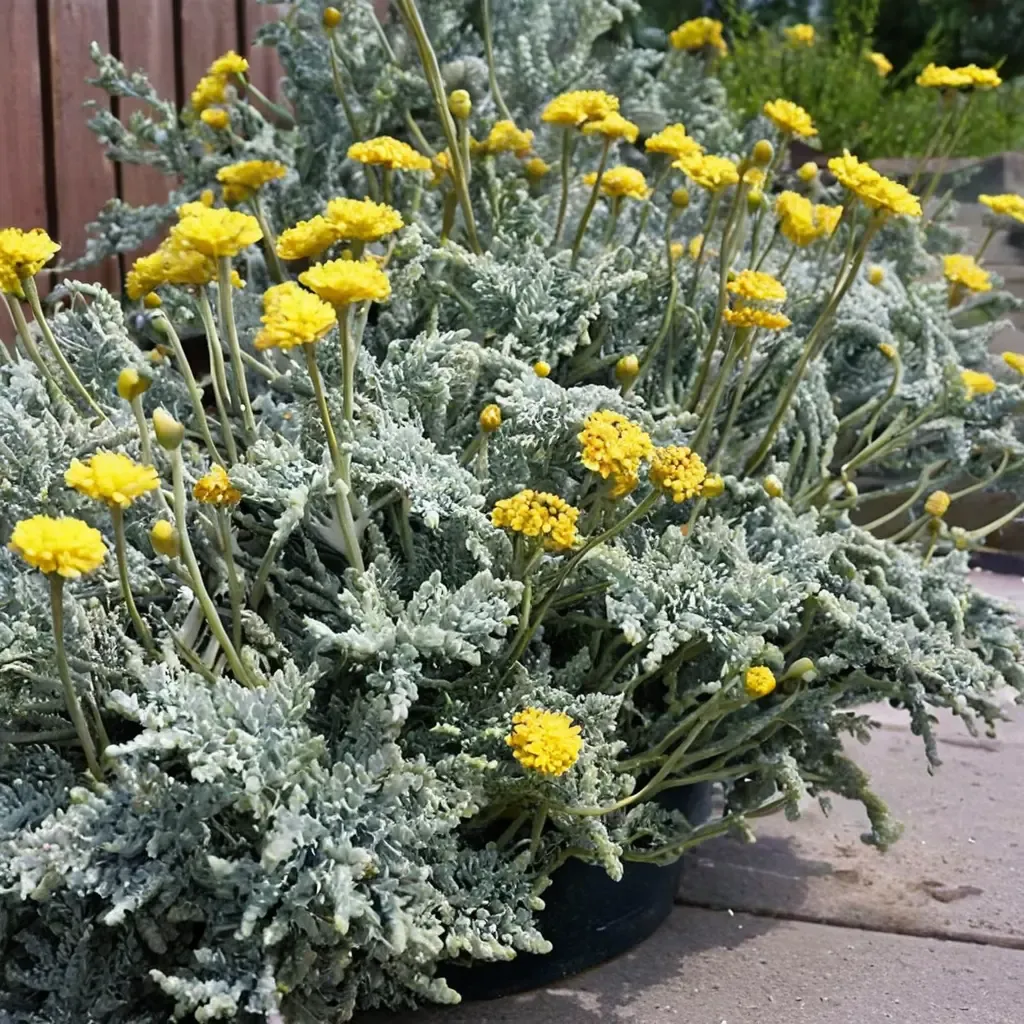
Gray Santolina
Santolina chamaecyparissus
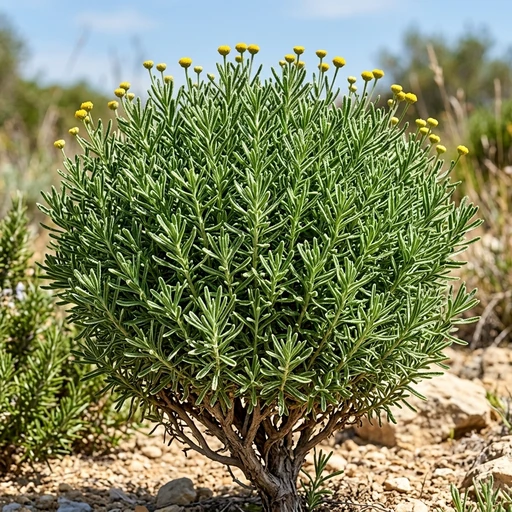
Green Lavender Cotton
Santolina rosmarinifolia
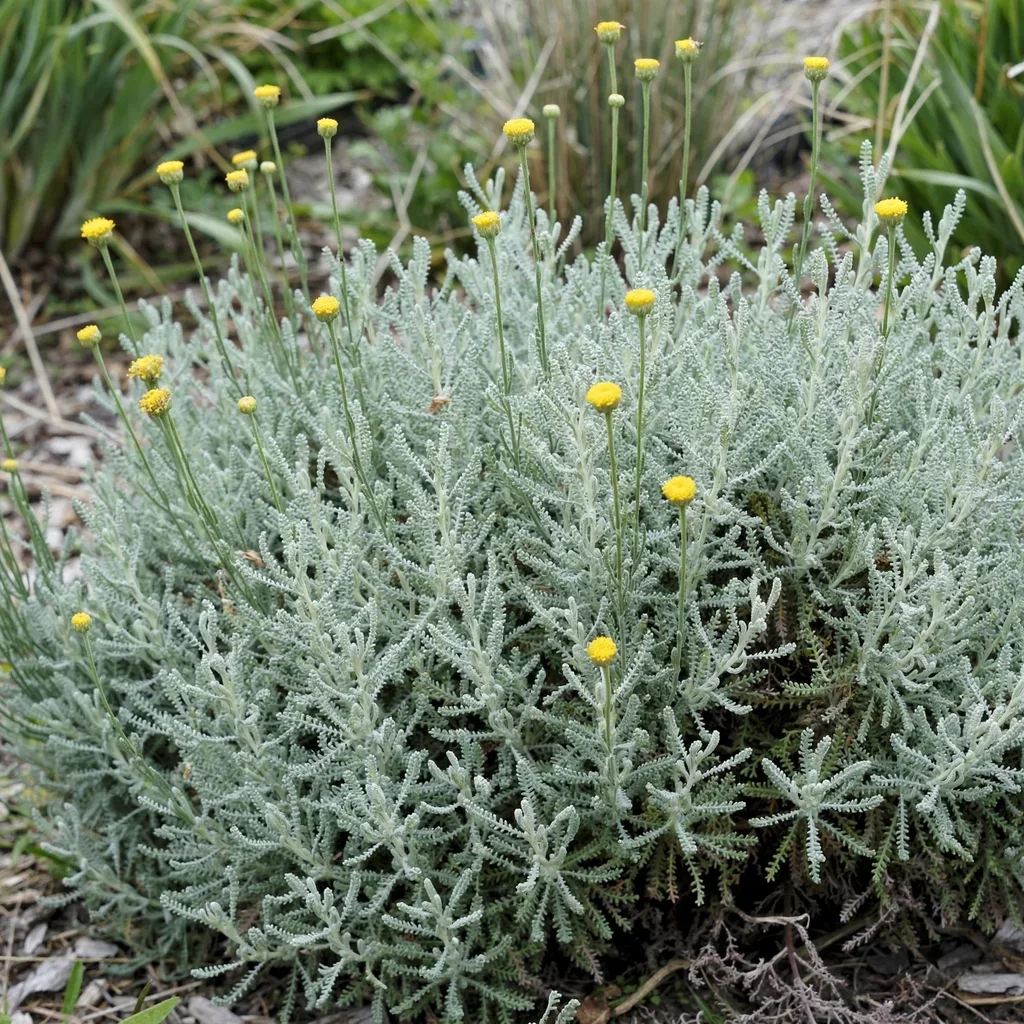
Holy Flax
Santolina ericoides
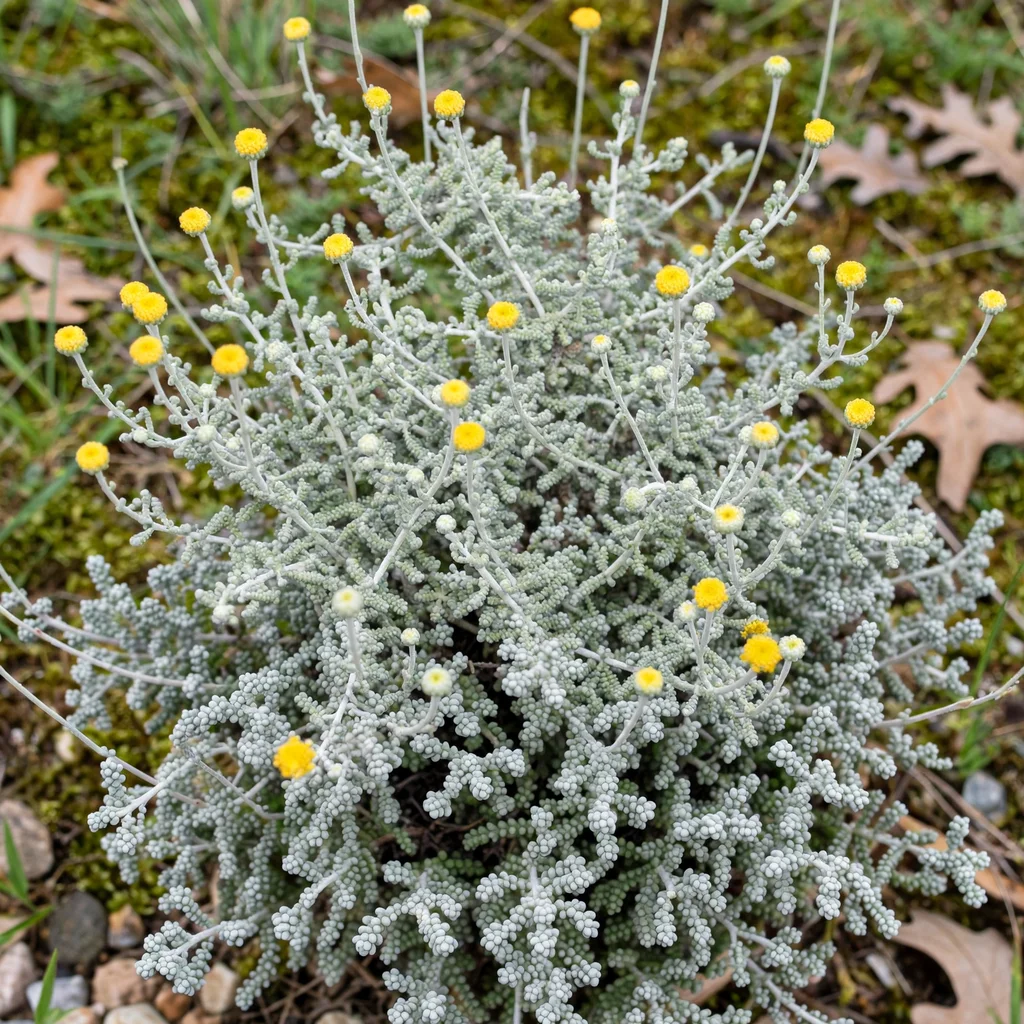
Minorcan Cotton Lavender
Santolina magonica
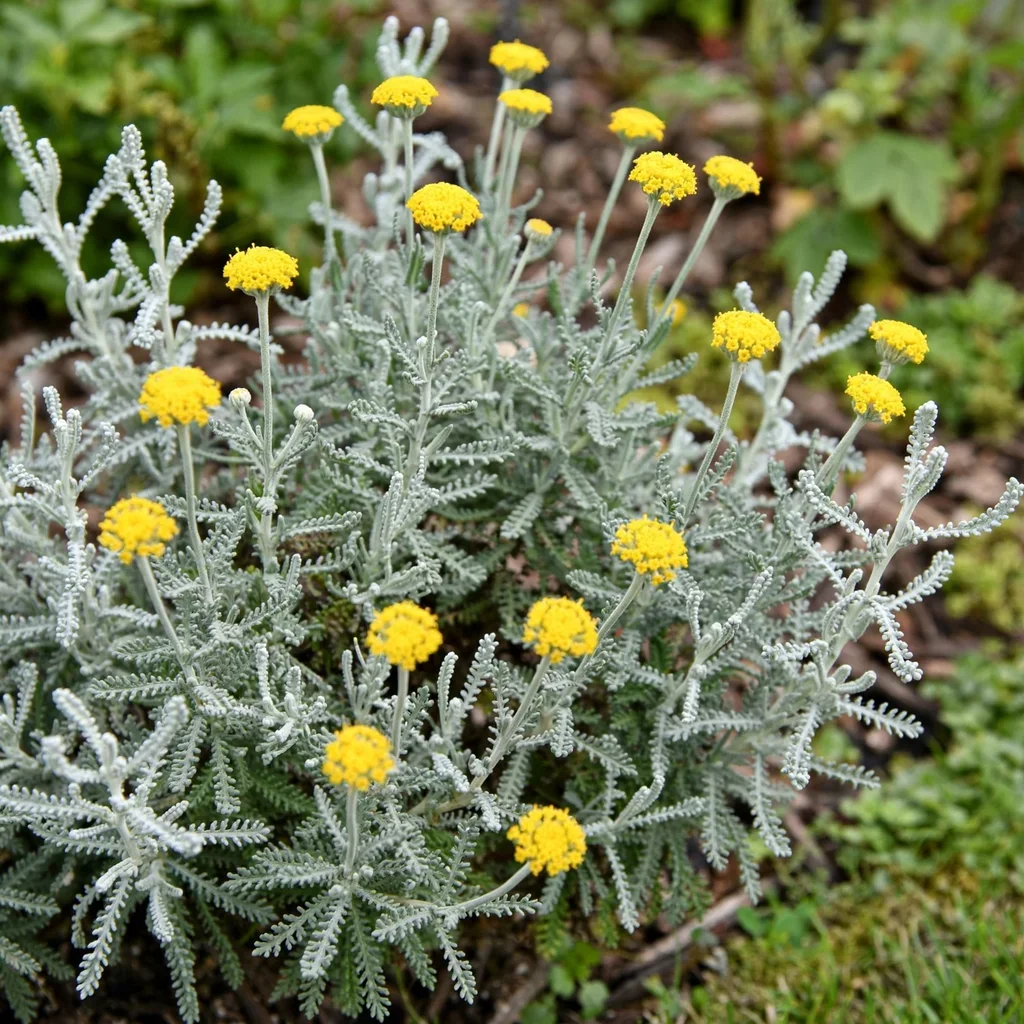
Lavender Cotton
Santolina incana
Keep exploring
Explore the genus
Hardy in your zone?
Grow Green Santolina with confidence
See it in a design of your actual yard, get zone-matched care reminders, and track it season by season in your garden journal.