The Story
Plant Bio
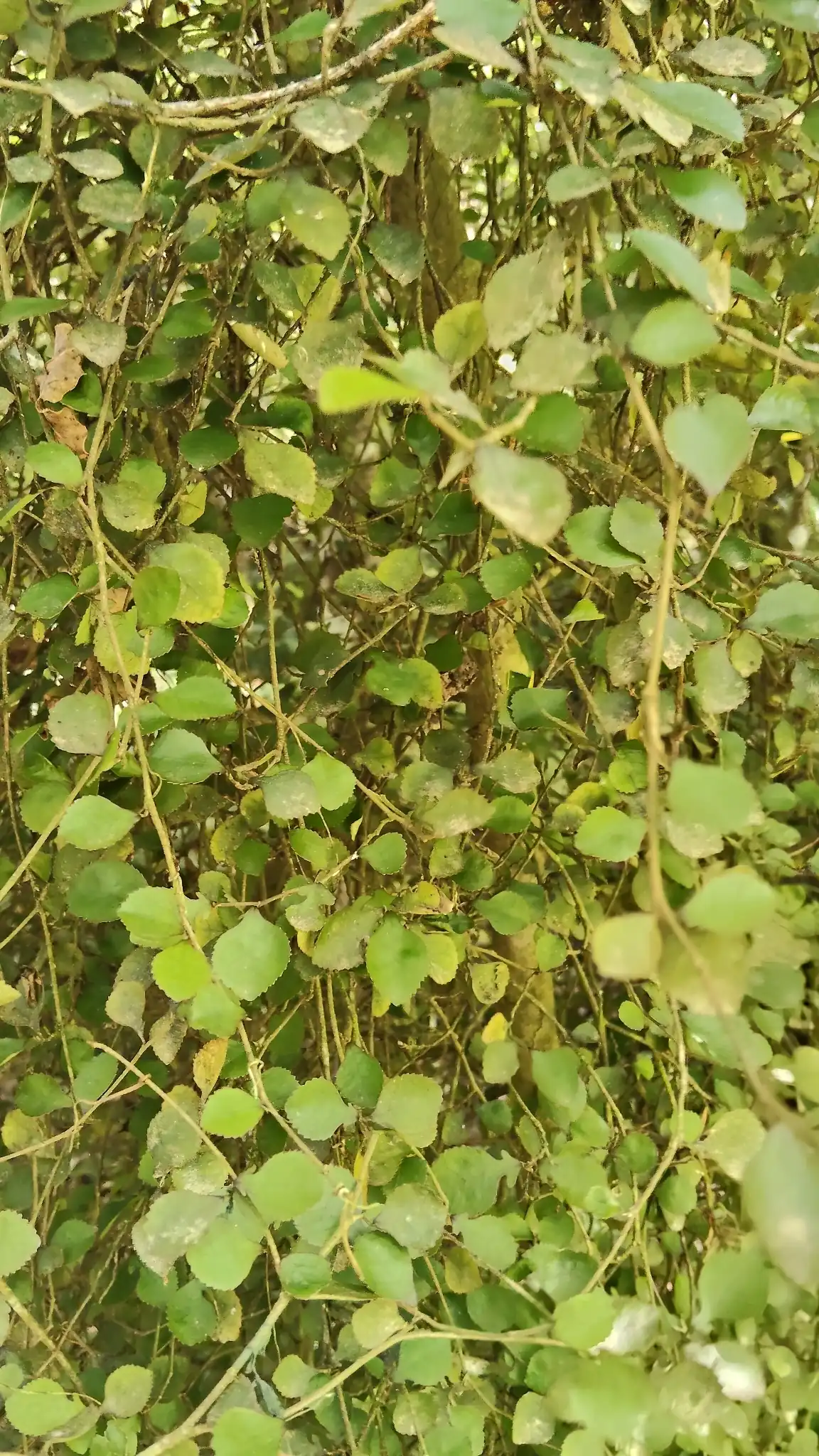
Paratrophis microphylla, commonly known as the small-leaved milk tree, is an evergreen tree native to New Zealand that exudes a thick white latex sap when cut. In cultivation it reaches up to forty feet in height, shifting from a divaricating juvenile form into an erect tree with glossy, dark green oval foliage.
Juvenile plants produce dense, zig-zagging branchlets bearing tiny fiddle-shaped leaves before maturing into unlobed foliage with prominent veins underneath. Apetalous pale yellow flower spikes produced in spring yield small red berries that ripen into autumn.
Uses & Benefits:
Essentials
At a Glance
Plant Type
Tree
Height
472"
Width
236"
Light
Full Sun, Partial Sun
Zones
8, 9, 10
Water
Moderate
Humidity
Moderate to High
Lifespan
Long-lived
Native To
New Zealand
Toxicity
Sap is a mild skin irritant
Bloom period
Mid spring – Summer
In flower about 5 months of the year
Planting
How to Grow
- Plant in a sandy or loamy soil mix that provides thorough drainage in full sun to partial shade.
- Water regularly during the first two seasons to help establish a deep root system.
- Apply a light, balanced organic fertilizer in spring, avoiding high-nitrogen blends.
- Perform light formative pruning in late winter or early spring to shape hedges or remove dead branches.
Pro Tip
Avoid pruning into old, leafless woody interiors where dormant buds fail to regenerate reliably.
Keep It Thriving
Care Guide
Do
- Ensure free-draining soil to avoid root stagnation and decay.
- Protect young plants from deer and rabbit browsing until they grow past grazing height.
- Wear gloves when pruning to avoid skin irritation from the milky sap.
Don't
- Do not panic-prune the interlaced juvenile stems, as this cage structure naturally resolves as the tree gains height.
- Do not cut heavily into old bare wood during routine maintenance.
- Do not leave containerized roots in waterlogged soil.
Seasonal Care Calendar
| Task | Jan | Feb | Mar | Apr | May | Jun | Jul | Aug | Sep | Oct | Nov | Dec |
|---|---|---|---|---|---|---|---|---|---|---|---|---|
| Fertilize | ||||||||||||
| Pest Check | ||||||||||||
| Propagate | ||||||||||||
| Prune |
Watch Out For
Pests & Diseases
Common Pests
Common Diseases
In the Garden
Landscape Uses & Companions
Landscape Uses
Companion Plants
Multiply
Propagation Methods
Good to Know
Common Questions
Small-Leaved Milk Tree questions
What zones can Small-Leaved Milk Tree grow in?
Small-Leaved Milk Tree is hardy in USDA Zones 8–10: in that range it survives winter in the ground. Colder than Zone 8, winters are too cold for it to survive outdoors.
Is Small-Leaved Milk Tree deer resistant?
Not reliably. Deer may browse Small-Leaved Milk Tree, especially tender spring growth — plan on repellents or fencing where pressure is high.
When does Small-Leaved Milk Tree bloom?
Small-Leaved Milk Tree typically blooms from mid-spring to late summer. Exact timing shifts a week or two with your zone — Sow's bloom calendar maps it to your garden.
Does Small-Leaved Milk Tree need full sun?
Small-Leaved Milk Tree does best in full sun to part shade. In hot climates, afternoon shade keeps blooms fresher longer.
Is Small-Leaved Milk Tree drought tolerant?
Yes — once established (usually after the first full season), Small-Leaved Milk Tree handles dry spells with minimal watering. Water deeply its first year to build the root system that makes that possible.
More Paratrophis to compare
Keep exploring
Explore the genus
Hardy in your zone?
Grow Small-Leaved Milk Tree with confidence
See it in a design of your actual yard, get zone-matched care reminders, and track it season by season in your garden journal.