The Story
Plant Bio
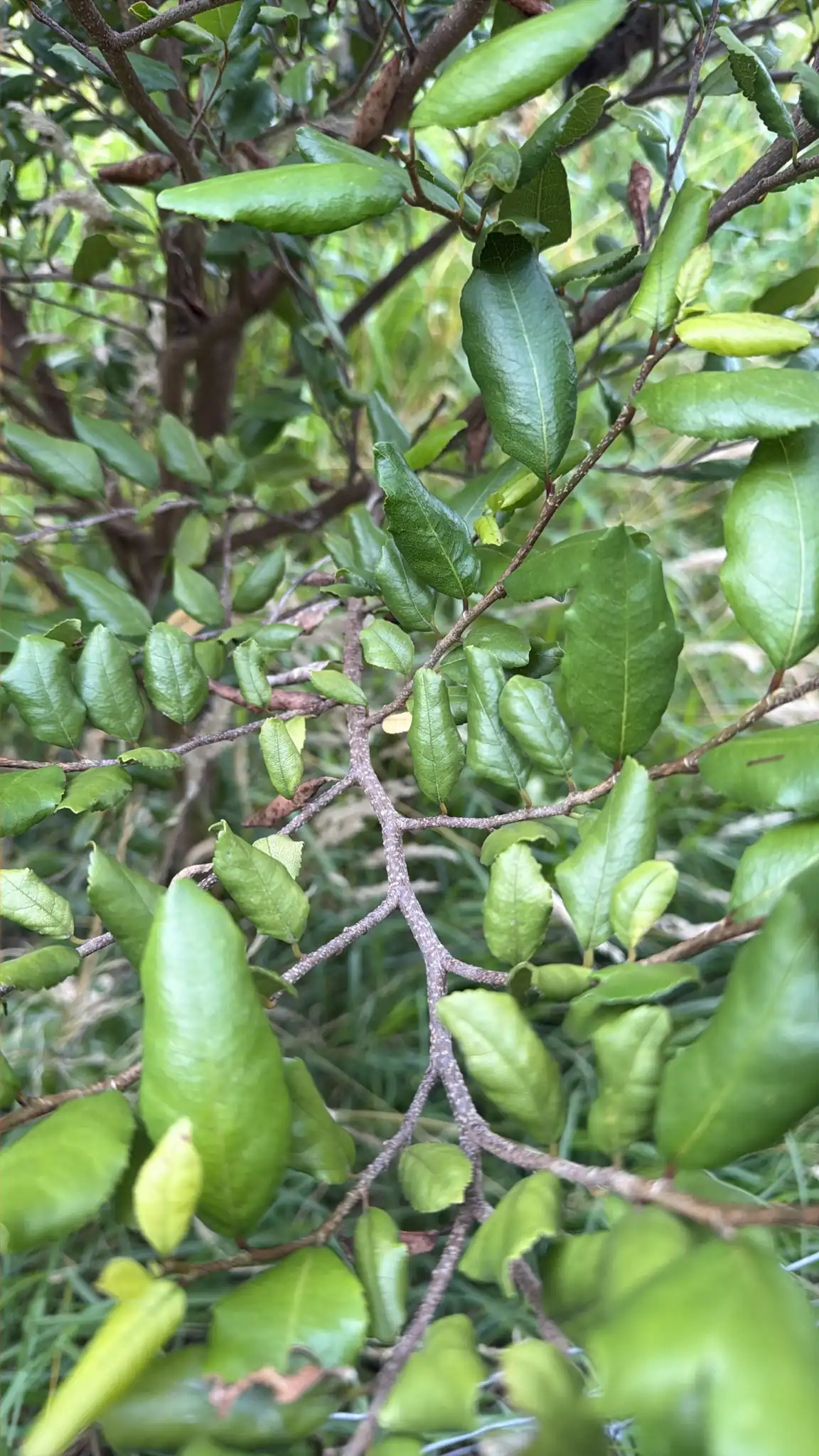
Paratrophis banksii is an evergreen coastal tree native to New Zealand, developing a broad, dense crown with dark brown bark marked by raised lenticels. Its foliage exhibits strong heteroblasty, moving from small, lobed juvenile leaves to larger, net-veined adult leaves carried on flexible branches.
This dioecious species produces small green-to-yellow flower spikes in spring followed by bright red-orange fleshy fruits on female specimens. Pruning or cutting any branch releases a thick milky sap characteristic of the mulberry family.
Uses & Benefits:
Essentials
At a Glance
Plant Type
Tree
Height
315"
Width
236"
Light
Full Sun, Partial Sun
Zones
9, 10
Water
Moderate
Humidity
Moderate
Lifespan
Long-lived
Native To
New Zealand
Toxicity
Mild Skin Irritant (sap)
Bloom period
Spring – Late spring
In flower about 3 months of the year
Planting
How to Grow
- Select a planting site in full sun or light shade with well-drained, fertile soil.
- Dig a hole twice as wide as the root ball and set the plant at the same depth it grew in its container.
- Water thoroughly after planting and apply a layer of organic mulch around the root zone, keeping it clear of the trunk.
- Water regularly during the first growing season until the root system establishes.
Pro Tip
Plant both male and female specimens within close proximity if fruit production is desired, as solitary trees will not set seed or berries.
Keep It Thriving
Care Guide
Do
- Plant in free-draining soils to avoid root rot.
- Wear gloves when pruning to avoid contact with the milky latex sap.
- Protect young saplings from deer and rabbit browsing.
Don't
- Do not allow soil to remain waterlogged or poorly drained.
- Do not make harsh pruning cuts into old, leafless wood.
- Do not expect fruit setting on isolated, single specimens.
Seasonal Care Calendar
| Task | Jan | Feb | Mar | Apr | May | Jun | Jul | Aug | Sep | Oct | Nov | Dec |
|---|---|---|---|---|---|---|---|---|---|---|---|---|
| Fertilize | ||||||||||||
| Mulch | ||||||||||||
| Pest Check | ||||||||||||
| Prune |
Watch Out For
Pests & Diseases
Common Pests
Common Diseases
In the Garden
Landscape Uses & Companions
Landscape Uses
Multiply
Propagation Methods
Good to Know
Common Questions
Large-leaved Milk Tree questions
What zones can Large-leaved Milk Tree grow in?
Large-leaved Milk Tree is hardy in USDA Zones 9–10: in that range it survives winter in the ground. Colder than Zone 9, winters are too cold for it to survive outdoors.
Is Large-leaved Milk Tree deer resistant?
Not reliably. Deer may browse Large-leaved Milk Tree, especially tender spring growth — plan on repellents or fencing where pressure is high.
When does Large-leaved Milk Tree bloom?
Large-leaved Milk Tree typically blooms in spring. Exact timing shifts a week or two with your zone — Sow's bloom calendar maps it to your garden.
Does Large-leaved Milk Tree need full sun?
Large-leaved Milk Tree does best in full sun to part shade. In hot climates, afternoon shade keeps blooms fresher longer.
Is Large-leaved Milk Tree drought tolerant?
Yes — once established (usually after the first full season), Large-leaved Milk Tree handles dry spells with minimal watering. Water deeply its first year to build the root system that makes that possible.
More Paratrophis to compare
Keep exploring
Explore the genus
Hardy in your zone?
Grow Large-leaved Milk Tree with confidence
See it in a design of your actual yard, get zone-matched care reminders, and track it season by season in your garden journal.