The Story
Plant Bio
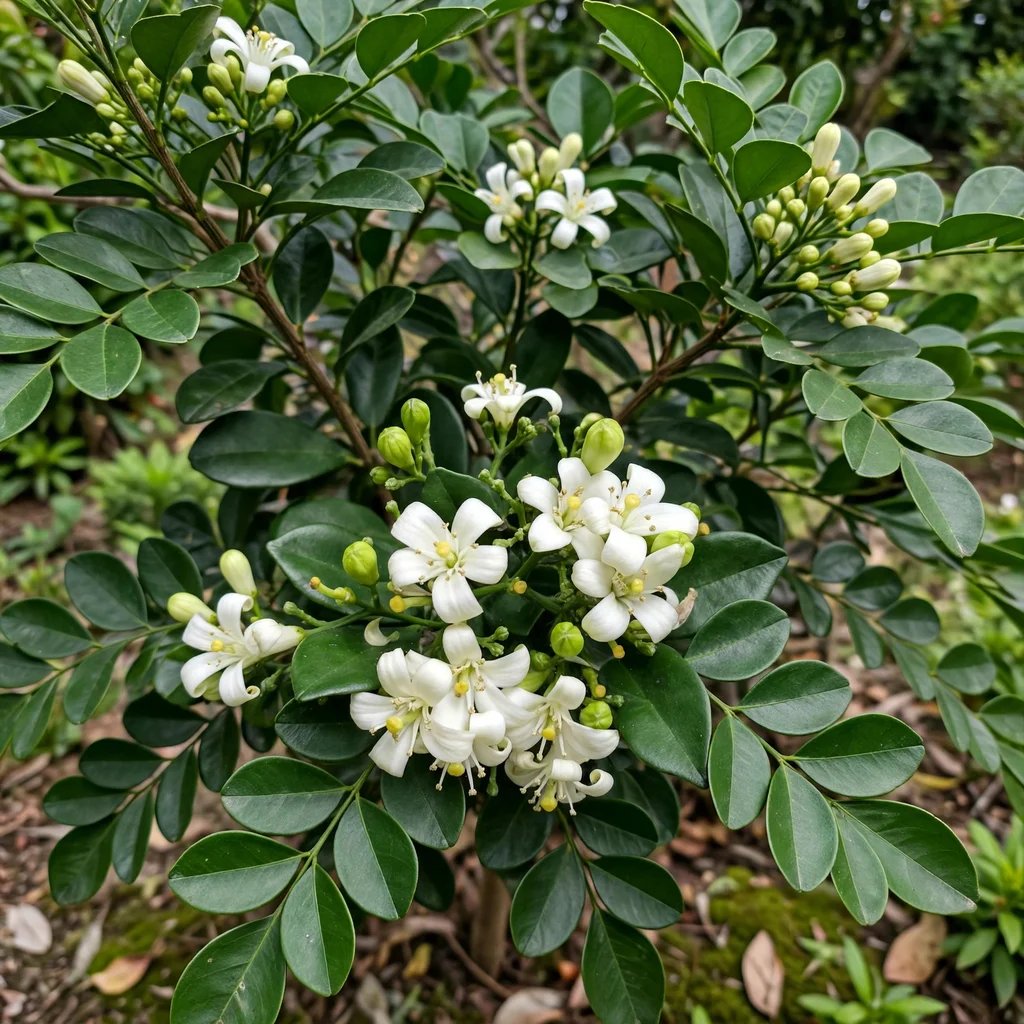
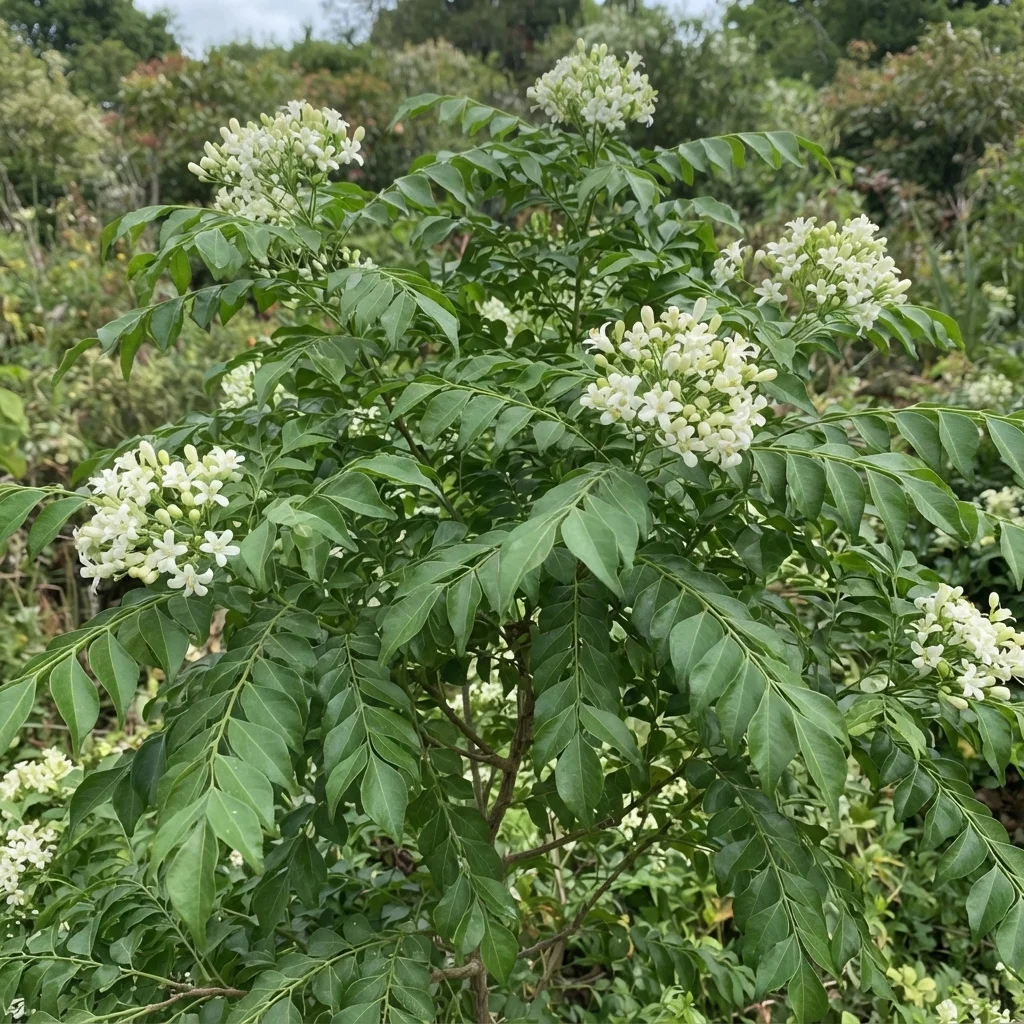
Murraya paniculata is an evergreen shrub or small tree in the citrus family, reaching 8 to 12 feet in frost-free gardens with pinnate leaves of three to nine glossy leaflets that smell of citrus when crushed. The display comes from terminal clusters of up to eight intensely fragrant white flowers with narrow recurved petals, followed by ovoid bright red berries about half an inch long.
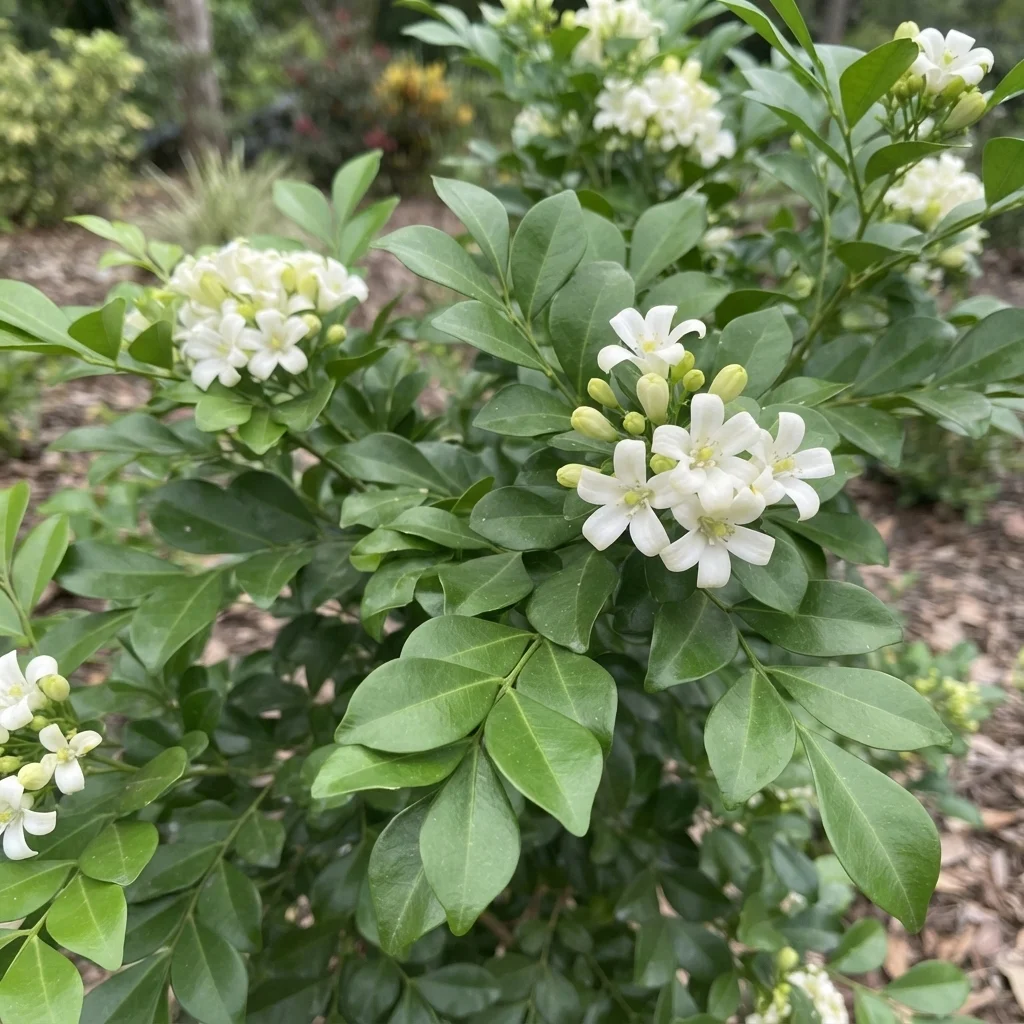
'Exotica' is the nursery name for plants long sold as Murraya exotica, now treated as a cultivar of Murraya paniculata rather than a separate species. It makes a bushy multistemmed evergreen hedge with the same citrus-scented foliage and fragrant white bloom, and it sets heavy crops of red seed where it has naturalized in Florida hammocks.
Uses & Benefits:
Essentials
At a Glance
Plant Type
Shrub
Height
144"
Width
144"
Light
Full Sun, Partial Sun
Zones
10
Water
Medium
Humidity
Unknown
Lifespan
Long-lived evergreen shrub
Native To
Tropical Asia to northern Australia
Toxicity
Unknown
Bloom period
Year round
In flower about 12 months of the year
Planting
How to Grow
- Plant in full sun to part shade in rich, moist, well-drained loam, spacing for a 10 to 12 foot spread.
- Water deeply to establish, then keep soil evenly moist but never soggy to avoid root rot.
- Fertilize lightly in spring with a balanced fertilizer for flowering shrubs.
- Prune lightly after bloom to shape the hedge and remove spent flower clusters.
- Protect from frost; grow in a container to move indoors where winter falls below zone 10.
Pro Tip
Plant in rich, moist but well-drained loam and keep water off the crown; soil that stays wet brings root rot.
Keep It Thriving
Care Guide
Do
- Do plant in well-drained loam in full sun to part shade.
- Do check leaf undersides for whiteflies, scale and mealybugs.
- Do prune after flowering to keep the hedge dense.
Don't
- Do not keep soil saturated or let water stand around the crown.
- Do not move plants across state lines without checking citrus psyllid quarantine rules.
- Do not plant where it can seed into native hammocks in Florida.
Seasonal Care Calendar
| Task | Jan | Feb | Mar | Apr | May | Jun | Jul | Aug | Sep | Oct | Nov | Dec |
|---|---|---|---|---|---|---|---|---|---|---|---|---|
| Fertilize | ||||||||||||
| Mulch | ||||||||||||
| Pest Check | ||||||||||||
| Prune | ||||||||||||
| Winter Prep |
Watch Out For
Pests & Diseases
Common Pests
Common Diseases
In the Garden
Landscape Uses & Companions
Landscape Uses
Companion Plants
Multiply
Propagation Methods
Good to Know
Common Questions
Orange Jessamine questions
What zones can Orange Jessamine grow in?
Orange Jessamine is hardy in USDA Zone 10: in that range it survives winter in the ground. Colder than Zone 10, grow it in a container you can move to shelter for the winter.
When does Orange Jessamine bloom?
Orange Jessamine typically blooms year-round. Exact timing shifts a week or two with your zone — Sow's bloom calendar maps it to your garden.
Does Orange Jessamine need full sun?
Orange Jessamine does best in full sun to part shade. In hot climates, afternoon shade keeps blooms fresher longer.
More Murraya to compare

Keep exploring
Explore the genus
Hardy in your zone?
Grow Orange Jessamine with confidence
See it in a design of your actual yard, get zone-matched care reminders, and track it season by season in your garden journal.