The Story
Plant Bio
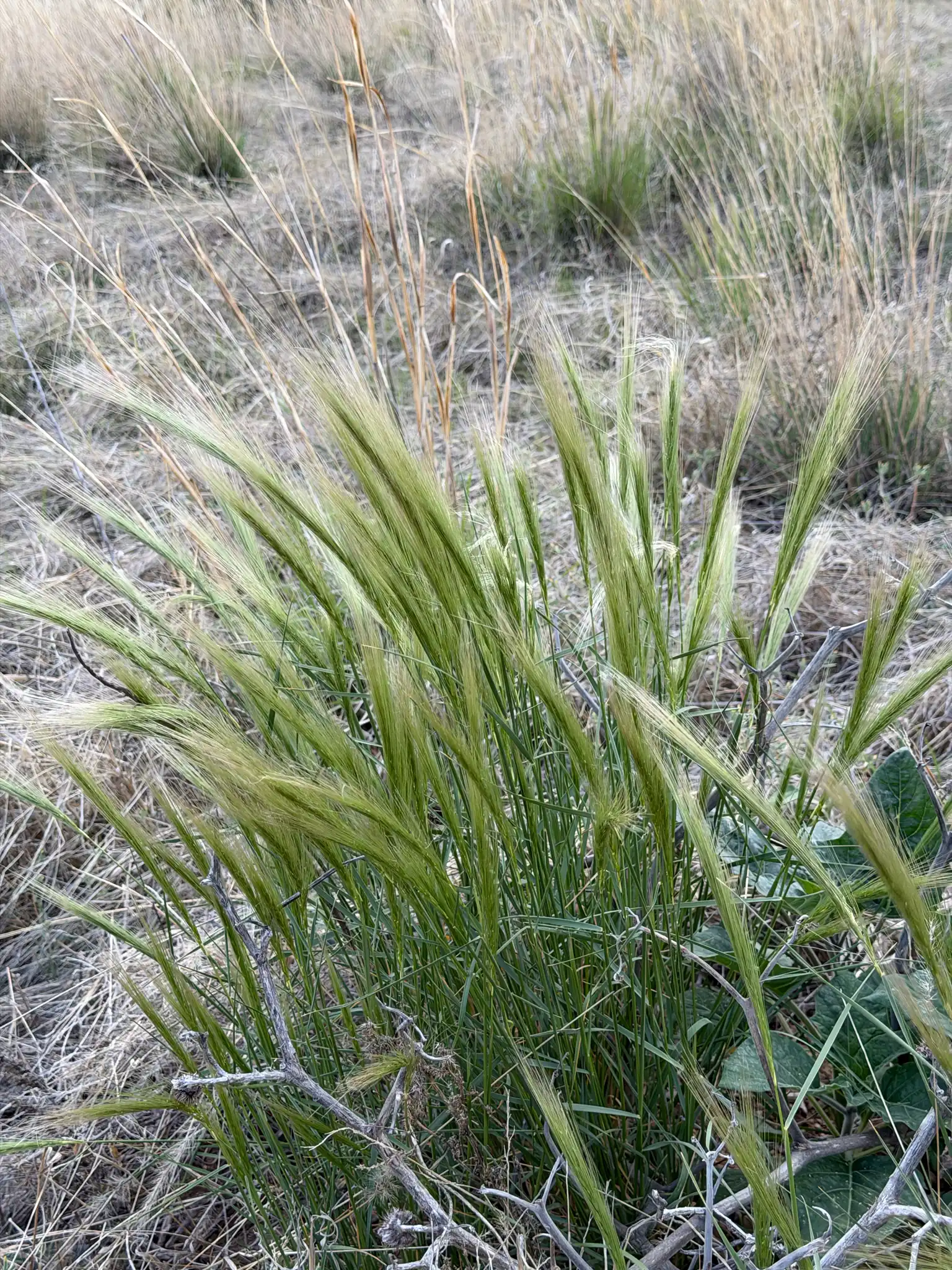
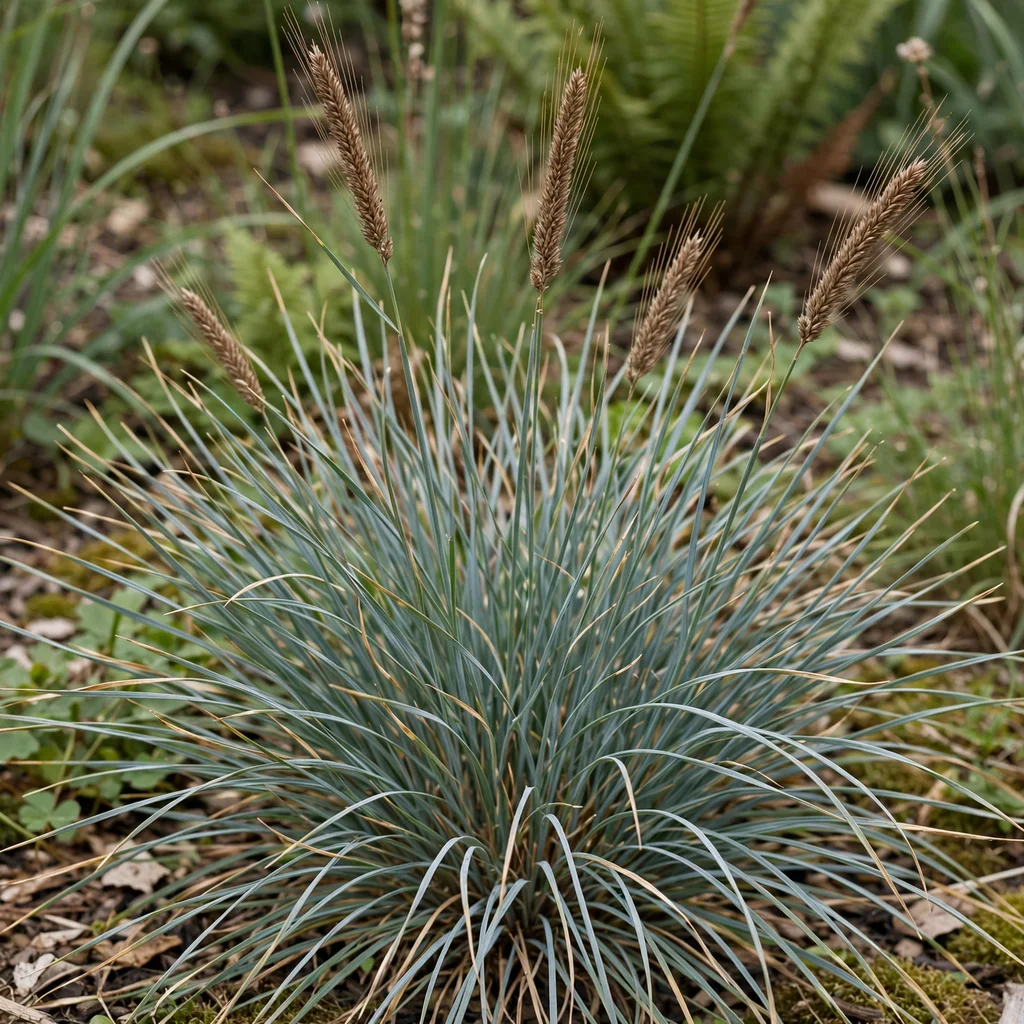
Elymus elymoides is a cool-season perennial bunchgrass that forms dense tufts of erect to spreading culms without rhizomes and reaches 6 to 22 inches tall. The flat or rolled leaf blades green up in early spring and hold into fall and winter, often flushing purple as the plant matures.
The head is a dense bottlebrush spike ringed with long needlelike awns that spread wide at maturity and dry to straw. Seed ripens from summer into early fall, and the stiff awns persist on the head instead of shattering cleanly.
Uses & Benefits:
Essentials
At a Glance
Plant Type
Grass
Height
18"
Width
12"
Light
Full Sun, Partial Sun
Zones
4, 5, 6, 7, 8, 9
Water
Low
Humidity
Low to moderate
Lifespan
Short-lived perennial
Native To
Western North America
Toxicity
Awns injurious; spring growth can cause digestive upset
Bloom period
Late spring – Summer
In flower about 4 months of the year
Planting
How to Grow
- Sow seed in fall or early spring onto well-drained sandy to clay soil in full sun to part shade.
- Press seed shallowly into the surface and water sparingly until seedlings root, then reduce to natural rainfall.
- Thin to tufted clumps and keep competing weeds down the first season without fertilizing.
- Allow seed heads to mature and drop in summer, then leave stubble standing through winter for early regrowth.
Pro Tip
Sow where it is to grow and leave the tuft intact; plants live longer on lean soil with no fertilizer and no hard cutback.
Keep It Thriving
Care Guide
Do
- Plant in lean, well-drained soil in full sun to part shade.
- Allow fall seed drop to renew short-lived clumps.
- Site away from pets and livestock because of awned heads.
Don't
- Do not fertilize to push summer growth; it shortens plant life.
- Do not cut tufts to the crown each year.
- Do not graze or handle mature awned heads in summer.
Seasonal Care Calendar
| Task | Jan | Feb | Mar | Apr | May | Jun | Jul | Aug | Sep | Oct | Nov | Dec |
|---|---|---|---|---|---|---|---|---|---|---|---|---|
| Pest Check | ||||||||||||
| Plant | ||||||||||||
| Propagate | ||||||||||||
| Spring Cleanup | ||||||||||||
| Winter Prep |
Watch Out For
Pests & Diseases
Common Pests
Common Diseases
In the Garden
Landscape Uses & Companions
Landscape Uses
Multiply
Propagation Methods
Good to Know
Common Questions
Bottlebrush Squirreltail questions
What zones can Bottlebrush Squirreltail grow in?
Bottlebrush Squirreltail is hardy in USDA Zones 4–9: in that range it survives winter in the ground. Warmer than Zone 9, winter isn't the problem: it prefers colder winters, and summer heat can shorten its life.
Is Bottlebrush Squirreltail deer resistant?
Not reliably. Deer may browse Bottlebrush Squirreltail, especially tender spring growth — plan on repellents or fencing where pressure is high.
When does Bottlebrush Squirreltail bloom?
Bottlebrush Squirreltail typically blooms from late spring to late summer. Exact timing shifts a week or two with your zone — Sow's bloom calendar maps it to your garden.
Does Bottlebrush Squirreltail need full sun?
Bottlebrush Squirreltail does best in full sun to part shade. In hot climates, afternoon shade keeps blooms fresher longer.
Is Bottlebrush Squirreltail drought tolerant?
Yes — once established (usually after the first full season), Bottlebrush Squirreltail handles dry spells with minimal watering. Water deeply its first year to build the root system that makes that possible.
More Elymus to compare
Keep exploring
Explore the genus
Grow Bottlebrush Squirreltail with confidence
See it in a design of your actual yard, get zone-matched care reminders, and track it season by season in your garden journal.