The Story
Plant Bio
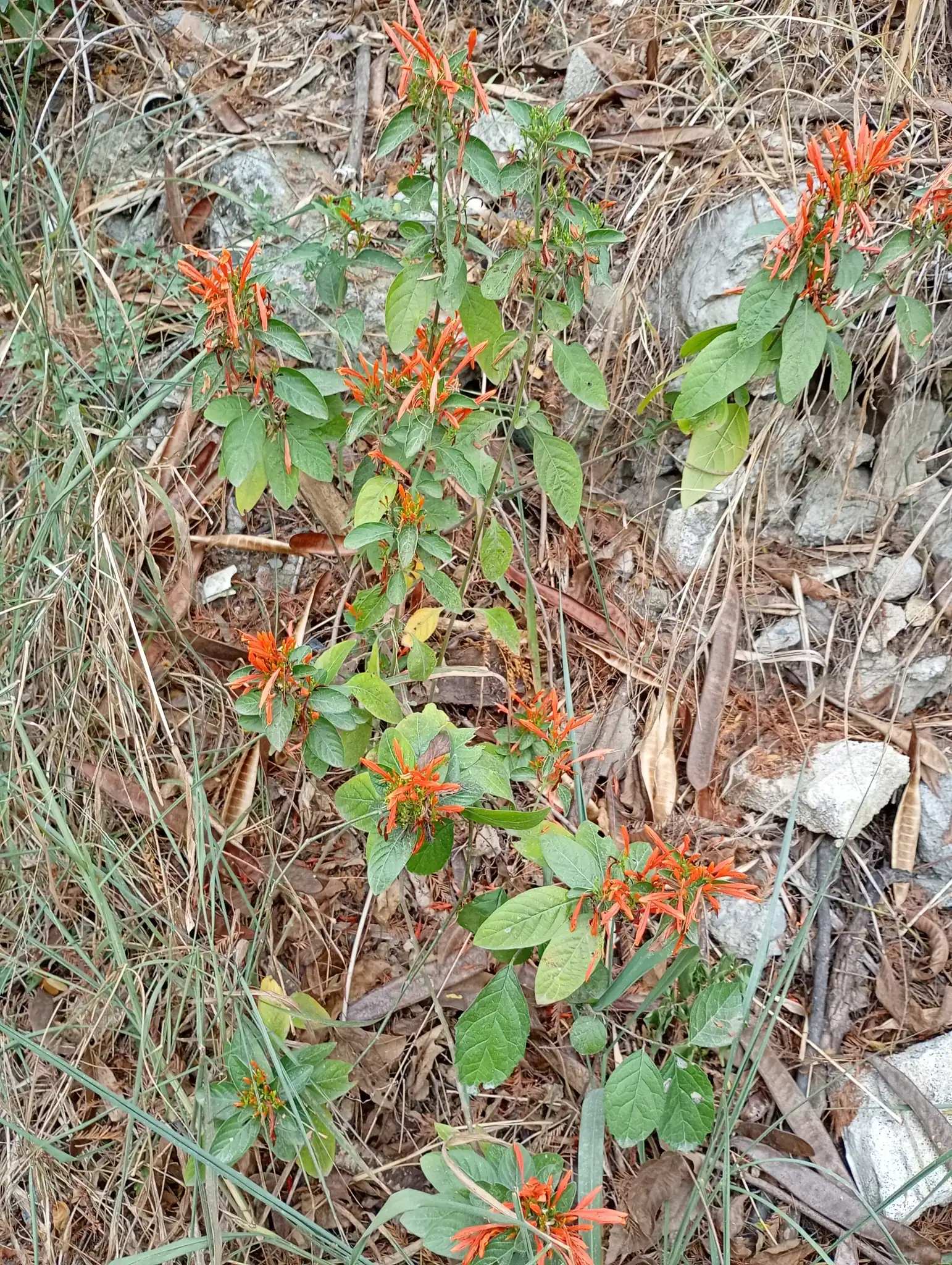
Justicia spicigera, the Mexican honeysuckle, is an evergreen shrub from Mexico and Central America reaching two to four feet tall and three to five feet wide with a compact rounded form and opposite lance-shaped green leaves. The display comes from dense terminal spikes of narrow orange tubes that open over a long season from spring to frost.
It flowers in part shade and reflected heat where many sun shrubs fail, feeding hummingbirds plus butterflies and bees and hosting Texan crescent caterpillars. Stems brown near 15 degrees but resprout from the roots in spring, so cold-zone plants return as a herbaceous mound rather than a woody shrub.
Uses & Benefits:
Essentials
At a Glance
Plant Type
Shrub
Height
48"
Width
60"
Light
Full Sun, Partial Sun, Shade
Zones
8, 9, 10
Water
Moderate
Humidity
Tolerant
Lifespan
Perennial shrub
Native To
Mexico to Colombia
Toxicity
Not known to be toxic
Bloom period
Spring – Fall
In flower about 9 months of the year
Planting
How to Grow
- Plant after last frost in full sun to part shade in well-drained loam.
- Set the crown level with the soil and water in deeply to settle roots.
- Water regularly the first season, then cut back once established; it is drought-tolerant but blooms best with moderate moisture.
- Mulch to hold soil moisture while keeping the crown dry.
- Tip-prune after bloom and remove freeze-damaged stems to the ground in early spring.
Pro Tip
Cut freeze-damaged stems to the ground in early spring and tip-prune lightly after bloom; hard cutting every year destroys the rounded form and removes flowering wood.
Keep It Thriving
Care Guide
Do
- Give full sun to part shade with good air flow.
- Water deeply during establishment, then moderately.
- Tip-prune lightly after bloom to keep the mound dense.
Don't
- Do not overwater or keep the crown wet; soggy soil causes root rot.
- Do not cut hard every year; it ruins the rounded form.
- Do not expect top growth to stay green through hard frost; let roots resprout in spring.
Seasonal Care Calendar
| Task | Jan | Feb | Mar | Apr | May | Jun | Jul | Aug | Sep | Oct | Nov | Dec |
|---|---|---|---|---|---|---|---|---|---|---|---|---|
| Mulch | ||||||||||||
| Pest Check | ||||||||||||
| Plant | ||||||||||||
| Prune | ||||||||||||
| Winter Prep |
Watch Out For
Pests & Diseases
Common Pests
Common Diseases
In the Garden
Landscape Uses & Companions
Landscape Uses
Multiply
Propagation Methods
Good to Know
Common Questions
Mexican Honeysuckle questions
What zones can Mexican Honeysuckle grow in?
Mexican Honeysuckle is hardy in USDA Zones 8–10: in that range it survives winter in the ground. Colder than Zone 8, grow it in a container you can move to shelter for the winter.
When does Mexican Honeysuckle bloom?
Mexican Honeysuckle typically blooms from spring to fall. Exact timing shifts a week or two with your zone — Sow's bloom calendar maps it to your garden.
Does Mexican Honeysuckle need full sun?
Mexican Honeysuckle does best in full sun to part shade. In hot climates, afternoon shade keeps blooms fresher longer.
Is Mexican Honeysuckle drought tolerant?
Yes — once established (usually after the first full season), Mexican Honeysuckle handles dry spells with minimal watering. Water deeply its first year to build the root system that makes that possible.
More Justicia to compare
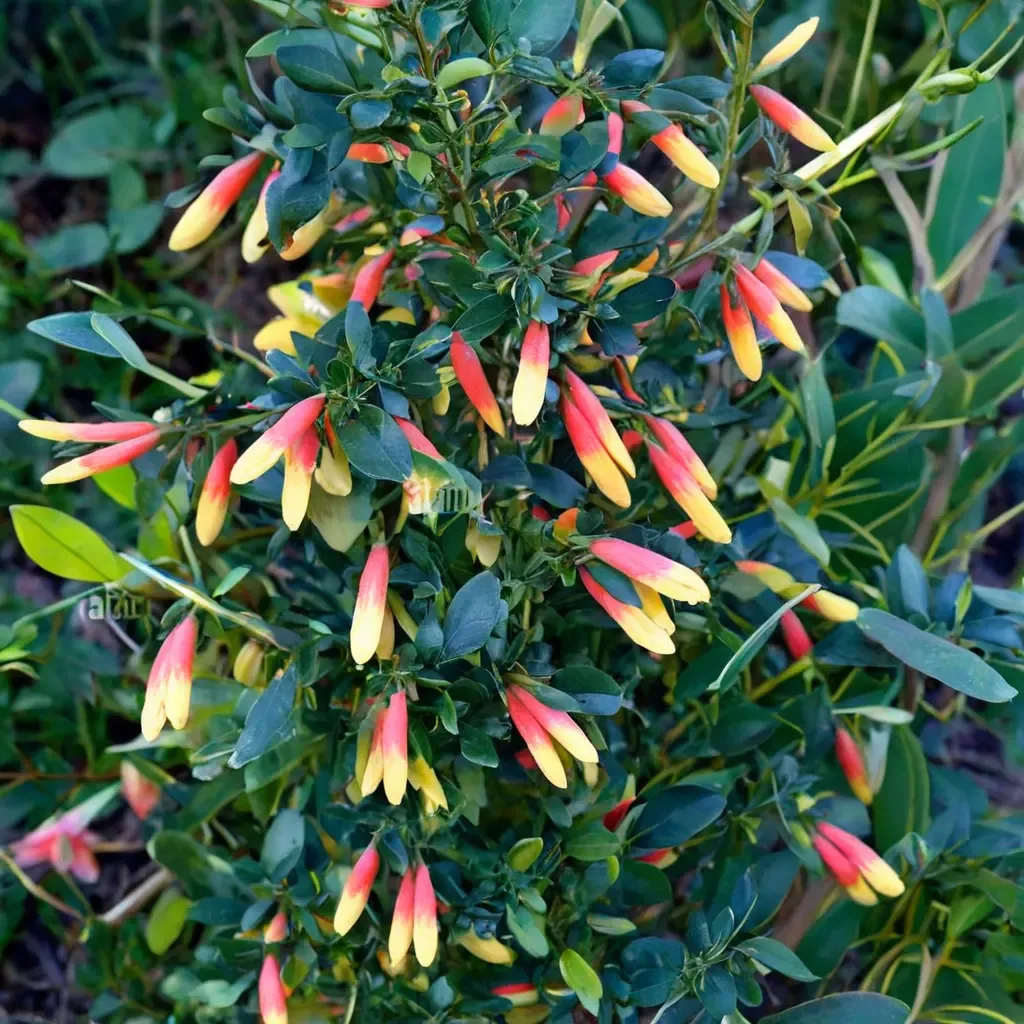
Brazilian Fuchsia
Justicia rizzinii 'Brazilian Fuchsia'
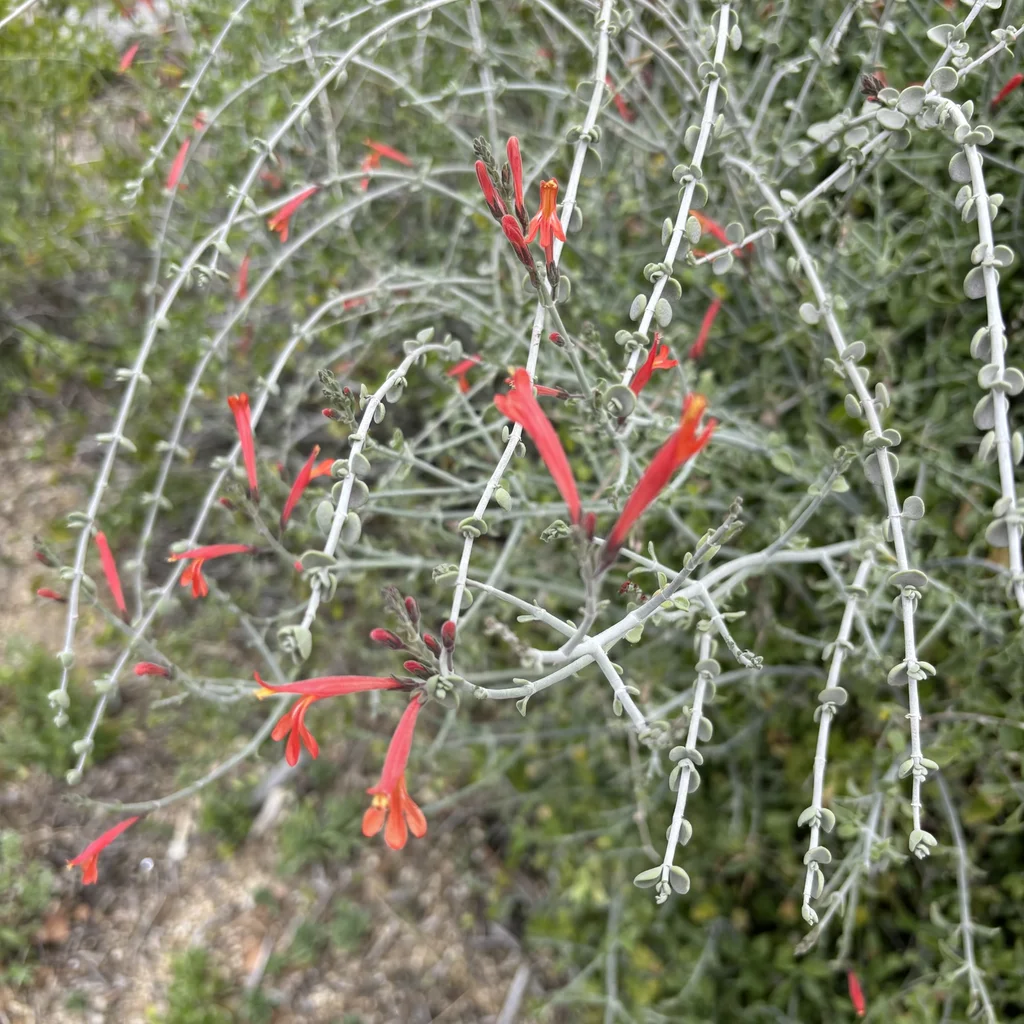
Chuparosa
Justicia californica
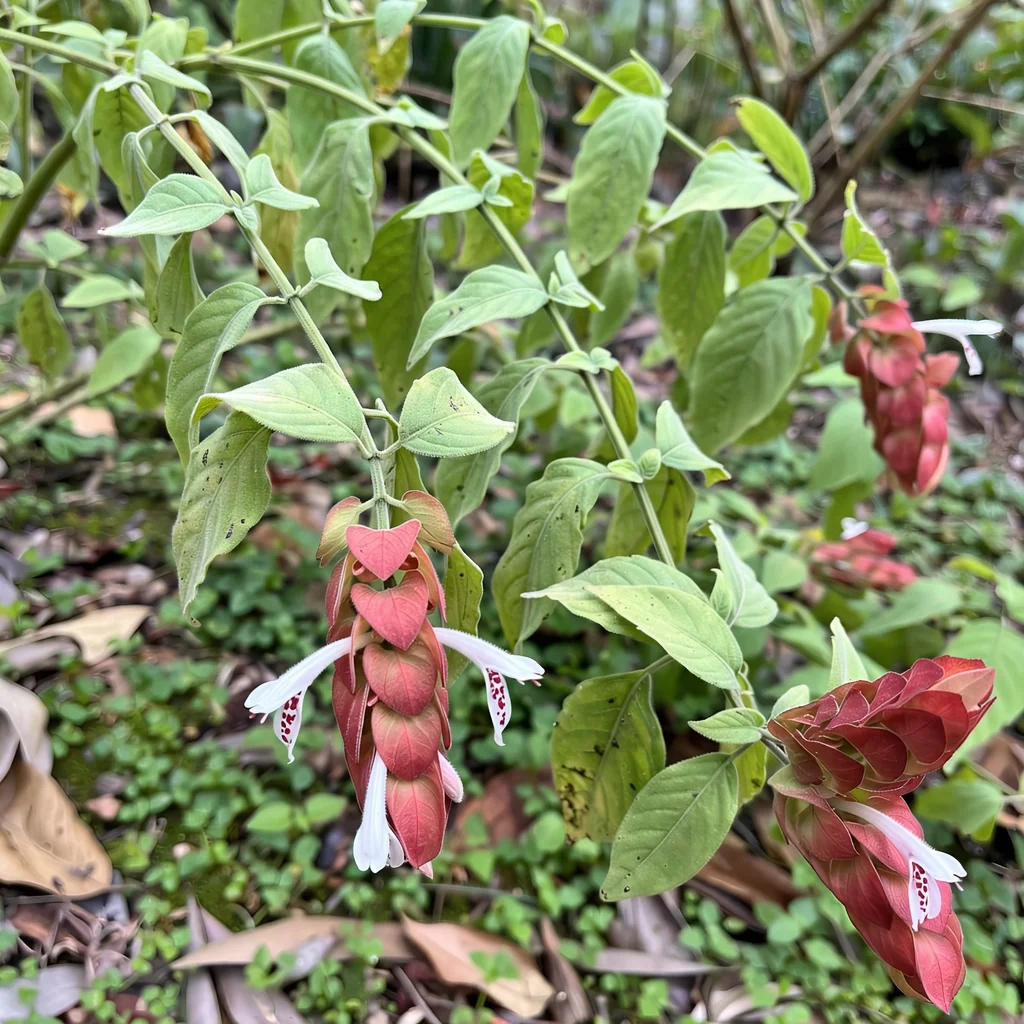
Shrimp Plant
Justicia brandegeeana
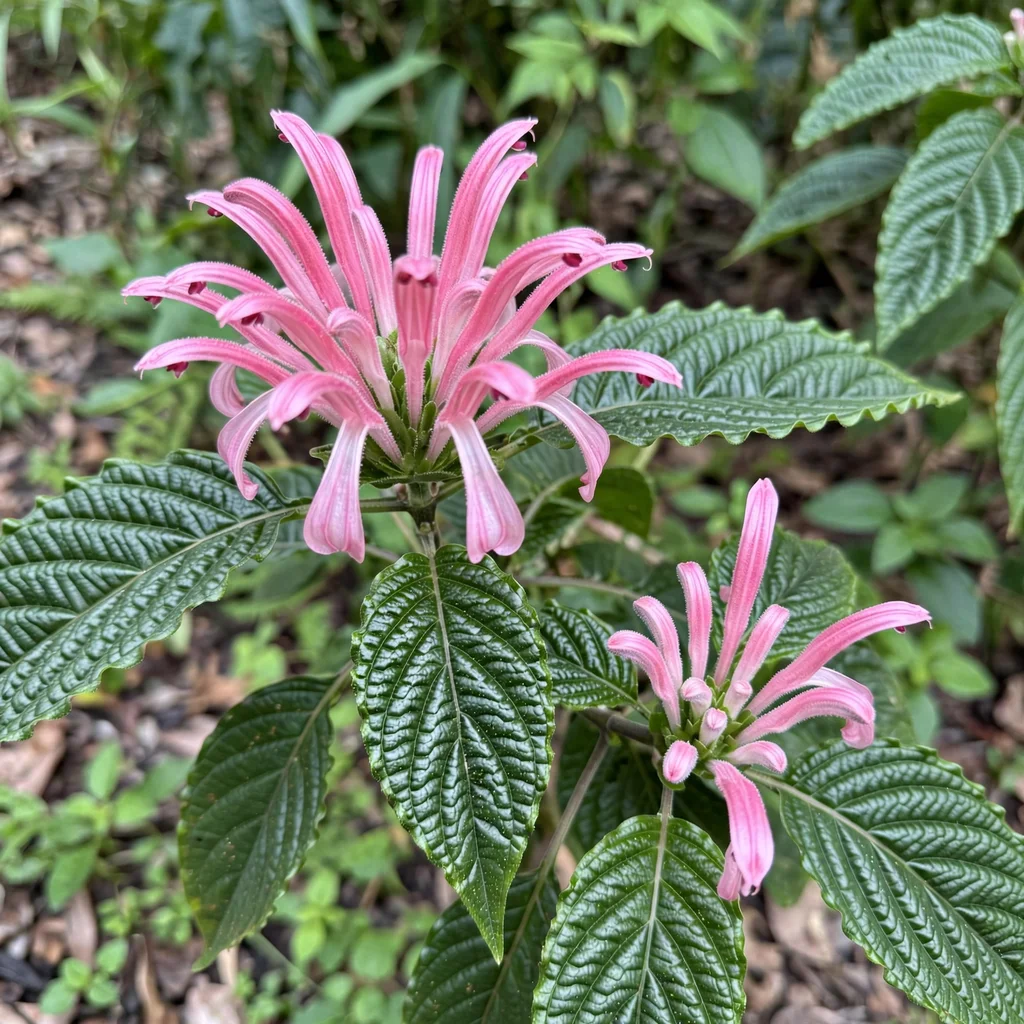
Brazilian Plume
Justicia carnea
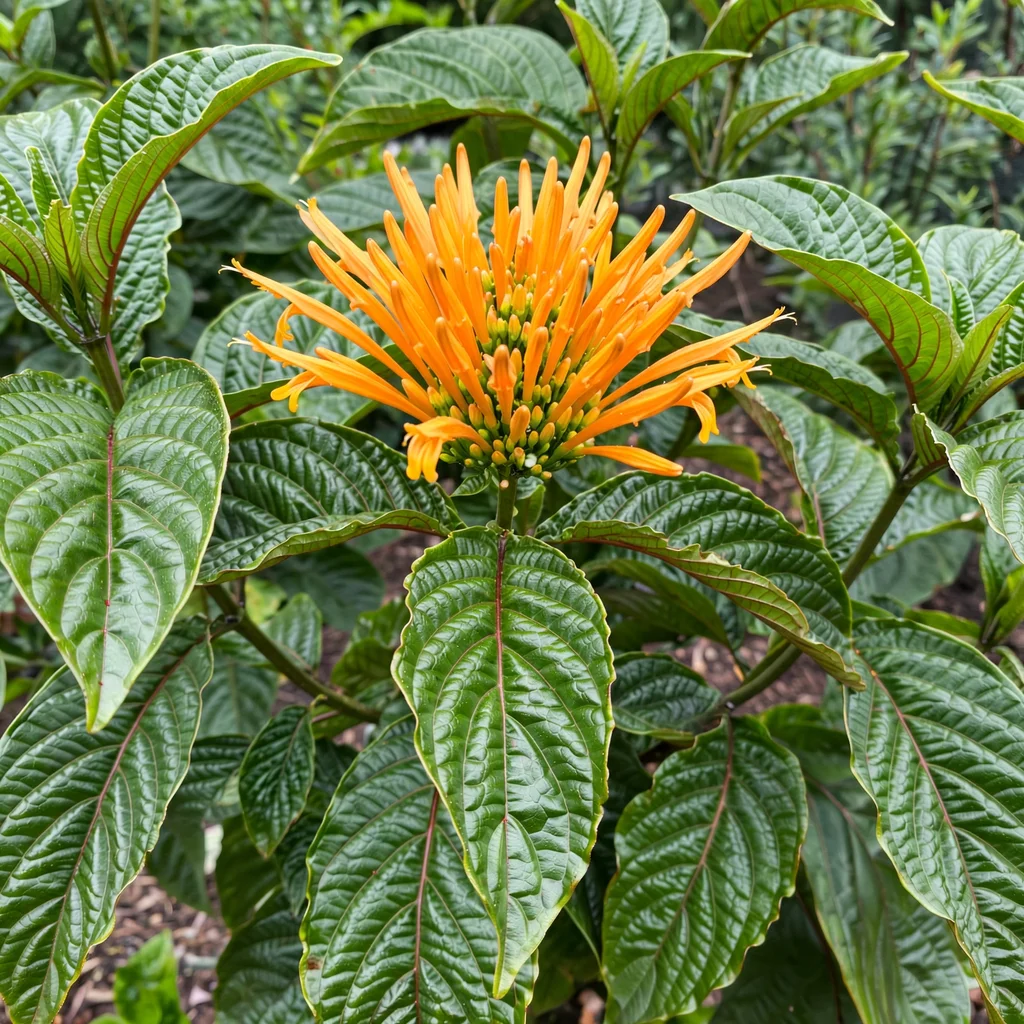
Orange Flame Justicia
Justicia chrysostephana
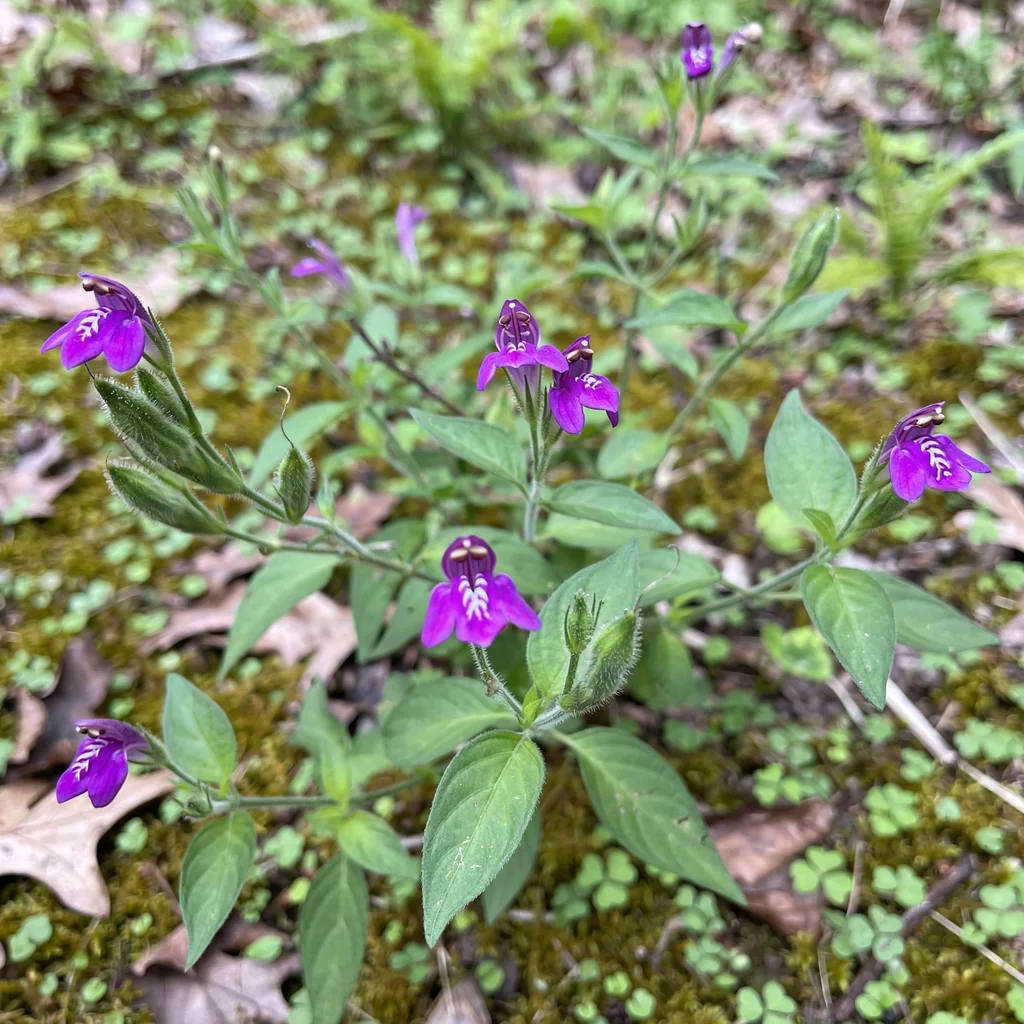
Cooley's Waterwillow
Justicia pringlei
Keep exploring
Explore the genus
Hardy in your zone?
Grow Mexican Honeysuckle with confidence
See it in a design of your actual yard, get zone-matched care reminders, and track it season by season in your garden journal.