The Story
Plant Bio
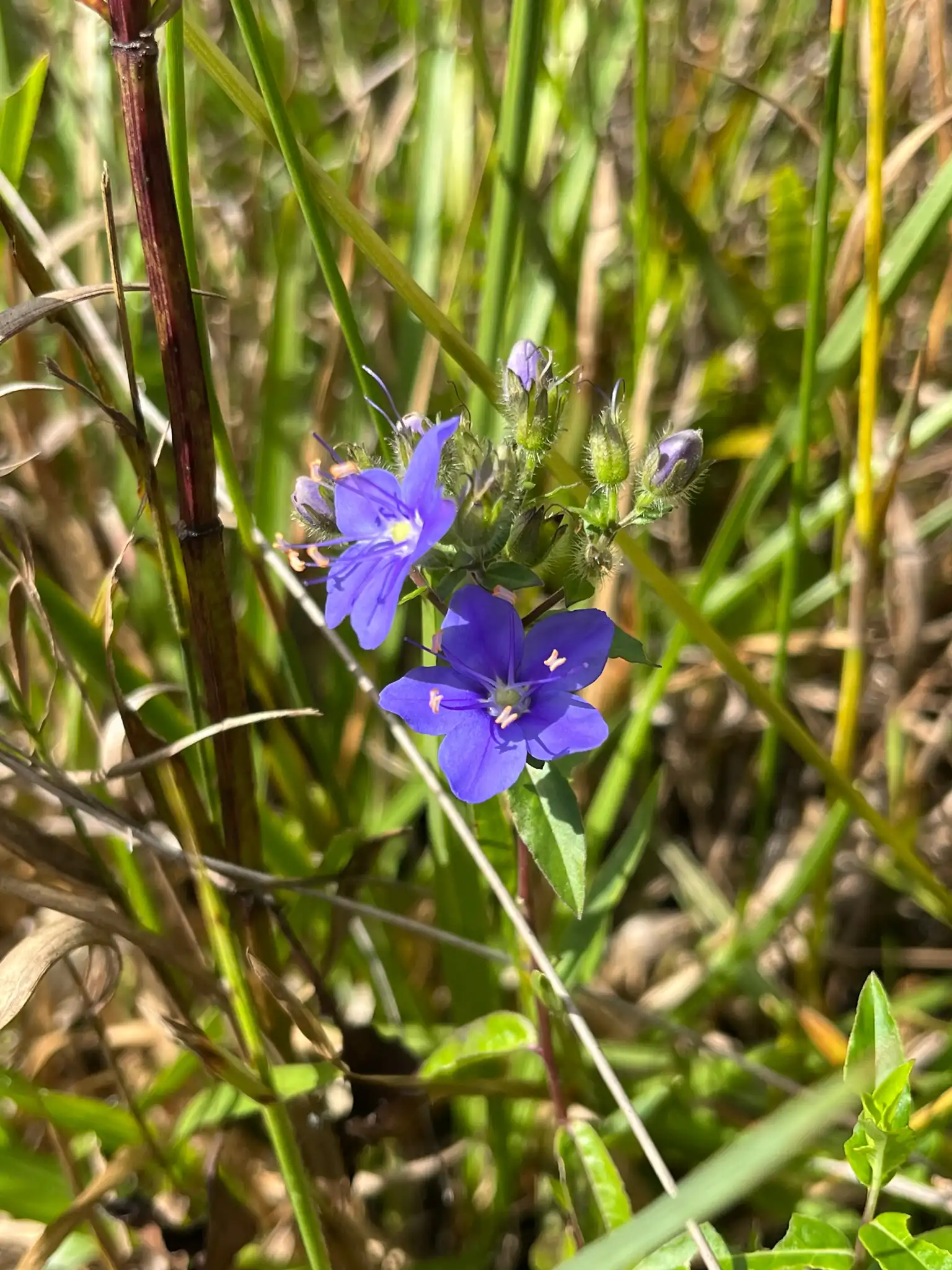
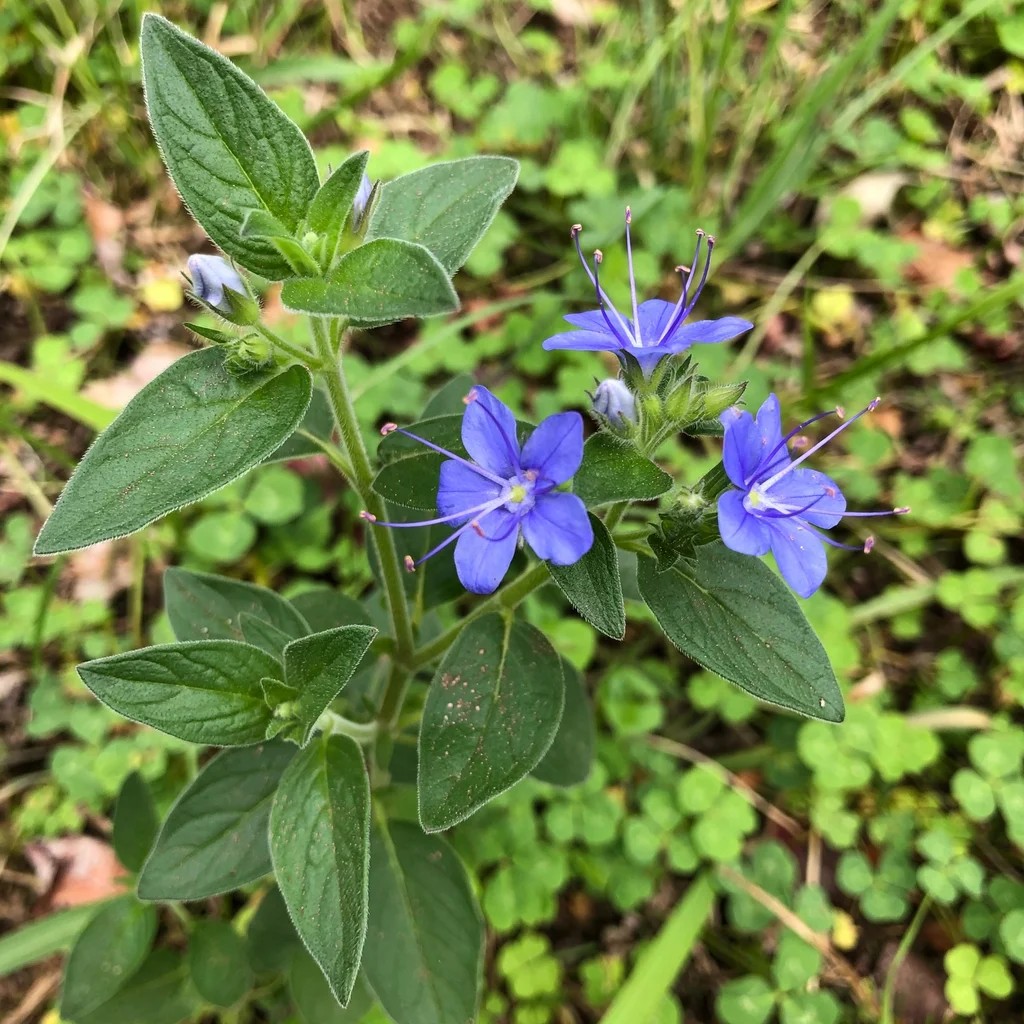
Hydrolea corymbosa is a multi-stemmed herbaceous perennial of southeastern coastal wetlands, reaching two to three feet tall and spreading by rhizomes to form colonies in saturated soil. The stems carry alternate sessile lance-shaped leaves with toothed margins, hairy above and smooth below, dying back to the ground in winter.
It is separated from its close relatives by the combination of sessile toothed leaves, spineless stems and brilliant blue to violet flowers with orange to pinkish-orange pollen. Flowers are borne in terminal corymbs of fifteen to thirty blooms about an inch wide that open in the morning and fade the same day, requiring bees for pollination.
Uses & Benefits:
Essentials
At a Glance
Plant Type
Perennial
Height
30"
Width
12"
Light
Full Sun, Partial Sun
Zones
8, 9, 10
Water
Wet - constantly moist
Humidity
High - humid subtropical
Lifespan
Herbaceous perennial, crown renews yearly by rhizomes
Native To
Southeastern USA - FL, GA, SC, AL
Toxicity
Leaves may cause nausea if ingested
Bloom period
Late spring – Early fall
In flower about 5 months of the year
Planting
How to Grow
- Set plants at pond margins, swales or rain gardens where soil stays saturated, in full sun to light shade.
- Plant crowns level with the soil surface in moist organic soil and water in deeply to settle.
- Maintain constant moisture through the growing season; do not let the root zone dry out.
- Feed lightly during active growth to support repeat bloom.
- Leave winter crowns in place and clear dead tops in late winter before new shoots emerge.
Pro Tip
Keep the root zone saturated at all times; even brief drying checks growth and a dried crown will not resprout strongly in spring.
Keep It Thriving
Care Guide
Do
- Grow it wet - pond edge, ditch margin or a container without drainage kept saturated.
- Remove dead tops in late winter to make room for spring resprouts from rhizomes.
- Divide congested colonies or pot up suckers in spring to renew vigor.
Don't
- Do not plant it in a dry perennial border; it fails without constant moisture.
- Do not cut living stems back hard in fall while the crown is storing reserves.
- Do not eat leaves or let children chew them; ingestion may cause nausea.
Seasonal Care Calendar
| Task | Jan | Feb | Mar | Apr | May | Jun | Jul | Aug | Sep | Oct | Nov | Dec |
|---|---|---|---|---|---|---|---|---|---|---|---|---|
| Fertilize | ||||||||||||
| Plant | ||||||||||||
| Propagate | ||||||||||||
| Spring Cleanup | ||||||||||||
| Winter Prep |
Watch Out For
Pests & Diseases
Common Pests
In the Garden
Landscape Uses & Companions
Landscape Uses
Multiply
Propagation Methods
Good to Know
Common Questions
Skyflower questions
What zones can Skyflower grow in?
Skyflower is hardy in USDA Zones 8–10: in that range it survives winter in the ground. Colder than Zone 8, grow it in a container you can move to shelter for the winter, or as an annual.
When does Skyflower bloom?
Skyflower typically blooms from late spring to early fall. Exact timing shifts a week or two with your zone — Sow's bloom calendar maps it to your garden.
Does Skyflower need full sun?
Skyflower does best in full sun to part shade. In hot climates, afternoon shade keeps blooms fresher longer.
More Hydrolea to compare
Keep exploring
Explore the genus
Hardy in your zone?
Grow Skyflower with confidence
See it in a design of your actual yard, get zone-matched care reminders, and track it season by season in your garden journal.