The Story
Plant Bio
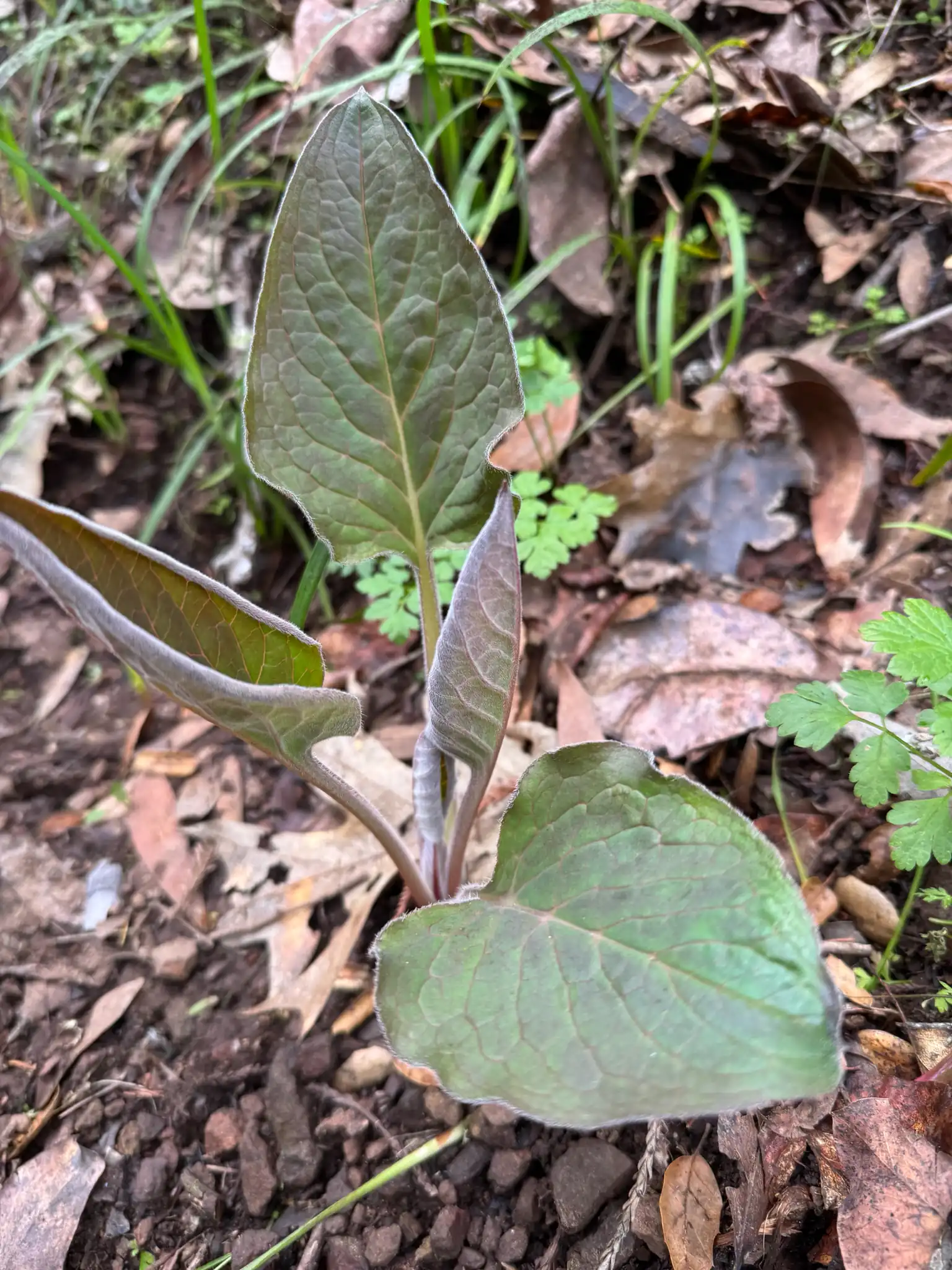
Adelinia grandis is a woodland herbaceous perennial native to western North America, arising each winter from a deep, fleshy taproot to form a basal rosette of large, oval green leaves. In spring, erect unbranched stems reach up to three feet high, carrying terminal clusters of bright blue forget-me-not-like flowers with white central appendages.
This species is notably summer-deciduous, dropping its foliage and entering complete dormancy soon after setting seed to endure dry summer conditions. The flowers age from vivid blue to purplish-pink, followed by seeds covered in tiny hooked barbs that cling to passing animals.
Uses & Benefits:
Essentials
At a Glance
Plant Type
Perennial
Height
35"
Width
35"
Light
Partial Sun, Shade
Zones
5, 6, 7, 8, 9
Water
Low (summer dry)
Humidity
Moderate
Lifespan
Perennial
Native To
Western North America
Toxicity
Toxic if ingested
Bloom period
Late winter – Late spring
In flower about 4 months of the year
Marketplace
Where to Buy
Shipping costs Year-round shipping Free shipping
Planting
How to Grow
- Plant in partial shade to deep shade in soil with excellent drainage.
- Water regularly during its active growth period in winter and spring to establish roots.
- Cease all supplemental watering as the foliage yellowing signals natural summer dormancy.
- Cut spent flower stems to the ground after seed set, taking care not to disturb the root crown.
Pro Tip
Avoid all summer irrigation once established, as warm, moist soil causes the dormant taproot to rot rapidly.
Keep It Thriving
Care Guide
Do
- Provide deep shade under deciduous or evergreen oak trees.
- Ensure soil drains quickly to prevent root rot during wet periods.
- Allow foliage to die back naturally in early summer.
Don't
- Do not irrigate during summer dormancy.
- Do not dig up or disturb the established taproot.
- Do not apply heavy synthetic fertilizers.
Seasonal Care Calendar
| Task | Jan | Feb | Mar | Apr | May | Jun | Jul | Aug | Sep | Oct | Nov | Dec |
|---|---|---|---|---|---|---|---|---|---|---|---|---|
| Mulch | ||||||||||||
| Pest Check | ||||||||||||
| Plant | ||||||||||||
| Prune |
Watch Out For
Pests & Diseases
Common Pests
Common Diseases
In the Garden
Landscape Uses & Companions
Landscape Uses
Multiply
Propagation Methods
Good to Know
Common Questions
Pacific Hound's Tongue questions
What zones can Pacific Hound's Tongue grow in?
Pacific Hound's Tongue is hardy in USDA Zones 5–9: in that range it survives winter in the ground. Colder than Zone 5, grow it in a container you can move to shelter for the winter, or as an annual. Warmer than Zone 9, winter isn't the problem: it prefers colder winters, and summer heat can shorten its life.
Is Pacific Hound's Tongue deer resistant?
Yes — Pacific Hound's Tongue is rated deer-resistant. Deer typically pass it over, though extreme hunger can override any plant's defenses.
When does Pacific Hound's Tongue bloom?
Pacific Hound's Tongue typically blooms from late winter to late spring. Exact timing shifts a week or two with your zone — Sow's bloom calendar maps it to your garden.
Does Pacific Hound's Tongue need full sun?
Pacific Hound's Tongue does best in part shade.
Is Pacific Hound's Tongue drought tolerant?
Yes — once established (usually after the first full season), Pacific Hound's Tongue handles dry spells with minimal watering. Water deeply its first year to build the root system that makes that possible.
Keep exploring
Explore the genus
Hardy in your zone?
Grow Pacific Hound's Tongue with confidence
See it in a design of your actual yard, get zone-matched care reminders, and track it season by season in your garden journal.