The Story
Plant Bio
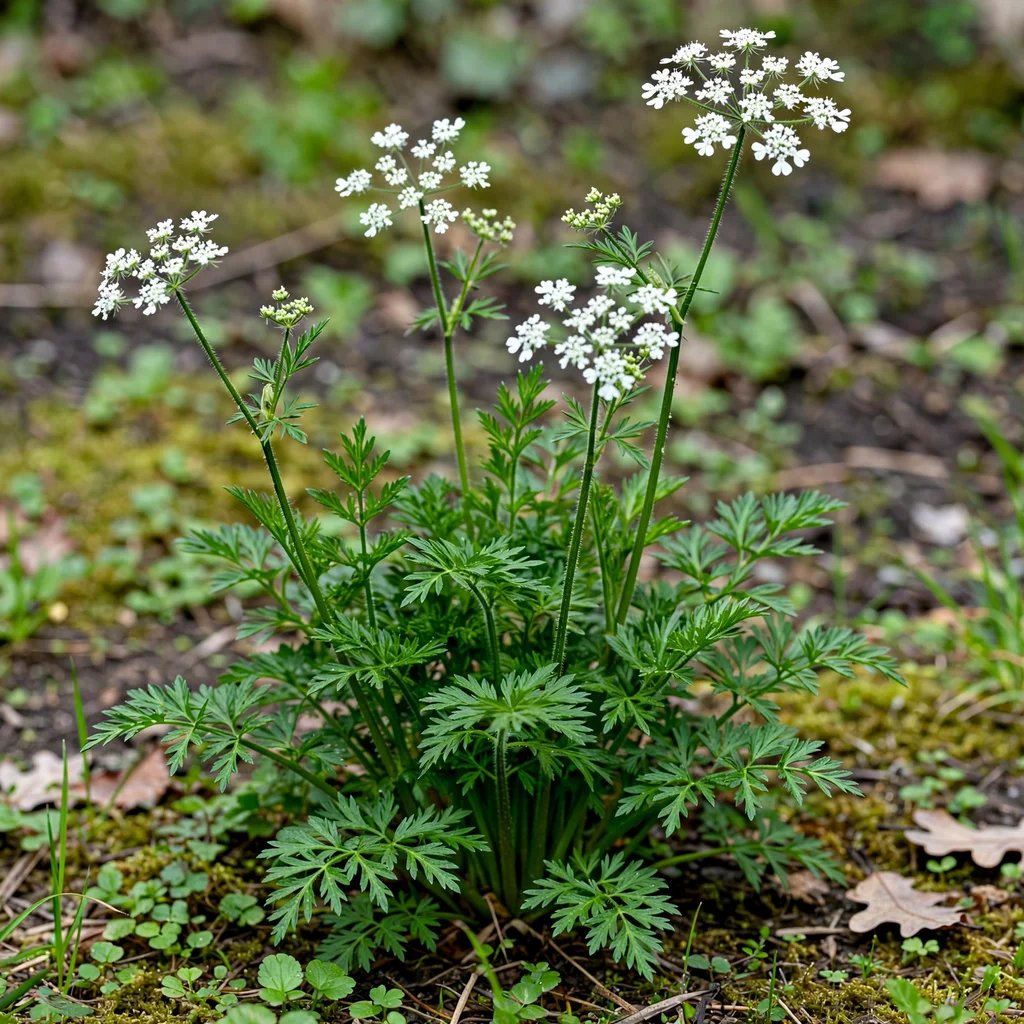
Ligusticum apiifolium, commonly known as celeryleaf licorice-root, is a long-lived herbaceous perennial native to western North America from Washington to California. It forms neat basal clumps of finely divided, deep green glossy leaves topped by slender flowering stalks rising two to four feet high.
In late spring and early summer, delicate compound umbels of tiny white flowers attract a broad array of beneficial insects and native pollinators. The foliage and seeds release a distinct anise aroma when crushed, while established plants show high tolerance to summer dry spells.
Uses & Benefits:
Essentials
At a Glance
Plant Type
Perennial
Height
48"
Width
24"
Light
Full Sun, Partial Sun, Shade
Zones
5, 6, 7, 8, 9
Water
Low to Moderate
Humidity
Moderate
Lifespan
Perennial
Native To
Western North America
Toxicity
Non-toxic (Caution: carrot family look-alikes)
Bloom period
Late spring – Early summer
In flower about 2 months of the year
Planting
How to Grow
- Select a planting site in full sun to dry shade with well-draining loam or sandy soil.
- Dig a hole twice as wide as the root container and set the crown flush with the surrounding soil level.
- Water thoroughly at planting to settle the roots and eliminate air pockets.
- Provide moderate water during the first growing season, tapering off irrigation completely once established.
Pro Tip
Withhold excessive summer irrigation once established; keeping this species on a frequent summer watering schedule causes crown rot in warmer soils.
Keep It Thriving
Care Guide
Do
- Ensure excellent soil drainage around the root zone.
- Cut dead stems back to the ground in late winter before spring growth begins.
- Top-dress with a light layer of organic compost around the crown in spring.
Don't
- Do not overwater established plants during hot summer weather.
- Do not plant in heavy, compacted clay that retains standing winter water.
- Do not trim old woody root tissue unnecessarily.
Seasonal Care Calendar
| Task | Jan | Feb | Mar | Apr | May | Jun | Jul | Aug | Sep | Oct | Nov | Dec |
|---|---|---|---|---|---|---|---|---|---|---|---|---|
| Divide | ||||||||||||
| Mulch | ||||||||||||
| Pest Check | ||||||||||||
| Plant | ||||||||||||
| Spring Cleanup |
Watch Out For
Pests & Diseases
Common Pests
Common Diseases
In the Garden
Landscape Uses & Companions
Landscape Uses
Multiply
Propagation Methods
Good to Know
Common Questions
Celeryleaf Licorice-Root questions
What zones can Celeryleaf Licorice-Root grow in?
Celeryleaf Licorice-Root is hardy in USDA Zones 5–9: in that range it survives winter in the ground. Colder than Zone 5, grow it in a container you can move to shelter for the winter, or as an annual. Warmer than Zone 9, winter isn't the problem: it prefers colder winters, and summer heat can shorten its life.
Is Celeryleaf Licorice-Root deer resistant?
Yes — Celeryleaf Licorice-Root is rated deer-resistant. Deer typically pass it over, though extreme hunger can override any plant's defenses.
When does Celeryleaf Licorice-Root bloom?
Celeryleaf Licorice-Root typically blooms from late spring to early summer. Exact timing shifts a week or two with your zone — Sow's bloom calendar maps it to your garden.
Does Celeryleaf Licorice-Root need full sun?
Celeryleaf Licorice-Root does best in full sun to part shade. In hot climates, afternoon shade keeps blooms fresher longer.
Is Celeryleaf Licorice-Root drought tolerant?
Yes — once established (usually after the first full season), Celeryleaf Licorice-Root handles dry spells with minimal watering. Water deeply its first year to build the root system that makes that possible.
Keep exploring
Explore the genus
Hardy in your zone?
Grow Celeryleaf Licorice-Root with confidence
See it in a design of your actual yard, get zone-matched care reminders, and track it season by season in your garden journal.