The Story
Plant Bio
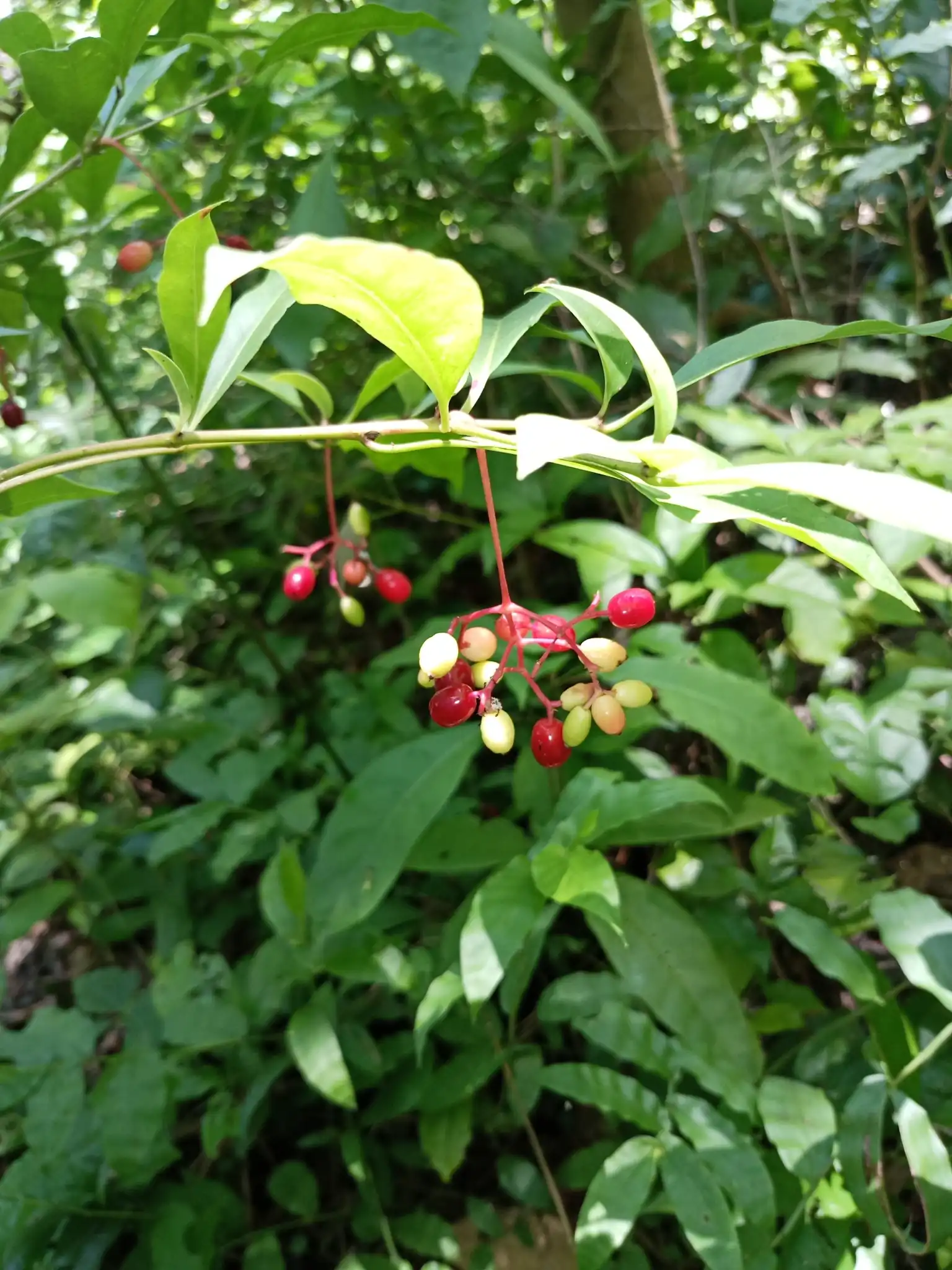
Neea psychotrioides is an evergreen shrub to small tree from Mexico to Colombia, reaching five to ten feet in cultivation with thick leathery elliptic opposite leaves. The tiny tan-brown flowers open in drooping axillary clusters on long slender stalks that extend beyond the foliage, with male and female flowers on separate plants.
The garden display comes from the fruit, not the flowers: drooping clusters of glossy bright red oval berries like jelly beans, yellow-orange when unripe with a pointed tip. Ripe berries are produced over several months and the plant is easily mistaken for an Ardisia, though it belongs to a different family.
Uses & Benefits:
Essentials
At a Glance
Plant Type
Shrub
Height
120"
Width
72"
Light
Full Sun, Partial Sun
Zones
9, 10
Water
Moderate
Humidity
Unknown
Lifespan
Perennial evergreen shrub
Native To
Mexico to Colombia
Toxicity
Unknown - ripe fruit reported edible
Bloom period
Year round
In flower about 12 months of the year
Planting
How to Grow
- Set in full sun to semi-shade in well-drained soil, in the ground in zones 9-11 or in a large pot with bright light.
- Water regularly for even moisture, then let the top inch dry slightly before watering again.
- Feed lightly through warm weather with a balanced fertilizer.
- Keep outdoors in frost-free weather; move pots under cover before frost and protect young plants from freezing.
- Grow a male plant near a female plant if you want the berry display.
Pro Tip
Plant a male alongside a female; a lone female leafs out well but sets no jelly-bean berries.
Keep It Thriving
Care Guide
Do
- Plant in full sun to semi-shade in well-drained soil.
- Water regularly but let the topsoil dry slightly between waterings.
- Protect young plants from frost and site mature plants in a warm microclimate.
Don't
- Do not expect berries from a lone plant without a male nearby.
- Do not overwater or leave pots standing in water.
- Do not expose young growth to a hard freeze.
Seasonal Care Calendar
| Task | Jan | Feb | Mar | Apr | May | Jun | Jul | Aug | Sep | Oct | Nov | Dec |
|---|---|---|---|---|---|---|---|---|---|---|---|---|
| Fertilize | ||||||||||||
| Pest Check | ||||||||||||
| Prune | ||||||||||||
| Winter Prep |
Watch Out For
Pests & Diseases
Common Pests
Common Diseases
In the Garden
Landscape Uses & Companions
Landscape Uses
Multiply
Propagation Methods
Good to Know
Common Questions
Jelly Bean questions
What zones can Jelly Bean grow in?
Jelly Bean is hardy in USDA Zones 9–10: in that range it survives winter in the ground. Colder than Zone 9, grow it in a container you can move to shelter for the winter.
When does Jelly Bean bloom?
Jelly Bean typically blooms year-round. Exact timing shifts a week or two with your zone — Sow's bloom calendar maps it to your garden.
Does Jelly Bean need full sun?
Jelly Bean does best in full sun to part shade. In hot climates, afternoon shade keeps blooms fresher longer.
Keep exploring
Explore the genus
Hardy in your zone?
Grow Jelly Bean with confidence
See it in a design of your actual yard, get zone-matched care reminders, and track it season by season in your garden journal.