The Story
Plant Bio
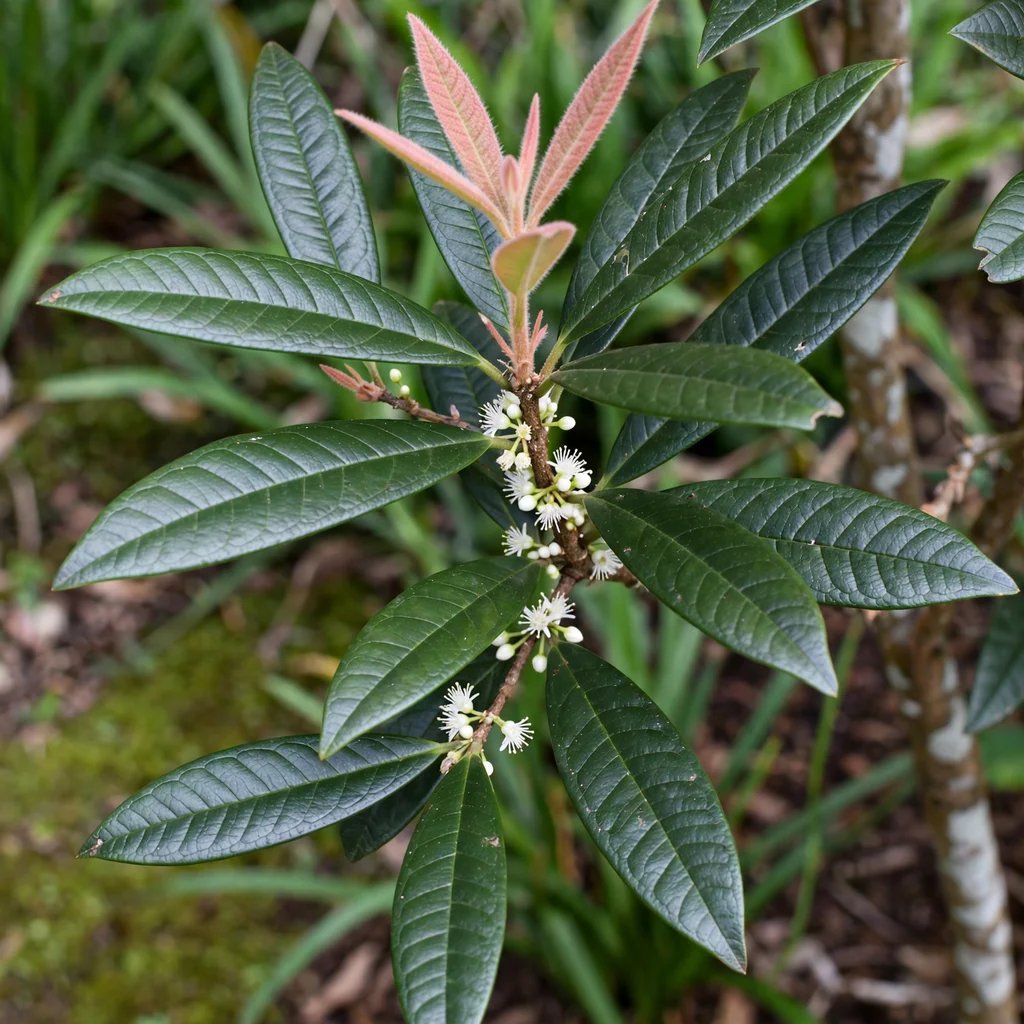
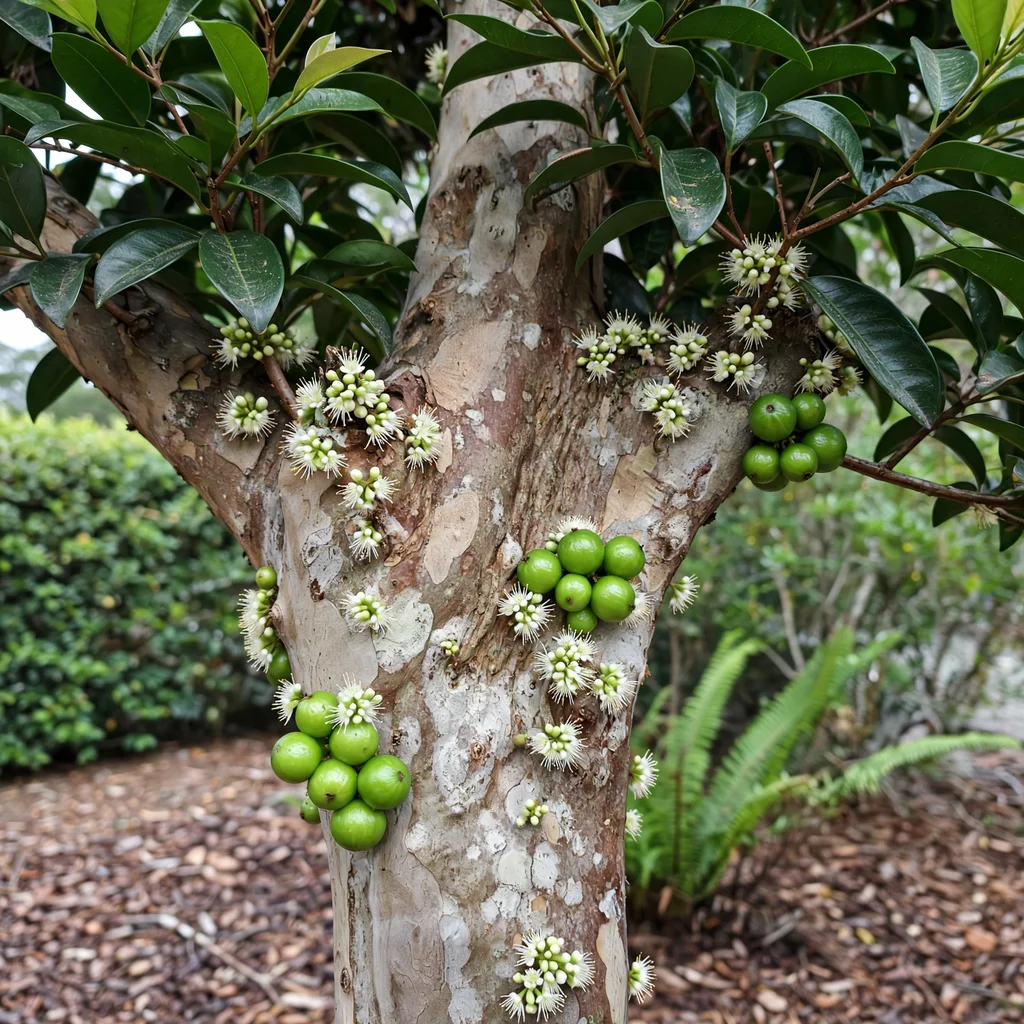
Plinia phitrantha is a slow-growing semi-deciduous small tree from the Atlantic rainforest of Sao Paulo and Minas Gerais, forming a short crooked bole with a dense pyramidal crown. New leaves emerge salmon-pink and softly hairy before hardening to dark green and glossy with impressed veins, while small white self-pollinating flowers form singly or in clusters directly on the trunk and branches.
Unlike common black jaboticabas, this species ripens green to green, producing 10 to 25 mm subglobose fruit that is often ribbed and lacks dark pigment. Ripe fruit is judged by full size with slight softening and sweet honey flavor, not by color change.
Uses & Benefits:
Essentials
At a Glance
Plant Type
Tree
Height
236"
Width
157"
Light
Full Sun, Partial Sun
Zones
9, 10
Water
High
Humidity
High
Lifespan
Long-lived tree
Native To
Eastern Brazil
Toxicity
Non-toxic
Bloom period
Spring – Fall
In flower about 9 months of the year
Planting
How to Grow
- Plant in full sun to dappled shade in moist, rich, well-drained soil with pH 5.5 to 6.5.
- Water deeply and often to keep soil evenly moist, increasing frequency in heat and for young trees.
- Apply acid mulch thinly and feed for acid-loving plants; correct yellowing on alkaline soil with chelated iron.
- Protect from frost below 30F; grow in a large container and move under cover elsewhere.
- Harvest when green fruit reaches full size and softens slightly, tasting for honey sweetness.
Pro Tip
Keep the root zone evenly moist and acid, mulch thinly, and never cut back into old leafless wood because regrowth is slow and patchy.
Keep It Thriving
Care Guide
Do
- Keep soil consistently moist, especially in the first years
- Give full sun once established with filtered light when young
- Mulch thinly to hold moisture in acid soil
Don't
- Do not let the rootball dry out
- Do not hard-prune into old bare wood
- Do not plant in alkaline or waterlogged soil without drainage
Seasonal Care Calendar
| Task | Jan | Feb | Mar | Apr | May | Jun | Jul | Aug | Sep | Oct | Nov | Dec |
|---|---|---|---|---|---|---|---|---|---|---|---|---|
| Fertilize | ||||||||||||
| Harvest | ||||||||||||
| Mulch | ||||||||||||
| Pest Check | ||||||||||||
| Prune |
Watch Out For
Pests & Diseases
Common Pests
Common Diseases
In the Garden
Landscape Uses & Companions
Landscape Uses
Multiply
Propagation Methods
Good to Know
Common Questions
White Jaboticaba questions
What zones can White Jaboticaba grow in?
White Jaboticaba is hardy in USDA Zones 9–10: in that range it survives winter in the ground. Colder than Zone 9, winters are too cold for it to survive outdoors.
When does White Jaboticaba bloom?
White Jaboticaba typically blooms from spring to fall. Exact timing shifts a week or two with your zone — Sow's bloom calendar maps it to your garden.
Does White Jaboticaba need full sun?
White Jaboticaba does best in full sun to part shade. In hot climates, afternoon shade keeps blooms fresher longer.
More Plinia to compare
Keep exploring
Explore the genus
Hardy in your zone?
Grow White Jaboticaba with confidence
See it in a design of your actual yard, get zone-matched care reminders, and track it season by season in your garden journal.