The Story
Plant Bio
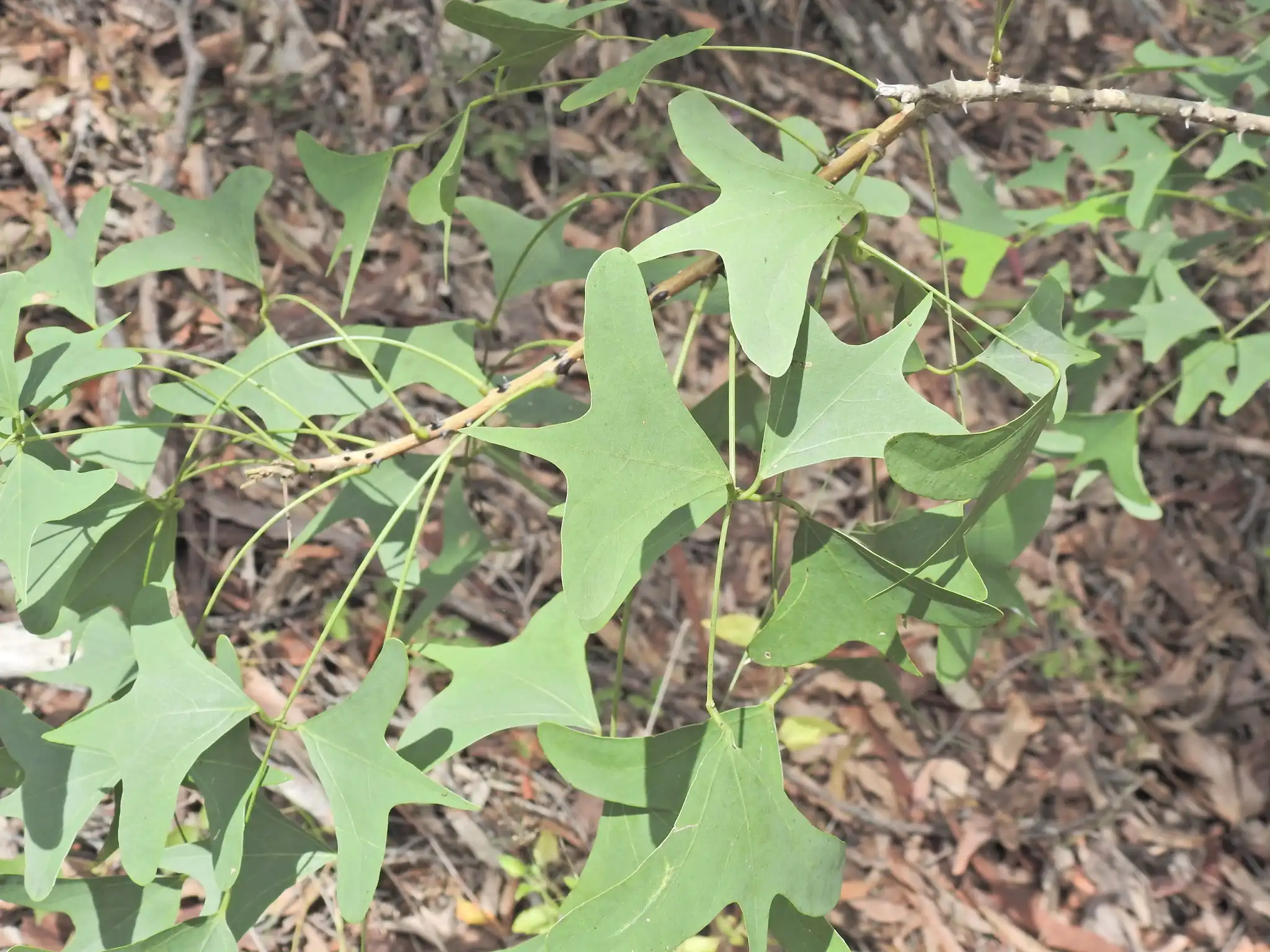
Erythrina vespertilio is a small to medium-sized deciduous tree native to northern and central Australia and New Guinea, recognized for its deeply furrowed, corky grey bark and trunk prickles. Its distinct leaves feature three broad lobes that closely resemble the outstretched wings of a bat.
During late winter and early spring while the canopy is leafless, terminal racemes of scarlet to orange-red pea flowers bloom to attract nectar-feeding wildlife. The striking, bat-shaped leaves drop cleanly in the dry season to reveal a sculptured frame armed with short thorns.
Uses & Benefits:
Essentials
At a Glance
Plant Type
Tree
Height
394"
Width
315"
Light
Full Sun
Zones
10
Water
Low
Humidity
Adaptable
Lifespan
Perennial
Native To
Australia, New Guinea
Toxicity
Toxic seeds
Bloom period
Winter – Early spring
In flower about 4 months of the year
Planting
How to Grow
- Select a site in full sun with gritty, sharply draining soil to prevent moisture accumulation around the roots.
- Dig a planting hole twice as wide as the root ball and set the crown flush with the surrounding grade.
- Water thoroughly at planting, then restrict irrigation to allow the soil to dry out between applications.
- Apply a light layer of organic mulch around the root zone, keeping it clear of the trunk base.
Pro Tip
Prune lightly only after flowering finishes, taking care never to cut back hard into old leafless wood as it fails to shoot.
Keep It Thriving
Care Guide
Do
- Provide full sun exposure to maintain dense branching and flowering.
- Ensure exceptional soil drainage, especially in higher-rainfall regions.
- Protect young saplings from frost and browsing animals.
Don't
- Do not overwater or allow soil to remain boggy.
- Do not prune hard into old bare wood.
- Do not plant near high-traffic footpaths without clipping lower trunk prickles.
Seasonal Care Calendar
| Task | Jan | Feb | Mar | Apr | May | Jun | Jul | Aug | Sep | Oct | Nov | Dec |
|---|---|---|---|---|---|---|---|---|---|---|---|---|
| Fertilize | ||||||||||||
| Pest Check | ||||||||||||
| Prune | ||||||||||||
| Winter Prep |
Watch Out For
Pests & Diseases
Common Pests
Common Diseases
In the Garden
Landscape Uses & Companions
Landscape Uses
Companion Plants
Multiply
Propagation Methods
Good to Know
Common Questions
Bat's Wing Coral Tree questions
What zones can Bat's Wing Coral Tree grow in?
Bat's Wing Coral Tree is hardy in USDA Zone 10: in that range it survives winter in the ground. Colder than Zone 10, winters are too cold for it to survive outdoors.
Is Bat's Wing Coral Tree deer resistant?
Not reliably. Deer may browse Bat's Wing Coral Tree, especially tender spring growth — plan on repellents or fencing where pressure is high.
When does Bat's Wing Coral Tree bloom?
Bat's Wing Coral Tree typically blooms from early winter to early spring. Exact timing shifts a week or two with your zone — Sow's bloom calendar maps it to your garden.
Does Bat's Wing Coral Tree need full sun?
Bat's Wing Coral Tree does best in full sun (6+ hours).
Is Bat's Wing Coral Tree drought tolerant?
Yes — once established (usually after the first full season), Bat's Wing Coral Tree handles dry spells with minimal watering. Water deeply its first year to build the root system that makes that possible.
More Erythrina to compare
Keep exploring
Explore the genus
Hardy in your zone?
Grow Bat's Wing Coral Tree with confidence
See it in a design of your actual yard, get zone-matched care reminders, and track it season by season in your garden journal.