The Story
Plant Bio
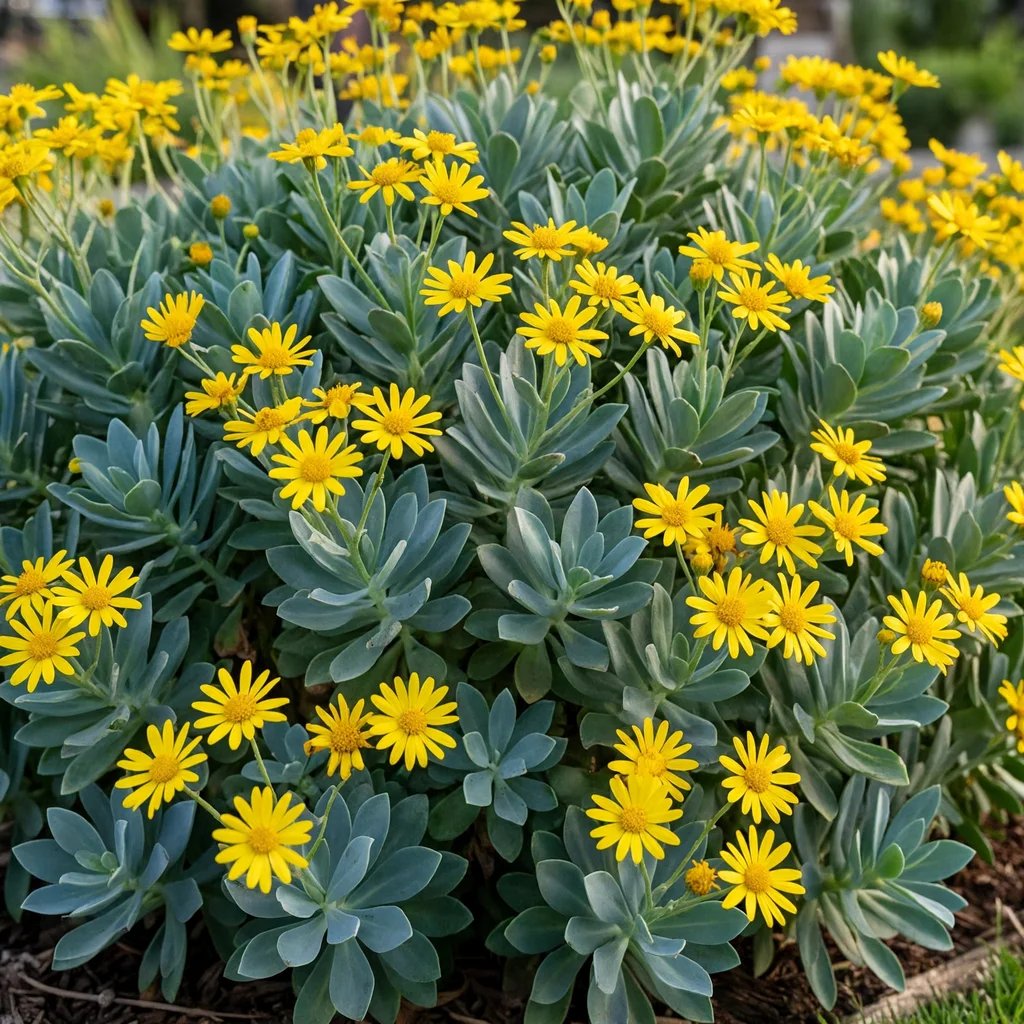
Senecio megaglossus is an evergreen dwarf shrub native to South Australia that grows up to three feet tall. It forms a rounded, multi-branched frame clothed in thick, waxy, blue-green foliage with a distinctly succulent texture.
This species produces bright golden-yellow composite flower heads held singly or in small clusters at stem tips from spring into early summer. The spent flowers transform into soft, fluffy seedheads with prominent yellowish pappus bristles.
Uses & Benefits:
Essentials
At a Glance
Plant Type
Shrub
Height
39"
Width
20"
Light
Full Sun
Zones
9, 10
Water
Low
Humidity
Low
Lifespan
Perennial
Native To
Australia
Toxicity
Contact irritant
Bloom period
Spring – Early summer
In flower about 4 months of the year
Planting
How to Grow
- Select a planting site in full sun with gritty, fast-draining soil.
- Set the plant into lean loamy or sandy soil with neutral to alkaline pH.
- Water thoroughly at planting, then restrict supplemental watering once roots establish.
- Lightly shear back green growth post-flowering to suppress leggy stems.
Pro Tip
Prune green stem growth lightly immediately after blooming to maintain a dense habit; cutting into old leafless wood prevents fresh buds from breaking.
Keep It Thriving
Care Guide
Do
- Provide full sun exposure and sharp drainage.
- Plant in gritty, nutrient-poor, or lime-rich soils.
- Tip-prune green growth annually post-bloom.
Don't
- Do not overwater or plant in dense clay that holds stagnant moisture.
- Do not cut back into old, bare wood without leaves.
- Do not over-fertilize, which induces soft and weak stem structure.
Seasonal Care Calendar
| Task | Jan | Feb | Mar | Apr | May | Jun | Jul | Aug | Sep | Oct | Nov | Dec |
|---|---|---|---|---|---|---|---|---|---|---|---|---|
| Pest Check | ||||||||||||
| Plant | ||||||||||||
| Prune | ||||||||||||
| Winter Prep |
Watch Out For
Pests & Diseases
Common Pests
Common Diseases
In the Garden
Landscape Uses & Companions
Landscape Uses
Companion Plants
Multiply
Propagation Methods
Good to Know
Common Questions
Superb Groundsel questions
What zones can Superb Groundsel grow in?
Superb Groundsel is hardy in USDA Zones 9–10: in that range it survives winter in the ground. Colder than Zone 9, grow it in a container you can move to shelter for the winter.
When does Superb Groundsel bloom?
Superb Groundsel typically blooms from early spring to early summer. Exact timing shifts a week or two with your zone — Sow's bloom calendar maps it to your garden.
Does Superb Groundsel need full sun?
Superb Groundsel does best in full sun (6+ hours).
Is Superb Groundsel drought tolerant?
Yes — once established (usually after the first full season), Superb Groundsel handles dry spells with minimal watering. Water deeply its first year to build the root system that makes that possible.
More Senecio to compare
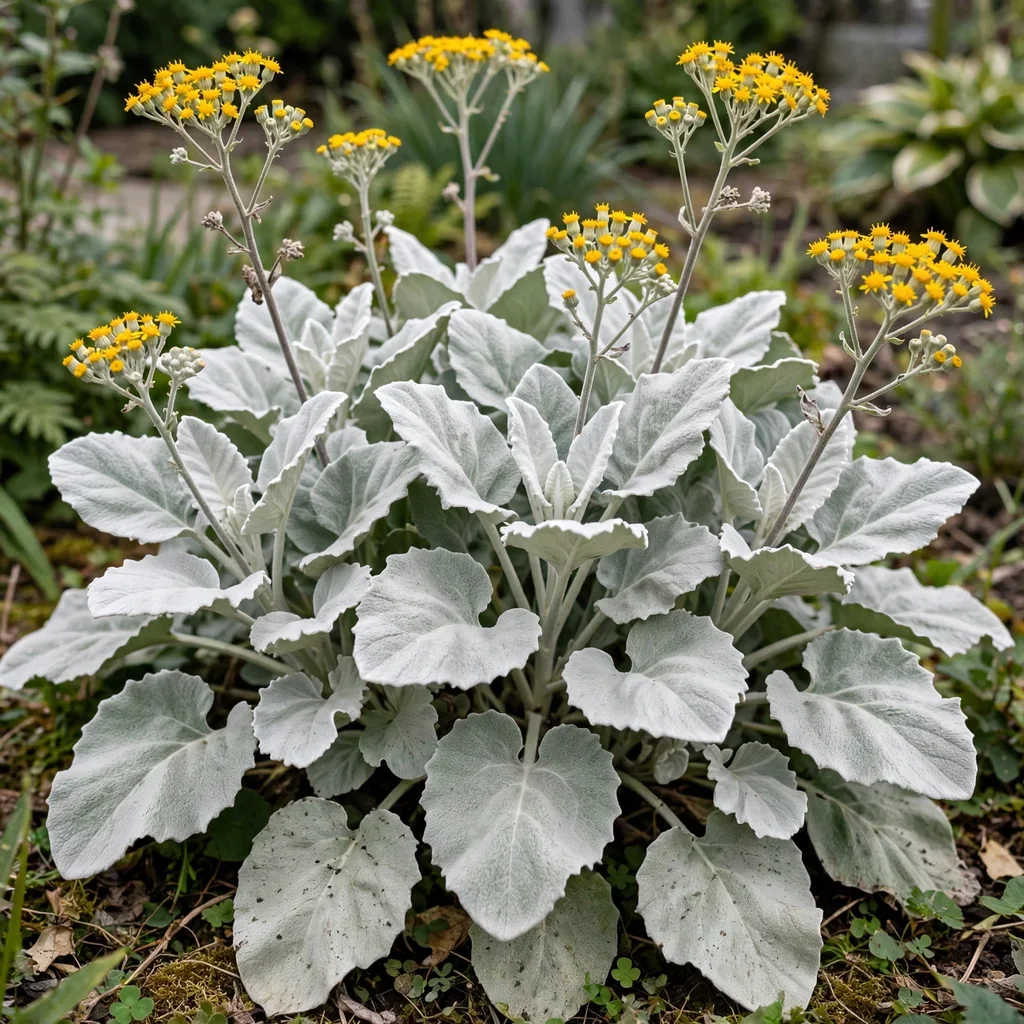
Angel Wings
Senecio candicans 'Angel Wings'
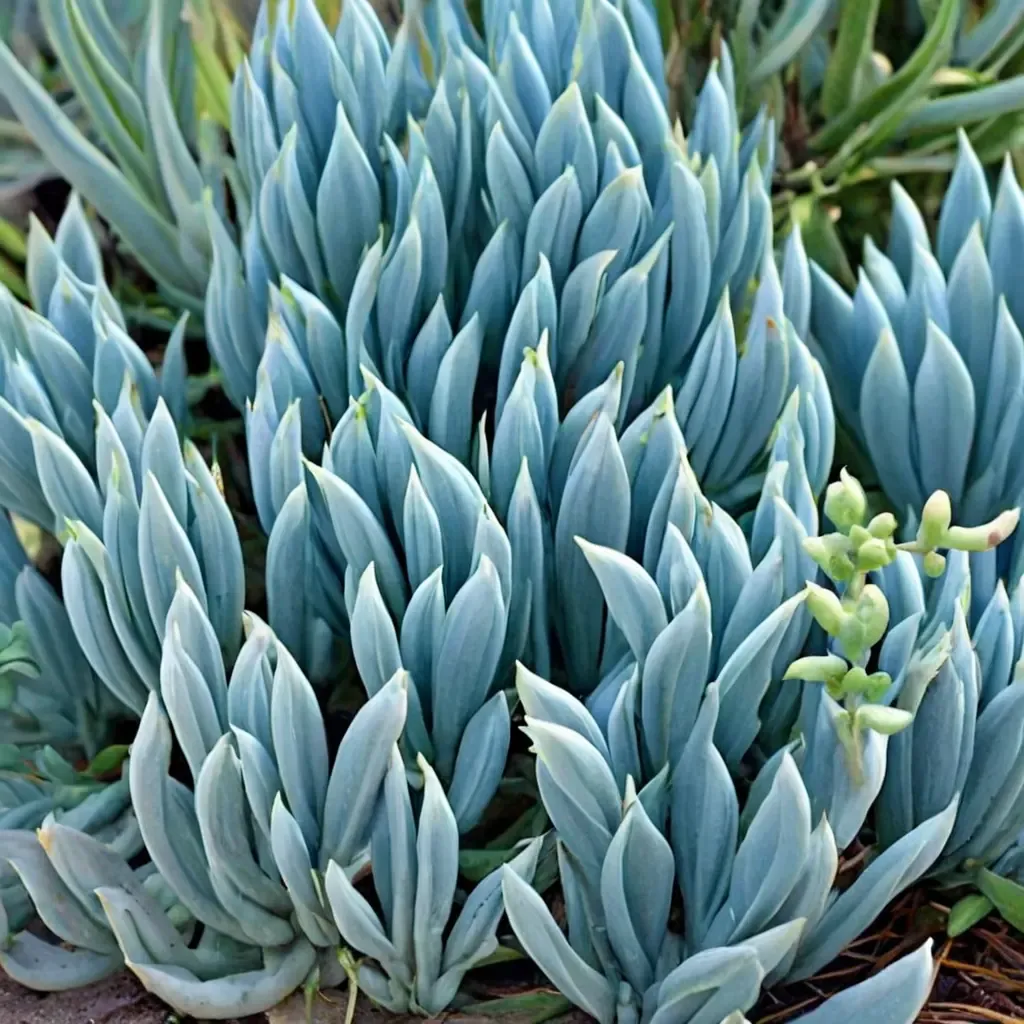
Blue Chalksticks
Senecio mandraliscae
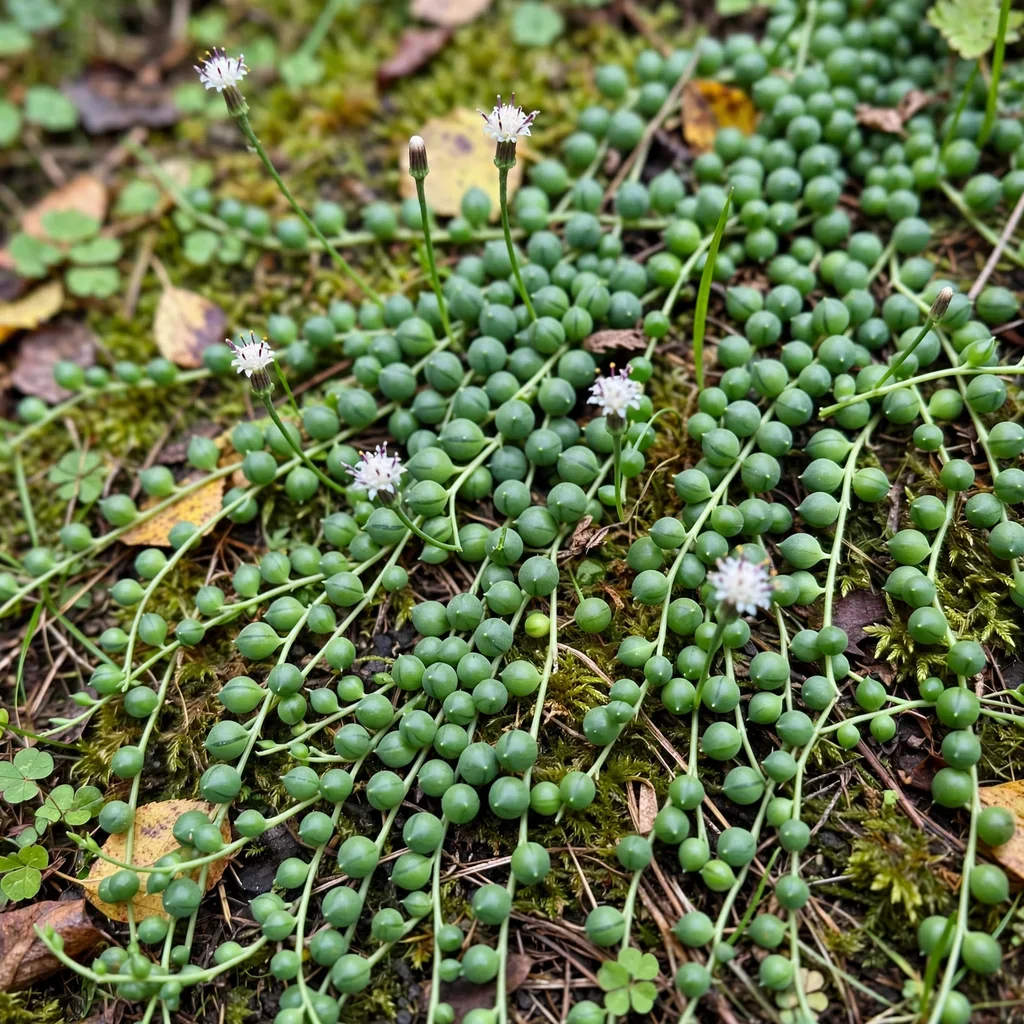
String of Pearls
Senecio rowleyanus
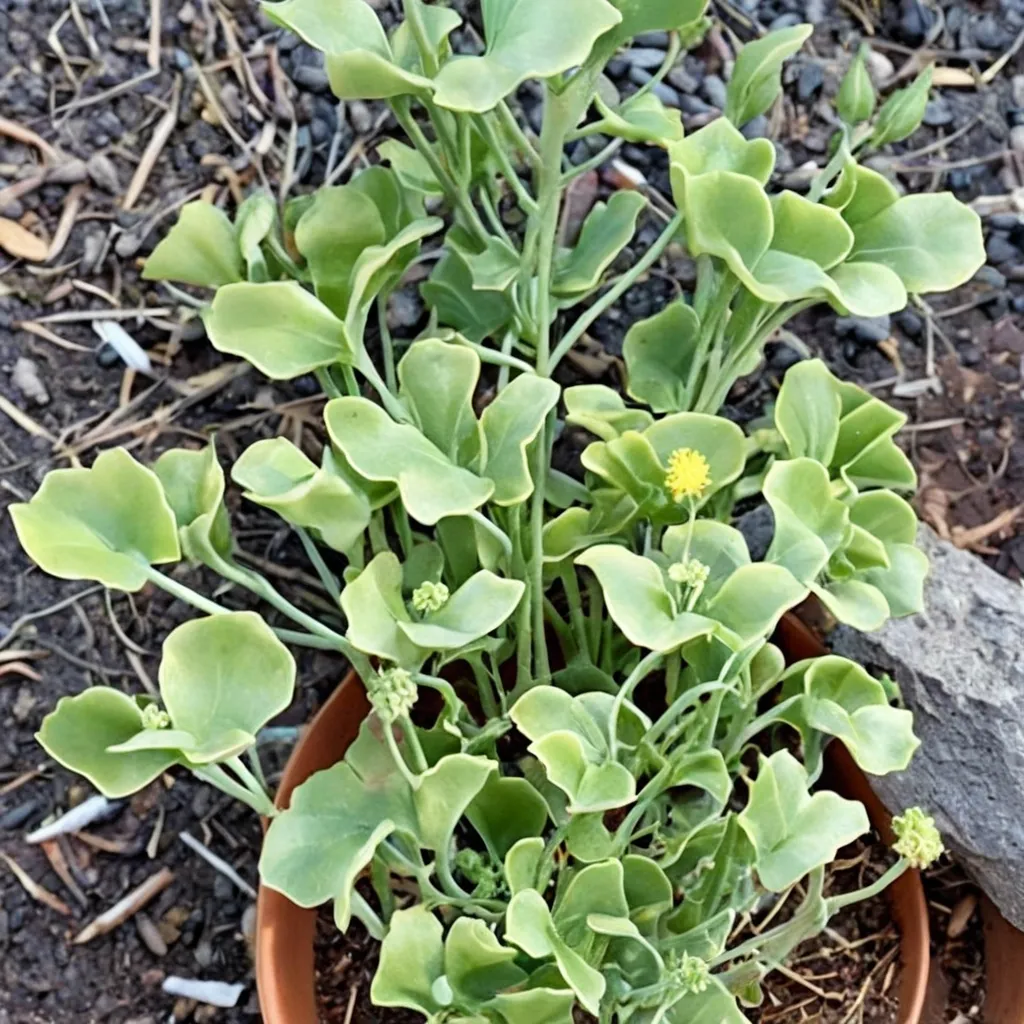
False Nasturtium
Senecio tropaeolifolius
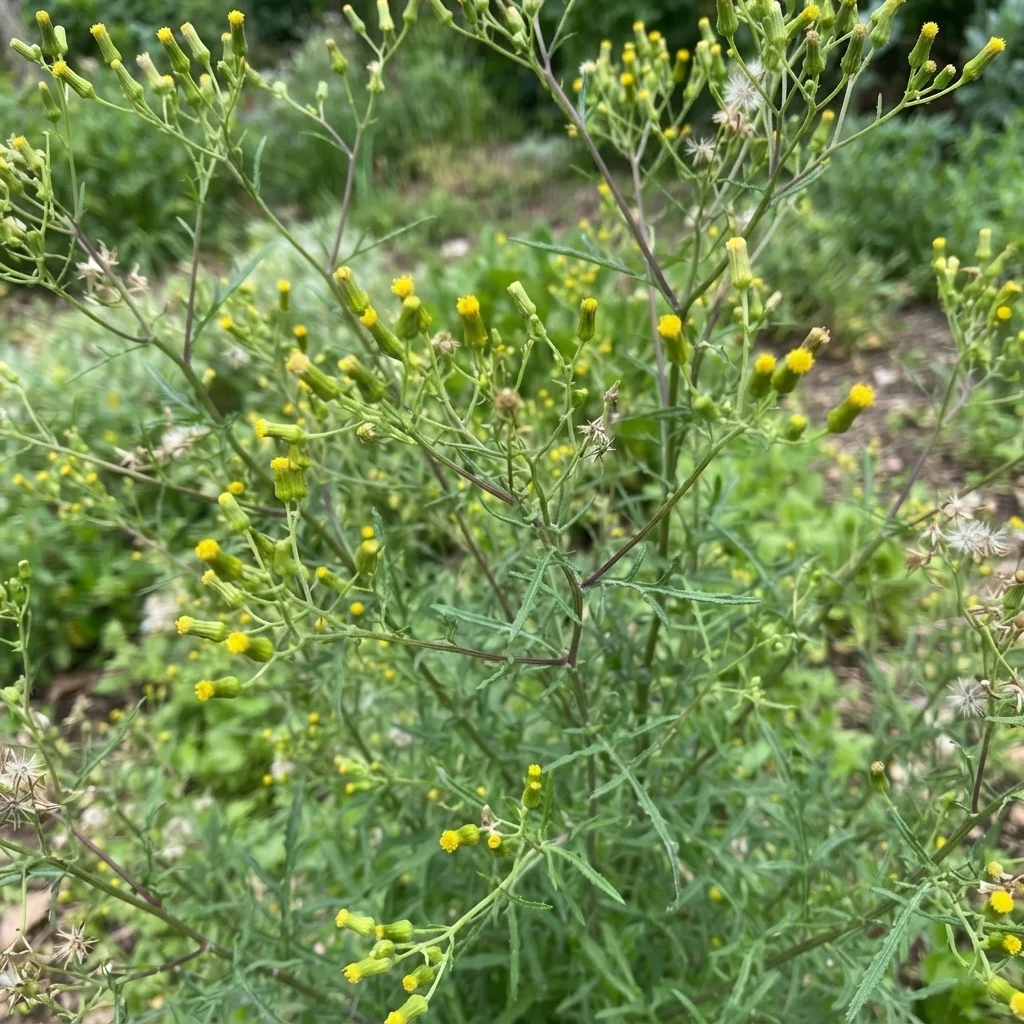
Hispid Fireweed
Senecio hispidulus
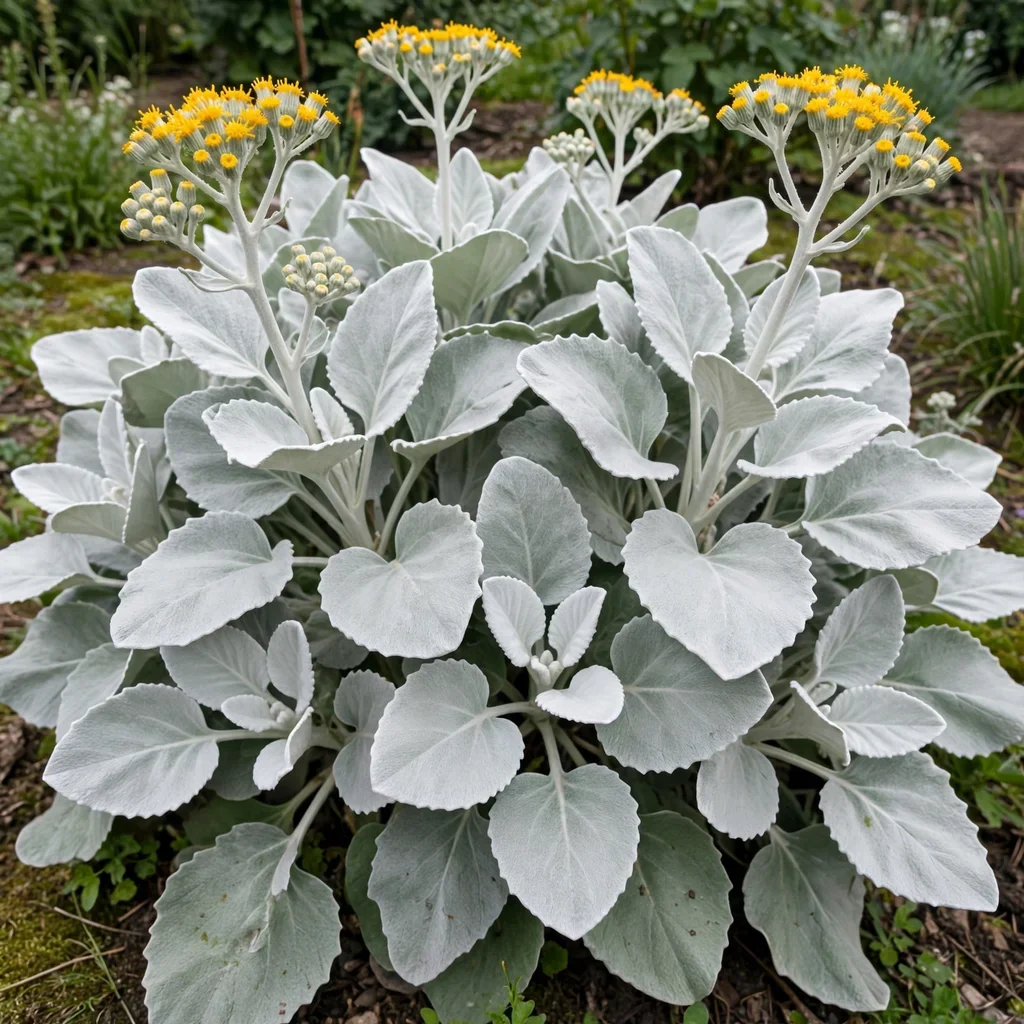
Sea Cabbage
Senecio candicans
Keep exploring
Explore the genus
Hardy in your zone?
Grow Superb Groundsel with confidence
See it in a design of your actual yard, get zone-matched care reminders, and track it season by season in your garden journal.