The Story
Plant Bio
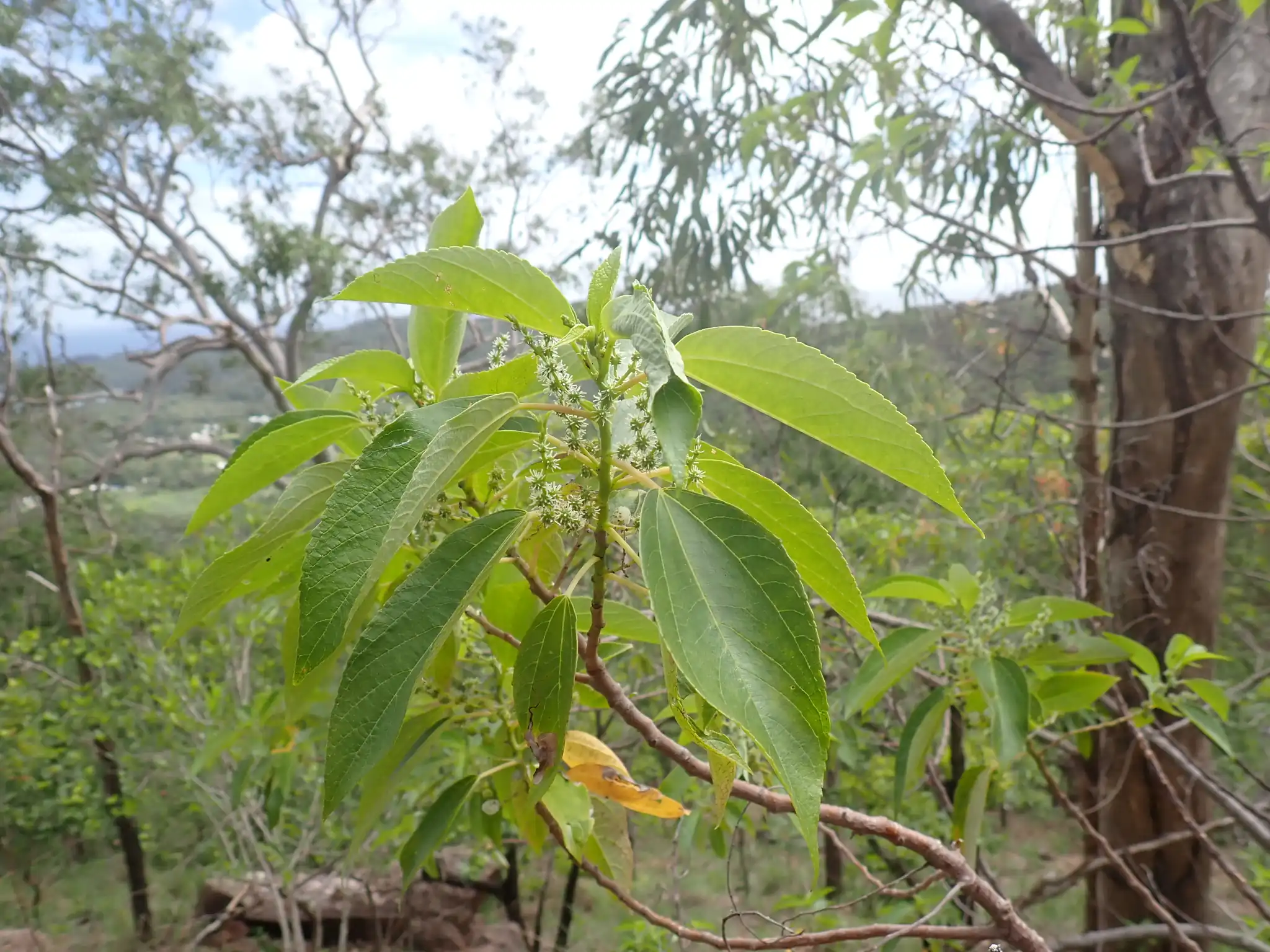
Pipturus argenteus, commonly known as native mulberry, is a fast-growing evergreen pioneer shrub or small tree native to warm rainforest margins across Asia, Oceania, and Indian Ocean islands. It forms a multi-stemmed habit reaching 10 to 25 feet tall, characterized by soft, brittle branches and alternate ovate leaves with dark green upper surfaces and silvery-white downy undersides.
Unlike many members of the nettle family, this species completely lacks stinging hairs and produces non-toxic, soft white aggregate fruits along its stems. The contrasting foliage shimmers in wind as the pale leaf undersides are exposed, while small greenish-white flowers develop in compact clusters along the branches.
Uses & Benefits:
Essentials
At a Glance
Plant Type
Shrub
Height
240"
Width
156"
Light
Full Sun, Partial Sun
Zones
10
Water
Moderate
Humidity
High
Lifespan
Perennial
Native To
Asia, Oceania, Africa
Toxicity
Non-toxic
Bloom period
Summer – Winter
In flower about 9 months of the year
Planting
How to Grow
- Select a planting site in full sun to partial shade with free-draining soil.
- Dig a hole twice as wide as the root ball and set the plant level with the surrounding soil.
- Backfill with native soil, press gently to settle air pockets, and water deeply.
- Apply a two-inch layer of organic mulch around the base, keeping it clear of the main stems.
- Water regularly during the first growing season until roots establish.
Pro Tip
Hard pruning back into bare stem tissue stimulates dormant buds and quickly rejuvenates leggy or drought-stressed plants.
Keep It Thriving
Care Guide
Do
- Plant in open, porous soil to ensure rapid drainage away from roots.
- Prune hard after flowering to maintain a dense, bushy habit.
- Provide supplemental water during extended dry spells to prevent premature defoliation.
Don't
- Do not allow roots to sit in saturated or waterlogged soil.
- Do not plant outdoors where winter temperatures drop below freezing.
- Do not crowd young plants in deep, heavy shade where growth becomes weak and sparse.
Seasonal Care Calendar
| Task | Jan | Feb | Mar | Apr | May | Jun | Jul | Aug | Sep | Oct | Nov | Dec |
|---|---|---|---|---|---|---|---|---|---|---|---|---|
| Fertilize | ||||||||||||
| Mulch | ||||||||||||
| Pest Check | ||||||||||||
| Prune |
Watch Out For
Pests & Diseases
Common Pests
Common Diseases
In the Garden
Landscape Uses & Companions
Landscape Uses
Companion Plants
Multiply
Propagation Methods
Good to Know
Common Questions
Native Mulberry questions
What zones can Native Mulberry grow in?
Native Mulberry is hardy in USDA Zone 10: in that range it survives winter in the ground. Colder than Zone 10, grow it in a container you can move to shelter for the winter.
When does Native Mulberry bloom?
Native Mulberry typically blooms from summer to winter. Exact timing shifts a week or two with your zone — Sow's bloom calendar maps it to your garden.
Does Native Mulberry need full sun?
Native Mulberry does best in full sun to part shade. In hot climates, afternoon shade keeps blooms fresher longer.
Is Native Mulberry drought tolerant?
Yes — once established (usually after the first full season), Native Mulberry handles dry spells with minimal watering. Water deeply its first year to build the root system that makes that possible.
Keep exploring
Explore the genus
Hardy in your zone?
Grow Native Mulberry with confidence
See it in a design of your actual yard, get zone-matched care reminders, and track it season by season in your garden journal.