The Story
Plant Bio
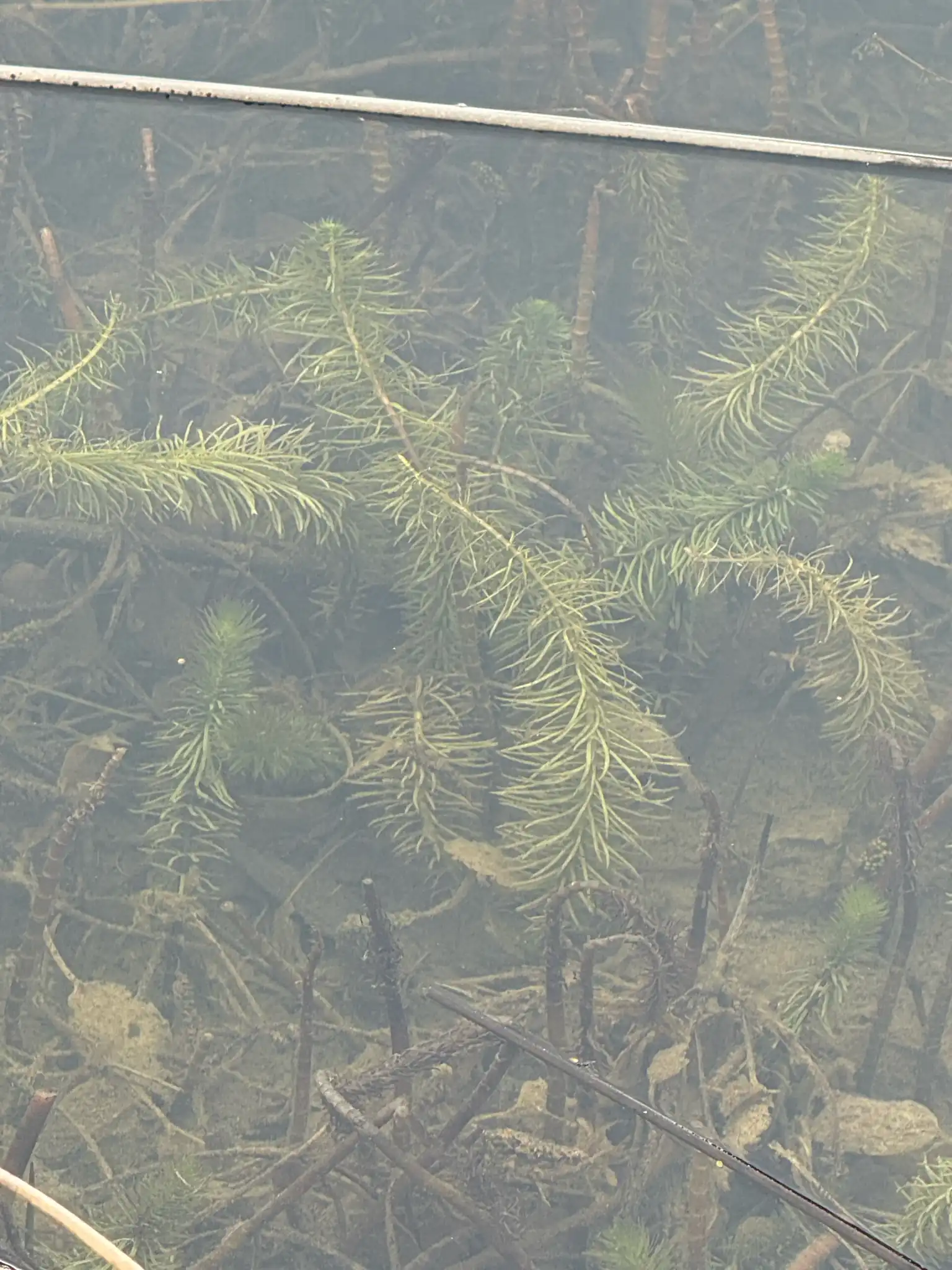
Hippuris vulgaris is a circumpolar emergent aquatic perennial that spreads via stout creeping rhizomes in muddy substrates and shallow water up to 20 inches deep. Unbranched rigid stems erect themselves above the water surface bearing dense whorls of 6 to 12 narrow leaves, creating a bottle-brush habit alongside limp submerged foliage.
The species exhibits strong heterophylly, producing thin, flaccid submerged leaves below the water line and shorter, stiff linear-lanceolate leaves above it. Inconspicuous petal-less green flowers bloom individually in the upper leaf axils during midsummer.
Uses & Benefits:
Essentials
At a Glance
Plant Type
Aquatic
Height
24"
Width
24"
Light
Full Sun, Partial Sun
Zones
4, 5, 6, 7, 8, 9
Water
High / Standing water
Humidity
High
Lifespan
Perennial
Native To
Northern Eurasia, North America
Toxicity
Non-toxic
Bloom period
Summer
In flower about 3 months of the year
Planting
How to Grow
- Plant rhizomes horizontally 1 to 2 inches deep in heavy clay or loam aquatic soil.
- Lower the container into pond margins so water sits 2 to 12 inches above the soil level.
- Position in an unshaded site receiving direct sunlight to stimulate rigid emergent growth.
- Divide overgrown rhizome clumps every three to four years during early spring.
Pro Tip
Submerge potted rhizomes only deep enough for upper shoot tips to emerge into full sun and open air, as complete submersion in shade prevents the structural xylem development needed for upright stems.
Keep It Thriving
Care Guide
Do
- Maintain steady water levels so the creeping rhizomes remain continuously submerged.
- Provide high light intensity to encourage firm, upright emergent stems.
- Grow in aquatic baskets to limit horizontal rhizome spread in artificial ponds.
Don't
- Do not allow the growing substrate to dry out at any point during the season.
- Do not prune stems into old underground woody tissue.
- Do not place containers in deep, shaded water where shoots cannot reach air.
Seasonal Care Calendar
| Task | Jan | Feb | Mar | Apr | May | Jun | Jul | Aug | Sep | Oct | Nov | Dec |
|---|---|---|---|---|---|---|---|---|---|---|---|---|
| Pest Check | ||||||||||||
| Plant | ||||||||||||
| Propagate | ||||||||||||
| Spring Cleanup |
Watch Out For
Pests & Diseases
Common Pests
Common Diseases
In the Garden
Landscape Uses & Companions
Landscape Uses
Companion Plants
Multiply
Propagation Methods
Good to Know
Common Questions
Common Mare's-tail questions
What zones can Common Mare's-tail grow in?
Common Mare's-tail is hardy in USDA Zones 4–9: in that range it survives winter in the ground. Warmer than Zone 9, winter isn't the problem: it prefers colder winters, and summer heat can shorten its life.
Is Common Mare's-tail deer resistant?
Yes — Common Mare's-tail is rated deer-resistant. Deer typically pass it over, though extreme hunger can override any plant's defenses.
When does Common Mare's-tail bloom?
Common Mare's-tail typically blooms in summer. Exact timing shifts a week or two with your zone — Sow's bloom calendar maps it to your garden.
Does Common Mare's-tail need full sun?
Common Mare's-tail does best in full sun to part shade. In hot climates, afternoon shade keeps blooms fresher longer.
Keep exploring
Explore the genus
Grow Common Mare's-tail with confidence
See it in a design of your actual yard, get zone-matched care reminders, and track it season by season in your garden journal.