The Story
Plant Bio
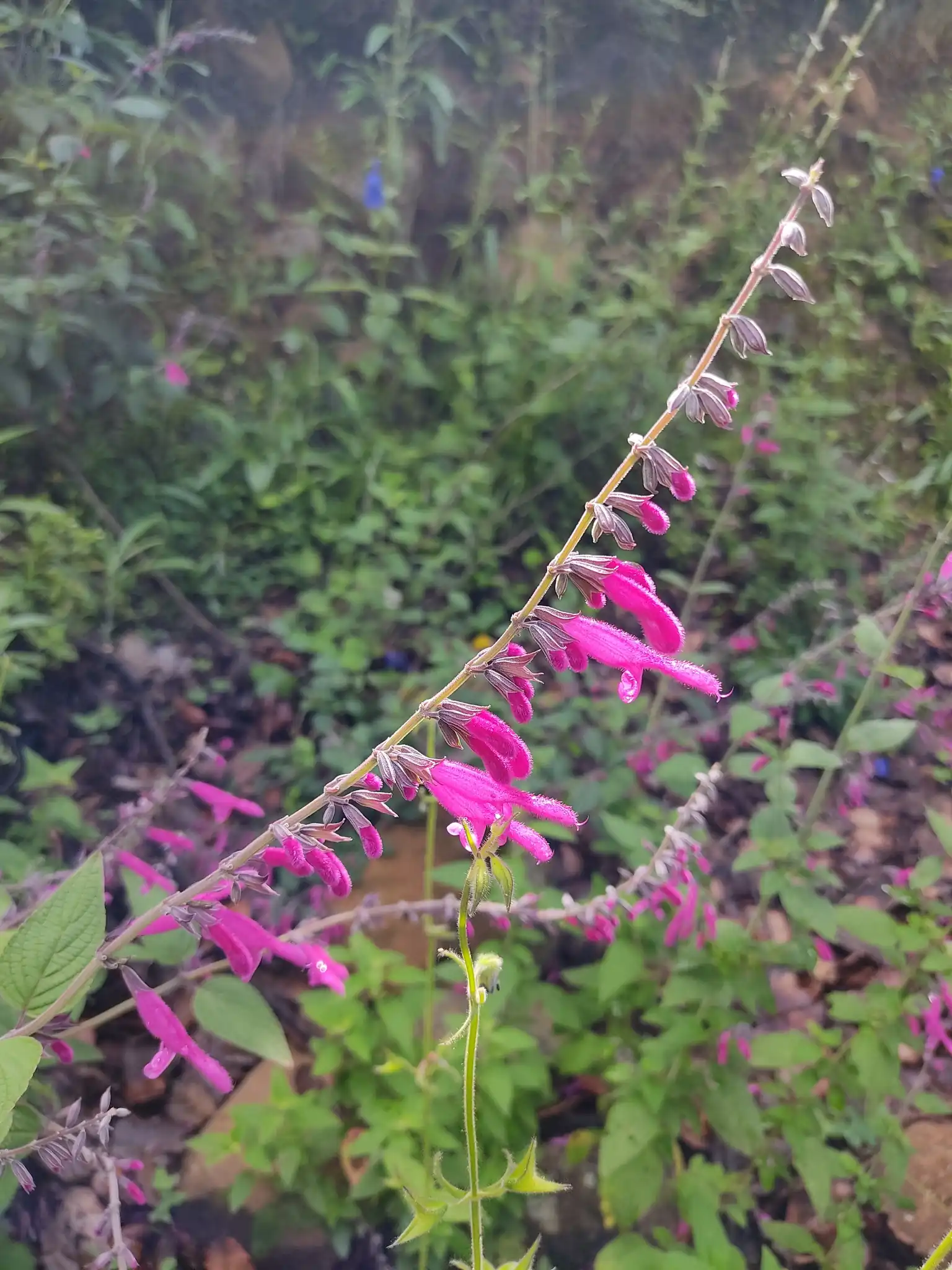
Salvia curviflora is a tender upright perennial in the mint family, forming a bushy column of long lance-shaped green leaves on square stems. Like most salvias, it carries two-lipped tubular flowers in whorled spikes that hold abundant nectar for bees, butterflies and hummingbirds.
This Mexican species grows 3 to 4 feet tall and 2 to 3 feet wide, with green foliage tinged purple on the stems and leaf undersides. Its distinction is long spikes of bright fuchsia-pink tubular flowers, often curved, that open through summer and fall and are visited heavily by hummingbirds.
Uses & Benefits:
Essentials
At a Glance
Plant Type
Perennial
Height
48"
Width
36"
Light
Full Sun, Partial Sun
Zones
9, 10
Water
Medium
Humidity
Average
Lifespan
Tender perennial
Native To
Mexico
Toxicity
Non-toxic
Bloom period
Summer – Fall
In flower about 6 months of the year
Planting
How to Grow
- Plant after last frost in full sun to part shade in moderately fertile, moist but well-drained soil.
- Space 24 to 36 inches apart to allow upright bushy growth and good air flow.
- Water to establish, then water when the top inch dries; do not keep crowns soggy.
- Remove faded flower spikes through summer and fall to keep new buds coming.
- Tip-prune through the growing season to keep plants neat and shelter crowns for winter in zone 9.
Pro Tip
Remove faded spikes to prolong flowering and grow in a sheltered sunny spot with well-drained soil to carry the tender crown through winter.
Keep It Thriving
Care Guide
Do
- Grow in full sun with shelter from cold wind.
- Provide moist but sharply drained loam or sand.
- Deadhead spent spikes to extend bloom.
- Mulch crowns where winters are mild.
Don't
- Do not plant in wet clay or low spots that stay soggy.
- Do not leave faded spikes standing if you want continuous bloom.
- Do not expose to hard frost without protection; it is hardy only to zone 9.
Seasonal Care Calendar
| Task | Jan | Feb | Mar | Apr | May | Jun | Jul | Aug | Sep | Oct | Nov | Dec |
|---|---|---|---|---|---|---|---|---|---|---|---|---|
| Deadhead | ||||||||||||
| Fertilize | ||||||||||||
| Plant | ||||||||||||
| Prune | ||||||||||||
| Winter Prep |
Watch Out For
Pests & Diseases
Common Pests
Common Diseases
In the Garden
Landscape Uses & Companions
Landscape Uses
Companion Plants
Multiply
Propagation Methods
Good to Know
Common Questions
Tehuacan Sage questions
What zones can Tehuacan Sage grow in?
Tehuacan Sage is hardy in USDA Zones 9–10: in that range it survives winter in the ground. Colder than Zone 9, grow it in a container you can move to shelter for the winter, or as an annual.
Is Tehuacan Sage deer resistant?
Yes — Tehuacan Sage is rated deer-resistant. Deer typically pass it over, though extreme hunger can override any plant's defenses.
When does Tehuacan Sage bloom?
Tehuacan Sage typically blooms from summer to fall. Exact timing shifts a week or two with your zone — Sow's bloom calendar maps it to your garden.
Does Tehuacan Sage need full sun?
Tehuacan Sage does best in full sun to part shade. In hot climates, afternoon shade keeps blooms fresher longer.
Is Tehuacan Sage drought tolerant?
Yes — once established (usually after the first full season), Tehuacan Sage handles dry spells with minimal watering. Water deeply its first year to build the root system that makes that possible.
More Salvia to compare
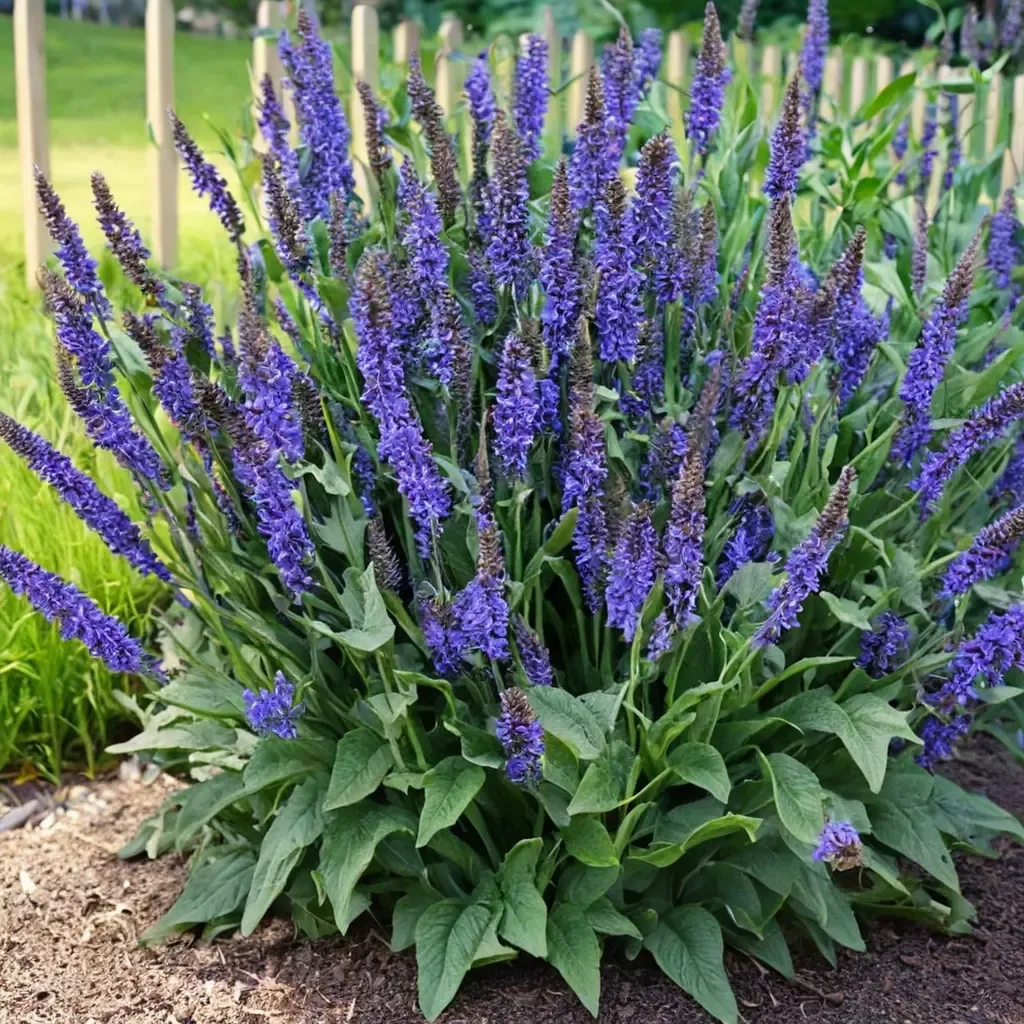
May Night Sage
Salvia nemorosa 'May Night'
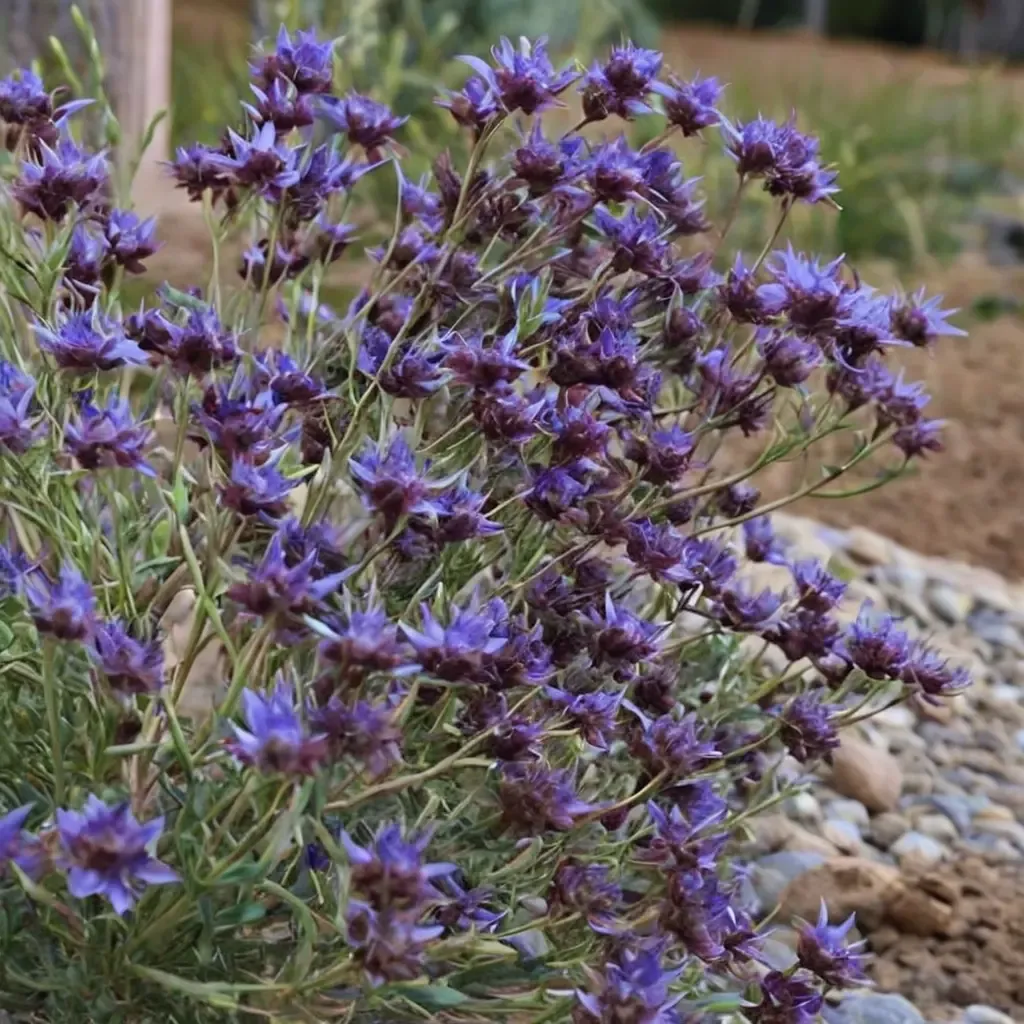
Celestial Blue Sage Wood Sage
Salvia nemorosa 'Celestial Blue'
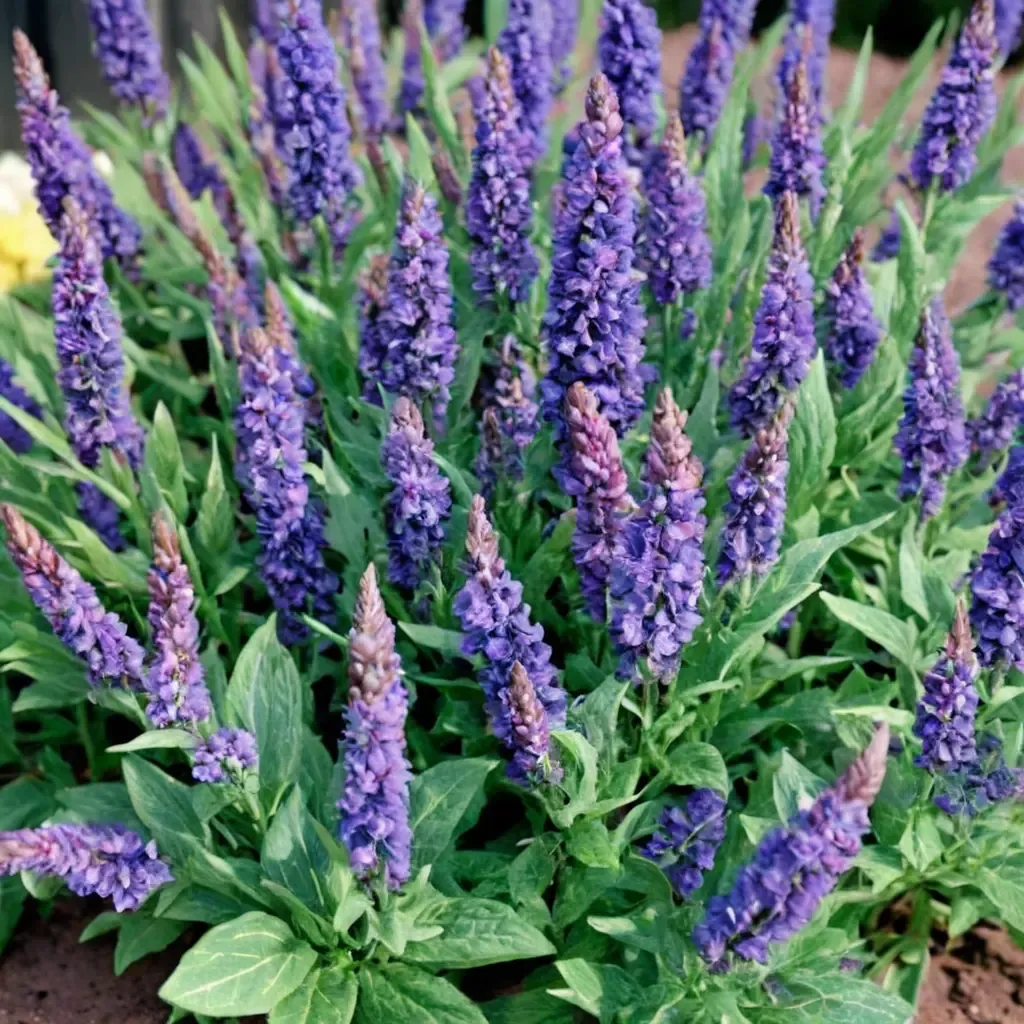
Marcus Woodland Sage
Salvia nemorosa 'Marcus'
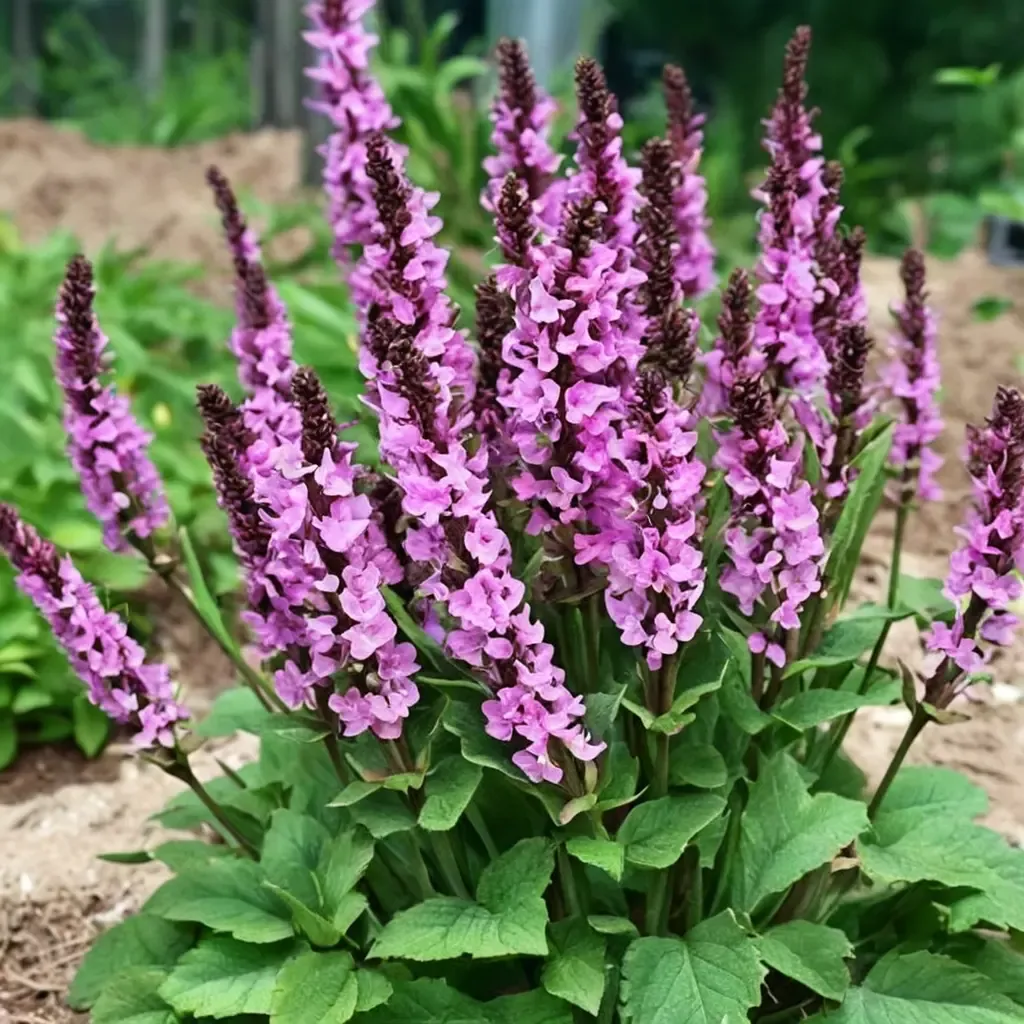
Rose Marvel Sage
Salvia nemorosa 'Rose Marvel'
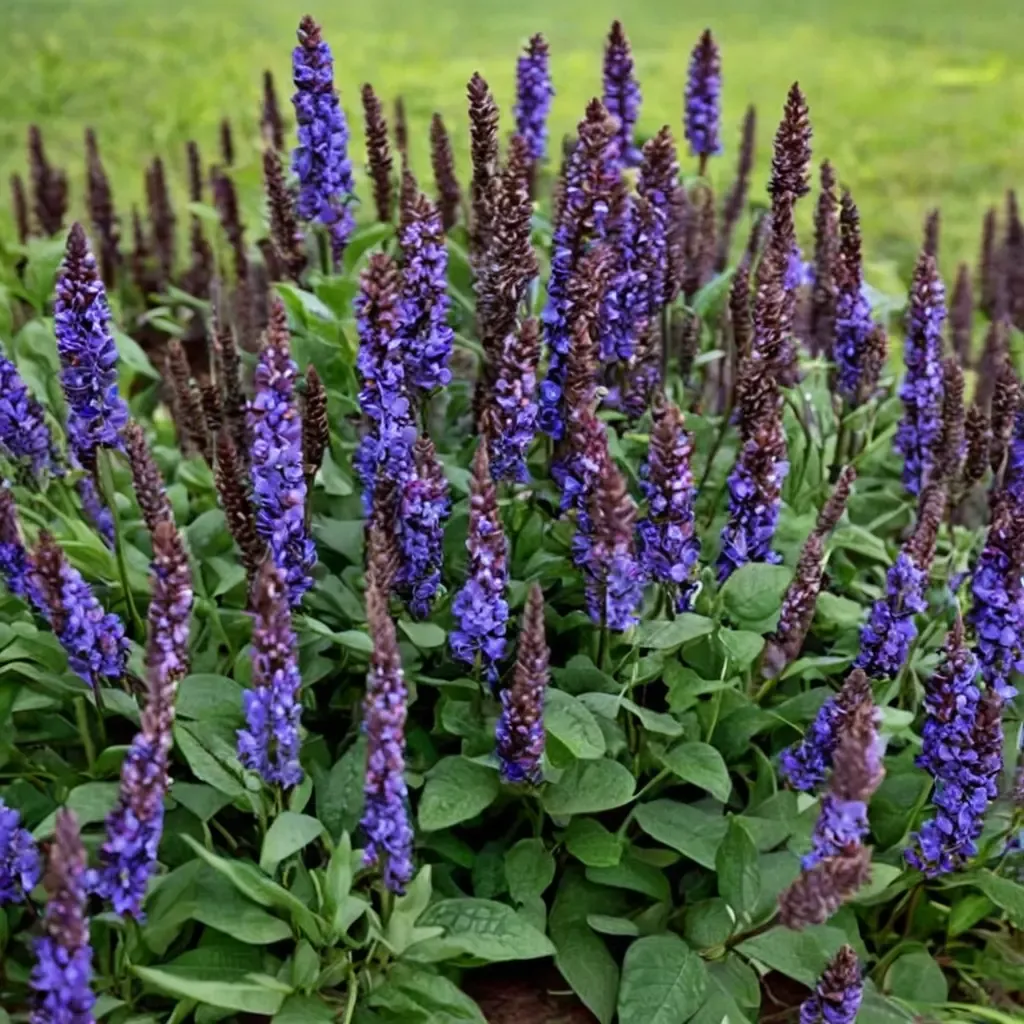
Bumbleblue Sage
Salvia nemorosa 'Bumbleblue'
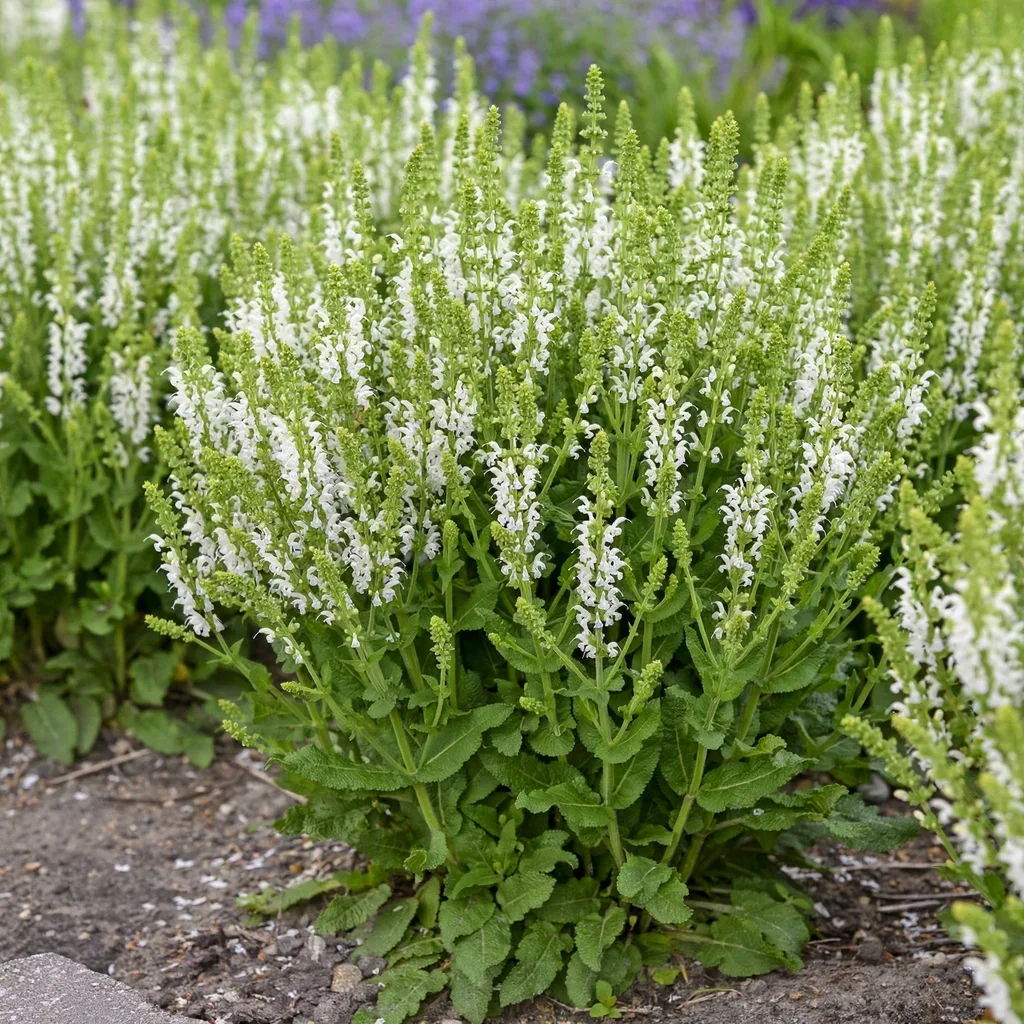
White Profusion Salvia
Salvia x hybrida 'White Profusion'
Keep exploring
Explore the genus
Hardy in your zone?
Grow Tehuacan Sage with confidence
See it in a design of your actual yard, get zone-matched care reminders, and track it season by season in your garden journal.