The Story
Plant Bio
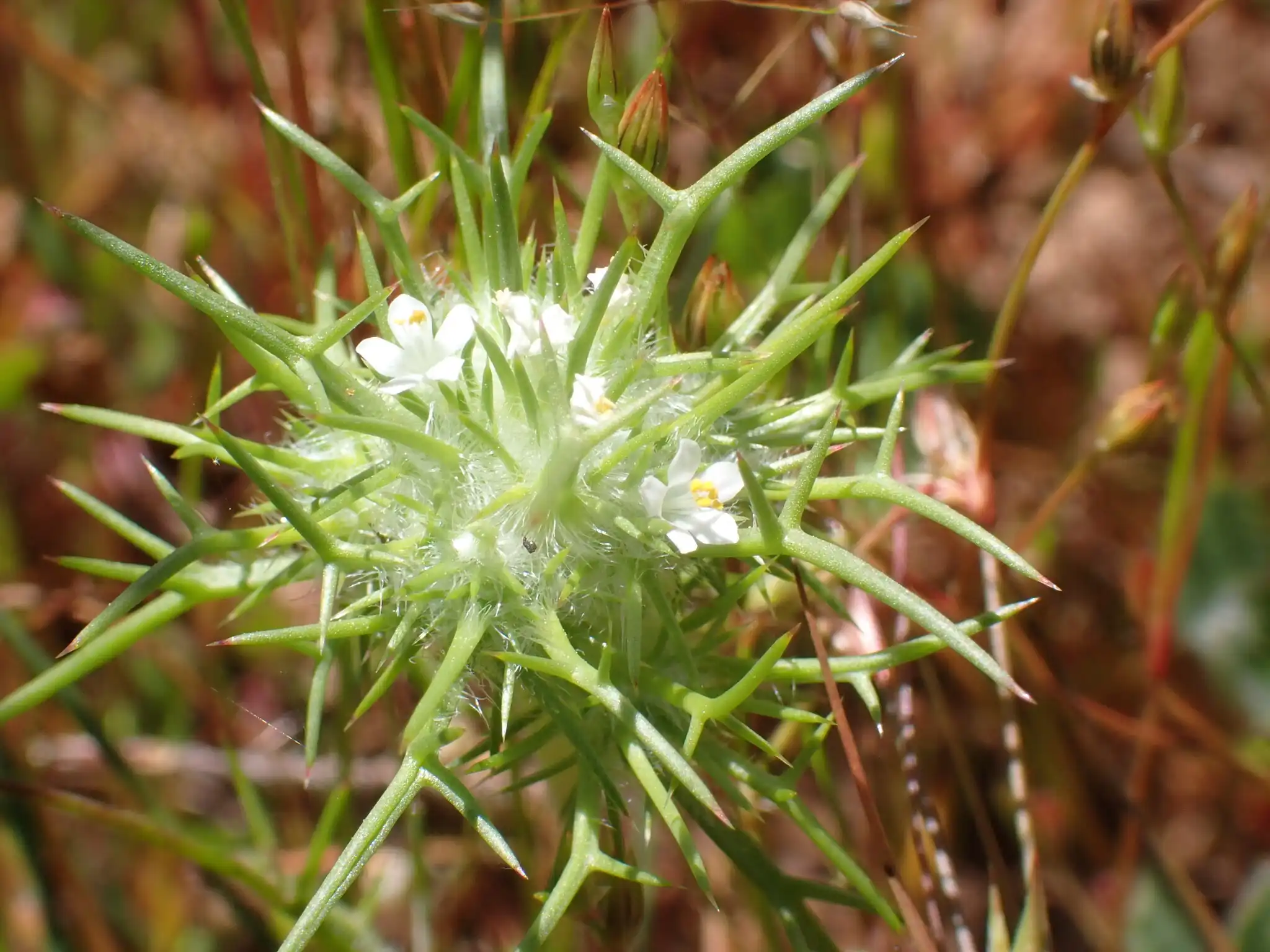
Navarretia intertexta, known as needleleaf pincushionplant, is a low-growing native annual herb found across moist meadows and vernal pools in western North America. The stems carry finely divided, needle-lobed leaves covered in dense hairs, terminating in dense head-like clusters of small white to pale blue flowers guarded by spiny floral bracts.
This species adapts specifically to seasonally wet sites, germinating in damp winter or spring conditions before setting seed and drying out by midsummer. Its sharp, needle-like leaf and bract tips form a spiny cushion that deters heavy grazing.
Uses & Benefits:
Essentials
At a Glance
Plant Type
Annual
Height
12"
Width
10"
Light
Full Sun
Zones
4, 5, 6, 7, 8, 9
Water
Moist to seasonally wet
Humidity
Moderate
Lifespan
Annual
Native To
Western North America
Toxicity
Non-toxic (spiny)
Bloom period
Spring – Summer
In flower about 6 months of the year
Planting
How to Grow
- Select an open site in full sun with clay, loam, or sandy soil that remains moist through spring.
- Sow seed directly on bare soil in fall or early spring, lightly pressing seed into the surface without deep burial.
- Maintain soil moisture during seedling development until spring growth is established.
- Allow the soil to dry down naturally as summer sets in, allowing the plant to complete its lifecycle and drop seed.
Pro Tip
Sow seed directly into moist, bare soil in fall or early spring, ensuring the site receives full sun and adequate seasonal moisture before drying down naturally in summer.
Keep It Thriving
Care Guide
Do
- Provide full sun and unshaded growing conditions.
- Allow the planting site to dry out naturally after flowering.
Don't
- Do not apply supplemental fertilizer, as wild annuals thrive in lean soils.
- Do not irrigate continuously through late summer, which causes fungal rot.
Seasonal Care Calendar
| Task | Jan | Feb | Mar | Apr | May | Jun | Jul | Aug | Sep | Oct | Nov | Dec |
|---|---|---|---|---|---|---|---|---|---|---|---|---|
| Pest Check | ||||||||||||
| Plant | ||||||||||||
| Propagate | ||||||||||||
| Spring Cleanup |
Watch Out For
Pests & Diseases
Common Pests
Common Diseases
In the Garden
Landscape Uses & Companions
Landscape Uses
Companion Plants
Multiply
Propagation Methods
Good to Know
Common Questions
Needleleaf Pincushionplant questions
What zones can Needleleaf Pincushionplant grow in?
Needleleaf Pincushionplant is an annual: it grows, flowers and sets seed in one season, so winter cold doesn't limit where it grows. Gardeners in any zone can grow it by planting at the right time, usually after the last spring frost.
When does Needleleaf Pincushionplant bloom?
Needleleaf Pincushionplant typically blooms from spring to summer. Exact timing shifts a week or two with your zone — Sow's bloom calendar maps it to your garden.
Does Needleleaf Pincushionplant need full sun?
Needleleaf Pincushionplant does best in full sun (6+ hours).
More Navarretia to compare
Keep exploring
Explore the genus
Grow Needleleaf Pincushionplant with confidence
See it in a design of your actual yard, get zone-matched care reminders, and track it season by season in your garden journal.