The Story
Plant Bio
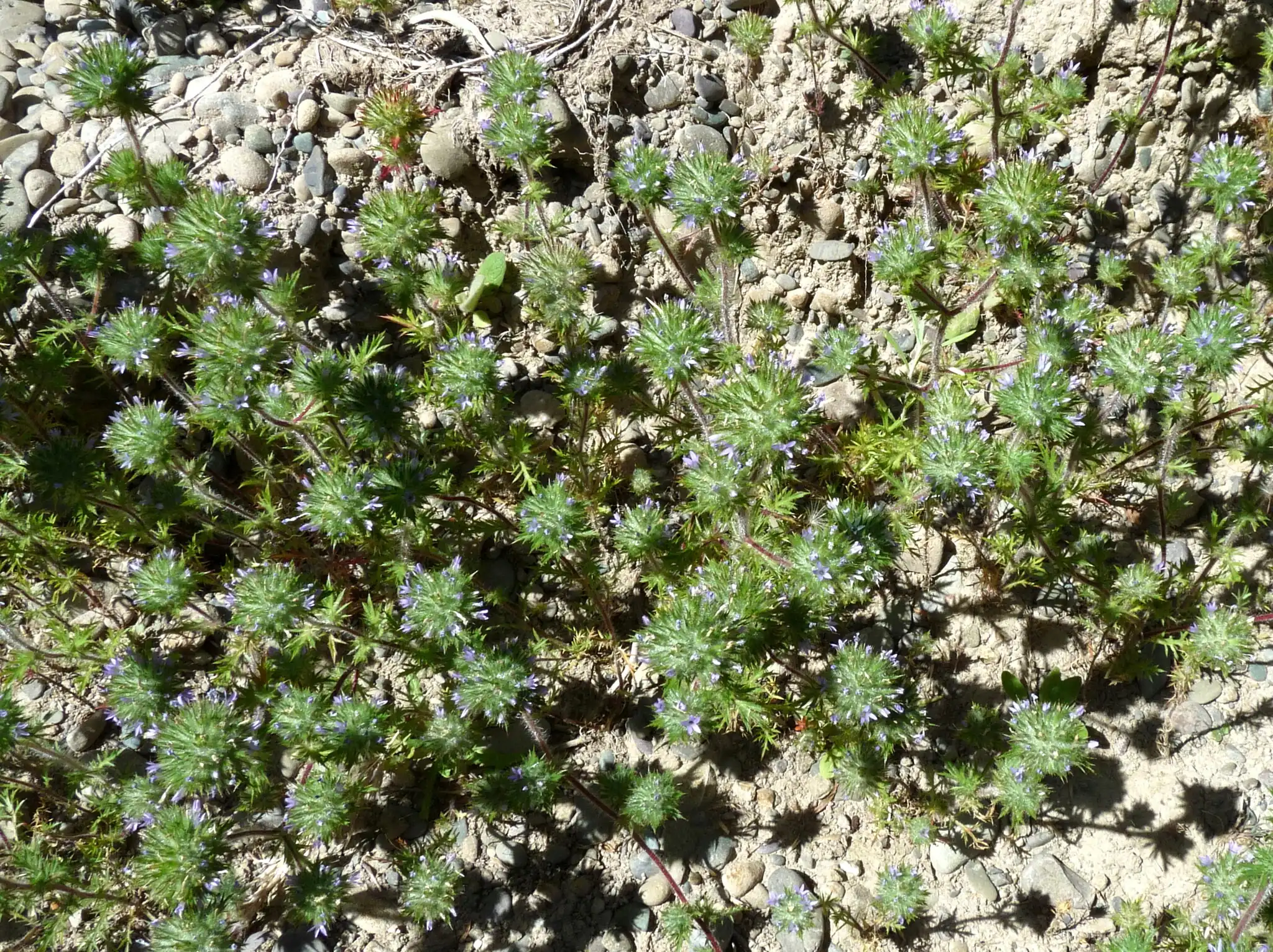
Navarretia squarrosa, commonly known as skunkweed, is an erect to spreading summer annual native to open flats and slopes across western North America. It produces rigid, branching stems clothed in sticky glandular hairs and spiny foliage that releases a pungent odor when handled.
Dense terminal flower heads feature small blue to purple tubular flowers nestled among stiff, needle-pointed bracts. The resinous foliage and prickles naturally deter browsing mammals like deer and rabbits.
Uses & Benefits:
Essentials
At a Glance
Plant Type
Annual
Height
24"
Width
12"
Light
Full Sun
Zones
7, 8, 9, 10
Water
Low
Humidity
Moderate to Low
Lifespan
Annual
Native To
Western North America
Toxicity
Non-toxic (causes skin irritation)
Bloom period
Late spring – Early autumn
In flower about 5 months of the year
Planting
How to Grow
- Select a site in full sun with gritty, free-draining soil.
- Scatter seeds across the soil surface in early spring and press lightly into the earth without deep coverage.
- Water gently until seedlings emerge, then reduce irrigation to match natural rainfall.
- Thin crowded seedlings to roughly six inches apart to allow adequate airflow.
- Allow plants to flower, set seed, and complete their annual cycle naturally.
Pro Tip
Sow seed directly into lean, well-draining soil in full sun; added fertilizer causes soft, floppy stems and compromises drought resistance.
Keep It Thriving
Care Guide
Do
- Plant in light, sharply drained soils or gravelly slopes.
- Wear gloves when handling to protect skin from prickles and resinous sap.
- Provide full sunlight throughout the entire growing season.
Don't
- Do not enrich soil with organic matter or nitrogen-rich fertilizers.
- Do not overwater once established, as waterlogged conditions trigger root rot.
- Do not attempt to transplant established seedlings with taproots.
Seasonal Care Calendar
| Task | Jan | Feb | Mar | Apr | May | Jun | Jul | Aug | Sep | Oct | Nov | Dec |
|---|---|---|---|---|---|---|---|---|---|---|---|---|
| Harvest | ||||||||||||
| Pest Check | ||||||||||||
| Plant | ||||||||||||
| Spring Cleanup |
Watch Out For
Pests & Diseases
Common Pests
Common Diseases
In the Garden
Landscape Uses & Companions
Landscape Uses
Multiply
Propagation Methods
Good to Know
Common Questions
Skunkweed questions
What zones can Skunkweed grow in?
Skunkweed is an annual: it grows, flowers and sets seed in one season, so winter cold doesn't limit where it grows. Gardeners in any zone can grow it by planting at the right time, usually after the last spring frost.
Is Skunkweed deer resistant?
Yes — Skunkweed is rated deer-resistant. Deer typically pass it over, though extreme hunger can override any plant's defenses.
When does Skunkweed bloom?
Skunkweed typically blooms from late spring to early fall. Exact timing shifts a week or two with your zone — Sow's bloom calendar maps it to your garden.
Does Skunkweed need full sun?
Skunkweed does best in full sun (6+ hours).
Is Skunkweed drought tolerant?
Yes — once established (usually after the first full season), Skunkweed handles dry spells with minimal watering. Water deeply its first year to build the root system that makes that possible.
More Navarretia to compare
Keep exploring
Explore the genus
Hardy in your zone?
Grow Skunkweed with confidence
See it in a design of your actual yard, get zone-matched care reminders, and track it season by season in your garden journal.