The Story
Plant Bio
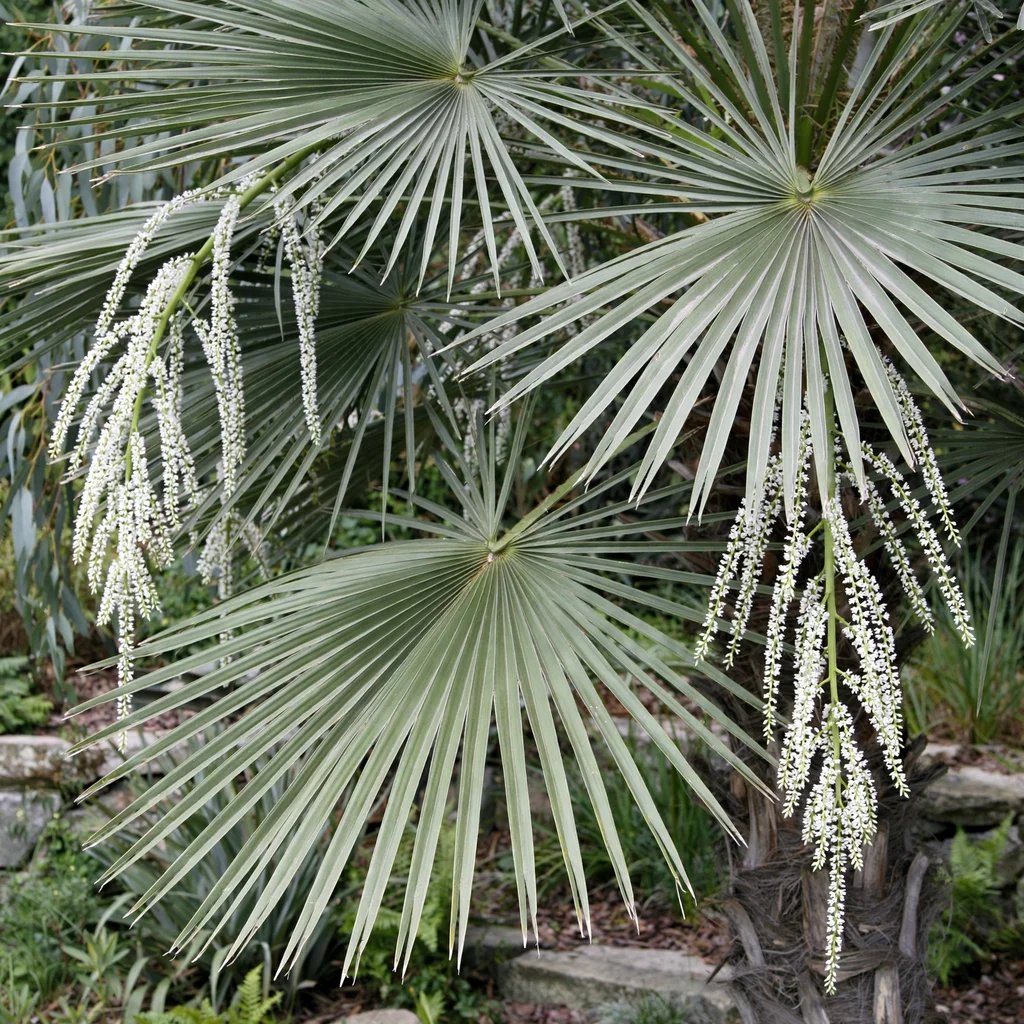
Brahea calcarea, the white rock palm, is a slow-growing evergreen fan palm forming a solitary trunk to thirty feet or more in gardens, crowned with twenty to thirty costapalmate leaves. The nearly circular blades are divided about one-third, deep glossy green above and chalky white beneath, with drooping tips carried on long petioles.
It is the only Brahea with completely unarmed petioles, which separates it at a glance from other hesper palms. Nursery stock still sold as Brahea nitida is the same plant, offered in green and blue to super-silver forms with the same white undersides and long drooping inflorescences.
Uses & Benefits:
Essentials
At a Glance
Plant Type
Tree
Height
396"
Width
108"
Light
Full Sun, Partial Sun
Zones
9, 10
Water
Low
Humidity
Low
Lifespan
Long-lived
Native To
Mexico to Guatemala
Toxicity
Non-toxic
Bloom period
Summer
In flower about 3 months of the year
Planting
How to Grow
- Plant in spring after last frost in full sun, with the rootball level and trunk base exposed.
- Dig in fast-draining sandy or loamy soil with limestone gravel; build a slight mound if drainage is slow.
- Water deeply at planting, then water sparingly and let soil dry between waterings.
- Feed rarely if at all; excess fertilizer burns roots and pushes soft growth.
- Leave the crown dry, keep mulch off the trunk, and avoid moving large established plants.
Pro Tip
Keep it on the dry side in sharp limestone drainage and never cut live fronds — remove only fully dead leaves.
Keep It Thriving
Care Guide
Do
- Plant in sharp drainage with limestone or gravel incorporated.
- Let soil dry between waterings once established.
- Remove only fully crisp dead fronds.
- Protect the spear from hard freeze in zone 9.
Don't
- Do not overwater or hold water around the crown.
- Do not cut green fronds or cut into the trunk.
- Do not hurricane-cut or strip the crown.
- Do not plant in heavy clay or chronically wet soil.
Seasonal Care Calendar
| Task | Jan | Feb | Mar | Apr | May | Jun | Jul | Aug | Sep | Oct | Nov | Dec |
|---|---|---|---|---|---|---|---|---|---|---|---|---|
| Mulch | ||||||||||||
| Pest Check | ||||||||||||
| Plant | ||||||||||||
| Prune | ||||||||||||
| Winter Prep |
Watch Out For
Pests & Diseases
Common Pests
Common Diseases
In the Garden
Landscape Uses & Companions
Landscape Uses
Multiply
Propagation Methods
Good to Know
Common Questions
White Rock Palm questions
What zones can White Rock Palm grow in?
White Rock Palm is hardy in USDA Zones 9–10: in that range it survives winter in the ground. Colder than Zone 9, winters are too cold for it to survive outdoors.
When does White Rock Palm bloom?
White Rock Palm typically blooms in summer. Exact timing shifts a week or two with your zone — Sow's bloom calendar maps it to your garden.
Does White Rock Palm need full sun?
White Rock Palm does best in full sun to part shade. In hot climates, afternoon shade keeps blooms fresher longer.
Is White Rock Palm drought tolerant?
Yes — once established (usually after the first full season), White Rock Palm handles dry spells with minimal watering. Water deeply its first year to build the root system that makes that possible.
More Brahea to compare
Keep exploring
Explore the genus
Hardy in your zone?
Grow White Rock Palm with confidence
See it in a design of your actual yard, get zone-matched care reminders, and track it season by season in your garden journal.