The Story
Plant Bio
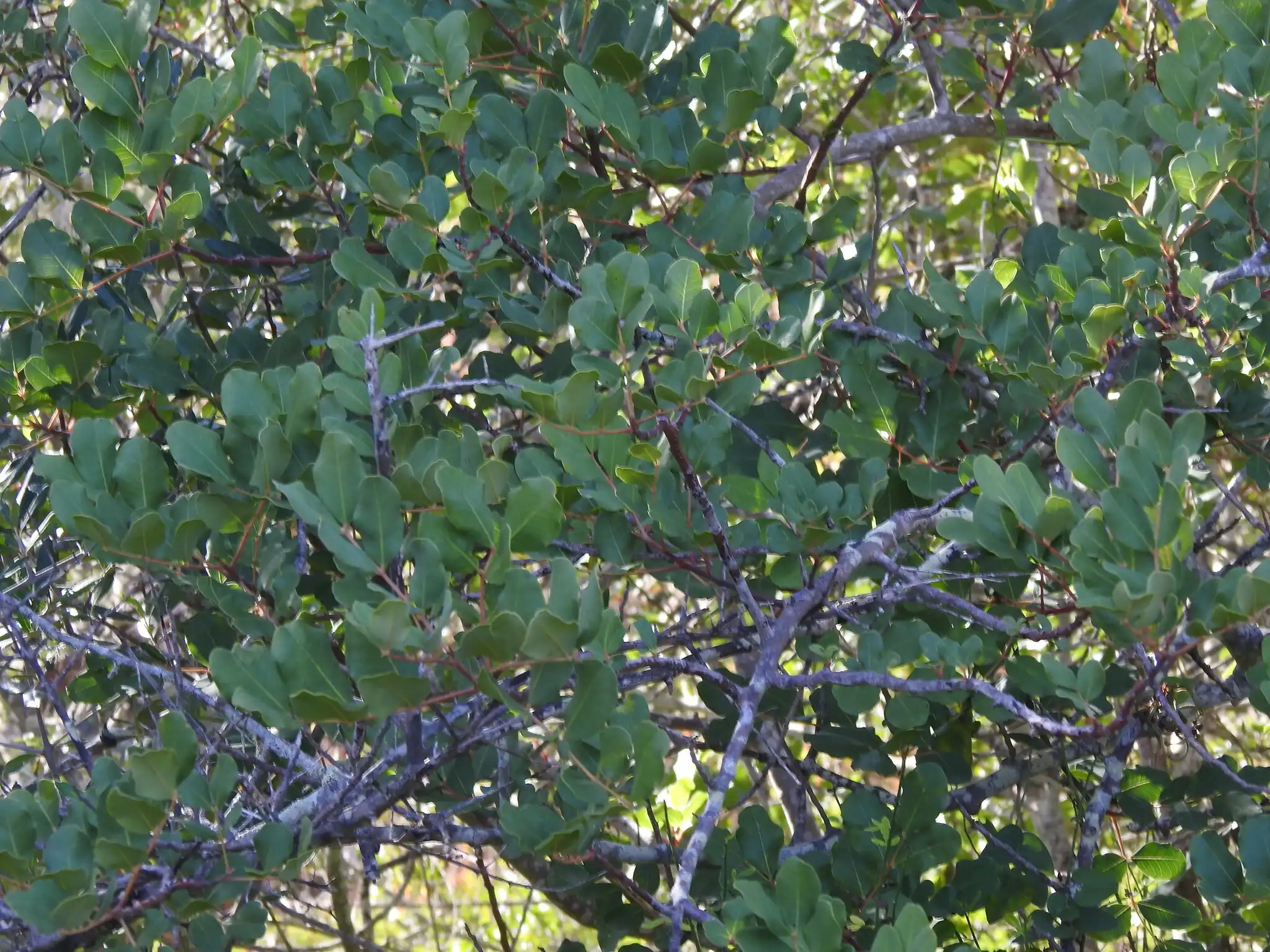
Ceratonia siliqua, commonly known as carob, is a slow-growing evergreen tree native to the Mediterranean basin that reaches 30 to 50 feet in height with an equal spread. Its leathery, dark green pinnate leaves form a broad, dense canopy that provides heavy shade throughout the year.
The small, petal-less flowers emerge directly from old wood and trunks in fall, releasing a distinct scent that attracts bees and flies. As a dioecious species, separate male and female trees are required to produce the thick, sweet, dark brown seed pods long harvested as a chocolate substitute.
Uses & Benefits:
Essentials
At a Glance
Plant Type
Tree
Height
480"
Width
480"
Light
Full Sun
Zones
9, 10
Water
Low
Humidity
Low
Lifespan
Perennial
Native To
Mediterranean region
Toxicity
Non-toxic
Bloom period
Fall
In flower about 3 months of the year
Planting
How to Grow
- Choose a location receiving full sun with deep, light, or sandy soil that drains rapidly.
- Dig a planting hole twice as wide as the root ball and equal in depth, ensuring the root crown sits level with the surrounding soil.
- Backfill with native soil without heavy amendments, firm gently, and water thoroughly to settle.
- Protect young saplings from freezing temperatures until they establish a woody trunk and deep taproot system.
Pro Tip
Plant in sharply draining soil where water never pools, as saturated ground quickly induces fatal root rot. Position male trees downwind from outdoor living spaces to manage the strong scent produced by their autumn flowers.
Keep It Thriving
Care Guide
Do
- Provide deep, infrequent watering during the first two establishment years.
- Ensure soil dries out completely between waterings once the root system develops.
- Prune lower limbs selectively if higher clearance under the broad canopy is required.
Don't
- Do not overwater or plant in low-lying areas subject to standing moisture.
- Do not apply heavy nitrogen fertilizers, which spur weak growth at the expense of root development.
- Do not disturb the taproot during transplanting.
Seasonal Care Calendar
| Task | Jan | Feb | Mar | Apr | May | Jun | Jul | Aug | Sep | Oct | Nov | Dec |
|---|---|---|---|---|---|---|---|---|---|---|---|---|
| Fertilize | ||||||||||||
| Harvest | ||||||||||||
| Mulch | ||||||||||||
| Pest Check | ||||||||||||
| Prune |
Watch Out For
Pests & Diseases
Common Pests
Common Diseases
In the Garden
Landscape Uses & Companions
Landscape Uses
Multiply
Propagation Methods
Good to Know
Common Questions
Carob questions
What zones can Carob grow in?
Carob is hardy in USDA Zones 9–10: in that range it survives winter in the ground. Colder than Zone 9, winters are too cold for it to survive outdoors.
Is Carob deer resistant?
Not reliably. Deer may browse Carob, especially tender spring growth — plan on repellents or fencing where pressure is high.
When does Carob bloom?
Carob typically blooms in fall. Exact timing shifts a week or two with your zone — Sow's bloom calendar maps it to your garden.
Does Carob need full sun?
Carob does best in full sun (6+ hours).
Is Carob drought tolerant?
Yes — once established (usually after the first full season), Carob handles dry spells with minimal watering. Water deeply its first year to build the root system that makes that possible.
Keep exploring
Explore the genus
Hardy in your zone?
Grow Carob with confidence
See it in a design of your actual yard, get zone-matched care reminders, and track it season by season in your garden journal.