The Story
Plant Bio
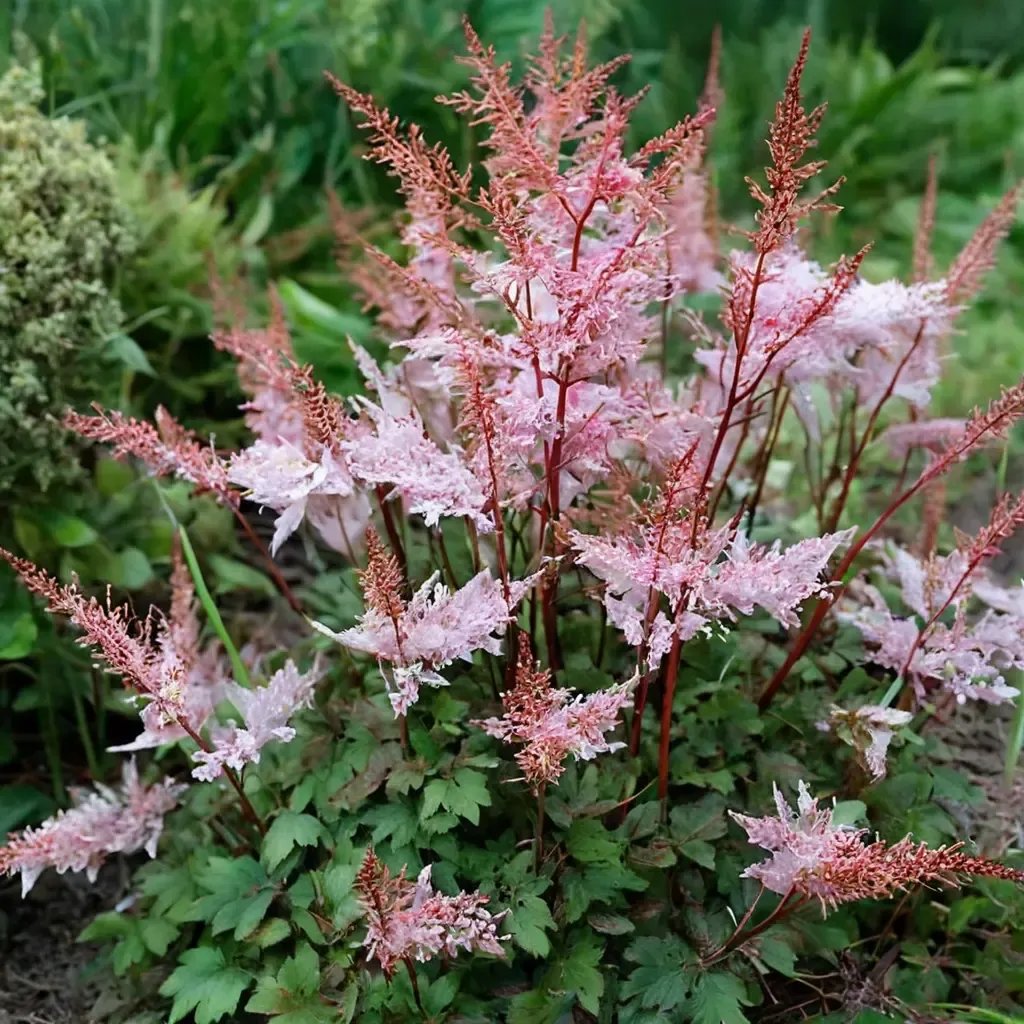
Astilbe 'Deft Lace' is known for its delicate, fern-like foliage and abundant, fluffy flower plumes.
This cultivar features lacey leaves and is particularly noted for its unique upright flower spikes.
Uses & Benefits:
Astilbe Deft Lace provides elegant, feathery white plumes that add a delicate touch to shaded gardens.
Its lush foliage helps retain soil moisture and suppress weeds in shaded areas.
Attracts beneficial insects and pollinators, supporting garden biodiversity.
Essentials
At a Glance
Plant Type
Perennial
Height
30"
Width
24"
Light
Partial Sun, Shade
Zones
4, 5, 6, 7, 8, 9
Water
Consistently moist
Humidity
Prefers high humidity
Lifespan
Perennial
Native To
Asia and North America
Toxicity
Non-toxic to humans and pets
Bloom period
Early summer
J
F
M
A
M
J
J
A
S
O
N
D
In flower about 1 month of the year
Planting
How to Grow
- Select a shady spot with rich, well-draining soil.
- Tuck seedlings or divisions into prepared soil in early spring.
- Water thoroughly after planting to settle soil around roots.
- Mist cuttings regularly to maintain humidity and encourage rooting.
- Mulch around plants to retain moisture and suppress weeds.
- Fertilize with a balanced, slow-release fertilizer in spring.
Pro Tip
Plant Astilbe Deft Lace in partial shade for vibrant foliage and abundant blooms.
Keep It Thriving
Care Guide
Do
- Water consistently to keep soil moist 🌱
- Apply mulch annually to conserve moisture
- Deadhead spent flowers to encourage new blooms
- Divide plants every 3–4 years for healthy growth
Don't
- Avoid dry, exposed locations ❌
- Don’t let soil dry out completely
- Refrain from over-fertilizing, which can reduce flowering
- Do not ignore pests or diseases
Seasonal Care Calendar
| Task | Jan | Feb | Mar | Apr | May | Jun | Jul | Aug | Sep | Oct | Nov | Dec |
|---|---|---|---|---|---|---|---|---|---|---|---|---|
| Deadhead | ||||||||||||
| Divide | ||||||||||||
| Fertilize | ||||||||||||
| Mulch | ||||||||||||
| Pest Check | ||||||||||||
| Spring Cleanup |
Watch Out For
Pests & Diseases
Common Pests
Common Diseases
In the Garden
Landscape Uses & Companions
Landscape Uses
Shaded woodland borderMoist garden bedFocal point in shaded courtyard
Companion Plants
Multiply
Propagation Methods
Good to Know