The Story
Plant Bio
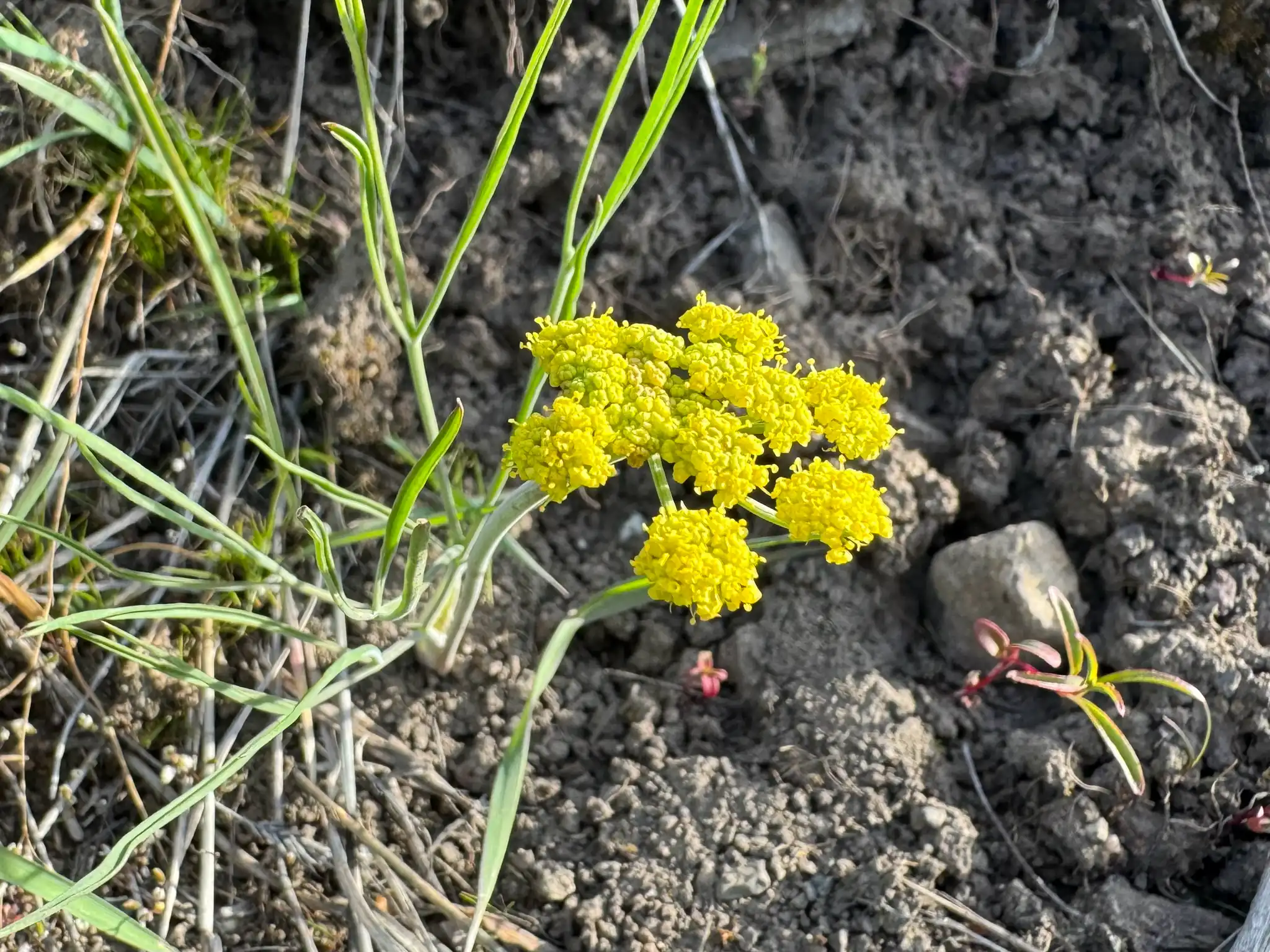
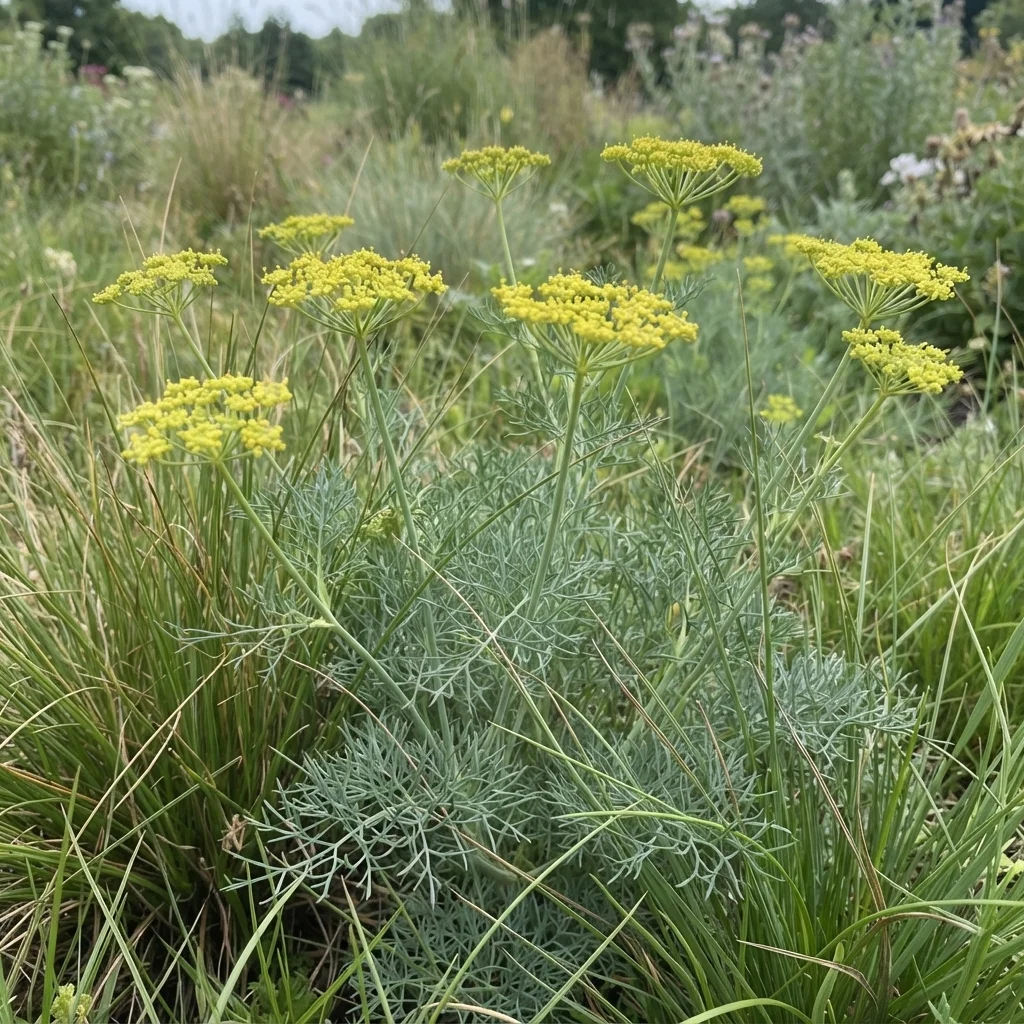
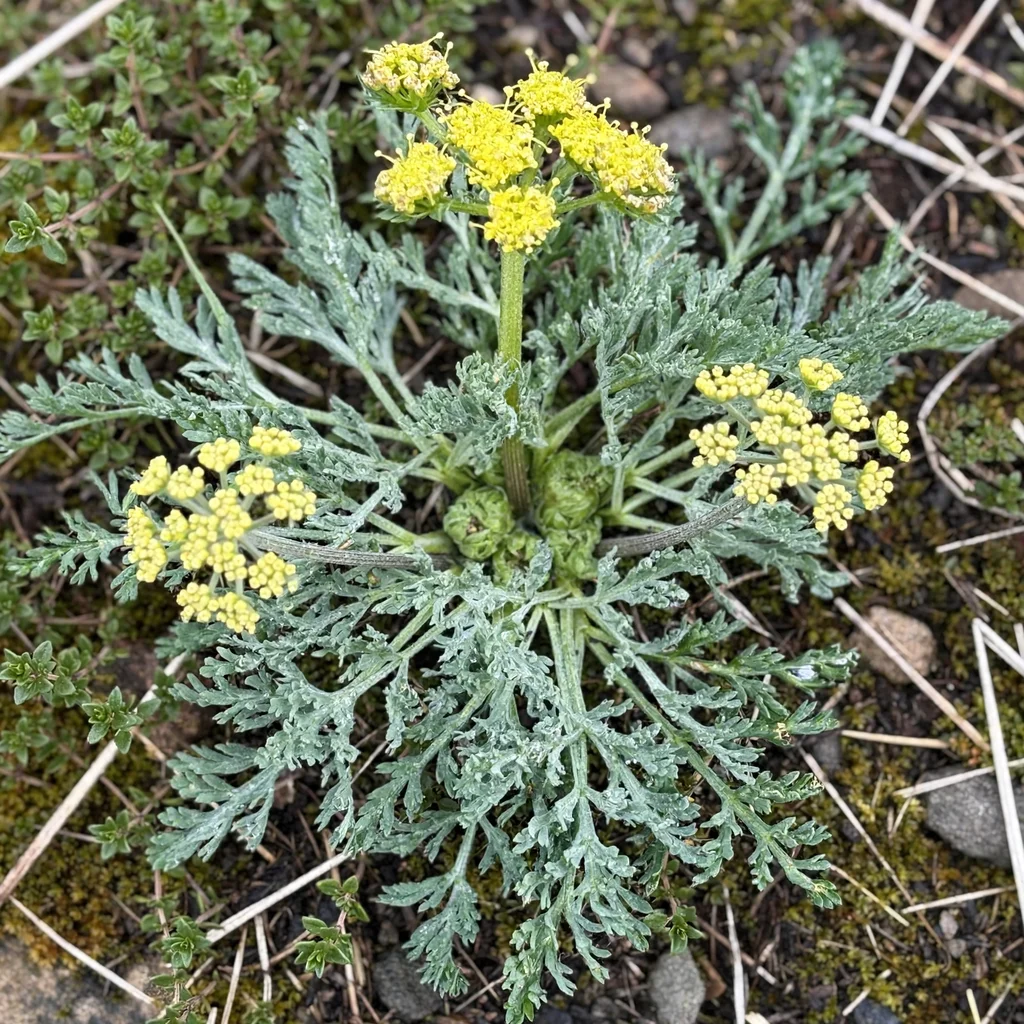
Lomatium triternatum is an upright perennial forb native to dry scrublands and open woodlands of western North America. It produces fine, multi-divided blue-green foliage topped by compound umbels of small bright yellow flowers from spring into early summer.
The foliage is ternately divided up to three times into long, narrow, linear leaflets that arise early in spring from a thick central taproot. Following seed set in early summer, the entire plant dies back and enters a summer dormancy to survive heat and drought.
Uses & Benefits:
Essentials
At a Glance
Plant Type
Perennial
Height
40"
Width
18"
Light
Full Sun, Partial Sun
Zones
4, 5, 6, 7, 8, 9
Water
Low
Humidity
Low
Lifespan
Perennial
Native To
Western North America
Toxicity
Non-toxic
Bloom period
Spring – Early summer
In flower about 4 months of the year
Planting
How to Grow
- Select a site in full sun to partial shade with sharply draining sandy, loamy, or stony soil.
- Plant container plugs in spring or autumn, taking care not to disturb or snap the central taproot.
- Water moderately during active spring growth until yellow flowers finish blooming.
- Stop watering completely in early summer as foliage begins to yellow and die back.
Pro Tip
Withhold all irrigation once foliage turns yellow after flowering; moist conditions during warm summer dormancy induce rapid root rot.
Keep It Thriving
Care Guide
Do
- Provide sharply draining soil to prevent taproot rot
- Allow soil to dry out completely during summer dormancy
- Sow seeds in autumn to allow natural cold stratification
Don't
- Do not water during summer dormancy
- Do not plant in heavy, wet clay soil
- Do not apply high-nitrogen fertilizers
Seasonal Care Calendar
| Task | Jan | Feb | Mar | Apr | May | Jun | Jul | Aug | Sep | Oct | Nov | Dec |
|---|---|---|---|---|---|---|---|---|---|---|---|---|
| Pest Check | ||||||||||||
| Plant | ||||||||||||
| Propagate | ||||||||||||
| Spring Cleanup |
Watch Out For
Pests & Diseases
Common Pests
Common Diseases
In the Garden
Landscape Uses & Companions
Landscape Uses
Multiply
Propagation Methods
Good to Know
Common Questions
Nineleaf Biscuitroot questions
What zones can Nineleaf Biscuitroot grow in?
Nineleaf Biscuitroot is hardy in USDA Zones 4–9: in that range it survives winter in the ground. Warmer than Zone 9, winter isn't the problem: it prefers colder winters, and summer heat can shorten its life.
When does Nineleaf Biscuitroot bloom?
Nineleaf Biscuitroot typically blooms from early spring to early summer. Exact timing shifts a week or two with your zone — Sow's bloom calendar maps it to your garden.
Does Nineleaf Biscuitroot need full sun?
Nineleaf Biscuitroot does best in full sun to part shade. In hot climates, afternoon shade keeps blooms fresher longer.
Is Nineleaf Biscuitroot drought tolerant?
Yes — once established (usually after the first full season), Nineleaf Biscuitroot handles dry spells with minimal watering. Water deeply its first year to build the root system that makes that possible.
More Lomatium to compare
Keep exploring
Explore the genus
Grow Nineleaf Biscuitroot with confidence
See it in a design of your actual yard, get zone-matched care reminders, and track it season by season in your garden journal.