The Story
Plant Bio
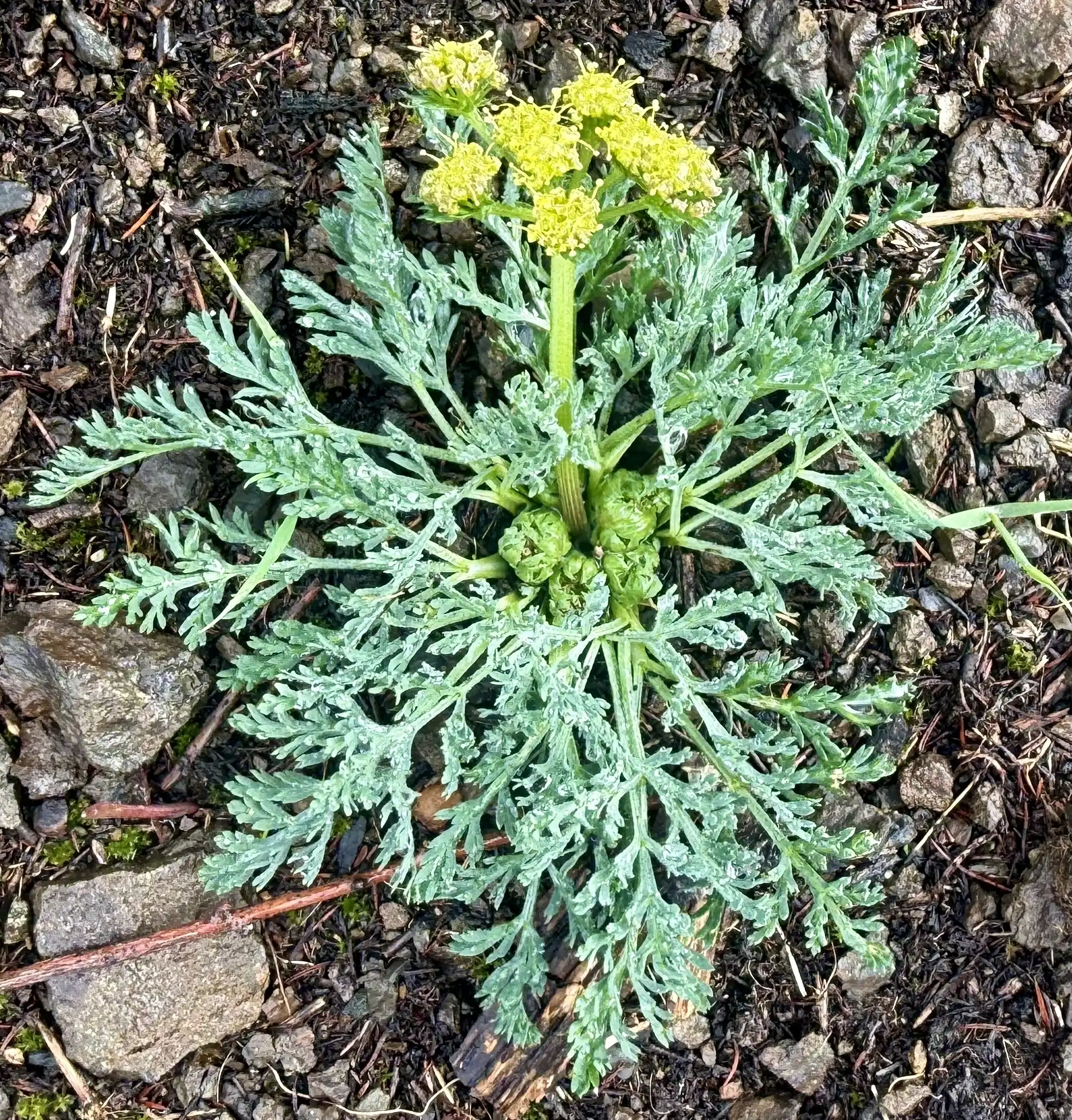
Lomatium macrocarpum is a low-growing perennial herb native to dry plains and sagebrush steppes across western North America. It forms a deep, swollen taproot that sustains finely divided, gray-green, fern-like foliage through spring.
This species produces flat, compound umbels of white to pale yellow flowers followed by distinctly large, winged fruits up to three-quarters of an inch long. Foliage completely dies back in early summer as the plant enters absolute heat dormancy.
Uses & Benefits:
Essentials
At a Glance
Plant Type
Perennial
Height
20"
Width
12"
Light
Full Sun
Zones
4, 5, 6, 7, 8, 9
Water
Low
Humidity
Low
Lifespan
Perennial
Native To
North America
Toxicity
Non-toxic
Bloom period
Spring – Early summer
In flower about 4 months of the year
Planting
How to Grow
- Select a planting site in full sun with gravelly, sandy, or sharply draining soil.
- Sow fresh seed in fall for natural cold stratification, or install containerized plugs without disturbing the deep taproot.
- Water sparingly during active spring leaf growth only when the top layer of soil dries out completely.
- Cease watering entirely once the foliage turns yellow and dies back in early summer.
Pro Tip
Withhold all supplemental irrigation during summer dormancy, as moisture while the taproot is leafless triggers rot.
Keep It Thriving
Care Guide
Do
- Provide exceptionally sharp soil drainage to protect the sensitive taproot.
- Clear away completely dried foliage after summer dieback occurs.
- Expose seeds to 90 days of cold, moist stratification prior to spring sowing.
Don't
- Do not irrigate during summer dormancy.
- Do not fertilize or amend the soil with rich organic compost.
- Do not attempt to divide established plants due to their fragile taproots.
Seasonal Care Calendar
| Task | Jan | Feb | Mar | Apr | May | Jun | Jul | Aug | Sep | Oct | Nov | Dec |
|---|---|---|---|---|---|---|---|---|---|---|---|---|
| Deadhead | ||||||||||||
| Pest Check | ||||||||||||
| Spring Cleanup | ||||||||||||
| Winter Prep |
Watch Out For
Pests & Diseases
Common Pests
Common Diseases
In the Garden
Landscape Uses & Companions
Landscape Uses
Companion Plants
Multiply
Propagation Methods
Good to Know
Common Questions
Bigseed Biscuitroot questions
What zones can Bigseed Biscuitroot grow in?
Bigseed Biscuitroot is hardy in USDA Zones 4–9: in that range it survives winter in the ground. Warmer than Zone 9, winter isn't the problem: it prefers colder winters, and summer heat can shorten its life.
Is Bigseed Biscuitroot deer resistant?
Not reliably. Deer may browse Bigseed Biscuitroot, especially tender spring growth — plan on repellents or fencing where pressure is high.
When does Bigseed Biscuitroot bloom?
Bigseed Biscuitroot typically blooms from early spring to early summer. Exact timing shifts a week or two with your zone — Sow's bloom calendar maps it to your garden.
Does Bigseed Biscuitroot need full sun?
Bigseed Biscuitroot does best in full sun (6+ hours).
Is Bigseed Biscuitroot drought tolerant?
Yes — once established (usually after the first full season), Bigseed Biscuitroot handles dry spells with minimal watering. Water deeply its first year to build the root system that makes that possible.
More Lomatium to compare
Keep exploring
Explore the genus
Grow Bigseed Biscuitroot with confidence
See it in a design of your actual yard, get zone-matched care reminders, and track it season by season in your garden journal.