The Story
Plant Bio
Inga edulis is an evergreen tree from Amazonian South America that forms a broad spreading canopy branching below 10 feet and holds pinnate leaves to 9 inches with four to six pairs of leaflets on a winged rachis with a nectary gland. It reaches 16 to 60 feet in warm gardens and fixes nitrogen through root nodules, which lets it grow in acid infertile soils that stay moist.
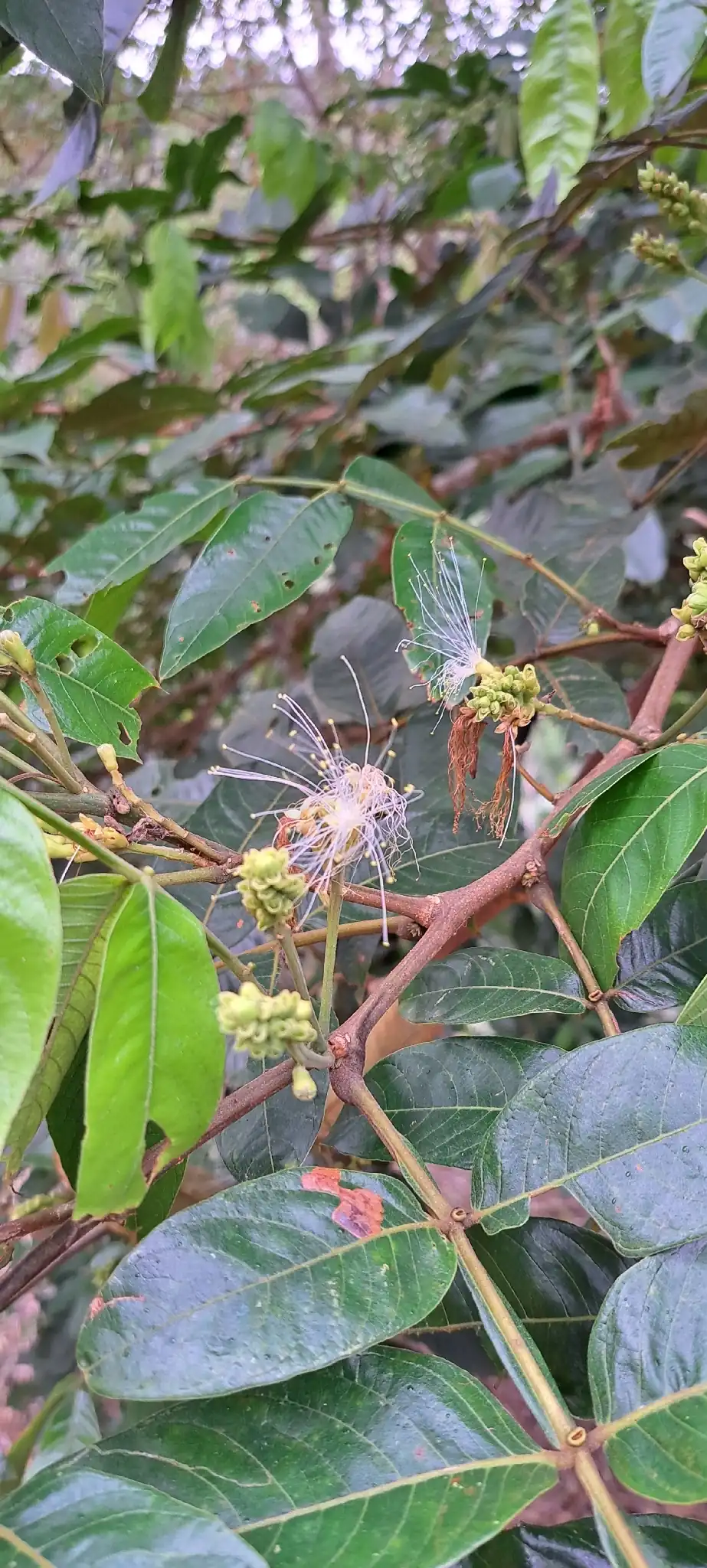
This species is grown for its hanging pods filled with sweet vanilla-flavored pulp eaten raw around large seeds that are toxic unless boiled or roasted. The flowers are dense axillary spikes 3 to 5 inches long of white stamens to 1.8 inches that open fragrant and hermaphrodite from summer to fall.
Uses & Benefits:
Essentials
At a Glance
Plant Type
Tree
Height
720"
Width
480"
Light
Full Sun
Zones
9, 10
Water
High
Humidity
High
Lifespan
Long-lived tree
Native To
Amazonian South America
Toxicity
Seeds toxic raw; pulp edible
Bloom period
Summer – Fall
In flower about 6 months of the year
Planting
How to Grow
- Plant in full sun with 8 to 10 hours of light after all frost danger, spacing 30 to 40 feet to allow the spreading canopy.
- Dig into acid soil pH 5.5 to 6.5 that is moist but well drained, and water deeply to settle the rootball.
- Mulch 3 inches deep, kept back from the trunk, and water regularly to keep soil evenly moist with at least 47 inches of water per year.
- Prune young trees to one strong trunk and shape after fruiting to contain size and remove suckers and fallen pods.
Pro Tip
Sow seed fresh the same week it leaves the pulp and pick every pod, because dried seed will not germinate and fallen pods self-sow.
Keep It Thriving
Care Guide
Do
- Give full sun and steady moisture, with extra water in dry spells
- Pick all ripe pods promptly to limit self-sowing
- Monitor leaf undersides for scale, mealybugs and mites
Don't
- Do not eat raw seeds, they contain trypsin inhibitors
- Do not let seed dry out or store it, it loses viability fast
- Do not plant where frost occurs without greenhouse protection
Seasonal Care Calendar
| Task | Jan | Feb | Mar | Apr | May | Jun | Jul | Aug | Sep | Oct | Nov | Dec |
|---|---|---|---|---|---|---|---|---|---|---|---|---|
| Harvest | ||||||||||||
| Mulch | ||||||||||||
| Pest Check | ||||||||||||
| Plant | ||||||||||||
| Prune |
Watch Out For
Pests & Diseases
Common Pests
Common Diseases
In the Garden
Landscape Uses & Companions
Landscape Uses
Companion Plants
Multiply
Propagation Methods
Good to Know
Common Questions
Ice-Cream Bean questions
What zones can Ice-Cream Bean grow in?
Ice-Cream Bean is hardy in USDA Zones 9–10: in that range it survives winter in the ground. Colder than Zone 9, winters are too cold for it to survive outdoors.
When does Ice-Cream Bean bloom?
Ice-Cream Bean typically blooms from summer to fall. Exact timing shifts a week or two with your zone — Sow's bloom calendar maps it to your garden.
Does Ice-Cream Bean need full sun?
Ice-Cream Bean does best in full sun (6+ hours).
Keep exploring
Explore the genus
Hardy in your zone?
Grow Ice-Cream Bean with confidence
See it in a design of your actual yard, get zone-matched care reminders, and track it season by season in your garden journal.