The Story
Plant Bio
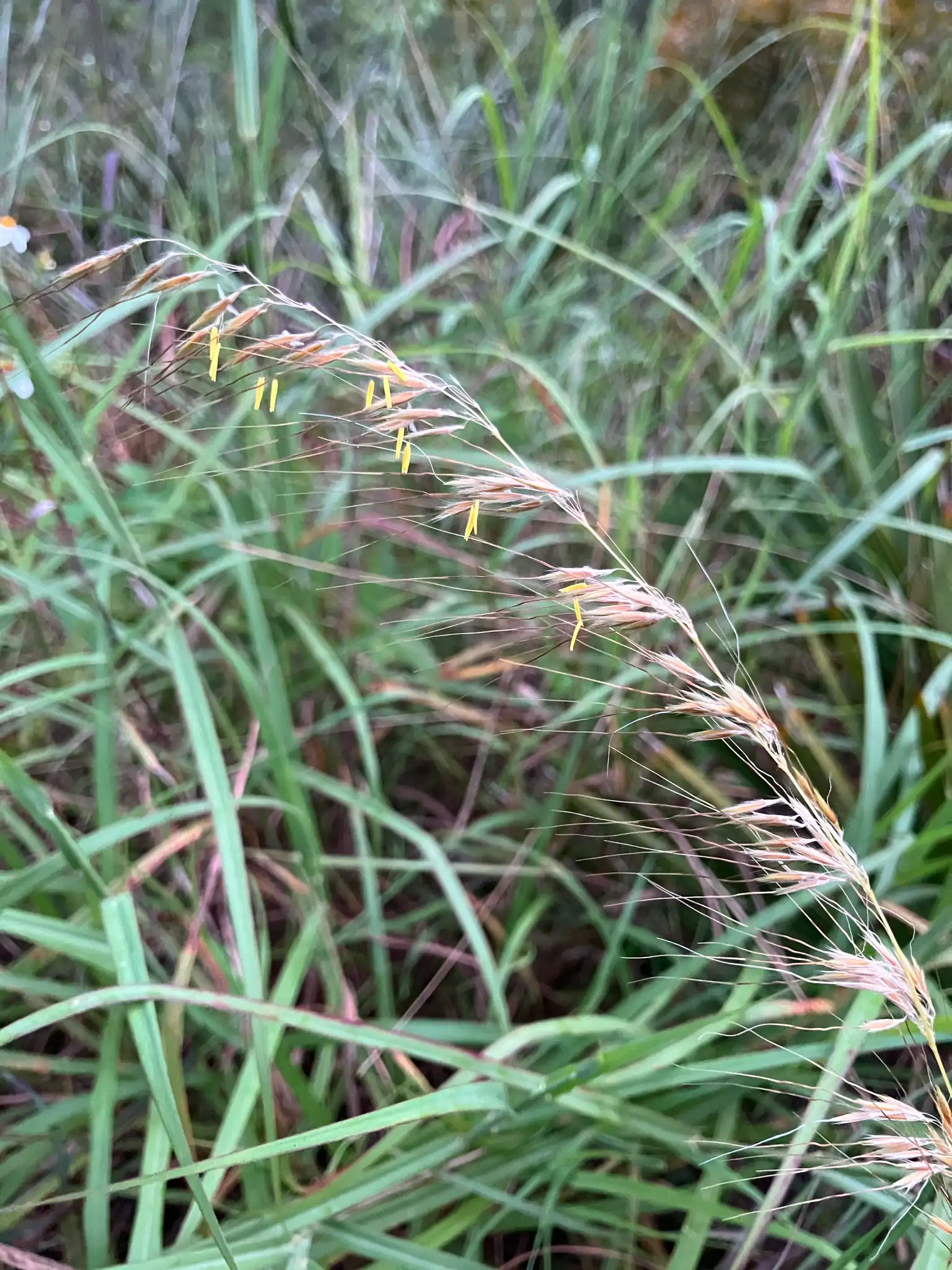
Sorghastrum secundum, the lopsided Indiangrass, is a warm-season perennial bunchgrass from the Southeast, forming erect tufts with short rhizomes that go dormant in winter. Foliage holds two to three feet tall with flat blades to half an inch wide, while flowering culms rise to five or six feet in late season.
What sets it apart is the narrow one-sided panicle, with small clustered spikelets all turned to one side of the stem and opening yellow to golden-brown. It holds in moist to dry well-drained sand, sandy loam, clay and lime rock in full sun, and declines with repeated soil disturbance once established.
Uses & Benefits:
Essentials
At a Glance
Plant Type
Grass
Height
72"
Width
12"
Light
Full Sun, Partial Sun
Zones
8, 9, 10
Water
Low
Humidity
Unknown
Lifespan
Perennial
Native To
Southeastern USA
Toxicity
Unknown
Bloom period
Late summer – Fall
In flower about 4 months of the year
Planting
How to Grow
- Plant plugs in spring after last frost in full sun in well-drained sand or sandy loam.
- Space 12 inches apart in masses and water in to settle soil around the crown.
- Water during the first season to establish, then reduce to rainfall except in extended dry spells.
- Cut dormant foliage to a few inches in late winter before new growth starts.
Pro Tip
Site it in full sun in well-drained sand and leave it undisturbed; the six-foot stalks rise openly above the foliage and never knit into a solid screen.
Keep It Thriving
Care Guide
Do
- Plant in full sun in well-drained sand or sandy loam
- Plant in masses or at the back of a meadow planting for fall effect
- Leave fall seed heads standing for birds and cover
Don't
- Do not over-maintain or repeatedly dig and rework soil around established tufts
- Do not site in shade or in soil that stays wet
- Do not expect a solid evergreen screen from the open flowering stalks
Seasonal Care Calendar
| Task | Jan | Feb | Mar | Apr | May | Jun | Jul | Aug | Sep | Oct | Nov | Dec |
|---|---|---|---|---|---|---|---|---|---|---|---|---|
| Divide | ||||||||||||
| Plant | ||||||||||||
| Propagate | ||||||||||||
| Spring Cleanup |
Watch Out For
Pests & Diseases
Common Pests
Common Diseases
In the Garden
Landscape Uses & Companions
Landscape Uses
Multiply
Propagation Methods
Good to Know
Common Questions
Lopsided Indiangrass questions
What zones can Lopsided Indiangrass grow in?
Lopsided Indiangrass is hardy in USDA Zones 8–10: in that range it survives winter in the ground. Colder than Zone 8, grow it in a container you can move to shelter for the winter, or as an annual.
When does Lopsided Indiangrass bloom?
Lopsided Indiangrass typically blooms from late summer to late fall. Exact timing shifts a week or two with your zone — Sow's bloom calendar maps it to your garden.
Does Lopsided Indiangrass need full sun?
Lopsided Indiangrass does best in full sun to part shade. In hot climates, afternoon shade keeps blooms fresher longer.
Is Lopsided Indiangrass drought tolerant?
Yes — once established (usually after the first full season), Lopsided Indiangrass handles dry spells with minimal watering. Water deeply its first year to build the root system that makes that possible.
More Sorghastrum to compare
Keep exploring
Explore the genus
Hardy in your zone?
Grow Lopsided Indiangrass with confidence
See it in a design of your actual yard, get zone-matched care reminders, and track it season by season in your garden journal.