The Story
Plant Bio
Bunchosia argentea is an evergreen large shrub to small tree from tropical South America, forming a dense rounded canopy 10 to 20 feet tall in warm gardens. It carries opposite oval leaves 4 to 7 inches long, glossy green above and silvery-silky beneath, with small yellow five-petalled flowers in compact axillary clusters.
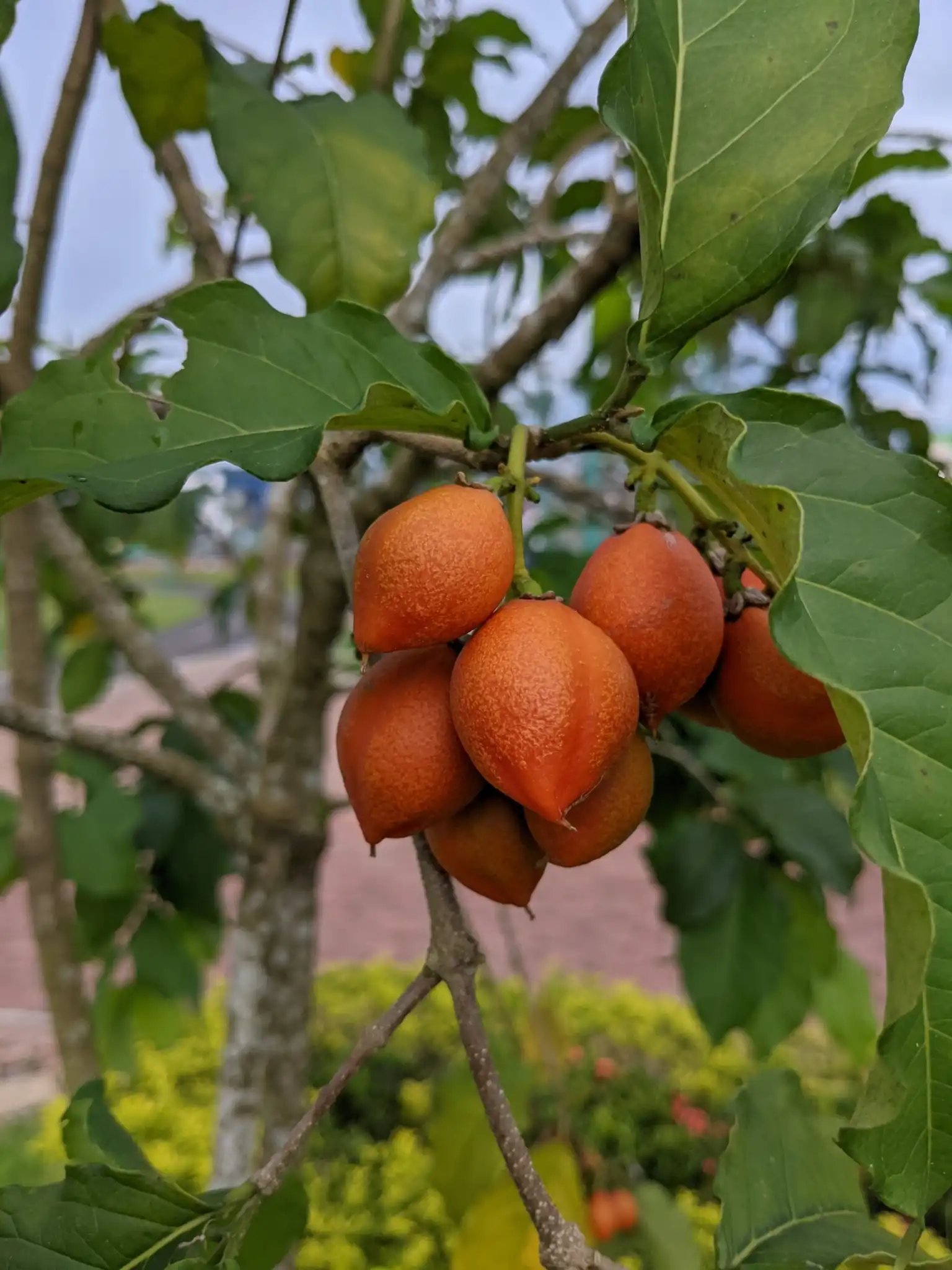
Ripe fruit is a one-inch oval drupe turning orange-red, with soft pulp that tastes of peanut butter and fig around a single large seed. Nursery stock sold under this name is often Bunchosia glandulifera or Bunchosia armeniaca; true B. argentea is recognized by the distinctly silvery undersides of the leaves.
Uses & Benefits:
Essentials
At a Glance
Plant Type
Fruit Vegetable
Height
240"
Width
180"
Light
Full Sun, Partial Sun
Zones
9, 10
Water
Medium
Humidity
High
Lifespan
Long-lived woody shrub
Native To
Tropical South America
Toxicity
Ripe pulp edible; other parts unknown
Bloom period
Spring – Fall
In flower about 9 months of the year
Planting
How to Grow
- Plant in full sun to semi-shade in rich, well-drained soil with pH 6.0-7.0, in the ground in frost-free zones or in a large container elsewhere.
- Water regularly to keep soil evenly moist, letting the top inch dry slightly; never leave roots soggy.
- Feed with balanced fertilizer every 4-6 weeks through the growing season.
- Winter-prune crossing and dead wood to keep the canopy open and compact for airflow and netting.
- Move containers indoors to bright light before first frost; mature plants take only a brief light freeze near 30-32F.
Pro Tip
Winter-prune crossing and dead wood to open the canopy; crowded growth holds moisture and invites rot, and an open compact crown is easier to net against birds.
Keep It Thriving
Care Guide
Do
- Grow in rich well-drained soil and water consistently without waterlogging.
- Feed through spring to fall and prune in winter for airflow.
- Net ripening fruit if birds take it and protect young plants from any freeze.
Don't
- Do not leave soil soggy or let the crown become tangled and congested.
- Do not plant outdoors year-round below zone 10 without winter protection.
- Do not expect drought tolerance; do not let containers dry out completely.
Seasonal Care Calendar
| Task | Jan | Feb | Mar | Apr | May | Jun | Jul | Aug | Sep | Oct | Nov | Dec |
|---|---|---|---|---|---|---|---|---|---|---|---|---|
| Fertilize | ||||||||||||
| Harvest | ||||||||||||
| Pest Check | ||||||||||||
| Prune | ||||||||||||
| Winter Prep |
Watch Out For
Pests & Diseases
Common Pests
Common Diseases
In the Garden
Landscape Uses & Companions
Landscape Uses
Companion Plants
Multiply
Propagation Methods
Good to Know
Common Questions
Peanut Butter Fruit questions
What zones can Peanut Butter Fruit grow in?
Peanut Butter Fruit is hardy in USDA Zones 9–10: in that range it survives winter in the ground. Colder than Zone 9, grow it in a container you can move to shelter for the winter, or as an annual.
When does Peanut Butter Fruit bloom?
Peanut Butter Fruit typically blooms from spring to fall. Exact timing shifts a week or two with your zone — Sow's bloom calendar maps it to your garden.
Does Peanut Butter Fruit need full sun?
Peanut Butter Fruit does best in full sun to part shade. In hot climates, afternoon shade keeps blooms fresher longer.
Keep exploring
Explore the genus
Hardy in your zone?
Grow Peanut Butter Fruit with confidence
See it in a design of your actual yard, get zone-matched care reminders, and track it season by season in your garden journal.