The Story
Plant Bio
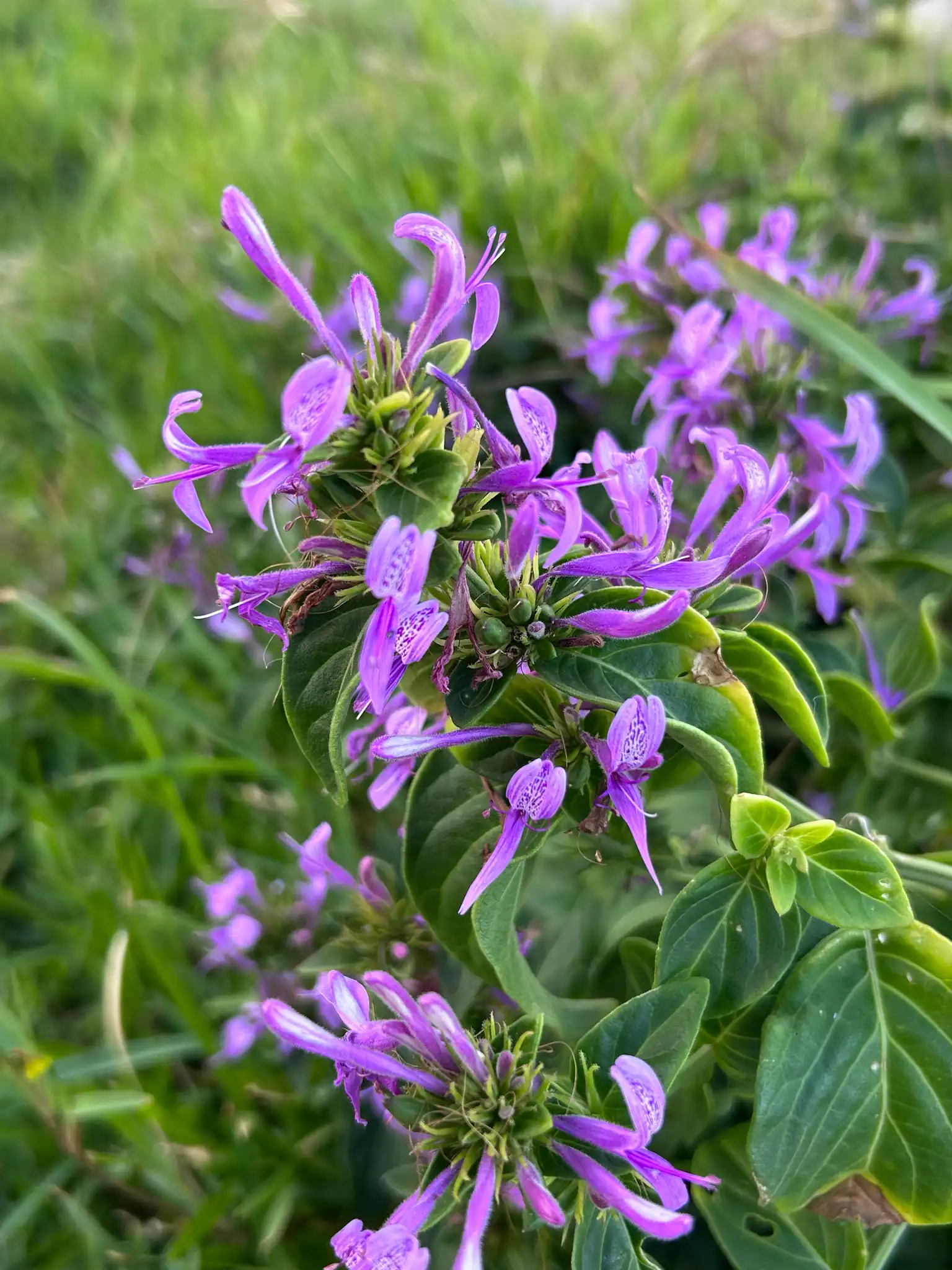
Hypoestes aristata, the ribbon bush, is a fast-growing evergreen subshrub from Africa reaching four to five feet tall, with soft hairy dark green oval leaves on upright stems. The display comes from loose terminal spikes of tubular lilac-pink to pale purple flowers, often white-spotted in the throat, carried in whorls above showy bracts.
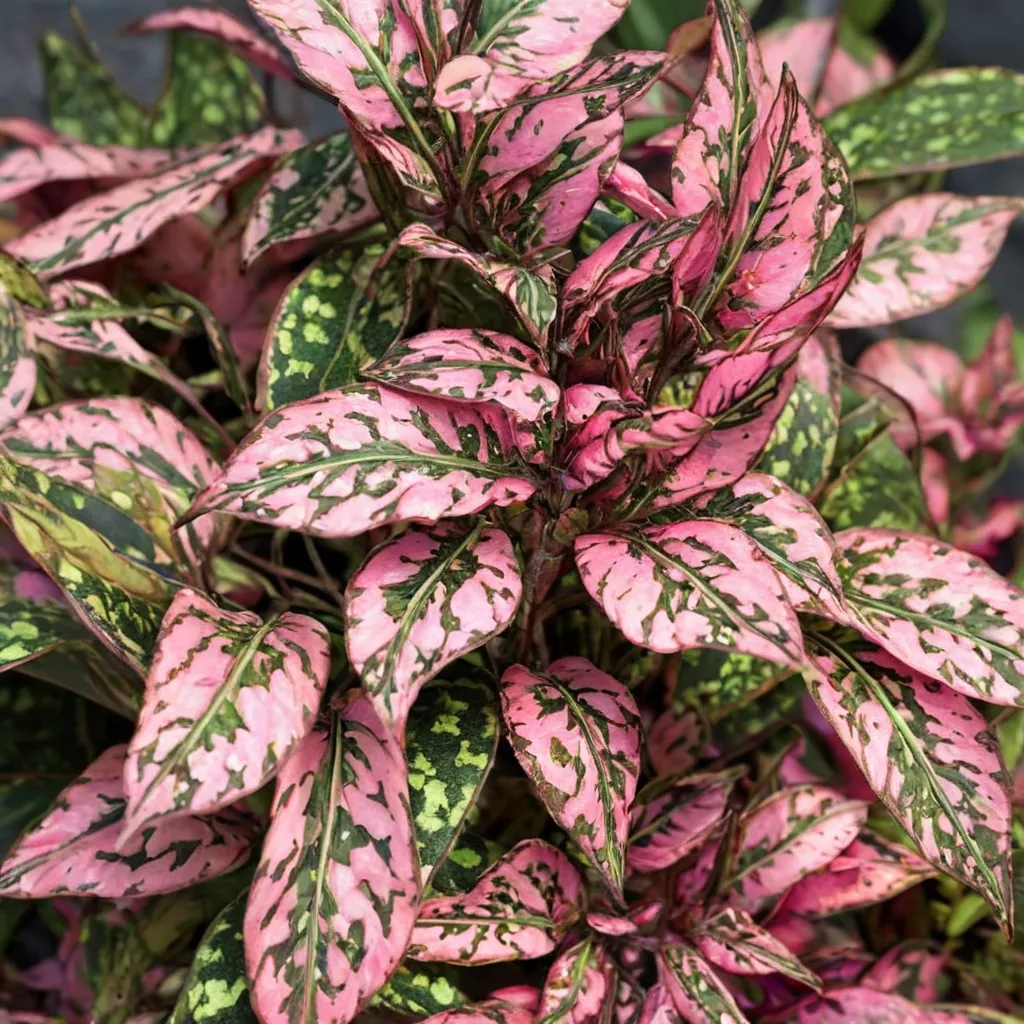
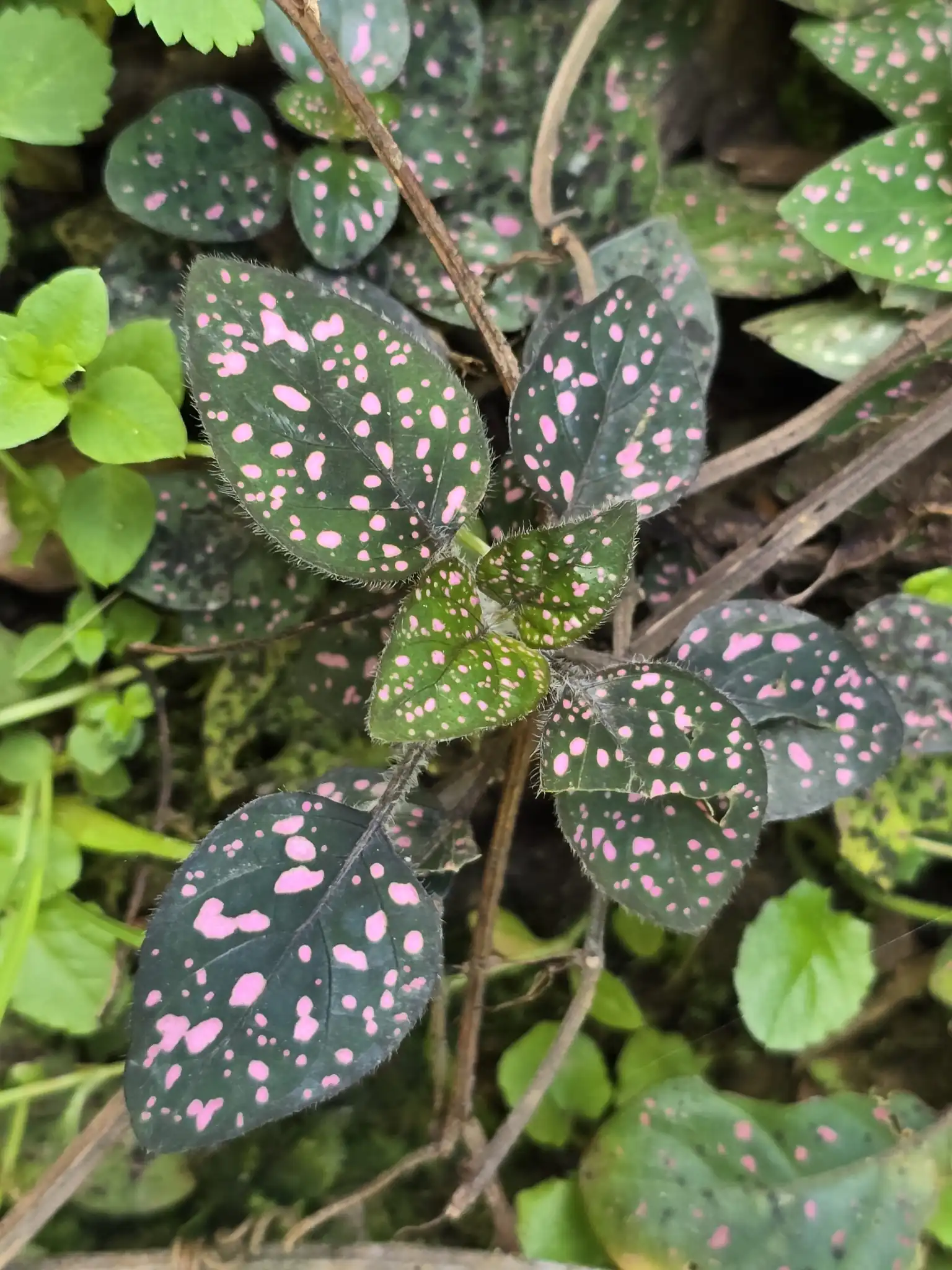
Unlike the polka-dot plant grown for foliage, this species is grown for fall to early winter flowers that open when little else blooms. Left uncut it turns lanky and woody at the base in a single season, but tip-pruning through growth and a hard cut after flowering keeps it dense and rounded.
Uses & Benefits:
Essentials
At a Glance
Plant Type
Shrub
Height
60"
Width
36"
Light
Full Sun, Partial Sun
Zones
8, 9, 10
Water
Medium
Humidity
Unknown
Lifespan
Perennial subshrub
Native To
Africa
Toxicity
Non-toxic
Bloom period
Fall – Winter
In flower about 6 months of the year
Planting
How to Grow
- Plant in full sun to light shade in moist, well-drained loam enriched with compost, spacing 3 feet apart.
- Water to settle in, then keep soil evenly moist and let the top inch dry between waterings.
- Tip-prune shoot tips through summer to force branching and prevent legginess.
- Cut stems back by one-half to two-thirds after the fall-winter bloom ends.
- Protect the crown with mulch in zone 8 and move containers indoors before hard frost.
Pro Tip
Cut it back hard right after the fall-winter bloom finishes; light tip-pruning alone leaves a woody, leggy base by the second year.
Keep It Thriving
Care Guide
Do
- Do tip-prune regularly during active growth to keep plants bushy.
- Do grow in moist, well-drained soil with room for air movement.
- Do cut back hard after flowering to renew from the base.
Don't
- Do not leave plants unpruned through winter or they go woody and open.
- Do not keep soil soggy or crowd plants where leaves stay wet.
Seasonal Care Calendar
| Task | Jan | Feb | Mar | Apr | May | Jun | Jul | Aug | Sep | Oct | Nov | Dec |
|---|---|---|---|---|---|---|---|---|---|---|---|---|
| Mulch | ||||||||||||
| Pest Check | ||||||||||||
| Pinch | ||||||||||||
| Plant | ||||||||||||
| Prune |
Watch Out For
Pests & Diseases
Common Pests
Common Diseases
In the Garden
Landscape Uses & Companions
Landscape Uses
Multiply
Propagation Methods
Good to Know
Common Questions
Ribbon Bush questions
What zones can Ribbon Bush grow in?
Ribbon Bush is hardy in USDA Zones 8–10: in that range it survives winter in the ground. Colder than Zone 8, grow it in a container you can move to shelter for the winter.
When does Ribbon Bush bloom?
Ribbon Bush typically blooms from fall to winter. Exact timing shifts a week or two with your zone — Sow's bloom calendar maps it to your garden.
Does Ribbon Bush need full sun?
Ribbon Bush does best in full sun to part shade. In hot climates, afternoon shade keeps blooms fresher longer.
Is Ribbon Bush drought tolerant?
Yes — once established (usually after the first full season), Ribbon Bush handles dry spells with minimal watering. Water deeply its first year to build the root system that makes that possible.
More Hypoestes to compare
Keep exploring
Explore the genus
Hardy in your zone?
Grow Ribbon Bush with confidence
See it in a design of your actual yard, get zone-matched care reminders, and track it season by season in your garden journal.