The Story
Plant Bio
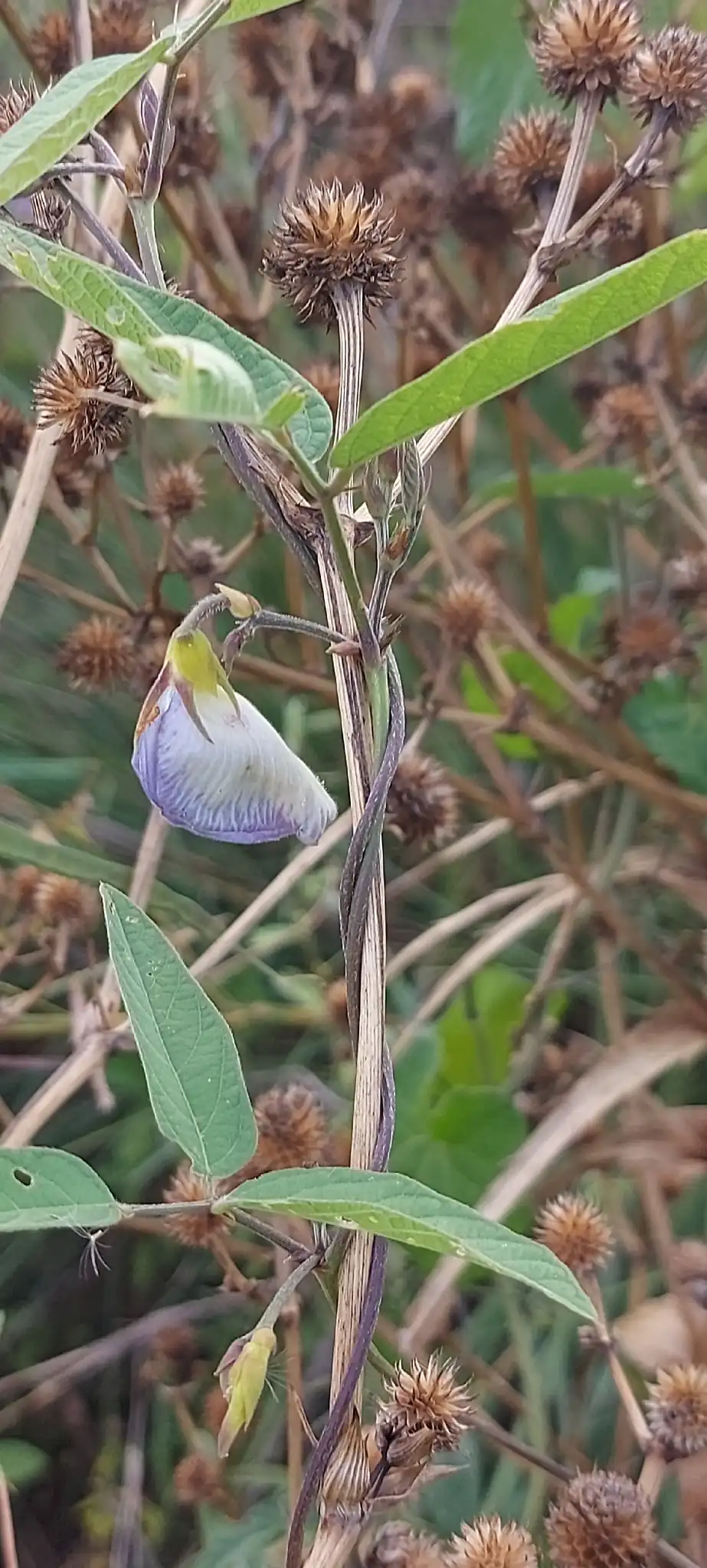
Centrosema virginianum is a herbaceous perennial vine that climbs by twining its stems to about 12 feet, sprawling as a groundcover where it has nothing to climb. It carries alternate trifoliate leaves and pea flowers with a white-marked standard, borne singly or in clusters of two to four in the leaf axils.
The flowers are resupinate and open upside-down, violet-blue to purple with a pale mark on the standard. Each bloom lasts only half a day but opens fresh daily through summer, and nitrogen-fixing nodules on the extensive roots let established plants thrive in poor acid sand.
Uses & Benefits:
Essentials
At a Glance
Plant Type
Vine
Height
144"
Width
72"
Light
Full Sun, Partial Sun
Zones
6, 7, 8, 9, 10
Water
Low to moderate
Humidity
Average
Lifespan
Perennial
Native To
Eastern USA to South America
Toxicity
Unknown
Bloom period
Summer
In flower about 3 months of the year
Planting
How to Grow
- Plant in full sun in well-drained sandy soil after danger of hard frost has passed.
- Set a trellis, fence, or brush support at planting for stems to twine around, or leave space for groundcover spread.
- Water to establish, then reduce; established plants tolerate dry spells and poor soils.
- Leave roots undisturbed once planted to protect nitrogen-fixing nodules and the deep root system.
Pro Tip
Give it a wire, string, or brush trellis to twine around from planting; it climbs without tendrils and will run along the ground if left unsupported.
Keep It Thriving
Care Guide
Do
- Grow in full sun with room to climb or sprawl.
- Use as groundcover for erosion control on sandy banks.
- Leave spent vines to set seed for butterflies and bees.
Don't
- Do not plant in deep shade or soggy ground.
- Do not cut back hard into leafless bases to control size.
- Do not enrich poor sand with heavy nitrogen fertilizer.
Seasonal Care Calendar
| Task | Jan | Feb | Mar | Apr | May | Jun | Jul | Aug | Sep | Oct | Nov | Dec |
|---|---|---|---|---|---|---|---|---|---|---|---|---|
| Pest Check | ||||||||||||
| Plant | ||||||||||||
| Spring Cleanup | ||||||||||||
| Stake |
Watch Out For
Pests & Diseases
Common Pests
Common Diseases
In the Garden
Landscape Uses & Companions
Landscape Uses
Multiply
Propagation Methods
Good to Know
Common Questions
Spurred Butterfly Pea questions
What zones can Spurred Butterfly Pea grow in?
Spurred Butterfly Pea is hardy in USDA Zones 6–10: in that range it survives winter in the ground. Colder than Zone 6, grow it in a container you can move to shelter for the winter, or as an annual.
When does Spurred Butterfly Pea bloom?
Spurred Butterfly Pea typically blooms in summer. Exact timing shifts a week or two with your zone — Sow's bloom calendar maps it to your garden.
Does Spurred Butterfly Pea need full sun?
Spurred Butterfly Pea does best in full sun to part shade. In hot climates, afternoon shade keeps blooms fresher longer.
Is Spurred Butterfly Pea drought tolerant?
Yes — once established (usually after the first full season), Spurred Butterfly Pea handles dry spells with minimal watering. Water deeply its first year to build the root system that makes that possible.
Keep exploring
Explore the genus
Hardy in your zone?
Grow Spurred Butterfly Pea with confidence
See it in a design of your actual yard, get zone-matched care reminders, and track it season by season in your garden journal.