The Story
Plant Bio
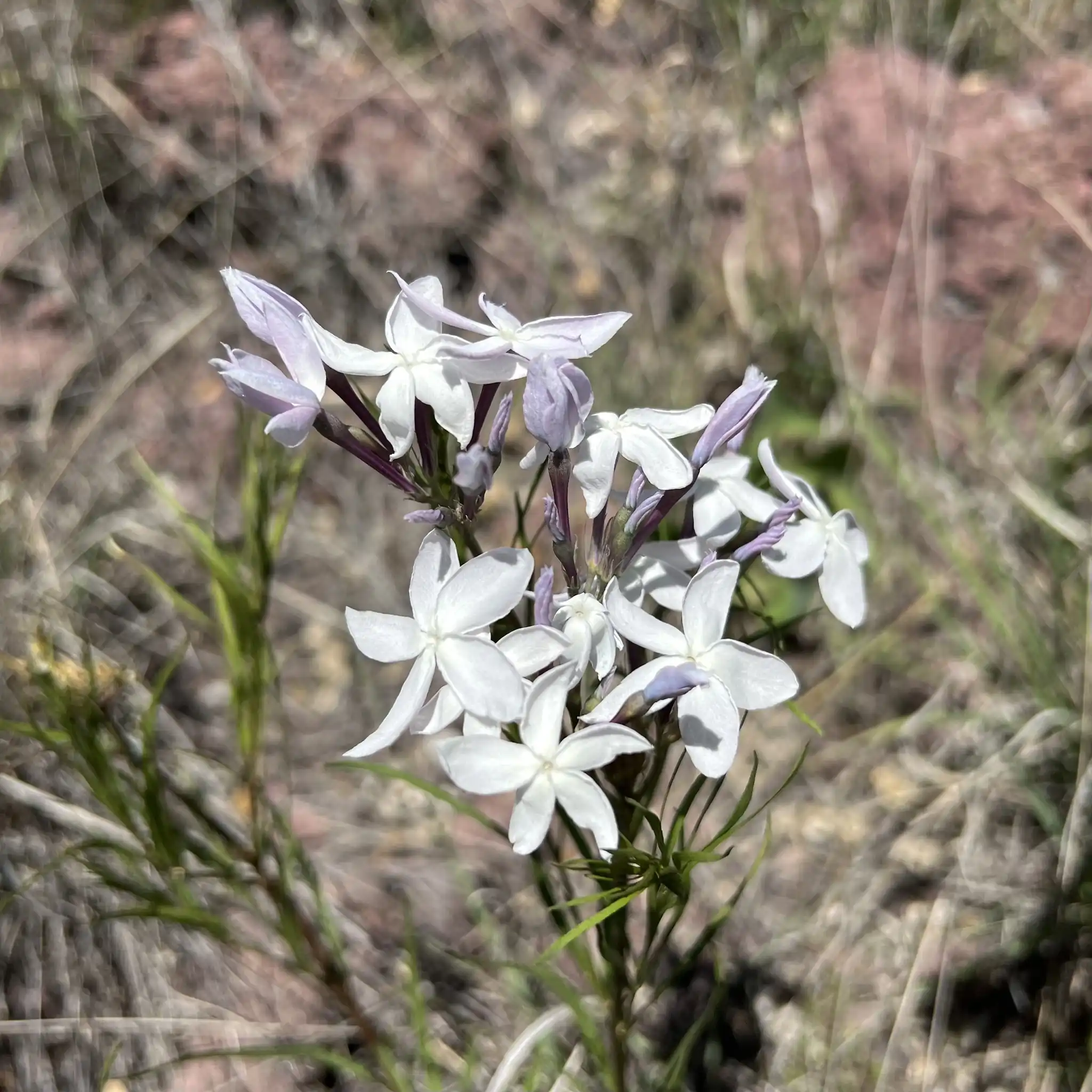
Amsonia grandiflora is a deciduous herbaceous perennial from southern Arizona and Sonora, growing two to three feet tall on erect stems that exude milky sap when broken. Leaves are alternate, narrow and grass-like, and spring flowers are white trumpets tinged lavender-blue carried in terminal clusters.
It is set apart by flower size, with a corolla tube 16-20 mm long and spreading lobes 10-15 mm, fragrant and held in compound cymes of 5 to 25. Lower leaves are 5-10 cm long by 3-6 mm wide, while upper leaves are 6-9 cm long and only 1-3 mm wide.
Uses & Benefits:
Essentials
At a Glance
Plant Type
Perennial
Height
36"
Width
30"
Light
Full Sun, Partial Sun
Zones
6, 7, 8, 9, 10
Water
Moderate
Humidity
Average
Lifespan
Herbaceous perennial
Native To
Arizona, northern Mexico
Toxicity
Milky sap toxic if ingested
Bloom period
Spring – Early summer
In flower about 4 months of the year
Planting
How to Grow
- Plant in spring in full sun to part sun with afternoon shade in hot sites.
- Set the crown at soil level in well-drained sandy or rocky soil.
- Water deeply to establish, then keep soil evenly moist but never saturated.
- Leave space 2 to 3 feet wide for the mature clump to fill.
Pro Tip
Give it full sun to afternoon shade in well-drained sandy or rocky soil with steady moisture, and keep it out of reflected heat and saturated ground.
Keep It Thriving
Care Guide
Do
- Provide good drainage with sandy or rocky soil.
- Water regularly through spring bloom and summer growth.
- Mark the crown while dormant to avoid digging it in winter.
Don't
- Do not plant in heavy clay that holds winter water.
- Do not site against hot reflective walls.
- Do not collect plants or seed from wild populations.
Seasonal Care Calendar
| Task | Jan | Feb | Mar | Apr | May | Jun | Jul | Aug | Sep | Oct | Nov | Dec |
|---|---|---|---|---|---|---|---|---|---|---|---|---|
| Mulch | ||||||||||||
| Pest Check | ||||||||||||
| Plant | ||||||||||||
| Propagate | ||||||||||||
| Spring Cleanup |
Watch Out For
Pests & Diseases
Common Pests
Common Diseases
In the Garden
Landscape Uses & Companions
Landscape Uses
Multiply
Propagation Methods
Good to Know
Common Questions
Arizona Bluestar questions
What zones can Arizona Bluestar grow in?
Arizona Bluestar is hardy in USDA Zones 6–10: in that range it survives winter in the ground. Colder than Zone 6, grow it in a container you can move to shelter for the winter, or as an annual.
Is Arizona Bluestar deer resistant?
Yes — Arizona Bluestar is rated deer-resistant. Deer typically pass it over, though extreme hunger can override any plant's defenses.
When does Arizona Bluestar bloom?
Arizona Bluestar typically blooms from early spring to early summer. Exact timing shifts a week or two with your zone — Sow's bloom calendar maps it to your garden.
Does Arizona Bluestar need full sun?
Arizona Bluestar does best in full sun to part shade. In hot climates, afternoon shade keeps blooms fresher longer.
More Amsonia to compare
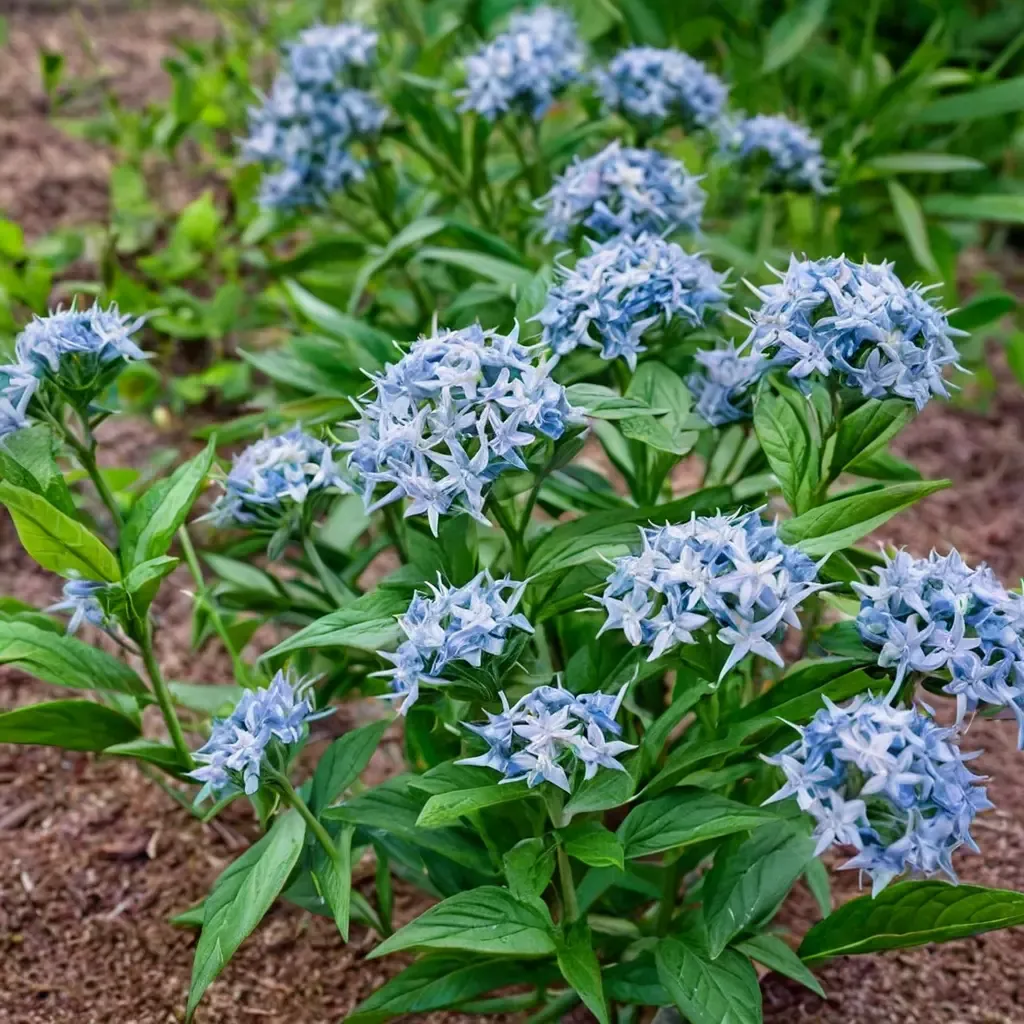
Blue Star Amsonia
Amsonia tabernaemontana 'Blue Star'
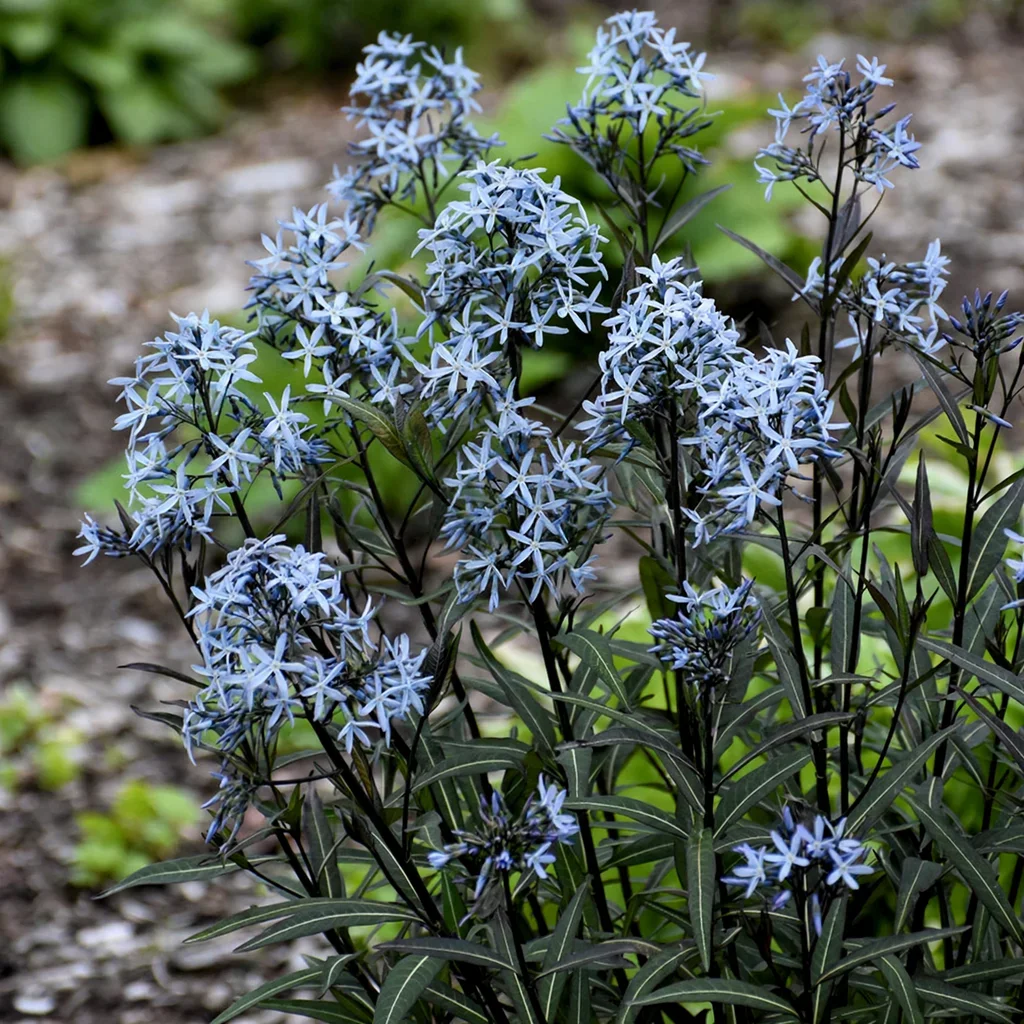
Storm Cloud Blue Star
Amsonia tabernaemontana 'Storm Cloud'
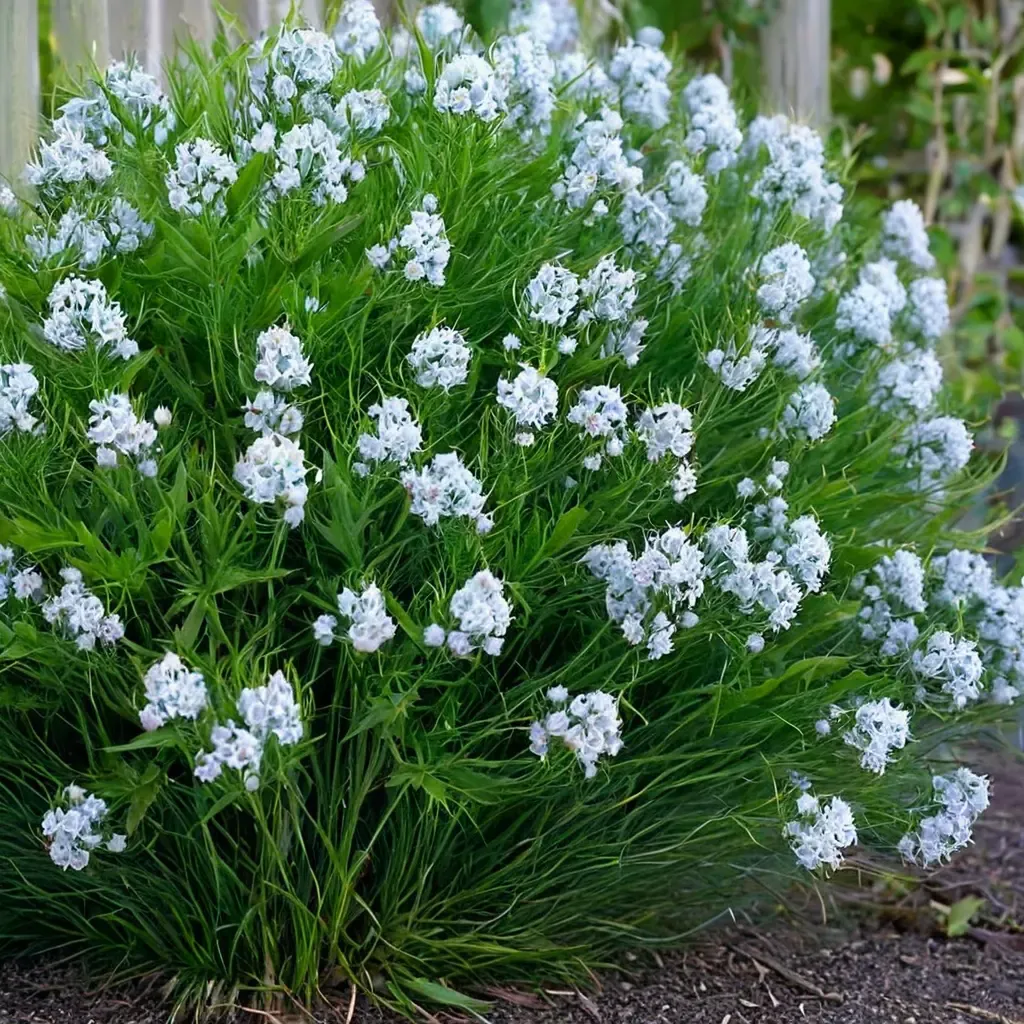
Arkansas Blue Star
Amsonia hubrichtii
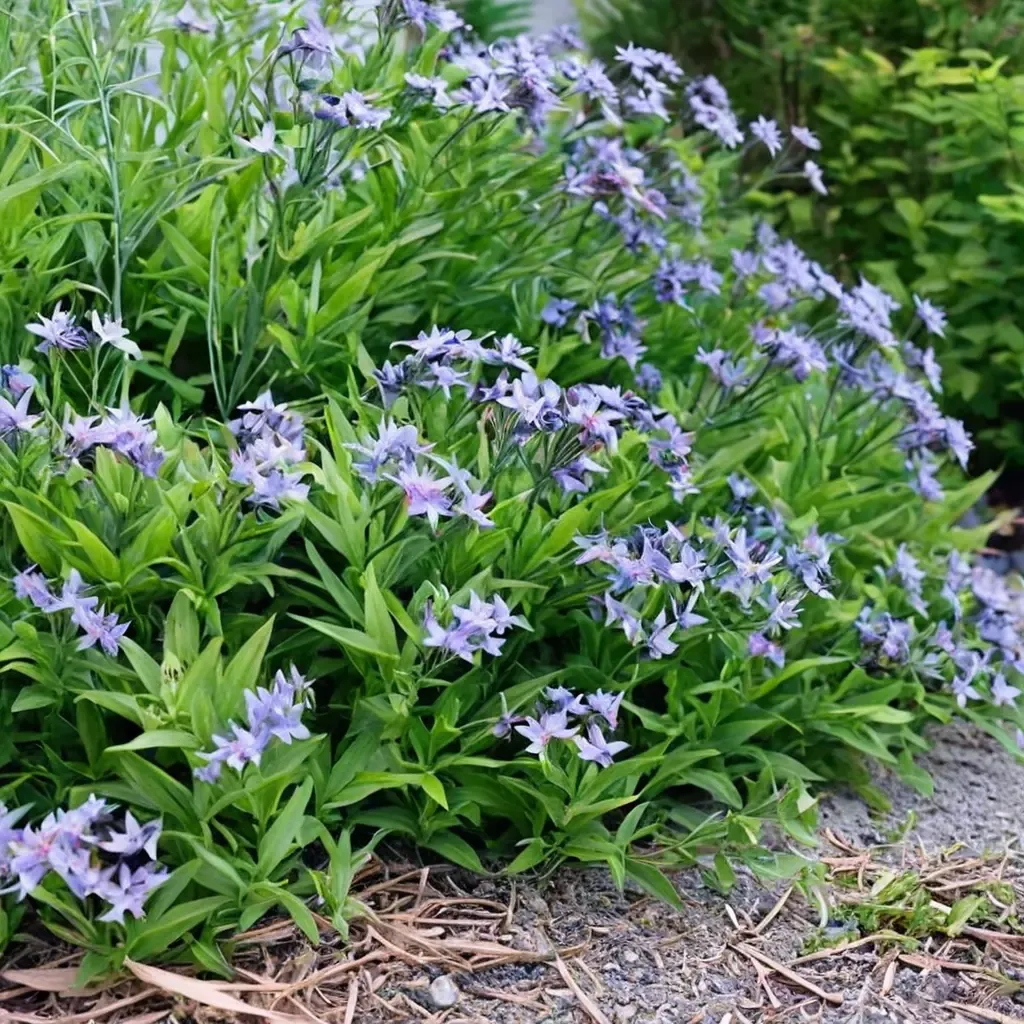
Blue Ice Amsonia
Amsonia orientalis 'Blue Ice'
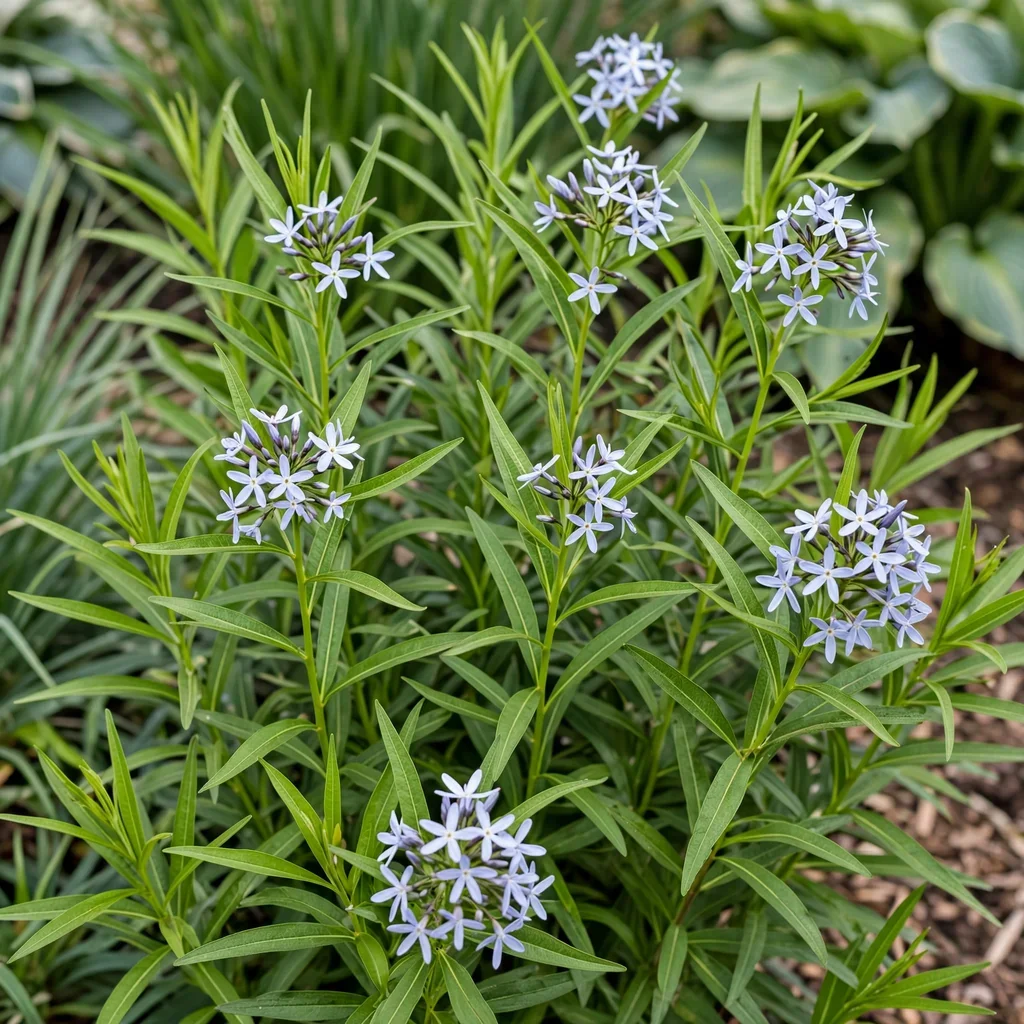
Bluestar
Amsonia tabernaemontana
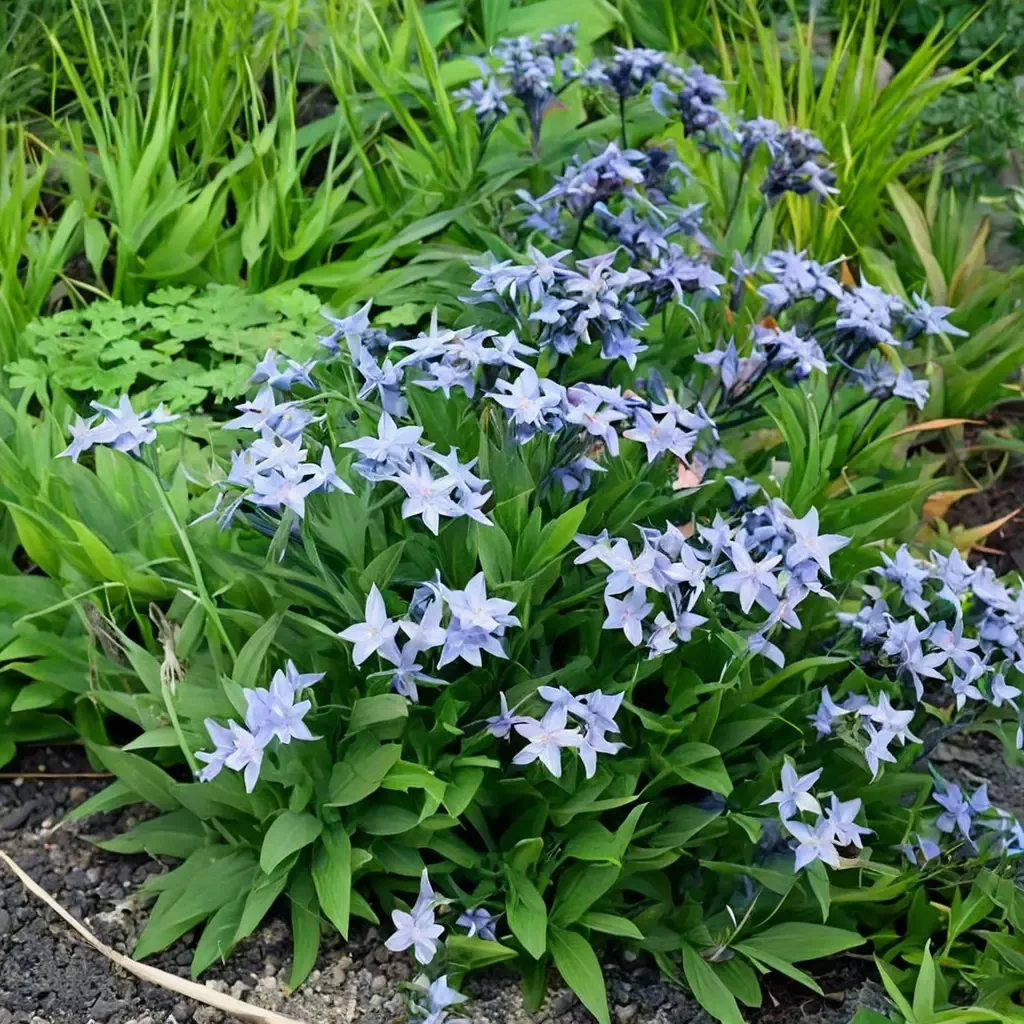
Blue Ice Bluestar
Amsonia tabernaemontana 'Glacier Blue'
Keep exploring
Explore the genus
Hardy in your zone?
Grow Arizona Bluestar with confidence
See it in a design of your actual yard, get zone-matched care reminders, and track it season by season in your garden journal.