The Story
Plant Bio
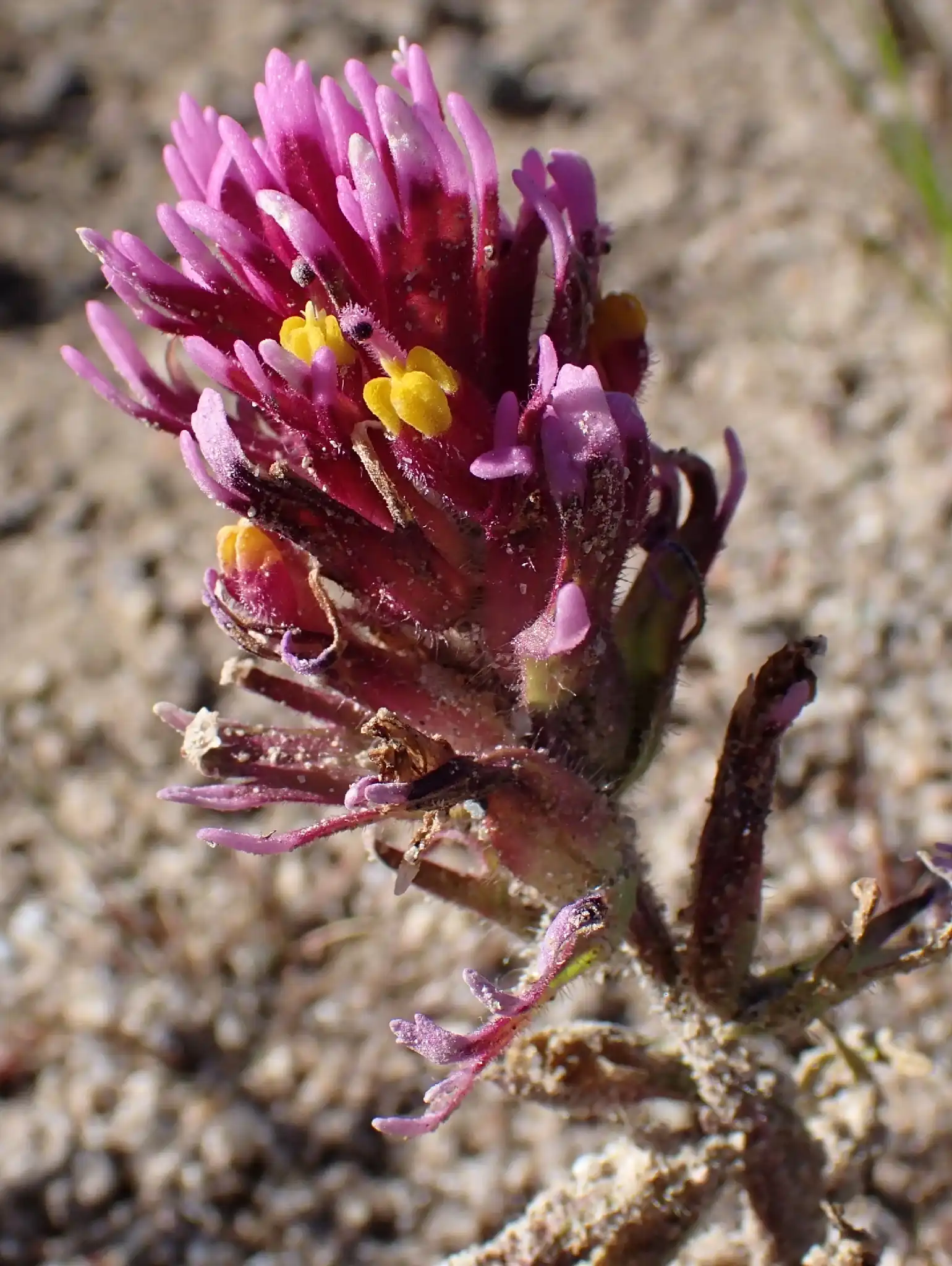
Castilleja exserta is an erect, slender annual wildflower native to open fields, slopes, and deserts across the southwestern United States and northwestern Mexico. The stem is covered in fine hairs and narrow, thread-lobed foliage, topped in spring by dense spikes of bright pink-purple flowers tucked behind colorful bracts.
As a hemiparasite, this species attaches root haustoria to nearby native grasses and wildflowers to extract water and secondary nutrients. It acts as a primary larval host plant for the threatened Bay checkerspot butterfly and draws diverse native pollinators.
Uses & Benefits:
Essentials
At a Glance
Plant Type
Annual
Height
18"
Width
8"
Light
Full Sun
Zones
8, 9, 10
Water
Low
Humidity
Low
Lifespan
Annual
Native To
North America (Southwestern US, Northwestern Mexico)
Toxicity
Non-toxic
Bloom period
Spring
In flower about 3 months of the year
Planting
How to Grow
- Select a full-sun site with coarse, sharply draining soil that does not hold excess water.
- Verify host plants, such as native bunchgrasses or native forbs, are present in the planting area.
- Direct-sow untreated seed on the soil surface in autumn so winter rains trigger natural germination.
- Keep the seedbed naturally moist through winter and early spring until seedlings form root connections.
Pro Tip
Direct-sow seeds in fall alongside host companion species like low native grasses; seedlings will fail if isolated in clean-weeded soil or pots without host roots to parasitize.
Keep It Thriving
Care Guide
Do
- Direct-sow seed alongside established host plants.
- Ensure sharp soil drainage to prevent root rot.
- Allow plants to drop seed naturally for return flushes next spring.
Don't
- Do not apply nitrogen fertilizers, which disrupt host-parasite dynamics.
- Do not attempt to grow seedlings in isolated containers.
- Do not overwater established spring plants.
Seasonal Care Calendar
| Task | Jan | Feb | Mar | Apr | May | Jun | Jul | Aug | Sep | Oct | Nov | Dec |
|---|---|---|---|---|---|---|---|---|---|---|---|---|
| Pest Check | ||||||||||||
| Plant | ||||||||||||
| Propagate | ||||||||||||
| Spring Cleanup |
Watch Out For
Pests & Diseases
Common Pests
Common Diseases
In the Garden
Landscape Uses & Companions
Landscape Uses
Companion Plants
Multiply
Propagation Methods
Good to Know
Common Questions
Purple Owl's Clover questions
What zones can Purple Owl's Clover grow in?
Purple Owl's Clover is an annual: it grows, flowers and sets seed in one season, so winter cold doesn't limit where it grows. Gardeners in any zone can grow it by planting at the right time, usually after the last spring frost.
Is Purple Owl's Clover deer resistant?
Not reliably. Deer may browse Purple Owl's Clover, especially tender spring growth — plan on repellents or fencing where pressure is high.
When does Purple Owl's Clover bloom?
Purple Owl's Clover typically blooms in spring. Exact timing shifts a week or two with your zone — Sow's bloom calendar maps it to your garden.
Does Purple Owl's Clover need full sun?
Purple Owl's Clover does best in full sun (6+ hours).
Is Purple Owl's Clover drought tolerant?
Yes — once established (usually after the first full season), Purple Owl's Clover handles dry spells with minimal watering. Water deeply its first year to build the root system that makes that possible.
More Castilleja to compare
Keep exploring
Explore the genus
Hardy in your zone?
Grow Purple Owl's Clover with confidence
See it in a design of your actual yard, get zone-matched care reminders, and track it season by season in your garden journal.